
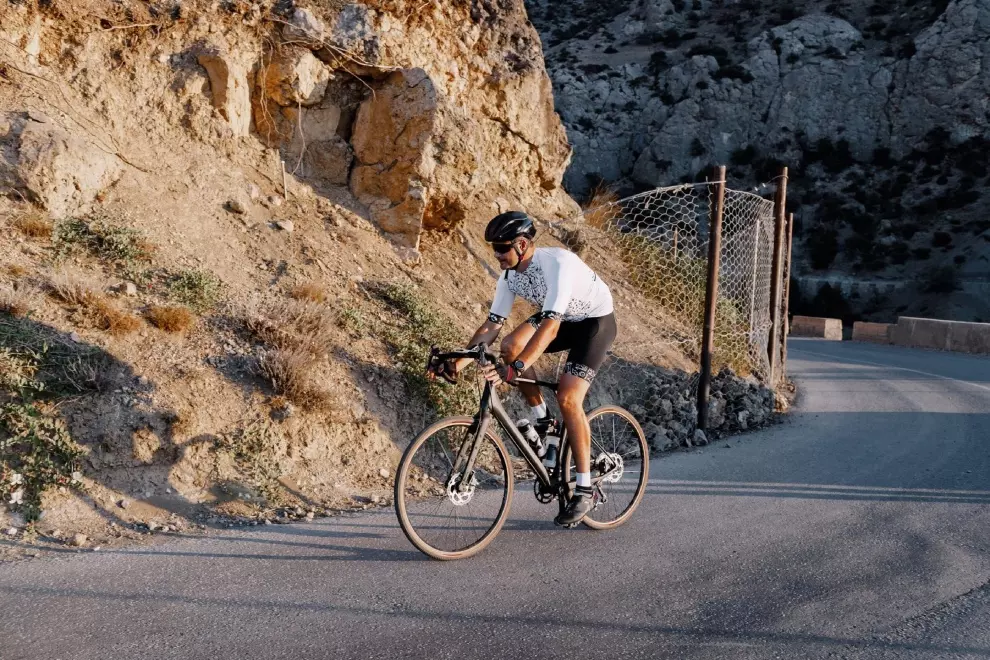
Eye contact is one of the fastest ways humans establish awareness of each other. Neuroscience and behavioural psychology show that seeing someone’s eyes activates attention and social-processing pathways almost instantly, far more than any other facial feature. It’s why a glance can communicate I see you without a single word being exchanged.
On the bike, we rely on that kind of communication constantly. Not consciously, but instinctively. At crossings, in traffic, on shared paths. We look for eyes to confirm that we’ve been noticed.
And yet, cycling culture treats sunglasses as non-negotiable safety equipment.
So the question isn’t whether sunglasses protect our eyes; they clearly do, but whether hiding one of our strongest social signals could subtly change how safe we are perceived to be, and how safely we move through the world.
Let’s unpack the safety, visibility, psychology, and social dynamics surrounding sunglasses vs. bare eyes.
Why sunglasses became non-negotiable
On a practical level, sunglasses make riding easier. Wind dries out your eyes, bugs appear out of nowhere at speed, and even a speck of grit can cause an involuntary blink at the worst possible moment. Add UV exposure and glare bouncing off car windscreens, wet asphalt or pale gravel, and it’s clear why most riders feel more relaxed when wearing sunglasses.
Modern cycling sunglasses go further than simple protection. Different tints enhance contrast, sharpen edges, and reduce visual fatigue on long rides. And yet, cycling isn’t only about reacting to terrain. Especially in shared spaces, it’s about reading people.
The social language of the road
Before traffic lights and painted lanes, we relied on glances to negotiate shared space. Even now, in busy cities, a brief look between two people often determines who goes first, who yields, and who hesitates.
Psychologists have shown that visible eyes make people feel more connected, more attentive, and more “present”. When we can see someone’s gaze, we instinctively try to interpret their intentions. Are they aware of us? Are they about to move? Are they confident, distracted or uncertain? This matters on a bike more than we might like to admit.
A cyclist approaching a junction often relies on micro-interactions with drivers and pedestrians. This could be a quick look to confirm you’ve been seen or a nod that says thanks. With sunglasses, some of that information disappears.
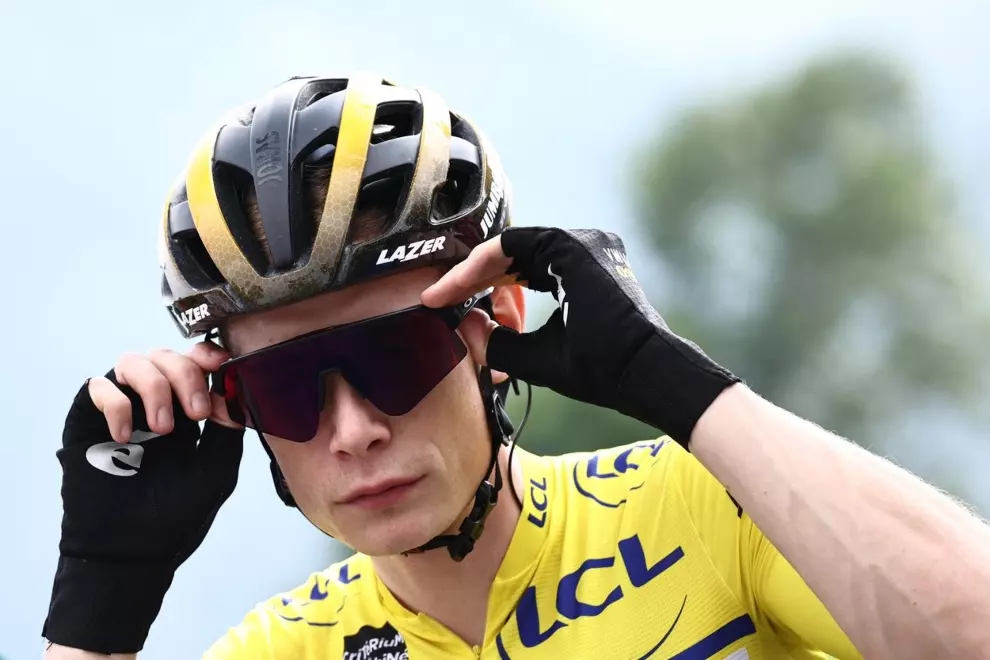 Could sunglasses hinder social communication, and does that matter for bike safety? © Profimedia
What changes when eyes are hidden
Research into face perception consistently shows that covering the eyes, whether with sunglasses, masks or heavy shadows, makes it harder for people to identify faces and read emotional cues. The eyes do a disproportionate amount of social work. They signal attention, intention, and awareness in a way that no other facial feature quite matches.
On the road, that can translate into uncertainty.
If they can’t tell where that cyclist is looking, a driver or pedestrian may hesitate or misjudge the situation. Even among cyclists, riding without visible eyes can subtly reduce awareness in a group.
None of this means sunglasses are “dangerous”. But it does suggest they slightly flatten the social conversation that’s constantly happening around us.
In urban riding, navigating markets, school zones, café streets, seeing the world more immediately can be a genuine advantage. You’re easier to read, your awareness is visible, and people respond to you as a person rather than a moving object.
Context is everything
A rider bombing down an alpine descent at 70 km/h has very different needs from someone rolling through a residential neighbourhood at 18 km/h.
On fast roads, sunglasses are essential. At speed, visual clarity and protection outweigh subtle social cues. You’re relying less on eye contact and more on predictable lines, clear sight, and sharp contrast.
In cities, the balance shifts. You’re constantly interacting with people who are unpredictable, distracted, and moving in all directions. Here, being seen as a thinking human can matter almost as much as being physically visible.
This is where lens choice matters more than the binary question of sunglasses or not.
The middle ground: seeing and being seen
Cycling eyewear doesn’t have to be all-or-nothing. Clear lenses offer protection from wind and debris while keeping eyes visible. Light tints reduce strain without completely masking gaze direction. Photochromic lenses shift with the light, staying transparent in shade and darkening only when necessary.
These options preserve much of the social information that heavy mirrored lenses erase, while still protecting your eyes from the worst physical irritants.
They’re especially well-suited to commuting, mixed-use paths, and group rides where communication matters. You don’t lose the ability to make eye contact; you just soften the exposure.
So… are cyclists safer without sunglasses?
Sometimes, yes. Sometimes, absolutely not. Cyclists are safest when they can see clearly, react quickly, and communicate effectively. Sunglasses help with the first two. Visible eyes help with the third.
On bright days, fast roads, and exposed terrain, eye protection wins. On shaded streets, busy intersections, and human-heavy environments, letting your eyes be seen can make you feel, and possibly be, safer. Safety, after all, is about awareness, yours and everyone else’s.
And sometimes, the most powerful signal on the road isn’t a light or a reflector. It’s a look that says, “I see you.”