
CHARLOTTE, N.C. — At the dawn of the 2026 season, NASCAR finds itself in an unfamiliar position from where it had been for several years at this time, now facing a rather clear runway to begin its season, as opposed to being roiled in a sea of tumult like it so often has been. A rocky few years have left much to clean up, compounded by the fact that several seismic developments occurred simultaneously, and for a protracted period, often overshadowing anything happening on the racetrack.
Yet, the brooms are out, and the cleanup has begun in earnest, creating a sense that NASCAR pushed away the off-track drama that has distracted the league.
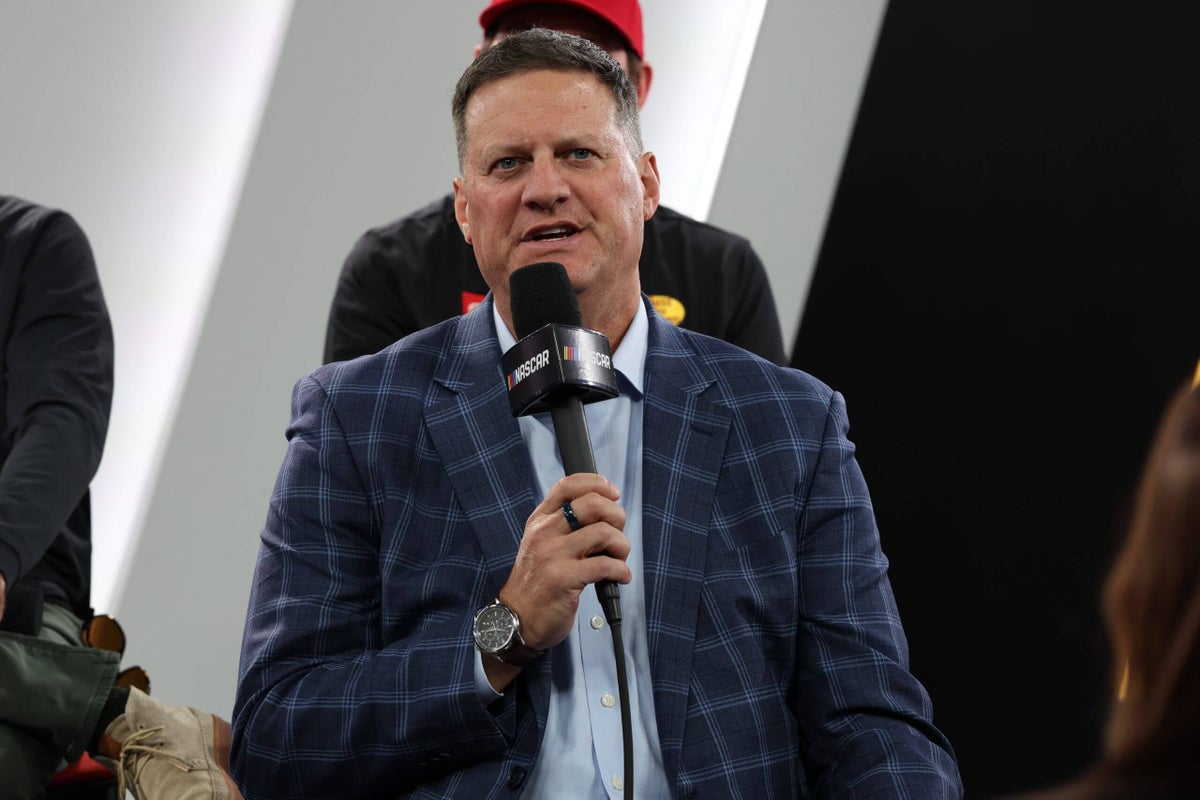
Still, sipping his beer at a bar in south Charlotte, NASCAR president Steve O’Donnell nodded in agreement that plenty of work remains, there is no denying that, he told The Athletic. This is a long-term project, not something that can quickly be spruced up at the snap of a finger. Still, notable improvements have already been made, and there is a sense around the sport that O’Donnell is taking the necessary — if sometimes hard — steps of admitting NASCAR’s mistakes and moving forward.
“It starts with being a little humble about where you are as a sport, being honest with where you are as a sport, what the challenges are, but also what the opportunities are, and then, not just talking about it, but doing it,” O’Donnell said. “Our commitment from NASCAR is that we’re all in. We are going to work our asses off with this industry, putting wins on the board, specifically for our fans. I think people believe that the direction we’re heading in has the potential to be really good. It’ll take time, but we’re all-in to prove that out.”
As he lays out his vision for NASCAR’s future, O’Donnell is going to enjoy his beer for a moment, thinking optimistically about the season to come — one he is convinced will focus on the action on the track, not what’s transpiring behind the scenes or in the courtroom. Gone is the angst over an antitrust lawsuit against the league led by Michael Jordan, challenges with brokering a new media rights deal, the continued backlash over a controversial playoff format, and the often contentious negotiations between NASCAR and the teams over extending the charter agreement — all thorny issues NASCAR has had to address over the last 24 months that have left the sport in recovery mode.
“There’s a big opportunity for us to just get out there and, I think, just be who we are,” O’Donnell said. “I think it’s a good year to level-set. I’m bullish about it.”
Dismissing optimism from the head of a league is easy; after all, part of the job description is being a salesperson for the sport. In this instance, though, O’Donnell’s words are supported by NASCAR having already taken tangible action to course correct after feeling like it lost a sense of what it was. NASCAR responded by enacting several changes this offseason conceived with the intent of helping fans, old and new alike, remember why they love big-time stock car racing.
When the 2026 season begins Sunday with the Daytona 500, the talk surrounding who wins NASCAR’s biggest race will in no way include them clinching a playoff berth, something that galled O’Donnell ever since NASCAR shifted to a “win-one-race-and-qualify” playoff format. Last month, after a year of analyzing different models, NASCAR revitalized a familiar model, called “The Chase,” that emphasizes sustained excellence across the regular season and through the playoffs.
For the many who lamented that they disliked NASCAR’s previous multi-round playoff format, which some felt rewarded good luck above all else, the change was well received. Even the previous format’s sharpest critic, Mark Martin, has said he “loves” the Chase, describing it as “fabulous.” The hope is that if Martin can find the good in it, then so too will its core fan base.
“One of the ways I’ve tried to position it is, we have the most passionate fans of any sport, by far,” O’Donnell said. “Our fans feel as if they have ownership in the sport. And I think for a time, they felt a little disconnected from that kind of ownership position. So a win for us is getting the fans back to feeling like this is my sport, we’re all part of this. And we won’t always agree, but for the most part, directionally, they’re excited again. That’s the goal. Let’s have some fun. Let’s get them excited about what we’re doing, and let’s be authentic to who we are.”
Listening, understanding, then reacting accordingly is indicative of O’Donnell’s overarching philosophy this season. That is an especially pertinent approach in the wake of the antitrust lawsuit being settled in December that left the sport bloodied, followed by NASCAR commissioner Steve Phelps exiting the company last month after the discovery of derogatory text messages Phelps sent regarding a team owner, along with NASCAR’s long fractured relationship with many of the teams that swelled during the years-long negotiations over extending the charter agreement that guarantees teams a certain revenue floor.
Through all the trials and tribulations, a frequent critique levied against NASCAR leadership is the feeling that they aren’t in tune with the core issues impacting the sport. Repairing and managing relationships with NASCAR’s various stakeholders is essential if NASCAR is going to capitalize on the clear runway it has before it.
Trust between both sides has eroded, Hendrick Motorsports vice chairman Jeff Gordon told The Athletic: NASCAR trusting the teams when the teams say they need greater concessions on the business side from the league, and the teams trusting NASCAR when the league says there are limitations on how far it can extend itself on certain matters.
“The relationship side of it that has been missing for a while and getting that back on track is important,” Gordon said.
Gordon speaks not only as a high-ranking executive with NASCAR’s most successful organization ever, but also as one of its greatest all-time drivers. In a career that saw 93 wins and four championships before retiring as a full-time competitor after the 2015 season, much of it was spent in an era where NASCAR’s popularity was at its zenith with television ratings that at times rivaled the NFL and many races with attendance exceeding six figures.
Reflecting on this heyday, Gordon explained there were multiple reasons why NASCAR hit these heights. One of the main pillars was the communal bond between all the principal players — NASCAR executives, team owners, drivers, sponsors and media partners — forged during fishing trips, jaunts in New York City or other fun outings away from the track. These ties built an understanding that while everyone may have had different perspectives, they also all wanted what was best for the sport.
“Those were meaningful trips that you just don’t see, they don’t happen anymore,” Gordon said. “And I think Steve’s really going to be great at doing this and creating those moments and rebuilding those relationships that then builds trust and then gets everybody to want to really lock arms and move together in the same direction.”
Just how valuable moments away from the track can be is something O’Donnell, who started with NASCAR in 1996, knows firsthand, as he was included on some of these excursions. He “1,000 percent agrees” with Gordon that the shared vision that came out of this effort helped set a foundation to launch NASCAR into the national sports landscape.
The decision to end these bonding trips was made years ago, before O’Donnell carried any sway. With NASCAR’s renewed emphasis on smoothing out frayed relationships, bringing back the NASCAR equivalent of a team-building experience is something already being formulated for later this year.
“We got to put a little fun back into it,” he said. “A lot of the relationships I’ve developed over the years were going to the Super Bowl with some drivers or just hanging out and getting to know people. This helps you when you have to make a tough call with someone that you have that foundation. We’ve missed that.”
Collaboration is vital, stressed 23XI Racing co-owner Denny Hamlin, also a star driver for Joe Gibbs Racing. With the legal fight between 23XI, Front Row and NASCAR put to bed — the case was officially dismissed last week — Hamlin wants to see improved relationships with NASCAR. The early signs point to this happening based on conversations that have taken place, along with NASCAR’s first meeting with team owners last month.
“I’ve looked at the inner strategy of NASCAR of what they put out to us to get back to where we were, and I think it’s the right strategy,” Hamlin said. “This is not going to be something that we’re going to see right away; it’s something that could take time within the garage. The proof will be in the pudding that the sport and the teams have said they wanted to do for the last decade. While it is more collaborative or was more collaborative than it was in the 1990s, it’s still nowhere nearly as collaborative as other sports are.
“(The teams are) just so cutthroat on what’s best for our team, and this team doesn’t like this splitter, and this team doesn’t like this transaxle. It’s all dumb stuff that gets talked about that doesn’t push the sport forward. We have to talk about things that are going to grow the sport collectively, and everyone has to get on that same page.”
Few within the industry would dispute that Phelps’ departure is anything but a loss. His people skills combined with his business acumen made him one of the more respected NASCAR executives within the garage. Often referred to as “The Two Steves,” he and O’Donnell balanced each other well; Phelps focused primarily on the business side of things and O’Donnell on the competition, though both were also involved in all facets of the company.
Now it’s just a singular Steve, leaving O’Donnell as the main figure guiding NASCAR on a day-to-day basis. How he adapts to handling many of the duties once on Phelps’ desk is one of the bigger unknowns.
“Steve’s big hurdle is I think he and Phelps were a pretty good combination in a lot of ways,” said Brad Keselowski, RFK Racing driver and co-owner. “They complemented each other. I’ll be curious to see the team that he surrounds himself with. How does that look is a big question mark for me. But he has a great opportunity in front of him. He’s got the keys to the castle. And from what I can tell, it is the first time he’s had them.”
As O’Donnell lays out NASCAR’s path, it will not just be his vision, but one that comes from heavy consultation with those who see things through a different prism.
If one wants to see how O’Donnell will lead, look to how he oversaw NASCAR changing its playoff system, which was an industry-wide effort to reshape how NASCAR crowns its champion. As he sips his second beer, O’Donnell gestures to the setting as an ideal place to spend time with former drivers who can offer invaluable feedback and guidance.
“My goal is for our group to go have some beers with Dale Earnhardt Jr. and Dale Jarrett and some others and just shoot the s— on, ‘What are we doing right? What are we doing wrong?’” he said. “Kevin Harvick, ‘What do you think? What should we do?’ And it’s not a business environment, we can sit around a bar and talk and have some beers and have some fun. But at least know you have that foundation even if you don’t agree all the time.”
One thing O’Donnell will not have to change is his visibility. Part of the role he’s in comes with being omnipresent inside the garage, always available to have a chat about any topic someone wants to discuss. On this front, O’Donnell has industry-wide respect for being accessible. He’s also become adept at being a firm leader but also someone people feel comfortable around, a delicate balance but one he has deftly walked.
“I think he’s a really good leader,” said Hendrick Motorsports driver Kyle Larson, the defending Cup Series champion. “I feel like he runs a good balance of being friends with everybody, but also can stand his ground, which I think is important for a leader. I respect him, and I respect the role that he has. I know the job that they have as executives at NASCAR is extremely tough. I think he balances it all very well.”
In line with his candid personality, O’Donnell doesn’t shy away from any skepticism he faces, accepting that uncertainty exists about whether things will be better with him in charge — if anything will change for the better, or be the same old NASCAR where the France family still owns the league and is ultimately calling the shots.
O’Donnell offered a firm rebuke that he is a mere stand-in for the family. For anyone who thinks he just happily goes along with whatever NASCAR chairman and CEO Jim France wants, a litany of court documents shows O’Donnell will openly speak his mind and has fought his bosses on the teams’ behalf.
In a sport where being regarded as a “racer” is a badge of honor, he feels as if he’s earned his credibility. His tenure with the company started in the marketing department, where he spent many years, before switching to competition, first at the grassroots level, then being named chief operating officer in 2022, and then culminating with being named NASCAR president last spring. He is no interloper.
“The advantages of having a guy like Steve in the sport is that they’ve seen a lot of different things over 30 years,” Keselowski said. “They know where a lot of landmines are that probably aren’t obvious to the general public, or even some of those that are inside the sport every day. There’s a lot of value in that.”
Asked if O’Donnell is someone who just happily goes along with whatever the France family decides, NASCAR executive vice president Ben Kennedy, France’s nephew, scoffed and shook his head. That is in no way O’Donnell’s style, Kennedy said, from personal experience.
When O’Donnell recruited Kennedy to give up pursuing a driving career to work for the company founded by his great-grandfather, Bill France Sr., one of the chief tenets O’Donnell instilled in Kennedy was to speak up if he has a dissenting opinion. That is a message O’Donnell still continually preaches.
“If there are any ‘Yes, people’ that we have in our organization, Steve is the exact opposite of that,” Kennedy said. “He is going to tell you what’s on his mind. He’s going to be honest with you. One of the first things that I learned when I came to the company is to surround yourself with people that are going to be honest and transparent with you.
“He’s disagreed with the leadership team on a handful of things, and sometimes he’s right, sometimes he’s wrong, just like all of us are. But that is one of the strongest traits that I believe Steve has and a big reason that he has got to the position that he’s in is because he’s honest with people, he’s transparent with people, and he shares what’s on his mind.”
Never one to sugarcoat anything, O’Donnell said he embraced the reality that if NASCAR is going to reach its full potential, all its stakeholders must be aligned. The infighting must cease, and trying to navigate past missteps doesn’t help the league as it faces its future.
The early returns suggest NASCAR is making progress to get everyone “to look through the windshield, not the rearview mirror,” O’Donnell said. Even those who were so adamantly opposing NASCAR just a few months ago are encouraged by what they’ve seen.
“I’m certainly a believer in the direction they are going,” Hamlin said. “Overall, I feel as though the sport got a good reset point at the end of last year, and now we are going into this year, the team owners are in a better position for the long term than where they’ve ever been before. It falls on O’Donnell’s shoulders to lead NASCAR to achieving this goal.”
“Not taking advantage of the opportunity we have to grow this sport would really bum me out,” O’Donnell said. “I look at my remaining time here at NASCAR, it’s to put people in place to continue to grow the sport and to do my best to bring this industry together and be proud of what we’re building.”