


Listen to this article
Estimated 5 minutes
The audio version of this article is generated by AI-based technology. Mispronunciations can occur. We are working with our partners to continually review and improve the results.
The City of Calgary unveiled plans to add two more developments to its growing list of office conversion projects Monday, which will add nearly 130 affordable housing units downtown.
Two non-profit organizations — HomeSpace Society and Trellis Society for Community Impact — are the recipients of the city’s inaugural Downtown Non-Market Office Conversion Grant, and will receive a combined $10.3 million for the conversion projects through the federal Housing Accelerator Fund.
The HomeSpace project, at 1000 8th Ave. S.W., is estimated to cost $27.5 million. It will receive $4.1 million from the fund to create 65 studio and one-bedroom units.
Trellis’ conversion, which is a partnership with the Bluevale Capital Group, is located at 441 5th Ave. S.W., and will receive $6.2 million towards the $27.8 million project that will produce 63 units, ranging from studios to three-bedroom apartments.
Both projects are part of the Downtown Calgary Development Incentive Program, which has a goal of removing six million square feet of underutilized office space by 2031. Twenty-one conversion projects are underway, nine of which were announced last year.
The projects will help the city move closer to a goal of delivering 3,000 non-market homes per year, said Mayor Jeromy Farkas, with nearly 100,000 square feet of empty office space being converted into 128 non-market homes.
“Housing affordability is one of the biggest challenges facing our city and solving it requires speed, creativity and strong partnerships,” Farkas said. “We need to build housing at speed and scale because everyone deserves a safe and affordable place to live.”
The city has prioritized tackling the housing crisis in recent years, outlining 98 actions to address in its six-year housing strategy.
Last year, Calgary’s housing market saw record growth — part of a trend across the province — with the total number of homes granted occupancy, and development and building permits, reaching all-time highs.
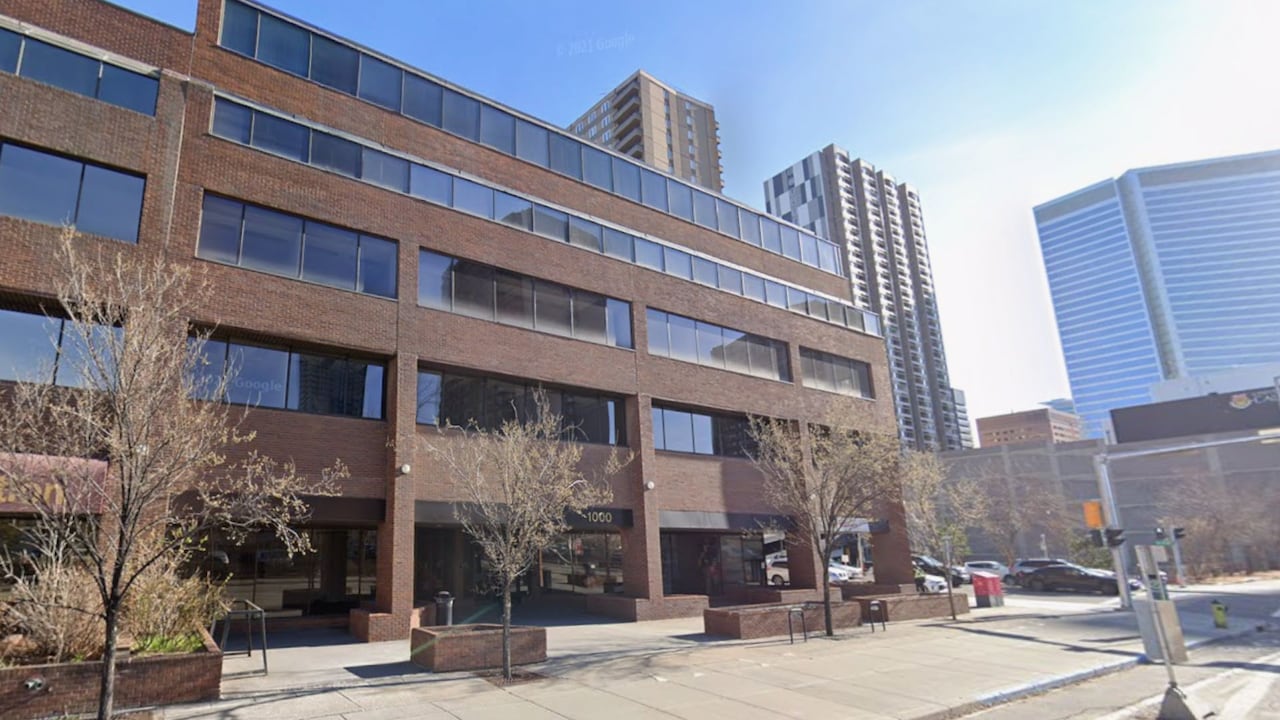 The HomeSpace conversion project is located at 1000 8th Ave. S.W. and will create 65 studio and one-bedroom units. (Google Maps)
Jeff Dyer, chief executive officer of Trellis, said that young people and families are often those in greatest need of affordable housing, and safe housing can be a stepping stone to building stronger communities.
“Without stable housing, everything else becomes harder,” Dyer said. “This investment allows us to respond to real community need while helping ensure our downtown remains inclusive and vibrant.”
Dyer added that with the grant, Trellis has secured $11 million for the project and is hoping funding from the provincial government and income-tested rent will help cover the remaining costs.
Increasing non-market housing options
Calgary has one of the highest downtown vacancy rates in Canada, sitting at 30.4 per cent in the fourth quarter of 2025, according to real estate firm CBRE Canada.
Despite this, CBRE found Calgary leads the country in total space converted and accounts for almost half of all vacant office spaces removed from the Canadian market between 2021 and 2025.
Five residential conversion projects opened in the downtown core last year, adding a total of 490 homes, including 130 non-market housing units.
WATCH | Housing developments hit a record. But is the building rush about to slow?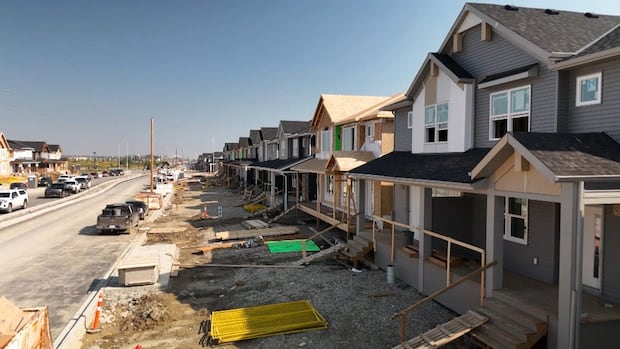
Housing developments hit a record. But is the building rush about to slow?
Roughly 28,000 homes came online in Calgary last year, including many affordable units. But as CBC’s Brendan Coulter reports, developers say they need more certainty around housing policy to keep the momentum going.
The city also saw more than 1,800 development permit approvals for non-market homes — roughly five times the average annual volume, said Reid Hendry, the city’s chief housing officer.
Two years ago, that number sat at 893, Hendry said. In 2023, it was 120.
“This has been a dedicated exercise in capacity building through capital programs, through priority streams on the planning side, through understanding different business models of different non-profits [and] different market developers,” he said.
Consequences from potential blanket rezoning repeal
As Calgary’s city council looks to roll back its contentious blanket rezoning policy, the Canada Mortgage and Housing Corporation (CMHC) — the agency responsible for distributing the Housing Accelerator Fund money — has warned changes could put new funding at risk.
Hendry said the city’s infrastructure and planning committee has a report coming this Wednesday detailing the potential consequences of repealing the policy.
“It is a potential risk,” Hendry said, adding that as of right now the city is in full compliance with the terms of the funding agreement.
Farkas said Monday that CMHC has assured the city the funding is not on pause, and discussions are underway to ensure any changes to the rezoning policy would not violate the agreement.
Of the 98 actions in the city’s housing strategy, Farkas said only one directly deals with blanket rezoning.