

Listen to this article
Estimated 4 minutes
The audio version of this article is generated by AI-based technology. Mispronunciations can occur. We are working with our partners to continually review and improve the results.
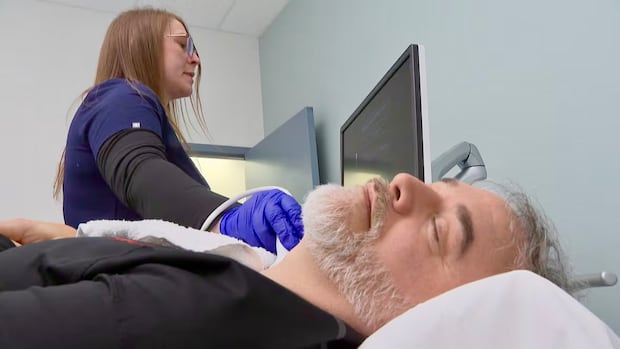
People waiting for an ultrasound in the Halifax area might be receiving a call to go to a new student-run clinic through Dalhousie University’s School of Health Sciences.
The clinic has quietly been seeing patients from Nova Scotia Health’s waitlist since October, but it officially opened on Tuesday.
“So far, patients have been interested in learning about ultrasounds, so they’re really learning along with the students,” said Jennifer Kressebuch, an instructor with the program.
The idea for the clinic was inspired by a similar program in British Columbia, and works to help two challenges facing sonography in the province: staffing shortages and long waitlists.
Pamela Goulden describes the need for sonographers in Nova Scotia as “massive.” She works alongside Kressebuch at the School of Health Sciences.
“I don’t think there’s any department in the province that wouldn’t look to hire students that are graduating,” said Goulden.
Three years ago, Dalhousie doubled the class cohort to train 16 students a year. But those students need on-the-job experience to graduate, and the health-care system doesn’t have room for them all.
So the school came up with the solution of the clinic. The instructors supervise the students, who work on real patients from Nova Scotia Health’s waitlist.
According to the province’s posted wait times, some patients in the Halifax area can wait as long as a year for their appointment.
“It really is helpful for the students because then they get the hands-on time with a patient but also hands-on time with an instructor who can guide them through how to obtain more challenging views,” said Kressebuch.
“It’s certainly different scanning a real-life patient who can have pathologies and other things like that compared to scanning their classmates and labs.”
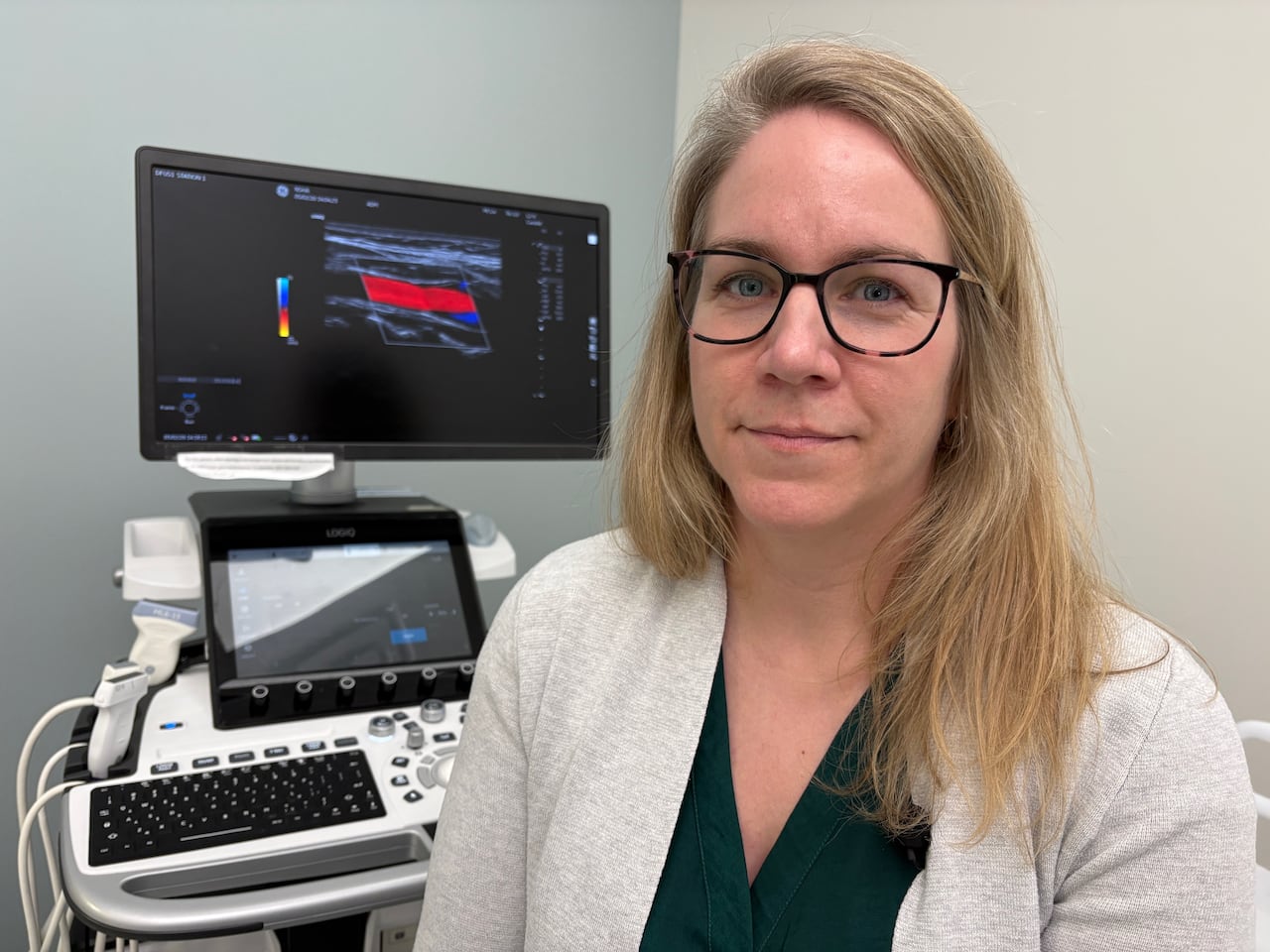 Pamela Goulden, one of the educators overseeing the ultrasound clinic, says it took two years to figure out the logistics in order to open the space. She believes it will play a big role in helping Nova Scotia’s shortage of sonographers. (Carolyn Ray/CBC)
The clinic is not accepting calls for appointments or walk-ins. Instead, it will be calling patients from the Nova Scotia Health waitlist who have cases that fit the learning modules from each semester.
The hours will also vary, depending on where students are in their education — at times operating just once a week and up to five days a week later in the term.
Students take their time, sometimes working with a patient for an hour, to make sure they’re getting it right.
The results are sent to Nova Scotia Health to be analyzed by radiologists.
Sophie Carmichael, who is in her third year of the program, has completed some training in hospitals. She said she appreciates the slower pace in the clinic while she’s still learning best practices.
“I really like the patient interaction, and I know that I’m playing a role in helping patients feel better as an end goal,” she said.
“If I can be a part of the change to our health-care system, that’s kind of what’s in it for me.”
Catherine Gunn, director of the School of Health Sciences, said the effort has been a great collaboration between the university and the health authority’s diagnostic imaging department.
The ultrasound clinic is in the same space as the lung clinic that opened in November. It offers spirometry tests to those with breathing issues.
While that side of the clinic is privately funded, the ultrasound portion is not. Gunn is hoping that they can prove this model can also make a difference, and eventually get funding to expand.
Right now, they’re seeing patients in two rooms, but have two empty rooms that could be used in the future.
“We would need to have hired staff in order to do that,” said Gunn. “At the moment our goal is to get more students into the workforce so we actually have staff to draw from.”
MORE TOP STORIES