
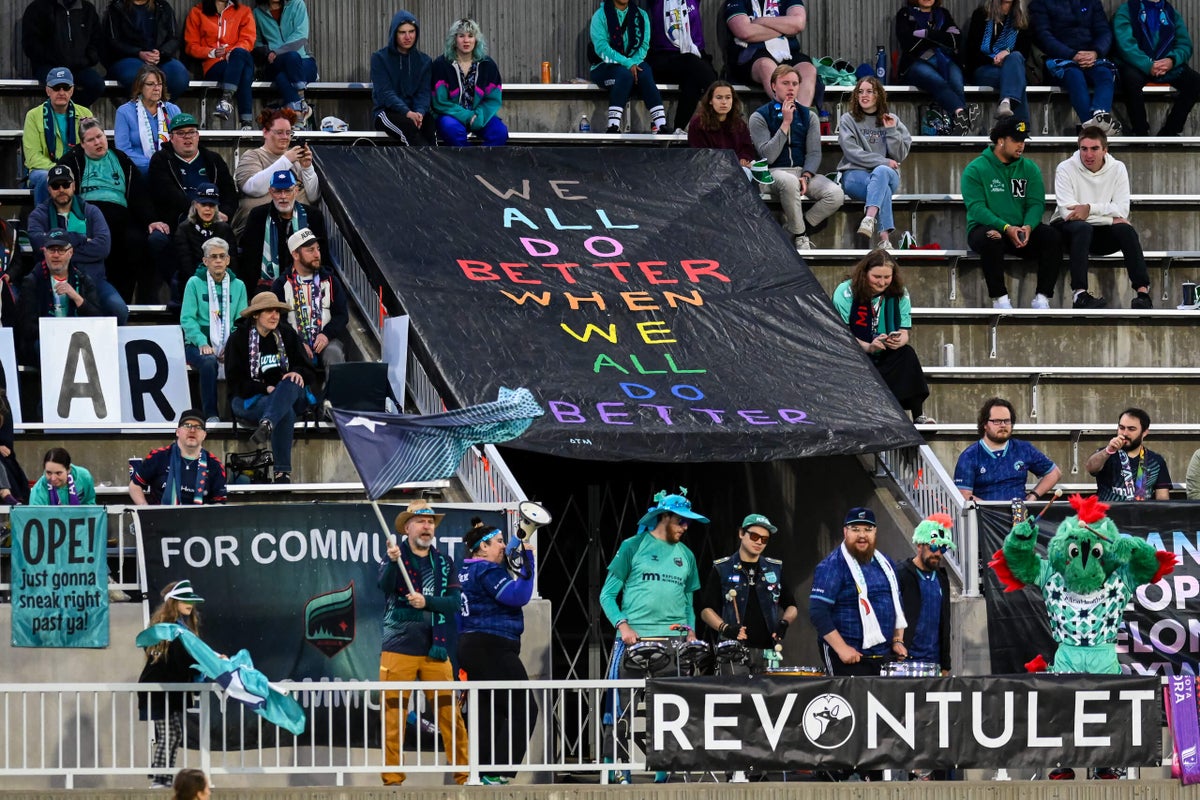
For Minnesota Aurora FC team president Saara Hassoun, there was no debate about whether the USL W team would speak out against U.S. Immigration and Customs Enforcement (ICE) and its presence in the state.
The question was: What would they say? And how could they make a tangible impact in their community?
“It has been something that we never shy away from,” Hassoun told The Athletic. “We really feel the responsibility to speak up, but I also feel a responsibility to protect my staff and protect the people who are in and around Aurora. We started having those conversations in December, so they’ve only escalated, and we’ve only continued to refine our approach.”
Minnesota Aurora is a community-owned women’s soccer club that plays in the pre-professional league, USL W, helping enhance the pathway from college to professional soccer.
Founded in 2021, the club has more than 5,000 investors from around the world and was established to “bring community-driven soccer to the Twin Cities,” according to the organization. The club’s average attendance has regularly reached 5,000 since 2022.
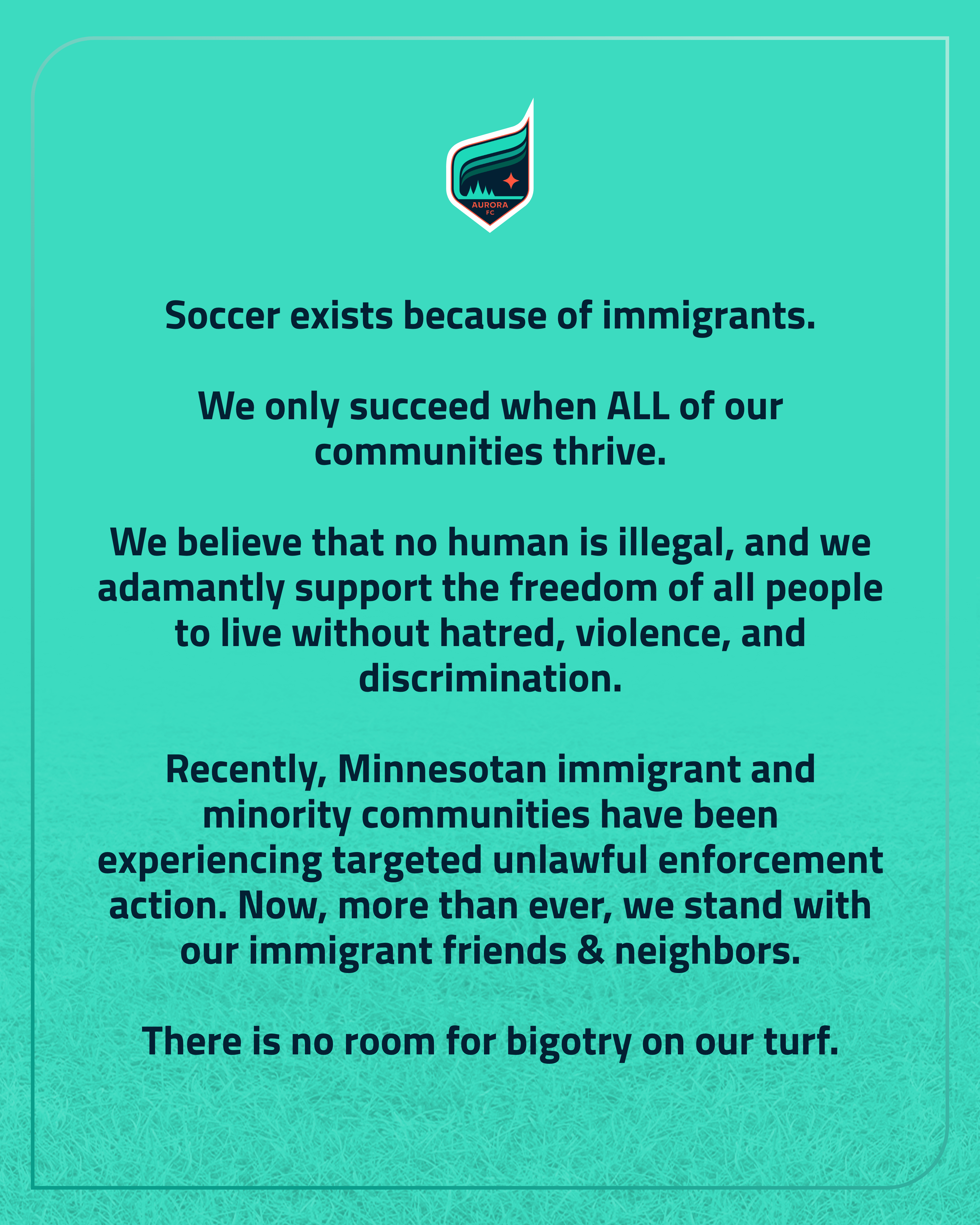
On Dec. 17, 2025, Aurora put out its first statement. It was simple: “Soccer exists because of immigrants.”
Earlier that month, the U.S. government launched Operation Metro Surge, a large-scale immigration enforcement operation run by the Department of Homeland Security in an effort to increase deportations.
Aurora said, in the wake of “targeted unlawful enforcement action,” the team would “stand with our immigrant friends and neighbors.” They directed people to the Immigration Defense Network; a local rapid response and constitutional rights advocacy group named Monarca; and Unidos Minnesota, a local grassroots organization focused on working families affected by social, racial, and economic injustice.
It was in December that co-founder and board member Wes Burdine noticed grassroots soccer matches with mostly Hispanic players getting canceled around the Twin Cities.
Burdine, who also owns LGBTQI+ soccer bar The Black Hart, said the rosters in the youth soccer leagues that his child competed in started to thin as ICE raids became more prevalent across St. Paul and Minneapolis in late 2025. Burdine went weeks without seeing children or parents.
“Kids on his team weren’t showing up to practice,” Burdine told The Athletic. “This is why you say soccer and community are intertwined. This is exactly how it affects soccer because soccer is a way that we want to live our lives, and 11-year-old kids should be able to play soccer. They should be able to have fun with their teammates and live their lives.”
Tensions rose in January when video and images from the Twin Cities area showed agents grabbing U.S. citizens, detaining children and threatening protesters. Matters came to a head after federal agents shot and killed two people, Renée Good and Alex Pretti, in Minneapolis.
On Jan. 18, a day after Good was killed, Aurora made its second statement, penned by Hassoun.
“Whether you are in Minnesota or watching from afar, we want to affirm that what is happening is very real and very scary,” she wrote.
Like many Minnesota businesses, Aurora closed its office and operations on Jan. 23 to march in the streets against ICE, demanding accountability and policy change. “No work. No school. No shopping,” the team said via statement.
Federal agents shot and killed Pretti the next day.
“If the goal was to achieve peace and safety, this is doing exactly the opposite. If the goal was to achieve calm and prosperity, this is doing exactly the opposite,” Minneapolis mayor Jacob Frey said in a press conference on Jan. 24. “Are you standing up for American families or are we tearing them apart?”
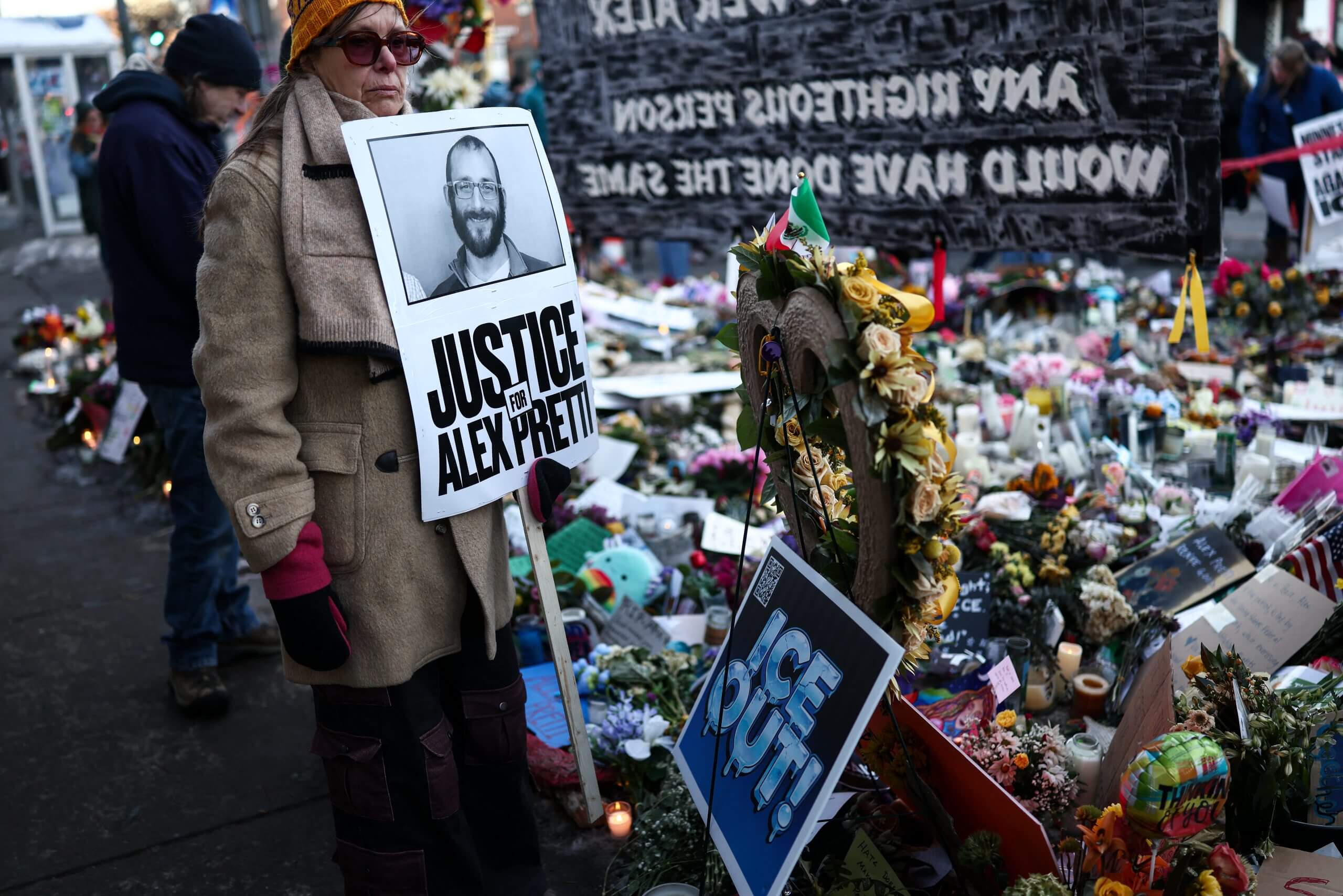
Tensions came to a head in Minnesota after federal agents shot and killed two people, Renée Good and Alex Pretti. (Charly Triballeau / Getty Images)
Thousands in Minnesota, including Aurora, joined another coordinated national action to strike and cease operations on Jan. 30.
“The things that you see are not exaggerated,” said Hassoun. “I’m constantly driving down the street and scanning for cars that look suspicious and scanning for people that look like they might be part of this occupation.”
Aurora has also chosen to make changes within its own organization, including locking doors to their offices and team store.
“We’ve stopped in-person shopping. Locking doors, driving people to work who feel threatened,” said Hassoun. “We have staff who are out on the front lines and feel very comfortable with that. They feel that that’s their place, and that’s something that they get called to do, and their definition of personal safety and where we need to draw that line on their behalf, is very different from other staff who are a part of certain communities who, frankly, are not coming into work right now.”
Like many in Minnesota, Hassoun is balancing community aid with her day job. The new USL W season is less than three months away, and Aurora is actively recruiting players, with safety a primary concern.
“We balance this concept of safety first and foremost. Can we keep them safe? Where are we going to put our players this summer, in terms of those coming from out of state? Where are we going to house them?” Hassoun said.
Aurora has a standard of excellence to maintain on the pitch, too. Since the inaugural season in 2022, the club has yet to lose a regular-season game (W33-L0-D5), and has won the Heartland Division in all four of its campaigns.
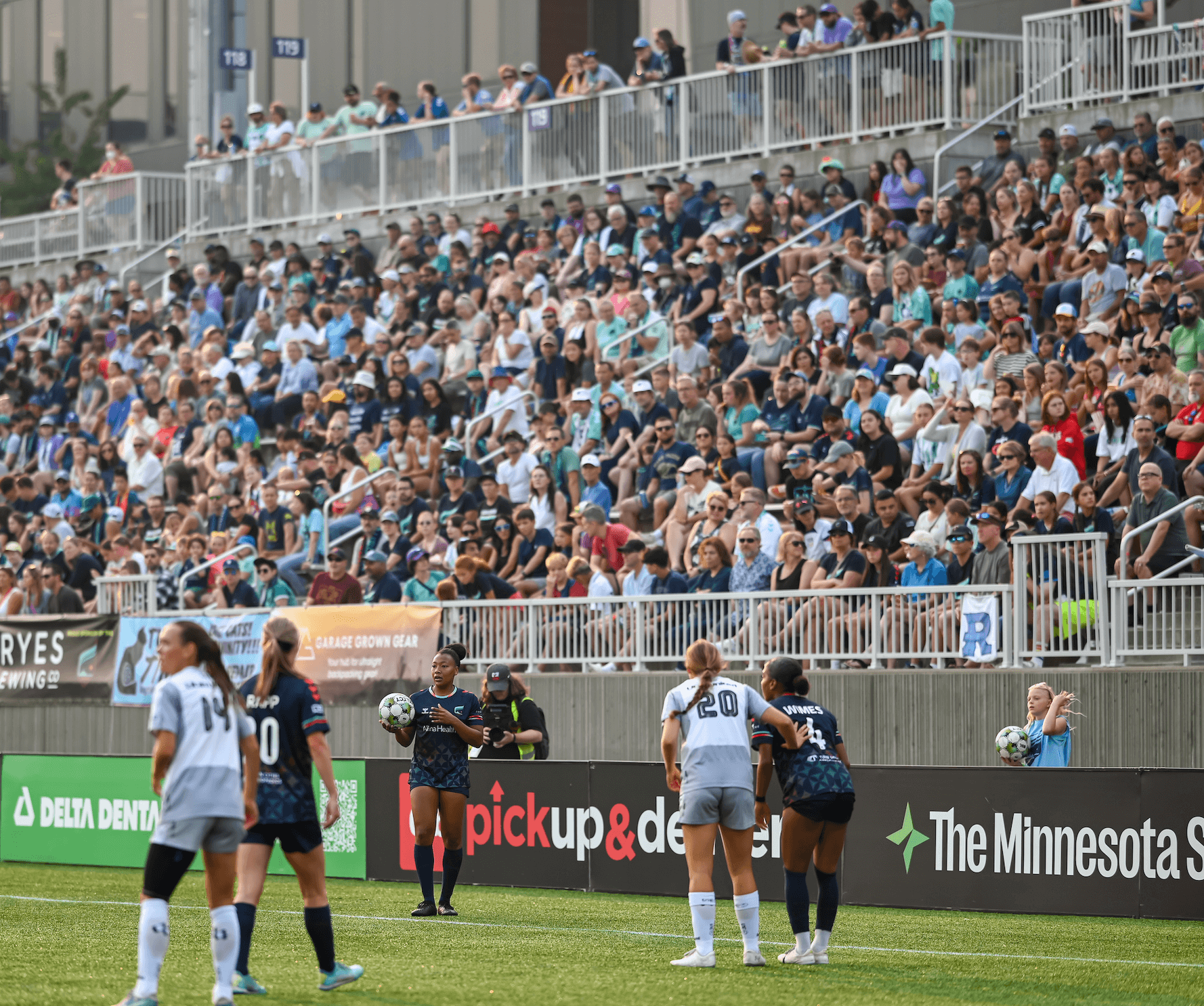
Minnesota Aurora has yet to lose a regular-season game in its four-year history. (Daniel Mick / Minnesota Aurora)
Hassoun calls it “cognitive dissonance” to swing like a pendulum back and forth — from meetings about ticket sales, budgets and scouting reports to checking in to make sure people made it back safely from being out in the streets.
However, in her view, that’s what makes putting on the Aurora jersey different from many other teams.
“When you come to play on this team, you are joining a community, you are representing something that means a lot to people, and there’s a responsibility that comes with that,” said Hassoun.
Financial relief is top of mind during this time. Hassoun, Burdine, and former vice chair Jamie Becker-Finn coordinate securing gas cards, groceries, diapers and donations for community members who need them. There are members of the community who, they say, have been unable to get groceries for over a month due to fear of being taken by ICE.
The club wants to put its money where its mouth is, which means getting sponsors involved, too.
Realtor Nate Pentz, of Pentz Homes, who first sponsored “autograph alley” at Aurora home games, is one of those team sponsors who has increased his involvement and donations during this time.
For the 2026 season, Aurora has partnered with Immigrant Law Center of Minnesota (ILCM), a local non-profit providing legal support and advocacy for immigrants and refugees.
With every season ticket sold this year, Aurora will donate $1, and Pentz will donate $4 to ILCM. Aurora will also donate 15 percent of revenue from a select merchandise line to the organization.
Aurora begins its 2026 season against Rochester United on May 21 in the first of six home games at TCO Stadium in Eagan, MN.
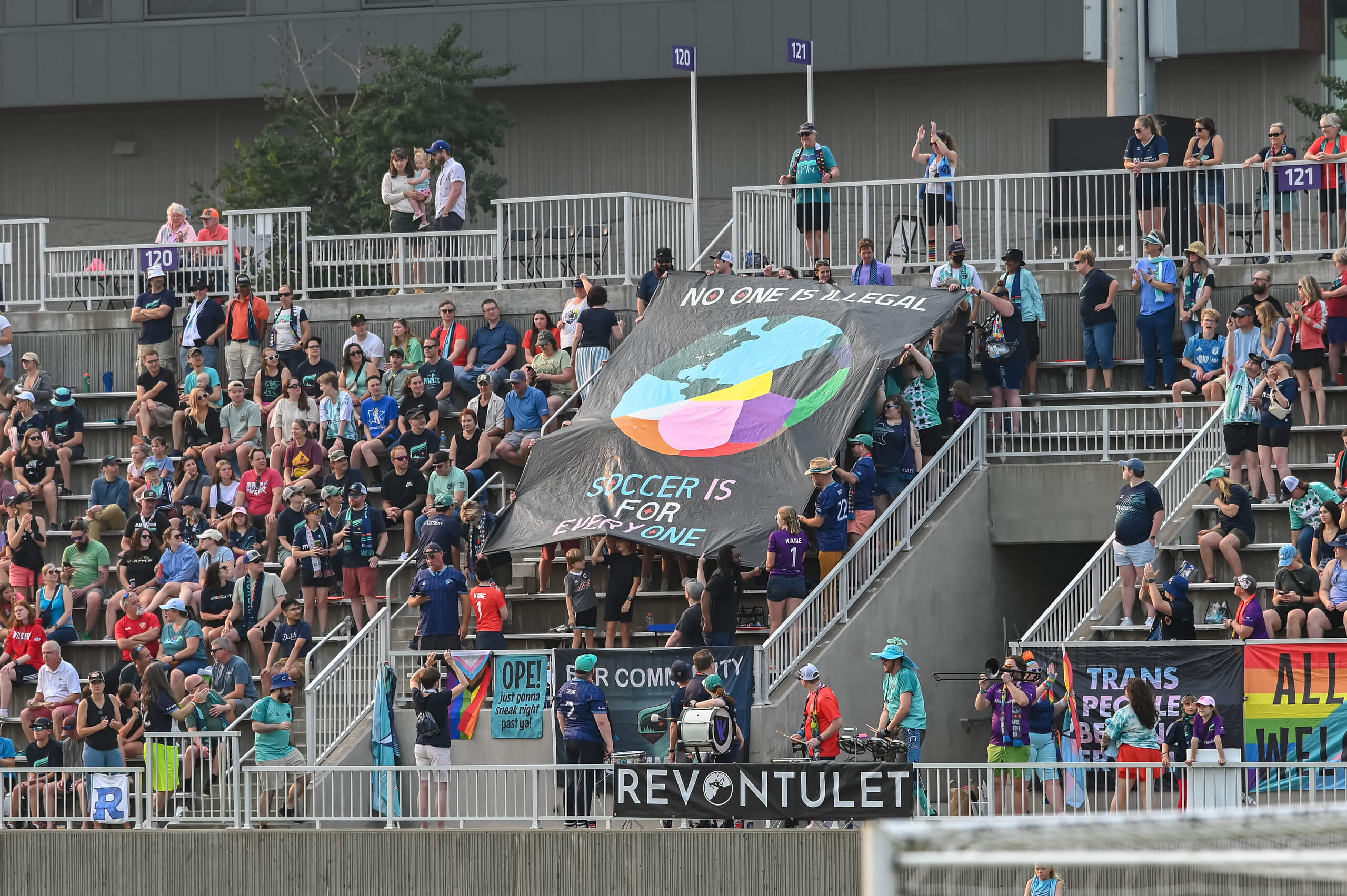
For every season ticket this year, Aurora will donate $1 to the Immigrant Law Center of Minnesota. (Revontulet)
“We really want to put our money behind what we say, what our values are. We really support the vision of what Aurora is doing,” Pentz told The Athletic. “We want to be part of that. It’s a really huge need right now.”
Pentz has also been raising funds for Latin, Asian and Arab businesses in the area that have had their revenue and physical safety directly impacted by ICE. Working in real estate, he said he sees firsthand how clients and people across his community are directly affected by the raids.
He added that he knows second- or third-generation American citizens who are leaving the house with their passports, while others question leaving the house at all, in fear of official documents being confiscated or discarded by ICE.
“We have a duty to speak out, because what’s occurring here is a violation of our constitutional rights or human rights. It’s right and wrong,” Pentz said. “This is a very clear black and white, moral and immoral issue. What we’re seeing is people being targeted and harassed because they look like they might be an immigrant.”
The road ahead in Minnesota feels uncertain. But for Aurora and its community, the path has never been clearer.
“It’s a two-way road,” said Burdine. “We have a community that supports our soccer team, and we have a soccer team that supports our community.”