

Listen to this article
Estimated 4 minutes
The audio version of this article is generated by AI-based technology. Mispronunciations can occur. We are working with our partners to continually review and improve the results.
While Maud Lewis paintings routinely sell for tens of thousands of dollars at auction, sometimes they can sell for a lot more due to details such as how a previous owner acquired the painting or who owned it.
This was best exemplified in a 2022 auction when a Lewis painting that was once traded for a grilled cheese sandwich and expected to get a maximum $35,000 at auction ended up selling for $350,000.
Lewis lived in poverty in Digby County, N.S., selling her paintings for no more than $10 apiece, but became famous after a 1965 CBC News story. She died in 1970.
For Ethan Miller, the CEO of Miller & Miller, a New Hamburg, Ont., auction house, he’s excited to see what happens at a Thursday folk art auction that includes several Lewis paintings. But one stands out because of its backstory.
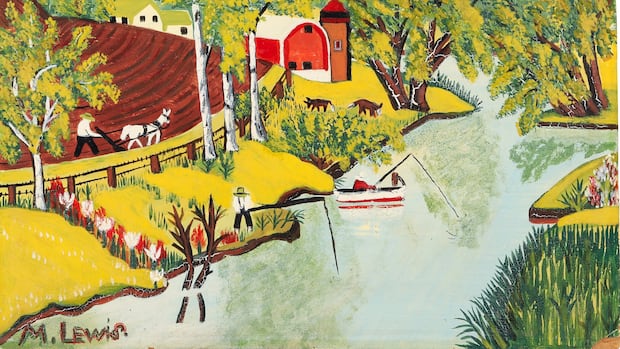
That piece is a 1940s Lewis painting showing a farmhouse, barn, silo and church spire, as well as individuals plowing with a horse, fishing from a bank and another fishing in a boat.
The image is a lot more detailed than the later works people associate with Lewis, such as oxen and cats, which she often reproduced in great numbers, said Miller.
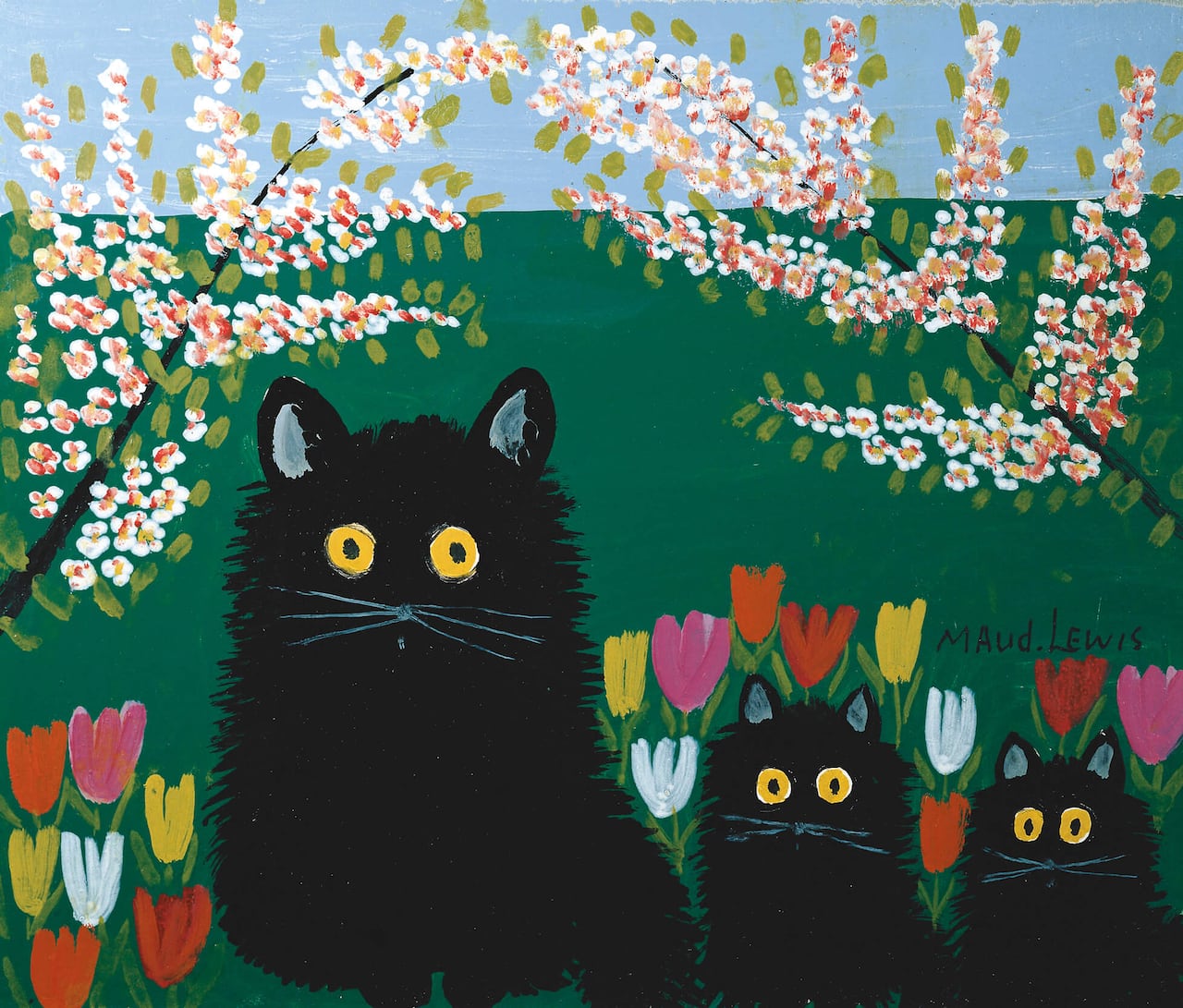 The fine detail of the painting up for auction stands in stark contrast to the more simplistic works Lewis became known for, such as Three Black Cats. (Art Gallery of Nova Scotia)
He said this painting is expected to sell for between $35,000 and $50,000 — or much, much more.
“Some of them are quite predictable,” he said. “And then you have what we call wild cards. This certainly has all of the elements of the wild card.”
In this case, the wild card is that the original owner was Marian Frances Porter, a late Nova Scotian who was the first female flying officer to parachute on an organized training course with the Royal Canadian Air Force, a feat she accomplished in 1951.
“When that lineage of ownership has a very interesting story, such as this case where we have a Canadian, female pioneer in the RCAF, doing something for the first time ever, it adds to that excitement, the excitement of the provenance,” said Miller.
Porter’s daughter, Janie Porter, said her mom was a humble person who didn’t speak a lot about her experiences until later in life when she became ill.
Porter said that as the family went through her possessions and saw newspaper clippings and photos from her Royal Canadian Air Force days, they asked questions. Her mother talked about doing pararescues — administering medical aid after parachuting to a site — and sometimes being the only woman at an air force base.
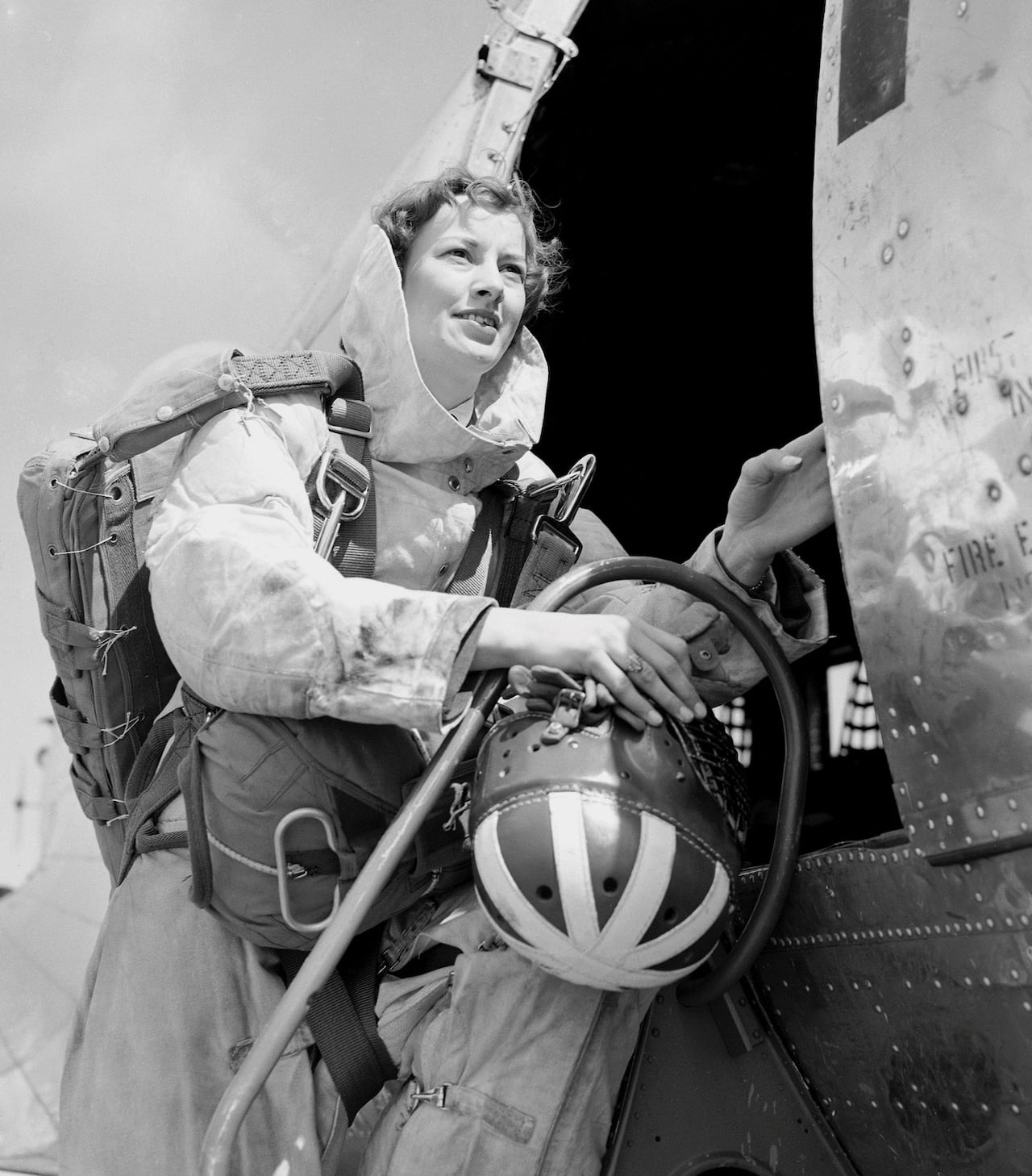 Marian Frances Porter (née Neilly) is shown during her time as a flying officer with the Royal Canadian Air Force. (Department of National Defence/Submitted by Janie Porter)
“It was wonderful to hear the bits that she told us … [but] she downplayed, she’d [say], ‘Oh that, dear,'” said Janie Porter.
After leaving the military, Marian Porter served as a public health nurse in Nova Scotia.
Janie Porter said it’s unclear how her parents got the Lewis painting, but they had a love for local artists and it was a hobby of theirs to acquire art directly from the artists and display them on their walls.
The painting is a personal favourite for Janie Porter. She liked its colours and found it different from Lewis’s other work. She remembers it hanging first in the family’s Chester Basin, N.S., home and most recently in Halifax before Marian Frances Porter’s death in 2023.
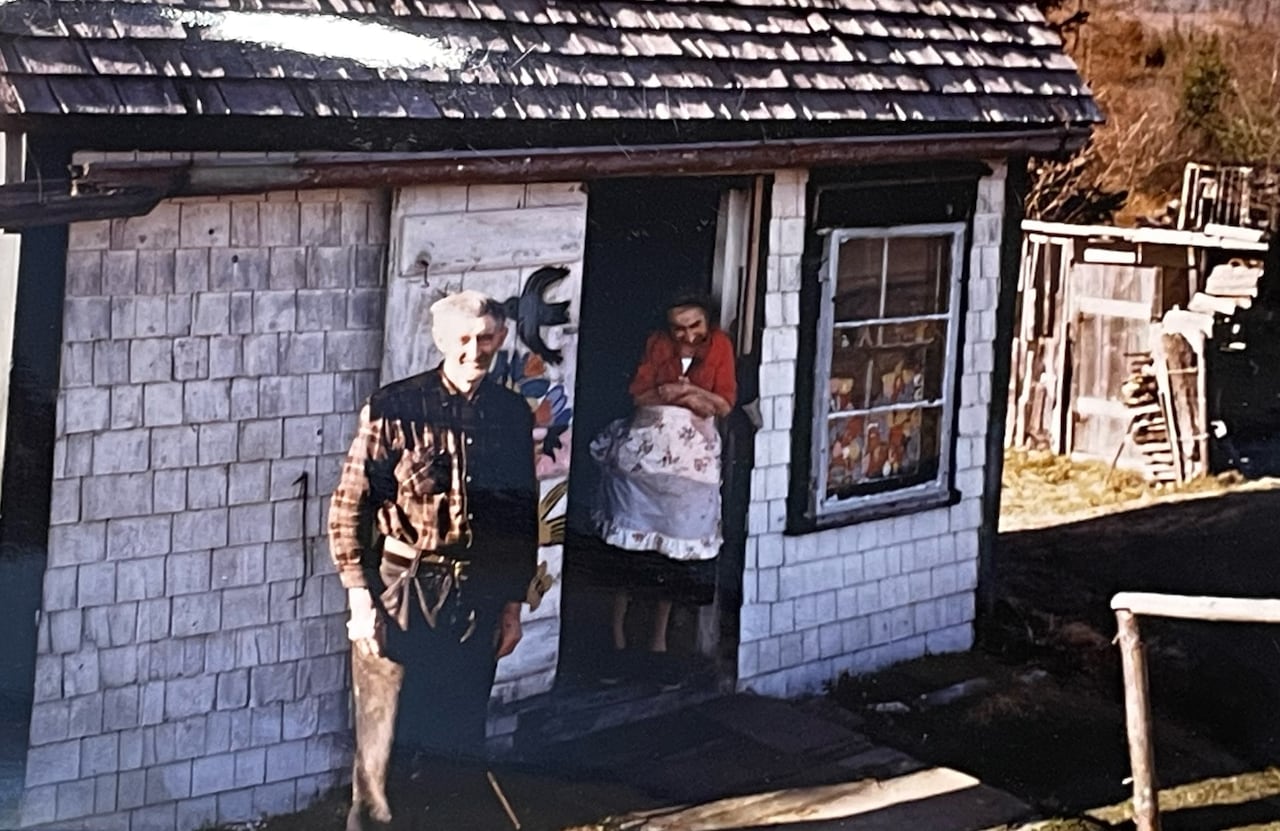 This undated photo of Everett and Maud Lewis was captured by Janie Porter’s parents on a visit to the Lewis’s Digby County, N.S., home. (Submitted by Janie Porter)
Parting with the painting is somewhat difficult for Janie Porter.
“It represents to me the whimsical side of my mother that not everybody knew,” she said. “She was very quiet, but downright funny. She had a quick-wit sense of humour that not everybody got to see, only those closest to her really saw.
“She was very giving, so when I look at the art pieces, it reminds me of all of those great qualities that she had.”
Miller said it’s important to remember Lewis’s work is folk art, meaning art created by people without any formal training.
He said this is why the story behind the artist and the story behind how paintings are acquired influence their value.
“They didn’t have the advantage of the formal art training that many privileged artists do,” said Miller. “They were creating work based on their intrinsic skills and that’s what makes folk art so exciting.”
MORE TOP STORIES