
“Moral indignation is not conducive to my best results,” says Rebecca Erbelding (Philippine Velge), a young curator at the United States Holocaust Memorial Museum, as this quietly devastating documentary drama from Tectonic Theater in New York makes its London premiere at Theatre Royal Stratford East. She and her boss have been poring through an album of newly found pictures from the Auschwitz concentration camp, 116 of them over 32 pages: snaps of guards, senior officers, families, doctors, female radio operators. No inmates, no Jews. She asks her boss how she keeps going. By focusing on the details, she is told. Too much big picture can do you in.
So for the most part this forensic 90-minute show leaves us to fill in the big moral picture for ourselves. The director Moisés Kaufman and his co-writer Amanda Gronich started work on it after The New York Times printed some of the pictures in 2007, when an 87-year-old American officer donated them to the museum.
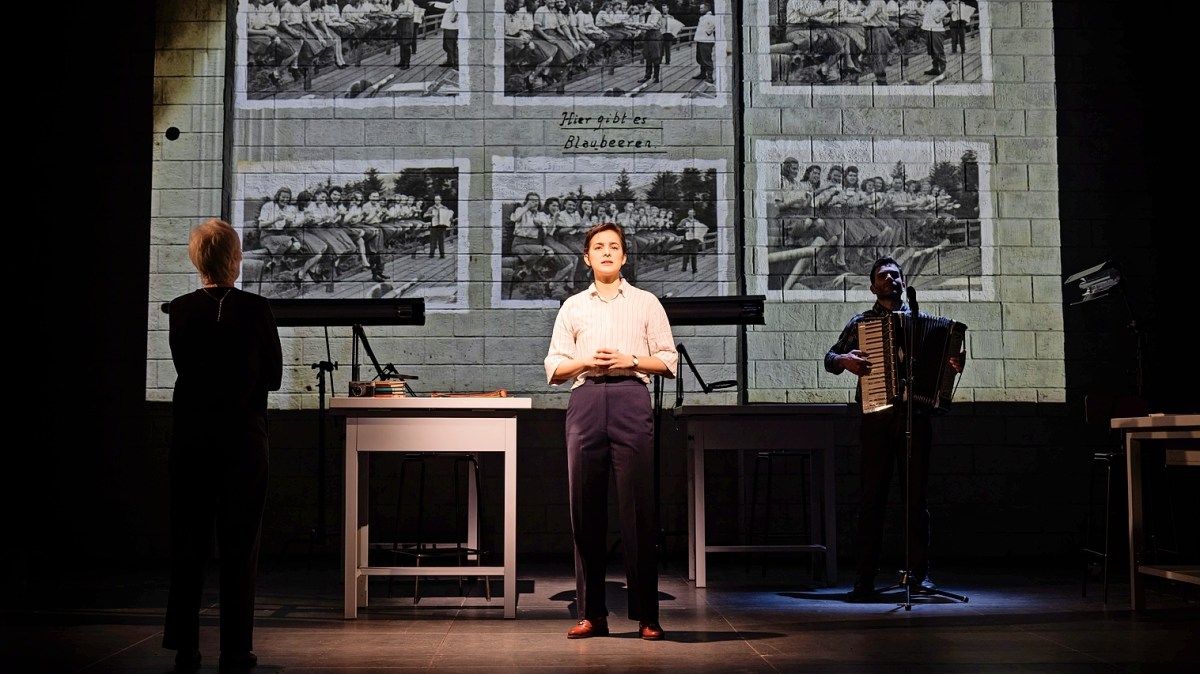
Derek McLane’s set starts and ends as the museum’s offices but opens up for testimonies, for explanations. It makes way for giant projections of photos on the back wall. It’s extraordinary to see them on this scale. Larky poses. Casual interplay. Key individuals are highlighted: Josef Mengele, “the Angel of Death”. Rudolf Höss, the camp commandant who, as dramatised in the film The Zone of Interest, has a picturesque family house yards away from horror.
• Read more theatre reviews, guides and interviews
Most often we see Karl Höcker, the SS officer whose album it was. We see Höcker, who died in 2000, posing with a group of female radiographers after they enjoy some fresh blueberries. The banality of evil? The word evil is used only once here, by a Nazi publicist whose belated self-knowledge carries a lot of moral weight near the end. “Our great and terrible mistake was made up of countless smaller mistakes.”
Kaufman’s show embraces complexity even as it addresses the worst of humanity. The mood is urgent but calm as the largely British, entirely American-accented cast of eight fill us in on details such as Solahütte, the nearby Polish resort where officers might go for some R&R. It’s 1944, the German war effort is collapsing, yet there is a Christmas party for officers’ children.
I’ve given this top marks, five out of five, but it feels uncomfortable to do so. Was I absorbed enough? Surprised enough? Horrified enough? Did I weep? Yes to all of the above. I urge you to see it but while it’s a fine start for Lisa Spirling, the theatre’s new artistic director, she’s unlikely to programme anything else like it. It plays by its own rules.
At the end of the drama pictures of the victims appear and, after everything we’ve heard and seen, they sting in a way familiar yet new. The impact is every bit as awful as it needs to be.
★★★★★
90min
Theatre Royal Stratford East, London, to Feb 28, stratfordeast.com