
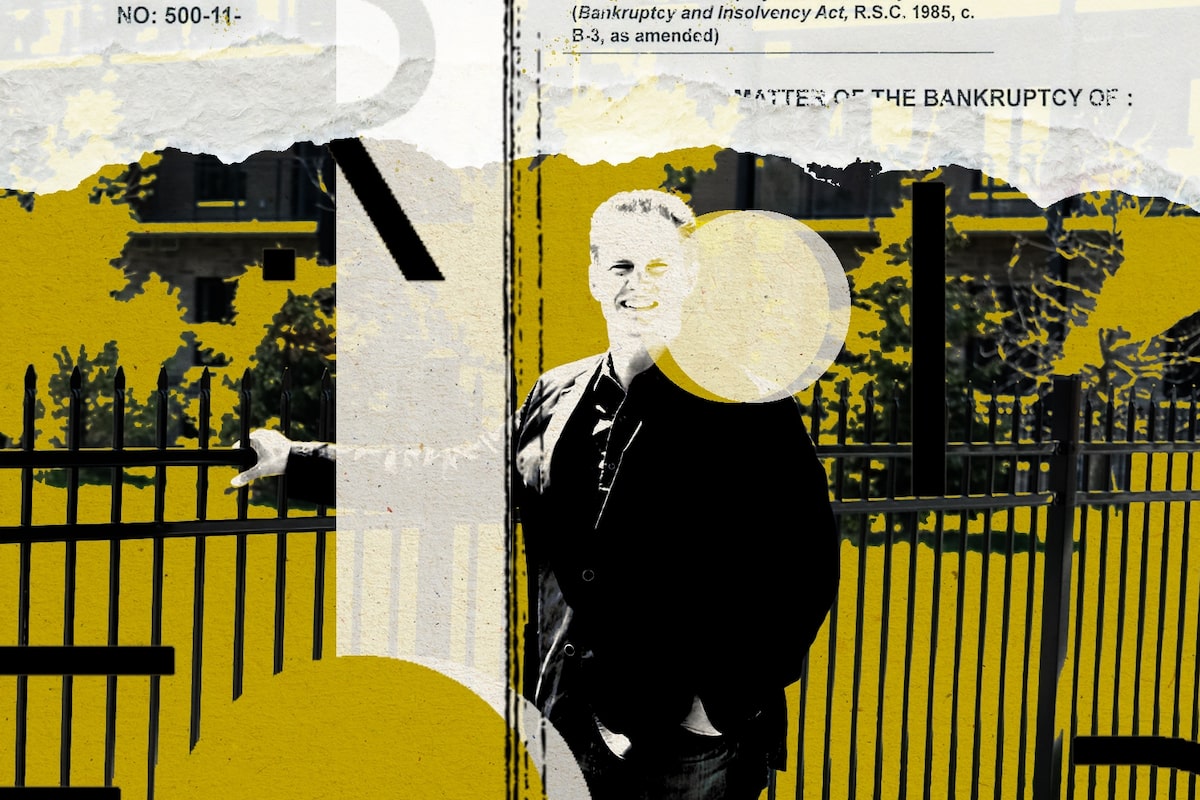
In the early months of 2025, the staff of Reid’s Heritage Properties were growing accustomed to a familiar scene. People would arrive at the office, begging to see president Scott Reid. Some would start crying. Others were angry, according to people who witnessed these visits.
They’d given millions to Mr. Reid in private real estate investments, but now, inexplicably, their monthly disbursements had stopped. These investors – who included retired teachers, single mothers, the deputy chief of police’s brother and the former coach of the local junior hockey team – came from all walks of life in Guelph, Ont., a pleasant, leafy university town of around 162,000 an hour’s drive west of Toronto.
In some cases, families pooled their savings to become limited partners in Mr. Reid’s rental property projects, which were scattered around the province and the United States. It was a profitable arrangement that provided them with reliable interest payments every month – until, suddenly, the money stopped coming.
Scott Reid, former president of Reid’s Heritage Properties (RHP), in 2021. The prominent Guelph developer is accused by his former investors of misappropriating nearly $100-million.Courtesy of Andrew Long/Supplied
The idea that Mr. Reid could run into financial trouble seemed hard to square with his respected image. His family was one of the wealthiest in Southwestern Ontario, known for giving millions to local charities. The Reids, prominent members of an evangelical Christian sect, have been in the construction business since the 1940s and had practically built Guelph, people here liked to say.
And yet, by July, 2025, Mr. Reid was bankrupt. His network of companies, part of a real estate empire that boasted $300-million in assets in 2023, was in receivership. He was hounded by creditors, his sprawling estate home was sold off, his office was closed and he’d left town for Northern Ontario.
“There are families who lost everything because of this,” said Andrew Long, a former business partner who brought many of the investors to Mr. Reid, and says his own family lost more than $1.7-million. “All we want to know is, where did that money go?”
The collapse of Reid’s Heritage Properties has left 182 creditors owed a combined $94.3-million, and pushed some investors into financial ruin. One woman, a 65-year-old widow, said she was forced out of retirement because of her losses. Another said she was reduced to living in a garage. Others said they had to sell their homes as a result.
Mr. Reid’s stunning downfall is being investigated by the Ontario Provincial Police’s financial crimes unit. But was his insolvency caused by market conditions and rising borrowing rates, as he argues, or a deliberate attempt to misappropriate his investors’ money, as some of them have claimed?
In an August decision that ordered the freezing of Mr. Reid’s assets, Ontario Superior Court Judge Jamie Trimble wrote that there’s strong evidence Mr. Reid, his wife Shelley, chief financial officer Todd Neill and president Melissa MacGregor were “operating a Ponzi scheme.” His investors, who are now suing him, say the surprising cast of characters he did business with while jetting to Dubai and Panama suggests more than just poor judgment.
Vale Station Apartments in Waterloo and URBN Lofts in Guelph.
Jonah Atkins/The Globe and Mail
Atwood Suites and Marquis Modern Towns in Guelph. The four Ontario properties are some of those developed by RHP or one of its affiliated companies.
Jonah Atkins/The Globe and Mail
They allege their money disappeared in a series of unusual intercompany loans, bond transactions and failed U.S. property deals that they say were not fully disclosed to them. Until the very end, Mr. Reid reassured his investors the financing that would solve his liquidity problems was indeed coming – but failed to acknowledge serious red flags around his would-be lenders, including a man he simply referred to as “Dr. Fritz” in calls and e-mails with investors.
As his real estate projects collapsed, it’s alleged Mr. Reid did not make his business partners aware that he was entering the bankruptcy process, and spent months restructuring his assets to protect them from creditors. He denies this, and insists he was only trying to do whatever he could to save his businesses.
In a statement, Mr. Reid said he is co-operating fully with the legal process, and disputed there was any intent to deceive his investors.
“I categorically deny all allegations made by the plaintiffs. There are substantial details that have not been disclosed, and allegations that are materially misrepresented, which will become clear through the judicial process. I look forward to that process, where all facts and evidence will be properly examined,” he told The Globe and Mail in an e-mail.

Where did all the money go?
This graphic is an example of how investors funded Scott Reid’s rental apartment construction projects, in an arrangement that functioned similarly to private REITs. In September, 2024, monthly returns stopped flowing back to investors, after they allege their funds were siphoned off in what an Ontario Superior Court Judge said appeared to be a Ponzi scheme. Mr. Reid denies this, and says market forces are to blame for his financial collapse and bankrupcy
FIRST: Scott Reid’s company structured private loan agreements, documented by a General Security Agreement (GSA) and Promissory Note, that will pay the investor back 9-12 per cent, with monthly payouts.
THEN: Funds are deposited into CIBC accounts held by Mr. Reid’s companies. Investors were told these funds would function as bridge or “mezzanine-style” capital to advance projects to a stage where lower-cost, traditional bank construction financing would be obtained.
FINALLY: After lower-cost construction financing was secured, typically within within 18-36 months, the investor would be paid out and would often reinvest in a new project.
BUT: In September, 2024, these arrangements broke down, and investors’ monthly payments suddenly stopped. In a lawsuit, investors allege their money was siphoned out of Mr. Reid’s projects and sent offshore, including to Dubai.
greg mercer and john sopinski/the globe and mail
Source: court filings

Where did all the money go?
This graphic is an example of how investors funded Scott Reid’s rental apartment construction projects, in an arrangement that functioned similarly to private REITs. In September, 2024, monthly returns stopped flowing back to investors, after they allege their funds were siphoned off in what an Ontario Superior Court Judge said appeared to be a Ponzi scheme. Mr. Reid denies this, and says market forces are to blame for his financial collapse and bankrupcy
FIRST: Scott Reid’s company structured private loan agreements, documented by a General Security Agreement (GSA) and Promissory Note, that will pay the investor back 9-12 per cent, with monthly payouts.
THEN: Funds are deposited into CIBC accounts held by Mr. Reid’s companies. Investors were told these funds would function as bridge or “mezzanine-style” capital to advance projects to a stage where lower-cost, traditional bank construction financing would be obtained.
FINALLY: After lower-cost construction financing was secured, typically within within 18-36 months, the investor would be paid out and would often reinvest in a new project.
BUT: In September, 2024, these arrangements broke down, and investors’ monthly payments suddenly stopped. In a lawsuit, investors allege their money was siphoned out of Mr. Reid’s projects and sent offshore, including to Dubai.
greg mercer and john sopinski/the globe and mail
Source: court filings

Where did all
the money go?
This graphic is an example of how investors funded Scott Reid’s rental apartment construction projects, in an arrangement that functioned similarly to private REITs. In September, 2024, monthly returns stopped flowing back to investors, after they allege their funds were siphoned off in what an Ontario Superior Court Judge said appeared to be a Ponzi scheme. Mr. Reid denies this, and says market forces are to blame for his financial collapse
and bankruptcy
FIRST: Scott Reid’s company structured private loan agreements, documented by a General Security Agreement (GSA) and Promissory Note, that will pay the investor back 9-12 per cent, with monthly payouts.
THEN: Funds are deposited into CIBC accounts held by Mr. Reid’s companies. Investors were told these funds would function as bridge or “mezzanine-style” capital to advance projects to a stage where lower-cost, traditional bank construction financing would be obtained.
FINALLY: After lower-cost construction financing was secured, typically within within 18-36 months, the investor would be paid out and would often reinvest in a new project.
BUT: In September, 2024, these arrangements broke down, and investors’ monthly payments suddenly stopped. In a lawsuit, investors allege their money was siphoned out of Mr. Reid’s projects and sent offshore, including to Dubai.
greg mercer and john sopinski/the globe and mail,
Source: court filings
For years, investors flocked to Mr. Reid, giving him millions toward the construction of multiunit apartments – making them limited partners in his projects and providing them monthly interest payments, tax-free income that was exempt from capital gains until the end of the loan term or the sale of the property. These arrangements, which paid between 9 and 12 per cent interest, functioned similarly to private REITs, or real estate investment trusts, but were not solicited publicly or registered with the Ontario Securities Commission.
Many investors told The Globe they thought their investments were backed by the Reid family, which owns a larger, privately held umbrella corporation called Reid’s Heritage Homes (RHH). Although RHP was severed from RHH in 2018, the investors insist the lines between the companies were blurred. They’re now suing both firms.
Mr. Reid, who remained vice-president of RHH until 2020 and was a shareholder until 2024, acknowledged he used advisers from RHH when he wound down his companies and entered the bankruptcy process. Marketing materials he circulated after the two companies separated also promoted his family’s track record in the home construction business, a legacy his investors say he used to gain their trust.
In a June, 2023, newsletter where he is pictured posing with a white hard hat in front of a building under construction, Mr. Reid talked about his family’s 74 years as home builders. He said he was “proud to carry on this tradition,” boasting he had $300-million in assets and another $500-million in projects in development.
“People trusted him because of the Reid name,” Mr. Long said. “They thought investing with him was safe, simply because of who his family is.”
Andrew Long, a former business partner of Mr. Reid who brought many investors to RHP. Mr. Long says his own family lost more than $1.7-million when the real estate company collapsed.Sammy Kogan/The Globe and Mail
The larger Reid’s Heritage Homes group has denied having anything to do with Mr. Reid’s rental property business. Tim Blevins, who is RHH’s chief executive and Mr. Reid’s brother-in-law, said the two companies haven’t had any business or financial relationship since Mr. Reid purchased the rental property division eight years ago.
“While signs of Reid’s Heritage Properties’ financial challenges began to appear before the bankruptcy filings, the magnitude of the business failure was shocking,” Mr. Blevins said in a statement.
The first sign of trouble at Reid’s Heritage Properties came in September, 2024, when Mr. Reid told his investors that their interest payments would be delayed because of the Truth and Reconciliation Day bank holiday. He didn’t tell them the Canada Revenue Agency was already garnishing funds from RHP because he’d failed to pay taxes, according to the lawsuit.
A new Reid’s Heritage Homes (RHH) development at 331 Clair Road East in Guelph. Although RHP was severed from RHH in 2018, many investors insist the lines between the companies were blurred, and are now suing both firms. RHH’s chief executive Tim Blevins denies any business or financial relationship with RHP in the past eight years.Jonah Atkins/The Globe and Mail
Behind the scenes, however, Mr. Reid’s financial problems had been going on much longer than that. His version of events, as told in his own bankruptcy hearings and in statements to The Globe, is that his company ran into serious liquidity problems in March, 2022, when interest rates began to rise and he was forced to turn to more risky third-party private lenders to raise capital.
In their lawsuit, his investors allege Mr. Reid used at least $40-million of their money to buy properties around Nashville, which he left undeveloped and borrowed against from private lenders before defaulting on the loans. He blamed what happened in the U.S. on “market dynamics” and said he could not sell the properties when the market turned.
His investors say the Nashville properties are tied to a series of irregular financing deals made with a Cayman Islands-registered company called Demeter Investment Holdings. A report from debt solutions company BDO Canada says Mr. Reid sent Demeter at least $22.9-million of the plaintiffs’ funds, for bonds the investors allege never materialized and were not disclosed to them in Mr. Reid’s monthly newsletters.
A year later, Mr. Reid approved another Demeter loan through a new broker, J. Streicher & Co. LLC – a firm the U.S. Securities and Exchange Commission has flagged for impersonating a genuine brokerage with the same name. In April, 2025, Demeter sued the fake J. Streicher & Co. LLC for US$15.9-million, as part of a failed financing scheme from 2023, according to U.S. legal filings.
By January, 2023, Mr. Reid says, his search for cash for his Nashville projects led him to a consultant in Toronto named Taimour Zaman, who boasts on his website that “you’d get me if James Bond and Bruce Wayne had a lovechild who traded in martinis and batarangs for financial instruments and capital strategies.”
Mr. Zaman confirmed that Mr. Reid attended one of his seminars in Panama in August, 2023, but denied he was involved in any attempt to provide Mr. Reid with what he calls “alternative financing.” Instead, he said, Mr. Reid was interested in learning about standby letters of credit, or SBLCs – a risky financial instrument that the FBI warns presents a significant risk of fraud, primarily because scammers exploit their complex nature and promise unrealistic outcomes.
The consultant said he introduced Mr. Reid to a man who specialized in these kinds of deals – a self-proclaimed financial maverick named Fritzgerald Zéphir, whom Mr. Reid would later introduce to others as “Dr. Fritz.” Within weeks of the Panama conference, Mr. Reid says, he was wiring US$1.2-million to Mr. Zéphir’s Montreal company, JD Euroway, as part of a deal he told The Globe was to provide $150-million in financing over approximately two years.
Fritzgerald Zéphir, also known as ‘Dr. Fritz,’ CEO of Montreal-based financial-services business JD Euroway. Mr. Zéphir is facing a $1-billion bankruptcy case in Quebec, among multiple lawsuits and allegations of fraud elsewhere.Press Office of the Queendom Of Sheba/Supplied
Now, two years later, as creditors pick over the pieces of Reid’s Heritage Properties, Mr. Zéphir has yet to produce a penny of the funds he’d promised Mr. Reid in 2023 using this financial tool. Mr. Zéphir is facing a $1-billion bankruptcy case in Quebec, multiple lawsuits, allegations of racketeering in the U.S. and accusations of fraud that stretch from North America to Ghana involving him and his company.
Mr. Zaman is also suing Mr. Zéphir, claiming his company AltFunds Global is owed a commission on a $20-million SBLC that JD Euroway arranged for Mr. Reid. He said his lawsuit “shows clearly” that Mr. Zéphir’s actions were fraudulent, and insists he’s done nothing wrong.
“I am caught up in this complicated web as an innocent bystander,” Mr. Zaman told The Globe. “I have never collected a single dollar from Scott Reid or any of his investors.”
Mr. Reid told The Globe he was confident the financing deal with JD Euroway was real. The company was registered with the SEC, with declared assets of US$2.3-billion; was on file with the Financial Transactions and Reports Analysis Centre of Canada, or FinTRAC, to operate as a private financial trust; and had offices in Montreal, Dubai and Delaware.
But he appears to have missed warnings around Mr. Zéphir. Just weeks after his first meeting with the private lender, Queen Shebah III, an African tribal leader, publicly fired Mr. Zéphir for breach of trust. She said in a press statement she had a “total loss of confidence” in his “ethics and moral compass,” related to a plan to create a central currency for the African Kingdoms Federation.
Earlier that year, in February, Mr. Zéphir brought a delegation of investors from Qatar and the United Arab Emirates to Cameroon to discuss energy projects. According to local news reports, the delegation was led by a little-known prince from the Qatari royal family, Sheikh Nayef Bin Eid Al Thani, who said he was also a member of the board of directors of JD Euroway.
The former office of RHP in Guelph in December, 2025. The collapse of the company has left 182 creditors owed a combined $94.3-million, pushing some investors into financial ruin.Sammy Kogan/The Globe and Mail
Weeks later, however, the delegation was dismissed as “white-collar criminals” by Rose Manguele, a consultant who helps the Cameroon government find international financing. She told reporters the Qatari prince was actually an Egyptian imposter, and said JD Euroway had defrauded a 2021 public-private project in Ivory Coast, signing fraudulent financing agreements while never producing any funds.
As part of Mr. Zéphir’s bankruptcy, a trustee reported to KPMG they were unable to find any substantive financial books or records for JD Euroway. Mr. Reid, however, said he saw nothing in his dealings with the company that raised his suspicions.
“We did what I would call normal due diligence with his compliance, legal and underwriting team at the time,” he told The Globe. “There were a number of people at the organization and he claimed to have $2.5-billion in assets under management. Other people, including Taimour, vouched for him and told me I was in good hands.”
In May, 2024, Mr. Reid attempted one last deal with Mr. Zéphir – despite the lender’s legal and bankruptcy troubles – to produce elusive financing. He said he was instructed to set up a “sister company” in Dubai, called RHP Project Management Co. LLC, which he said would allow JD Euroway’s Middle East affiliate to provide financing for Mr. Reid’s North American projects.
In August, 2024, Scott Reid filed a $151-million claim against JD Euroway as part a billion-dollar bankruptcy proceeding in Quebec. His investors allege this was not disclosed to them, despite his reassurances for months afterward that much-needed financing from JD Euroway was coming.Supplied
Mr. Reid named his wife, Shelley Reid, as sole director, and continued to pay fees to JD Euroway in Dubai until his bankruptcy. Those payments were among hundreds of thousands of dollars in wire transfers he approved to entities in Dubai in late 2024 and 2025, discovered in Mr. Reid’s financial records. His personal banking statements show he continued to wire tens of thousands of dollars to an investment broker in Dubai even after he was in receivership.
Mr. Zéphir, a “conspirator defendant” in the investors’ lawsuit, did not respond to requests for comment for this story. FinTRAC said JD Euroway’s registration as a financial-services business expired in November and has not been renewed. The agency said it can’t discuss any complaints that may have been filed against the company.
Mr. Long and fellow RHP investors still don’t know exactly how their combined millions were misappropriated by Mr. Reid, and are seeking answers through their lawsuit.Sammy Kogan/The Globe and Mail
Mr. Reid’s investors allege that the confusing journey they say their money took – through an ever-changing network of companies, lenders and transactions – was part of a convoluted attempt to conceal the misappropriation of their investments.
Mr. Long says what happened to Reid’s Heritage Properties was not a business falling on hard times, but something else entirely.
“There’s no other explanation. It doesn’t make any sense and he hasn’t been able to explain it,” he said.