
How the Undersized Argentine Outlasted Powerhouses Like Nadal and Thiem
© AFP

6 min to read
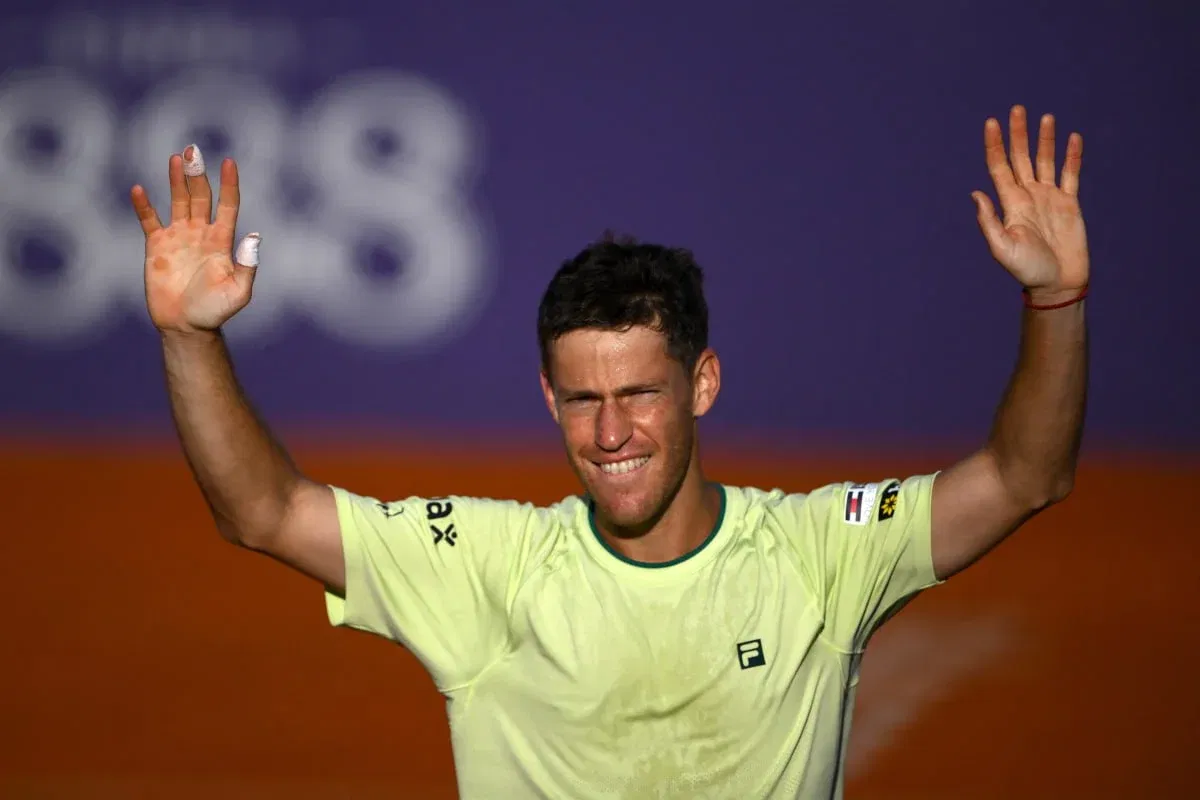
As men’s tennis has evolved into a power battle dominated by towering players, Diego Schwartzman has long stood out as the exception.
At 5-foot-7 (170 cm), the Argentine reached the top 10, made Grand Slam semifinals, and defeated the best players of his generation.
This feature traces the Argentine’s career through two lenses.
The first is athletic: how a player well below average height established himself among the world elite, excelled in Grand Slams, and won ATP titles.
The second is personal: how Schwartzman navigated the physical norms of modern tennis.
t
© AFP
Diego Schwartzman was born on August 16, 1992, in Buenos Aires, into a family with a unique history.
His maternal great-grandfather, a Polish Jew, escaped from a train headed to a concentration camp during World War II.
He then managed to bring his family from Germany to Argentina on a boat.
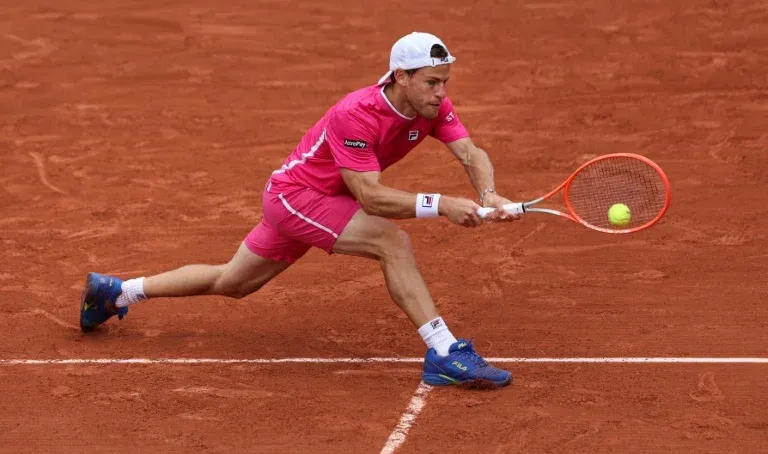
As for his youth, Diego’s size quickly became an issue, and during adolescence, while many players his age were already over 6 feet (1.80 m), he stopped growing.
He ultimately reached 5-foot-7 (1.70 m) as an adult—a height that in modern men’s tennis is almost a handicap.
“My size deprived me of certain weapons,” he told L’Équipe colleagues.
Yet he never used it as an excuse. “I have advantages over tall players and tall players have advantages over me, but I don’t think I have more talent than others,” he explained to Tennis Legend in 2018.
For comparison, the average height of a top 50 ATP player today exceeds 6-foot-1 (1.85 m).
Recent-era leaders like Novak Djokovic (6’2″/1.88 m), Rafael Nadal (6’1″/1.85 m), Andy Murray (6’3″/1.91 m), Daniil Medvedev (6’6″/1.98 m), or Alexander Zverev (6’6″/1.98 m) all measure between 6’1″ and 6’6″.
In this context, Schwartzman stands out as a statistical anomaly.
And from early on, people made it clear his ceiling was limited, with discouraging comments: “You’ll compensate with speed,” “We’ll see how far you go,” “It’ll be tough at the top level.”
Few dared say outright that a player his size could aim for the world elite.
Building a Game Against the Norm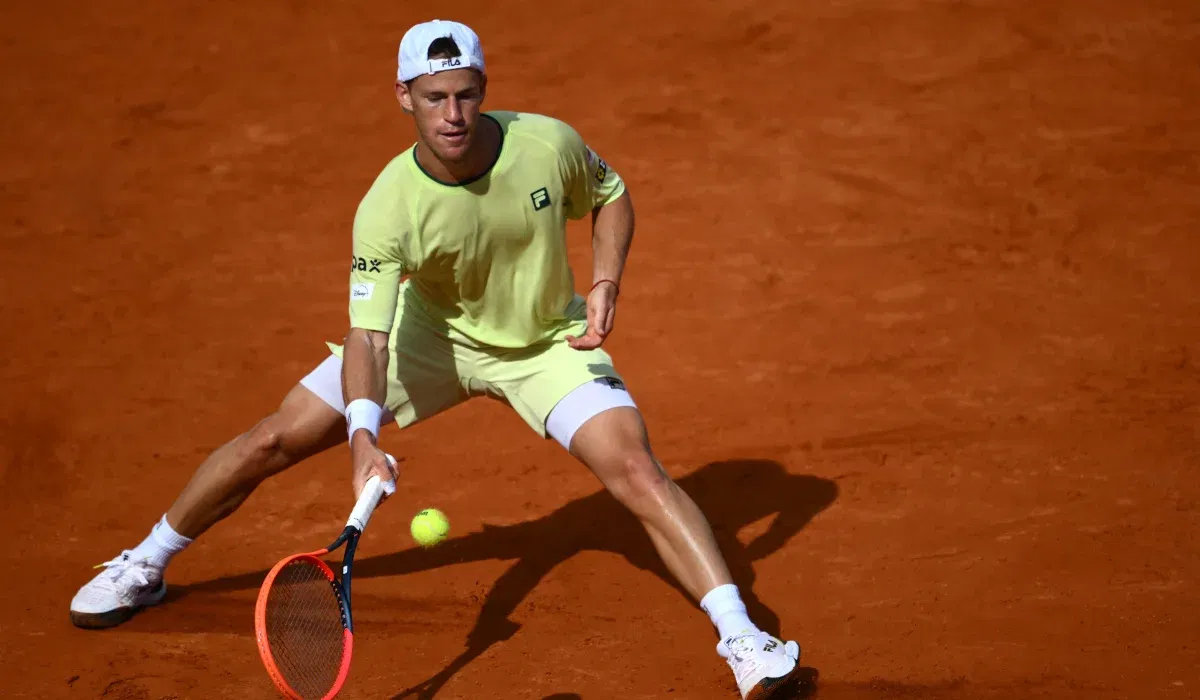
© AFP
Lacking a naturally dominant serve, Schwartzman had to develop other weapons early.
Where tall players rack up free points, he has to battle and play one more shot.
His first serve rarely tops 110-118 mph (180-190 km/h), well below tour standards.
In contrast, his eye for the ball and timing become major weapons. Plus, his low center of gravity gives him exceptional stability in defense.
He’s able to change direction quickly, slide on clay, and counter attackers brilliantly.
Above all, he boasts an outstanding return of serve, one of the best on tour during his prime.
“On return, I’m very good. I know my serve isn’t my strongest shot. A lot of players can attack my serve, so I have to be very strong on return.
These last two or three years, I’ve been returning really well. I always finished among the top five returners on tour.
I still have a lot to improve because taller players are more powerful than me, but I don’t think about my height or my opponents’ height on court. I just try to stay focused and nothing else,” he said to Tennis Legend in 2018.
That’s why Schwartzman realized his career would rely on consistency rather than one-off heroics.
He played a heavy schedule, grinding through ATP 250s and 500s, often on outer courts. But it paid off as he climbed into the top 30, then top 20.
2020: The Peak Year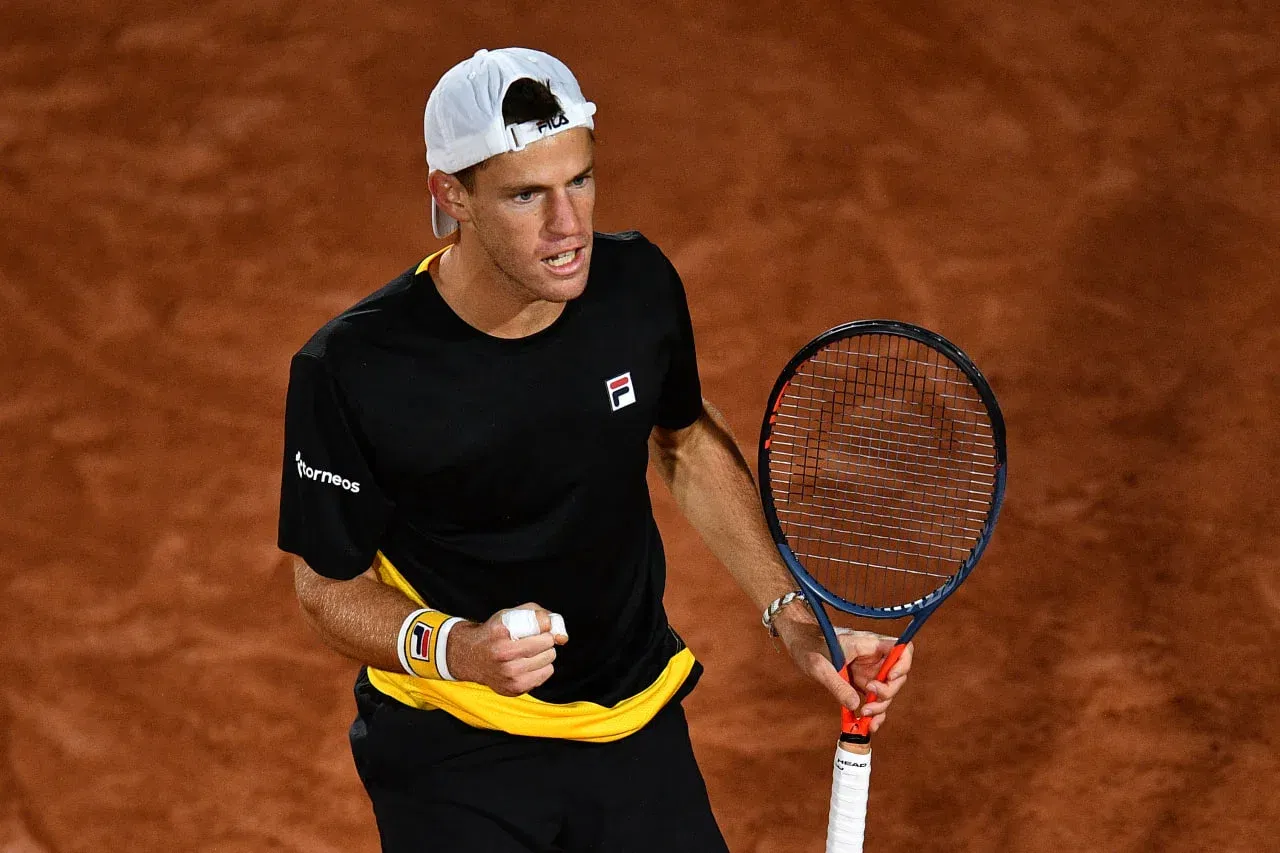
© Diego Schwartzman RG2020 Photo du2019Anne-Christine POUJOULAT AFP
The 2020 season marked a major turning point in Diego Schwartzman’s career.
In a pandemic-disrupted year, he hit his career-high ranking: world No. 8 in October.
This wasn’t a fluke but the culmination of steady progression over several seasons.
At Roland Garros, he delivered his career-best result by reaching the semifinals.
His quarterfinal against Dominic Thiem, won after more than five hours (7-6, 5-7, 6-7, 7-6, 6-2), became one of the tournament’s most memorable matches.
Schwartzman showed exceptional physical and mental resilience, going toe-to-toe with one of the circuit’s strongest clay courters (RG finalist in 2018 and 2019, Barcelona 2019 champion).
This run made him one of the shortest players to reach a Grand Slam semifinal.
Also the shortest to crack the top 8 since 1981, and the shortest to make a Grand Slam semifinal since Harold Solomon (5’6″/1.68 m) at Roland Garros 1980.
He didn’t stop at Porte d’Auteuil, reaching the quarterfinals the next year (lost again to Nadal despite taking a set) and the round of 16 in 2022 (outplayed by Djokovic).
But that’s not all—he made the round of 16 twice at the Australian Open (2018 and 2020) and the quarterfinals twice at the US Open (2017 and 2019).
Toppling the Giants
Throughout his career, Schwartzman beat much taller, more powerful players (including 13 top-10 wins).
He scored victories over Rafael Nadal on clay (Rome 2020), Dominic Thiem (Montreal 2017, Buenos Aires 2019), Alexander Zverev (US Open 2019), Kei Nishikori (Rome 2019), and Marin Čilić (US Open 2017).
These wins never hinged on one dominant shot but on attrition. Schwartzman forces opponents to play extra shots, hit harder, and take more risks.
A Career Built on Consistency
All told, Diego Schwartzman won four ATP singles titles, mostly on clay (Istanbul ATP 250 2016, Rio ATP 500 2018, Cabo San Lucas ATP 250 2019, and Buenos Aires ATP 250 2021), his preferred surface.
But beyond the trophies, it’s his consistency that stands out. For multiple seasons, he finished in the year-end top 20, regularly reached Masters 1000 deep runs—including a final (Rome 2020)—and qualified for the Nitto ATP Finals in 2020.
In 2020, he upset Rafael Nadal in the Rome quarterfinals (6-2, 7-5), beat Shapovalov in semis (6-4, 5-7, 7-6), but fell to Djokovic in the final (7-5, 6-3).
On his stunning win over the Spaniard, he said at the time: “Rafa was playing incredibly well and I’d been in a rough patch since play resumed after the pandemic.
It had been tough beating Hubert Hurkacz in the previous round and I thought he’d beat me. We played at night and I felt maybe that gave me a shot.
From the start, I sensed he wasn’t as sharp as I’d imagined, and when I look back at the highlights, I see I played perfectly, in attack and defense, thanks to the decisions I made.
I’ve played at 100% a thousand times and not beaten him, but I gave everything and won that night.”
A Quiet but Powerful Legacy
© AFP
Diego Schwartzman never claimed to revolutionize tennis. Yet his journey inspired young players aware of their size disadvantage to keep believing.
Because being smaller isn’t just a technical challenge—it’s a psychological burden too.
Schwartzman often said he had to prove himself more, match after match. As a junior, he was nicknamed “El Peque” (the little one).
Thus, he’ll go down as one of the last small-statured players to reach such heights in modern men’s tennis, with over 450 career wins.
Stats that, while not those of a multi-Grand Slam champion, mark a fully successful career in an ultra-competitive environment.
That’s why, in February 2025 at the Buenos Aires ATP 250, he decided to hang up his racquets.
“Retiring is a long process. My girlfriend is the one I’ve talked to most about it. Retirement is something you feel in your gut.
People on the outside always encourage you to keep going and find ways to perform, but at the end of the 2022 season, I had a bad run in indoor tournaments, then I noticed I wasn’t that nervous the days before events.
It was like nothing was happening. But 20 minutes before matches, my adrenaline would spike and it made me play poorly.
What I used to do well years ago had become anxiety that made me lose control of matches, and I didn’t like that anymore.
I was playing badly, didn’t want to train, and wasn’t feeling good, until I realized I didn’t want to continue.
For this last tournament, win or lose, it won’t really matter,” he told local press.
He retired after a round-of-16 loss to Pedro Martinez (6-2, 6-2).
An emotional end for the Argentine, who received tributes from sport giants like Rafael Nadal.
“Congratulations Diego on your great career! You’ve been a great example of fight and self-transcendence, and I’m glad we shared so many moments on tour! Enjoy your next chapter.”
Praise for the man whose first name, “Diego,” was chosen in reference to soccer legend Diego Maradona, even shorter at 5’5″ (1.65 m).
Finally, as young players hit 6’3″ (1.90 m) earlier than ever, Schwartzman’s path raises a key question: Does modern tennis still make real room for short players?
Or will the Argentine remain one of the last exceptions in a physically standardized game?
Dernière modification le 14/02/2026 à 13h07
Sources
Tennis Temple : « Diego Schwartzman : le joueur d’1m70 qui a déjoué les normes du tennis moderne »