
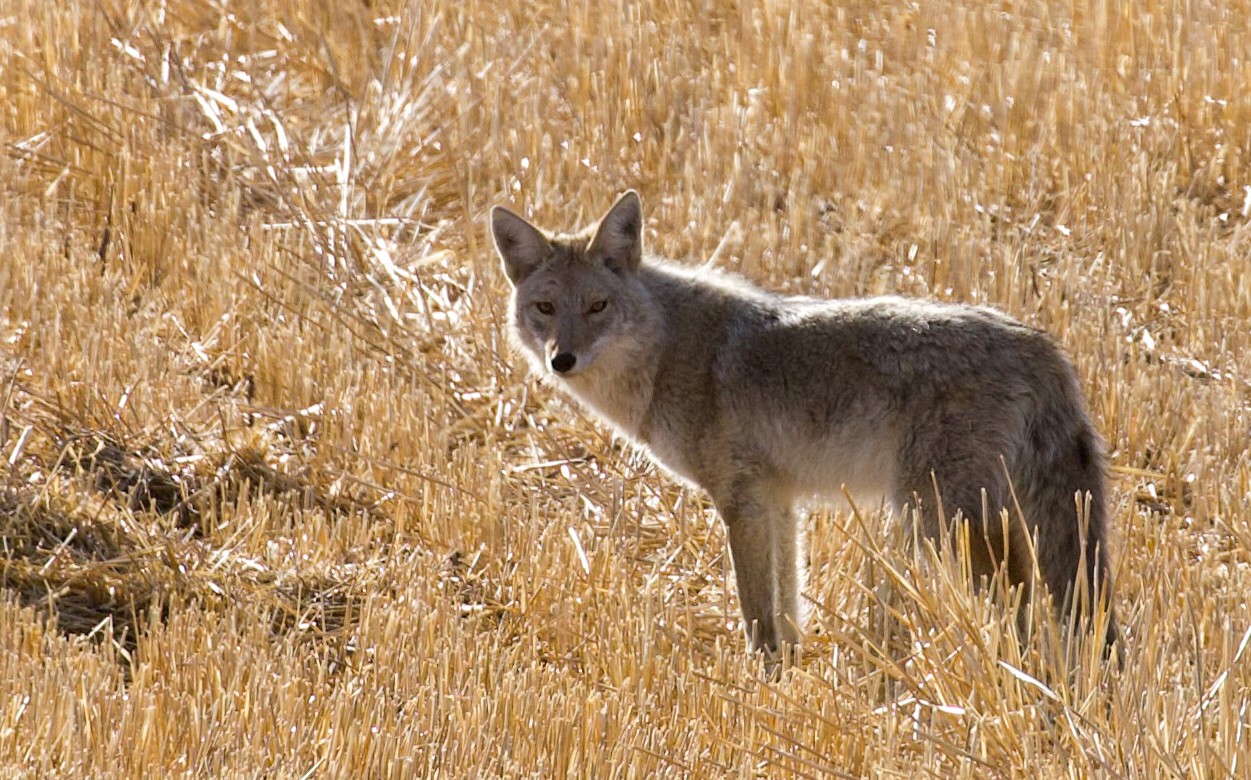
If you’ve noticed an uptick in coyote sightings around town, you aren’t imagining things—it’s currently breeding season for coyotes across southern Alberta.
Coyotes typically reunite with their mates in late December and early January, with females entering a short estrus window in February before having pups in May.
This leads to a common misconception that coyotes are more aggressive during this time of year; however, the truth is, coyotes feel protective of their partners during breeding season.
With coyotes being a prominent fixture among the diverse wildlife within the Foothills, it’s important to understand how coyote behaviour changes during this time of year—not only to maintain personal safety, but also the safety of the canines themselves.
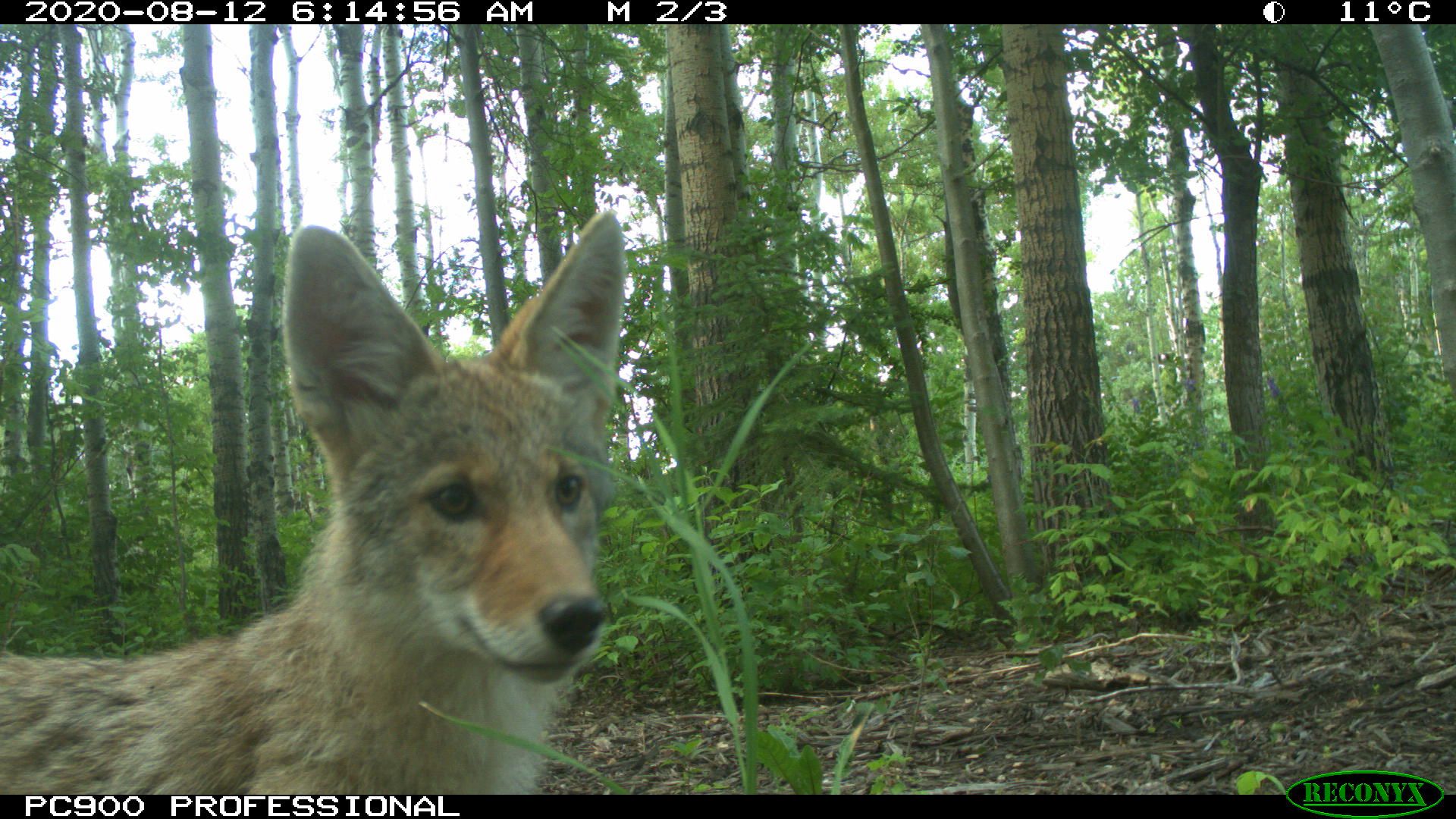 Image of a coyote from a remote camera site run by expert in wild canid ecology Shelley Alexander. Submitted/Shelley Alexander
Breeding season explained
A distinguishing trait of coyote breeding is that they are monogamous and typically remain with the same partner unless one dies. Pairs will go their separate ways, reuniting in late December and early January as they prepare for the breeding season.
Female coyotes enter estrus once a year, typically in February, giving around a 7–10-day breeding window for a pair.
Canadian expert in wild canid ecology Shelley Alexander says residents often report increased sightings around this time of year, as the reunited pairs work to re-establish territory.
“People will be seeing a lot more of them right now, hearing a lot more of them,” says Alexander. “There could be new partners getting together, and they have different vocalizations for all these different things.”
Reproductive pairs of coyotes will remain no more than two minutes apart until they den in mid-April—before suddenly quieting down.
The pairs then remain inconspicuous for about five weeks until giving birth in late May.
Once they’ve given birth, they will emerge from their natal den at the end of May to relocate their pups, often leading to another spike in reported interactions before eventually quieting down as the coyotes re-establish themselves.
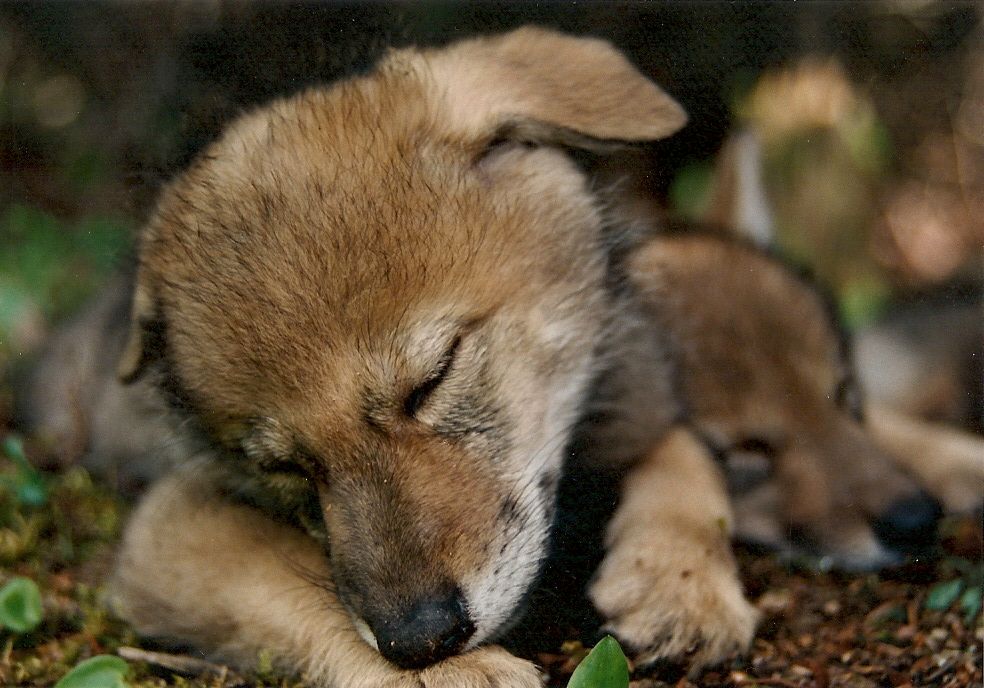 Image of coyote pups from a remote camera site run by expert in wild canid ecology Shelley Alexander. Sibmitted/Shelley Alexander
What you may notice
During mating season, coyote pairs will travel more widely within their typical range, checking scent marks and reinforcing boundaries, while young adults may wander to seek out a mate.
The increased movement during this time makes it more likely to spot coyotes.
Coyotes who are looking to find a partner will often howl during this time to attract mates.
They will generally try to avoid humans as much as possible, and conflicts typically only occur when humans disrupt their habitat during breeding season, causing them to find a new den abruptly.
“We will often see conflict occur in these places that are undergoing change or gentrification,” says Alexander. “In a place like Okotoks, they can end up choosing a place like under a deck because the people don’t use the backyard.”
Throughout the breeding season, coyotes are trying to communicate to humans and dogs alike that they should stay away.
How residents can reduce conflict
Residents of the Foothills are advised to make sure there are no spaces under personal decks or sheds, which coyotes might move into if forced out of their dens.
Alexander and her team have an online audit list on their Living with Wildlife site that gives additional information on how to prevent coyotes and other unwanted visitors from setting up shop nearby.
People should also be cautious not to leave out grain for other animals, as it may attract unwanted attention from coyotes. Other items such as open garbage, compost heaps, dog food and birdseed may also attract them.
Another thing to avoid is feeding wild animals by hand. If coyotes notice humans feeding other animals, or receive food from humans themselves, they will learn to approach humans more, increasing the risk of confrontation.
“On average, three people per year in Canada are bitten or scratched—all of those relate to people directly feeding coyotes,” says Alexander.
Residents should also be diligent not to litter, as many coyotes will retrieve items for their pups to play with this time of year, which can end up being harmful or toxic to them.
It’s also crucial for residents to keep their dogs on leashes and be cautious of their surroundings when walking them.
“Dogs are seen as a competitor and a threat,” says Alexander. “Coyotes aren’t interested in killing dogs, but they will defend that space.”
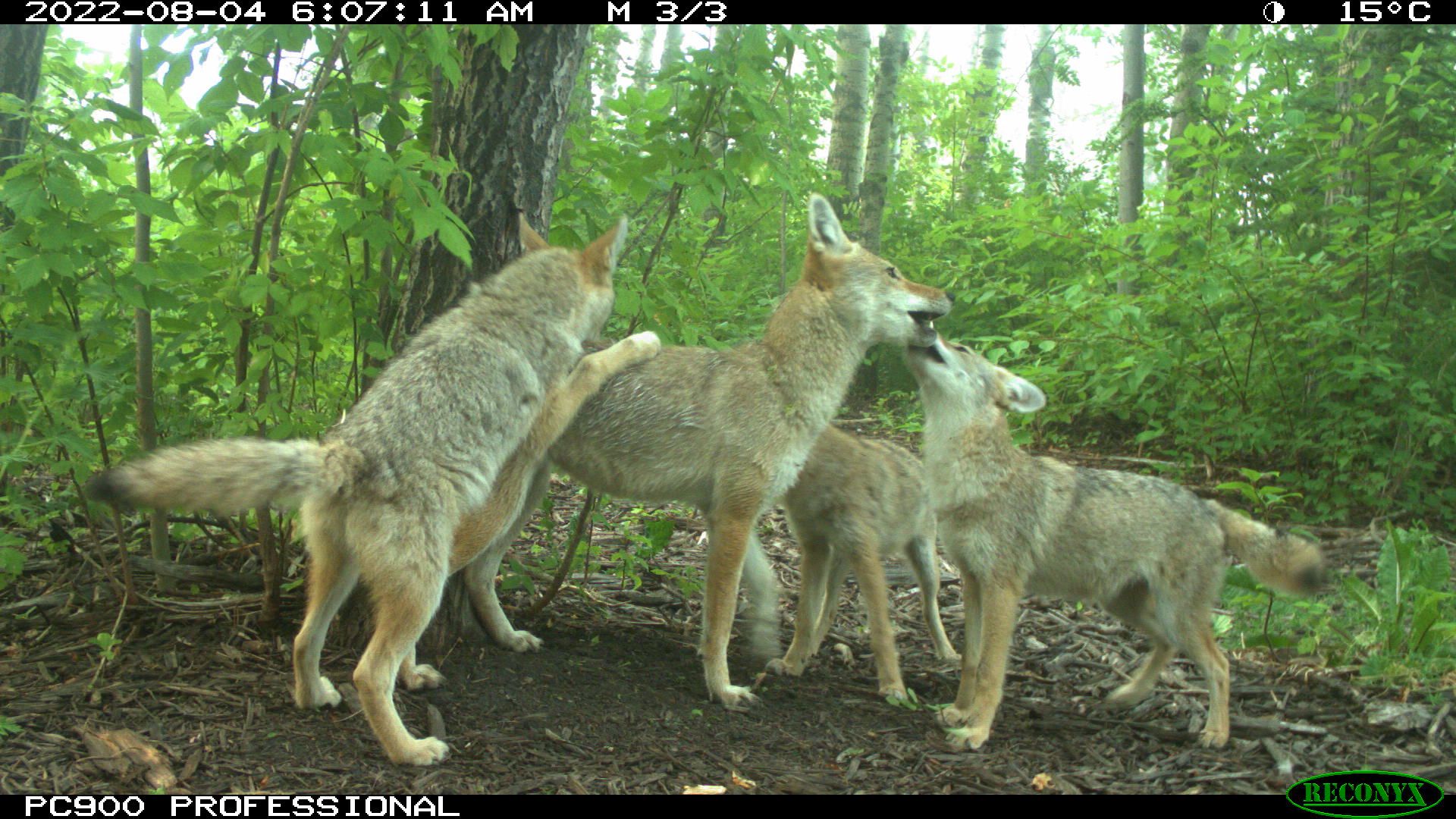 Image of coyote family from a remote camera site run by expert in wild canid ecology Shelley Alexander. Submitted/Shelley Alexander
Why coyotes matter
People often consider coyotes to be a pest species, but it’s important to remember that these animals play a crucial role in the local ecosystem.
As a carnivore species, coyotes regulate the populations of smaller predator species, such as skunks, raccoons and foxes, helping to boost biodiversity.
Contrary to popular belief, coyotes are more similar in behaviour to humans than people often realize—they operate like a family unit, and they will get defensive in order to protect their young.
This is why it’s important to emphasize proper precautionary measures in order to achieve peaceful cohabitation.
“It’s the mom and the dad who are doing all of the providing for the pups,” says Alexander. “If we remove one of them, we escalate their stress levels, their inability to get food, and we increase the risk of them doing things we don’t want them to do.”