


Listen to this article
Estimated 4 minutes
The audio version of this article is generated by AI-based technology. Mispronunciations can occur. We are working with our partners to continually review and improve the results.
Health sector leaders and union representatives have spent years raising concerns about nursing shortages in Newfoundland and Labrador hospitals, but a top executive with the province’s health authority assures the situation is starting to turn a corner.
“We are doing fairly well compared to others in Canada in our registered nursing workforce,” Newfoundland and Labrador Health Services vice-president of human resources Debbie Malloy told CBC News.
The optimism is based on new data from the Canadian Institute for Health Information (CIHI), though the official numbers reflect the situation as of 2024, a two-year lag Malloy said.
CIHI found Newfoundland and Labrador had the highest percentage of full-time nurses and the highest 20-year retention rate in the country.
“We were really happy to see some of the results,” Malloy said, adding she’s hopeful the updated numbers will paint an even brighter picture.
Float positions for graduates
In an email sent to Memorial University’s 2026 graduating class, NLHS outlined a number of newly created permanent full-time positions available for new graduates in eastern Newfoundland.
“We always have a relief need,” Malloy said. “We’re hiring people into float positions, and then they will be deployed to help with relief.”
Some float positions will be hired directly into a department, such as cardiology, mental health or the adult emergency room.
Others will take a float position and get assigned to a specific department for one year.
“We’re trying, right now, to first make that offer of a permanent position to come with us,” Malloy said.
Satellite nursing schools working
Outside of St. John’s, MUN’s satellite nursing schools in Gander, Happy Valley-Goose Bay and Grand Falls-Windsor will see their first graduating classes work in their communities.
Brittany Humby is a student at MUN’s satellite nursing school in Gander. She’s a mom of two and is completing the licenced practical nursing bridging program with a graduation date in 2027 that would make her a registered nurse.
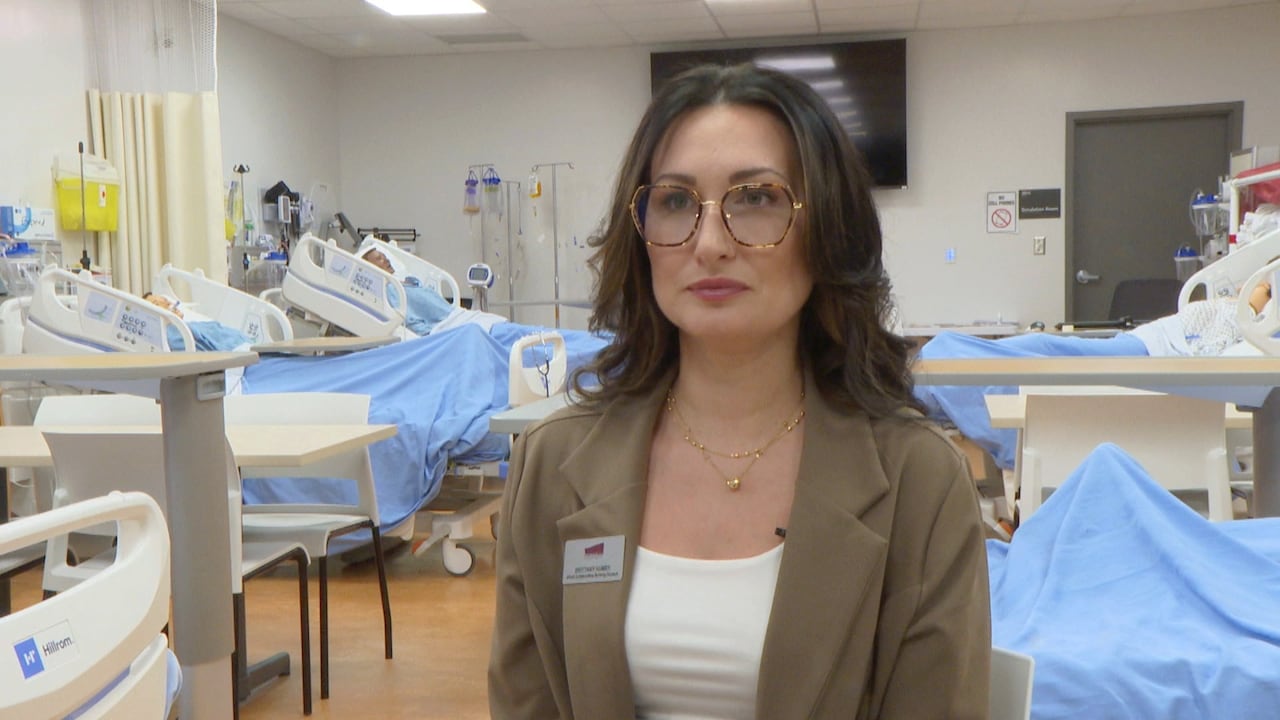 Brittany Humby says without the opportunity of a satellite school it would have been difficult to study to become a registered nurse. (Troy Turner/CBC)
“Half of my class are moms and LPNs who really took advantage of the opportunity of advancing to RN through the satellite campus,” Humby told CBC News. “Without this opportunity, it would not have been possible for us.”
Humby was an LPN for eight years before returning to nursing school. Now, she said, her kids get to learn an important life lesson at a young age.
“I do have to stay up late and study, and there’s weekends when, you know, they have more time with nan,” she said. “I’m just extremely happy that they can watch, knowing things aren’t always easy, but they see how hard work can pay off.”
Malloy said nearly 100 per cent of the nurses graduating from MUN’s satellite campuses have accepted job offers.
“It is sometimes difficult to entice people to leave the urban areas and to move to more rural areas of the province,” Malloy said.
Hundreds of vacancies
Yvette Coffey, president of the Registered Nurses’ Union Newfoundland and Labrador, said she’s prepared to welcome Memorial University’s upcoming graduates, but still has concern for current nurses.
“We have some questions coming forward about whether or not these positions were actually offered to our members first,” Coffey told CBC News.
WATCH | ‘We still have a lot of work to do’: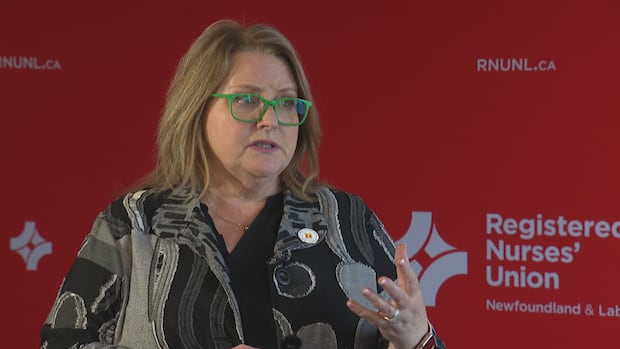
Stats show nursing numbers are getting better — and the union president agrees
The Canadian Institute of Health Information has several different statistics that both N.L. Health Services and the Registered Nurses’ Union agree shows a turning of the tide when it comes to the number of nurses in Newfoundland and Labrador. The CBC’s Jenna Head reports.
She said work to fix the province’s nursing crisis is not over.
“We have gone from 752 nursing vacancies three years ago down to 345 nursing vacancies as of April 2025,” she said, adding that’s still a “significant vacancy rate.”
Coffey is travelling across the province to meet with nurses this month. She said emergency departments are still overcrowded with patients being cared for in hallways, inpatient units and use of post-operative recovery rooms in some regions.
Nurses are still facing mandated overtime, she said, and the province is still using a high number of private agency nurses.
“Have we turned the corner with numbers? Yes. Have we turned the corner in the health-care crisis? We’re moving inch by inch,” Coffey said.
Download our free CBC News app to sign up for push alerts for CBC Newfoundland and Labrador. Sign up for our daily headlines newsletter here. Click here to visit our landing page.