
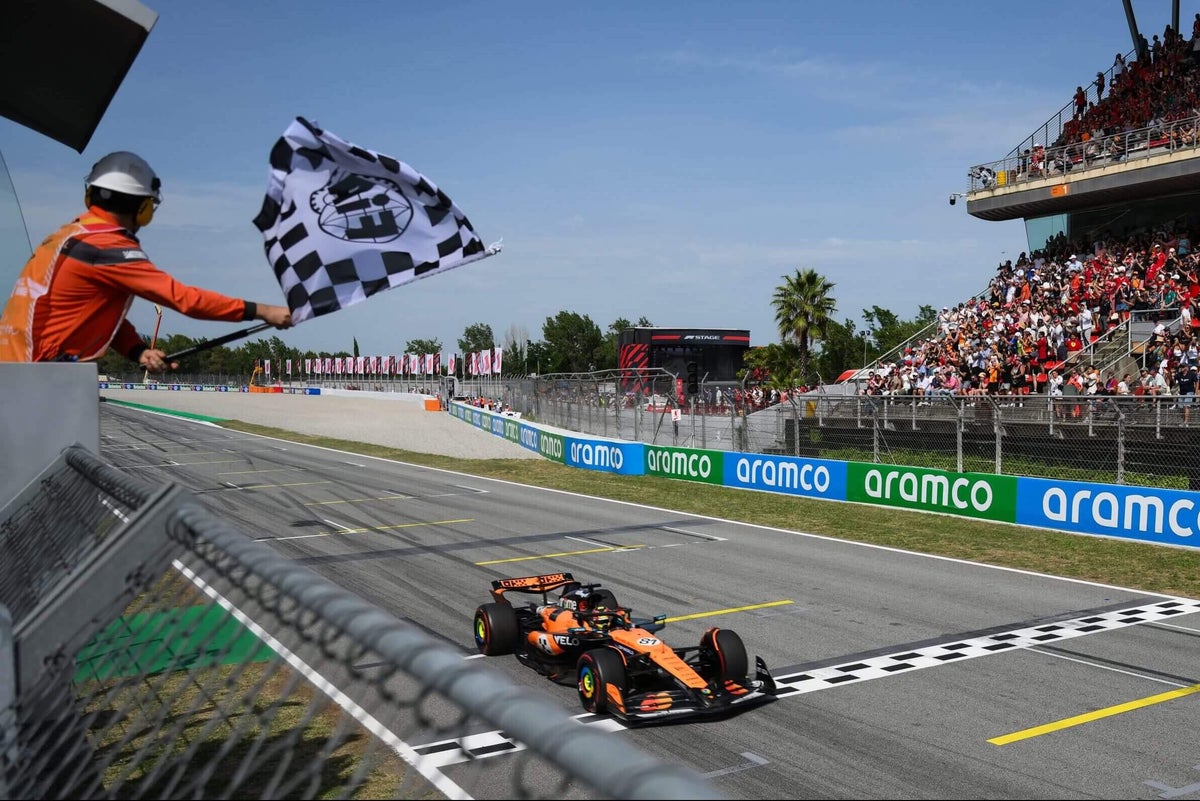
Formula 1 announced on Monday that its race at Barcelona will continue past 2026, but only as part of a biennial rotation with the Belgian Grand Prix at Spa-Francorchamps.
Barcelona’s contract to host an F1 race only lasted until this year, while Spa’s move from holding a grand prix every year to once every two years was announced back in January 2025.
After the Belgian race is held at the iconic motorsport venue in 2026 and 2027, it will only return to the F1 schedule in 2029 and 2031.
In Spa’s fallow years, Barcelona will host the newly christened Barcelona-Catalunya GP. The Spanish GP moniker passes to the new race in Madrid, which is holding its first race in September.
Why is F1 doing this?
Formula One Management, F1’s commercial rights holder, has been looking at getting long-standing races held in Europe to enter into rotation deals for a while.
It wants to balance these with events in new locations prepared to pay more — such as the efforts to hold a race in Thailand.
Unlike many nation-backed races held across the world, government funding for several longstanding F1 races across Europe is either limited or non-existent.
For example, the British GP at Silverstone is not funded by the UK government and largely relies on the ticket sales from its F1 race to meet the high race-hosting fees agreed in its contract with FOM. Silverstone is, however, committed to being on the F1 schedule until at least 2034.
Another race with such an arrangement is the Dutch GP at Zandvoort, but, even with the popularity of home hero and four time-world champion Max Verstappen, the Dutch GP organizers have been unable to secure its long-term future and it will drop off the F1 calendar after the 2026 season.
As a result of its big financial challenge, Zandvoort was not expected to enter into a rotation deal, even with its proximity to Spa (the tracks are 186 miles apart by road).
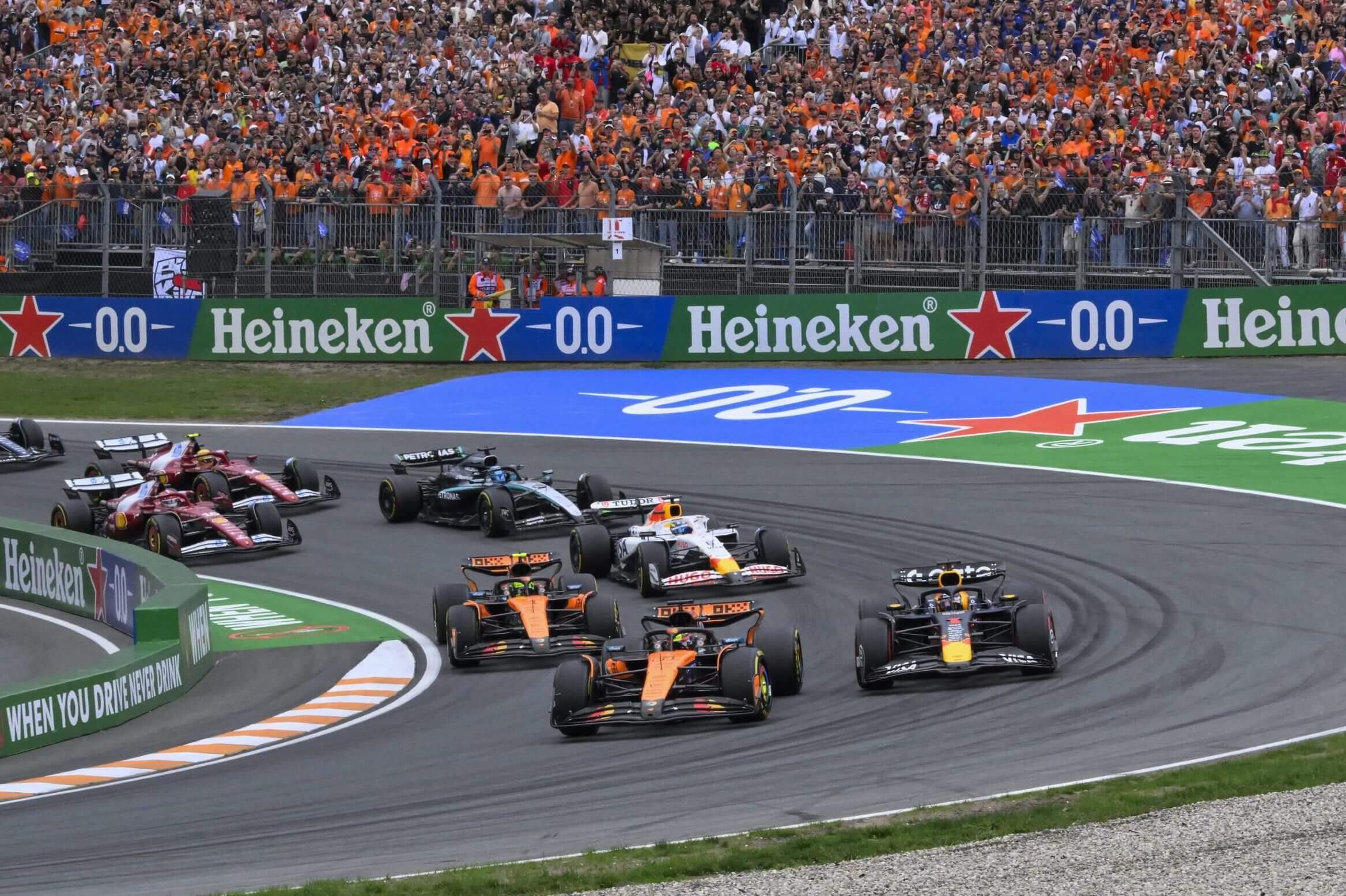
Zandvoort will drop off the circuit after the 2026 season (John Thys / AFP via Getty Images)
Therefore, it was expected that Barcelona would become Spa’s partner if it could strike a deal with FOM. This became more likely after the track made significant renovations to its main road entrance, revamped the paddock area and installed a hulking new hospitality area in 2024.
FOM had essentially put all long-standing races on notice with its rotation plan, with F1 CEO Stefano Domenicali warning these events via media interviews that they risked falling off the F1 calendar if they did not prioritize efforts to improve circuit infrastructure and offerings for fans.
“It’s not enough to have a pedigree anymore. You also have to demonstrate that you are keeping up,” Domenicali said in 2022.
Barcelona’s new works have also included, as cited in an F1 statement released on Monday, installing “solar panels throughout the circuit.”
“The team have invested heavily in the circuit and hosted fantastic fan festivals in recent years, so we look forward to seeing how they continue to develop the experience, both for attendees at the race and for the city as a whole,” said F1 CEO Stefano Domenicali, in the same statement.
What does this mean for the calendar?
F1’s previous Concorde Agreement, which binds key stakeholders the teams, FOM and motorsport’s governing body, the FIA, into agreeing to race over a five-year period around a series of commercial terms, held a provision that the race schedule would not exceed 25 races. It has never exceeded 24 races.
With Barcelona and Spa now rotating, the tracks with contracts to host races in 2027 only amounts to 23 events, as Portugal’s race at the Algarve International Circuit near Portimão has signed a short-term deal covering 2027 and 2028. The Portuguese GP will replace the Zandvoort event.
That leaves F1 space to ink new deals with countries willing to pay more, but it is unclear how soon the mooted event in Thailand, nor another in Rwanda, would be put on the calendar. Both remain in talks with F1 and are yet to finalize any plans or agreements.
The CEO of the Rwanda Development Board recently told The Athletic that it is targeting hosting a grand prix from 2029.
But, assuming both were to join the F1 schedule by the end of the decade and Portugal’s deal has passed, that would cap the calendar once again at 24 races. It is not clear if the 25-race limit remains in the new Concorde Agreement signed back in December 2025.
Around that assumed 24-race schedule length, Barcelona-Spa would be the only rotation agreement. Such an approach has been used previously in F1 — for instance with the German GP that alternated between the Hockenheim and Nürburgring tracks from 2008-2014 as both venues grappled with financial challenges.
The Spanish GP will be held at Madrid until at least 2032. Barcelona has held the event every year since 1991, when the Circuit de Barcelona-Catalunya was built ahead of the 1992 Barcelona Olympic Games. The track hosted the road cycling team time trial events.