

Listen to this article
Estimated 4 minutes
The audio version of this article is generated by AI-based technology. Mispronunciations can occur. We are working with our partners to continually review and improve the results.
A 36-year-old man and 42-year-old woman from Mississauga have been arrested after an investigation into a romance scam, prompting Toronto police to warn residents to be wary of online relationships and to think twice before sending money.
It’s alleged that the two used an alias on dating apps to approach victims across Canada and the U.S., said a media release by Toronto police Friday.
They said the accused individuals pretended to be a “successful businessman” in the Greater Toronto Area and would persuade victims to loan large sums of money to assist with the business.
Once money was sent, all communication was cut with victims and funds were used for personal gain, said police.
Investigators believe the man and woman scammed victims out of $250,000 and that there may be more victims, said Toronto police on social media.
The man is facing two charges, including fraud exceeding $5,000, and the woman with one charge of possession of property obtained through crime exceeding $5,000. The two accused are due to be in court on March 9.
WATCH | Red flags you should watch for in a potential romance scam: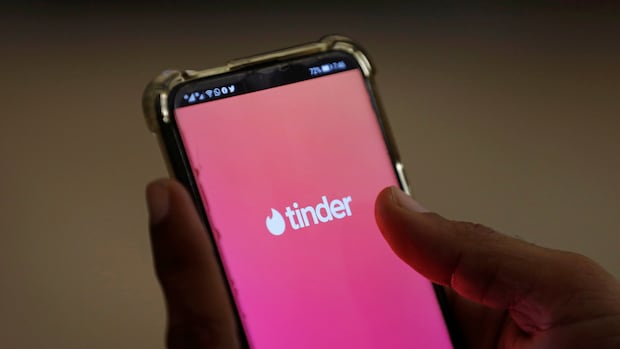
Ontario police say romance scams are on the rise. Here’s how to spot them
Canadians reported $58 million in romance scam losses to the Canadian Anti-Fraud Centre in 2024. CBC’s Ali Chiasson breaks down the romance red flags that Ontario police want the public to be aware of.
The arrests are a timely reminder that romance scams increase in the days leading up to Valentine’s Day, said police.
“Romance scams are not about poor judgment. They are highly organized, deliberate frauds that rely on social engineering and play on emotion,” they said.
Toronto police urged residents to be mindful of the following signs in a potential scam relationship:
A relationship that escalates quickly, but doesn’t want to meet in-person.Claims of wealth or business success, along with financial problems.Requests for money for shipping fees, investments, custom issues or emergency expenses.Requests to send money by bank draft, wire transfer, cryptocurrency or to a business account.Emotional manipulation by way of guilt or fear of losing the relationship.
Anyone with information or experiences of their own are encouraged to contact police or Crime Stoppers.
WATCH | A look at who’s conning Canadians:
Bad Romance: Who’s Conning Canadians?
Investigating a long-term con that combines investment schemes, romance scams and crypto fraud. We meet those who’ve lost their life savings and reveal many of the perpetrators are forced to scam.Canadians scammed out of millions in 2025
Canadians lost nearly $63 million in 2025 alone to relationship scams, said Jeff Horncastle, outreach officer with the Canadian Anti-Fraud Centre.
There’s potential for that number to be a lot bigger, he said, as the organization believes only five to 10 per cent of victims report their cases to the anti-fraud centre — in large part due to shame and stigma around fraud.
“People are just ashamed to discuss what happened,” he said. “In some cases they don’t want to report unless it’s guaranteed that they get their money back.”
Horncastle encourages anyone who believes they’ve been a victim of fraud to reach out to local law enforcement as well as the anti-fraud centre.
“As we know a lot of this fraud comes from overseas, so we have the ability to share that information [with police],” he said.
Taking that step to having open conversations and reporting these crimes is the best way to avoid having more victims in the future, said Heather Rovet, a former victim of romance scams.
“It’s like pouring gasoline on fire,” she said. “You’re just feeding them by staying quiet.”
She says people on online dating apps should be aware that anyone asking for money is a “huge red flag.”
“It can be really hard because your heart is opening up and you’re falling in love, so you think, and you’re being used,” said Rovet.
She encourages people to keep talking about these situations to raise awareness and reduce the stigma around victims of fraud.