
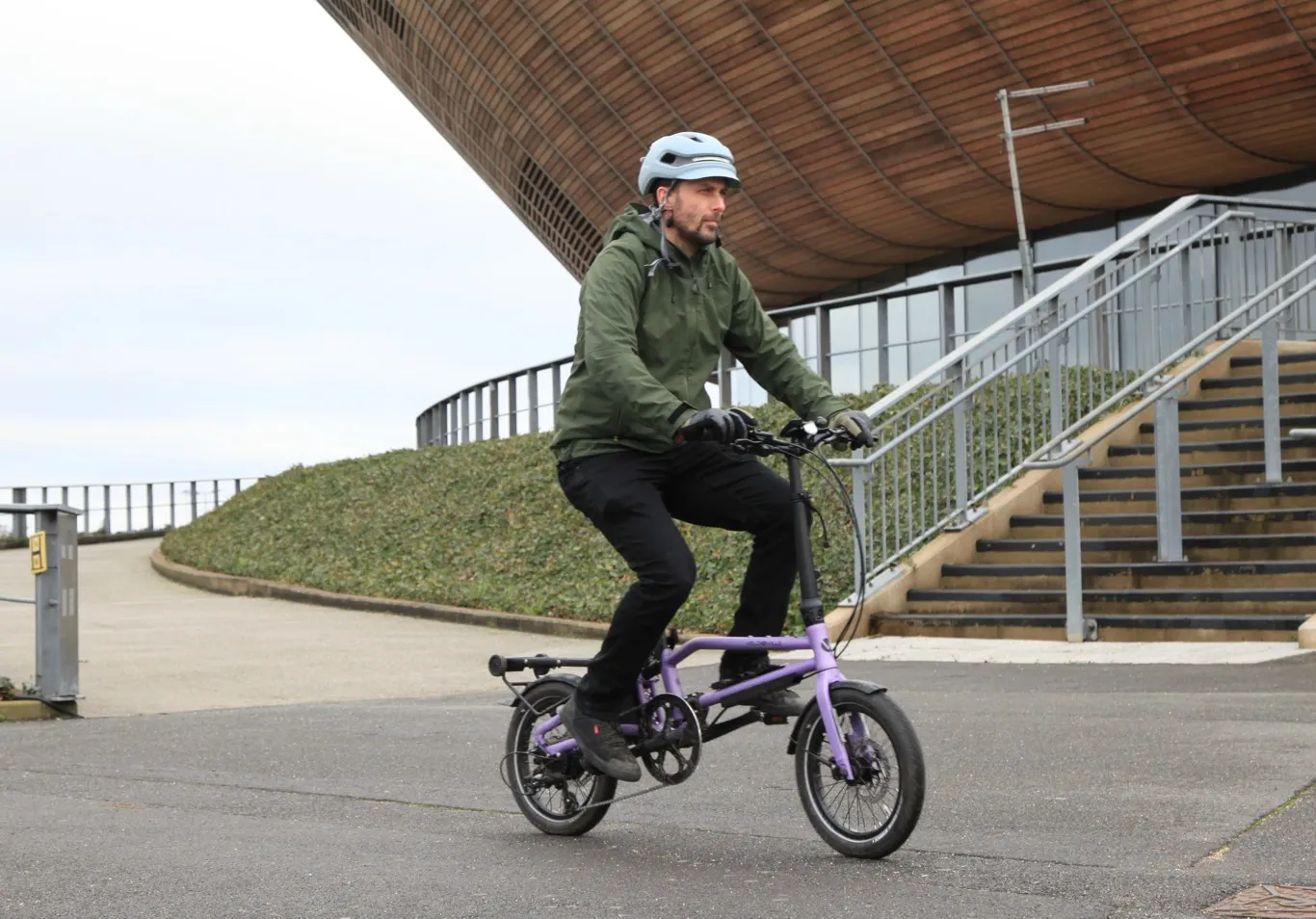
Having impressed us previously with the quality of its custom-configured cargo and leisure electric bikes, calling in the Velo de Ville e-Foldy for review was on our wishlist for 2026.
Last year, we reviewed a record number of electric folding bikes, resulting in probably the most in-depth buyer’s guide you’ll find on Cycling Electric. This is an in-focus category for a number of reasons. Electric folding bikes are your space-saving, apartment-living and train-friendly solution for multi-modal travel without the headaches.
As you may know by now, everything you buy from Velo de Ville is custom-configured to your preferences, which in folding bike terms is as good as unmatched, though Ahooga did just announce custom paint on its E-max too. This means that there’s a base price and then a built-up price, inclusive of the full package of custom paint, component and accessory add-ons. This means that you can design the bike precisely for your needs. In this Velo de Ville e-Foldy review, we did take a stock bike, but it is a fair representation of an ‘average’ spec.
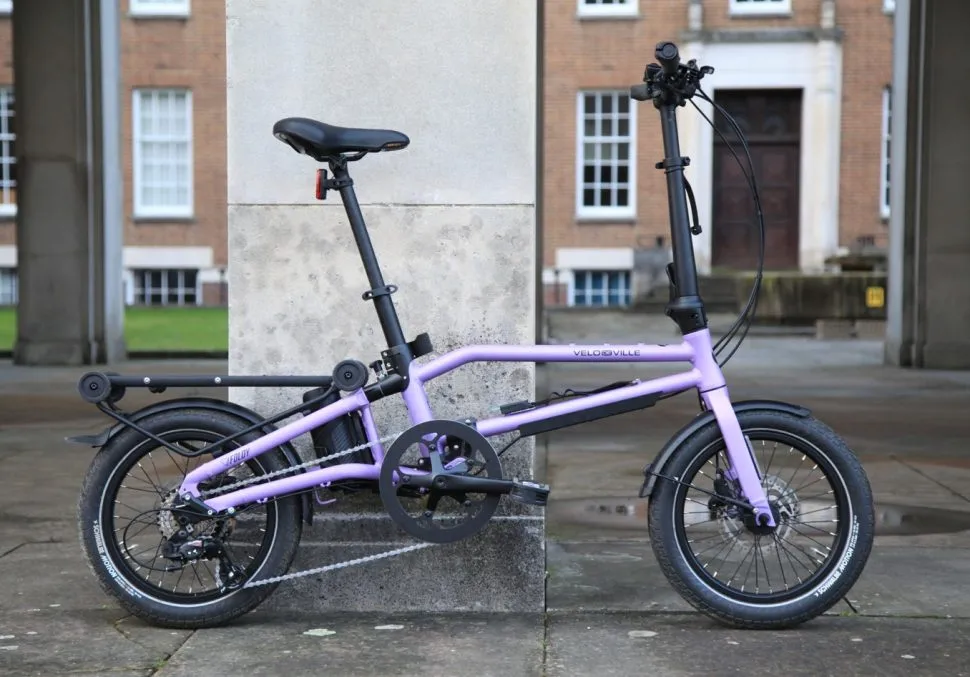
Velo de Ville e-Foldy review: The headline details
From £2,619 | View custom configurator
Pros
Easy to fold and snap shut
Wide height adjustability
Custom-built as standard
Cons
Custom-build costs
Longer than some when folded
Stated weight: Approx 17kg
Stated range: Approx 45km
Frame material: Aluminium
Motor: Mahle X30, 45nm
Battery: Mahle EX1 171Wh
Drivetrain: Singlespeed or Shimano Tourney 7-speed
Brakes: Shimano MT200 hydraulic discs
Saddle: Selle Royal Explora
Tyres: Schwalbe Motion 16”
Suspension: None
Included accessories: Mudguards, Roller/pannier rack
Velo de Ville e-Foldy review: The build
It’s long been the case that we’ve considered Velo de Ville to be a premium quality manufacturer and certainly, mechanically speaking, the e-Foldy feels well engineered, doesn’t rattle and handles well, where some folding bikes can be either twitchy or flex. As far as ride predictability goes, the geometry and slightly longer wheelbase that some folders properly offset that sometimes twitchy feeling 16-inch folding bikes have.
In the conditions that I rode this bike in (it has rained every single day…) that really helped. I had no fear of wiping out in the wet when I hit a drain cover on a corner, though the folding pedals could surely have been a bit grippier. This minor gripe is pretty common on folding bikes, however, which universally seem to compromise on pedal quality on account of the folding mechanism within.
I’m a stickler for the fold, as one should be when reviewing a folding bike. It’s a fundamental purpose of the bike that, if tricky, fiddly or dangerous, can ruin the experience. For the Velo de Ville e-Foldy, my verdict is simply not the best, not the worst.
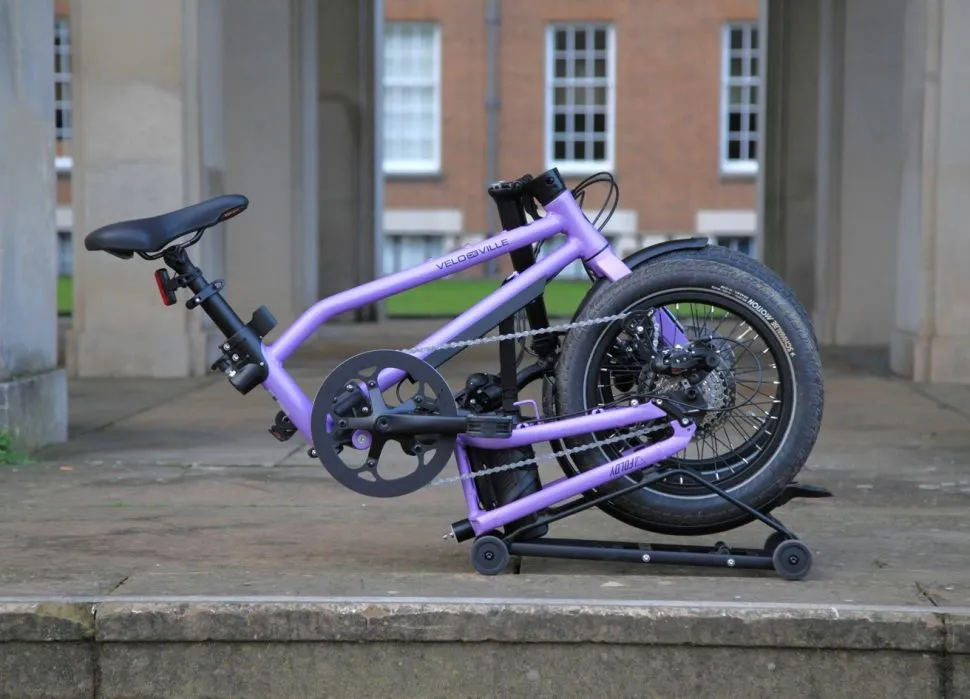
Reaching that verdict, there are a few components to explore. First, the folded length is longer than 95% of other models I’ve tested. It’s still only a pair of train seats wide (that’s a genuine measurement metric in this field), but it has a rectangular, plus a sloped seattube folded shape, which just feels more awkward in storage terms. It’s no dealbreaker, of course, just a notable comparison.
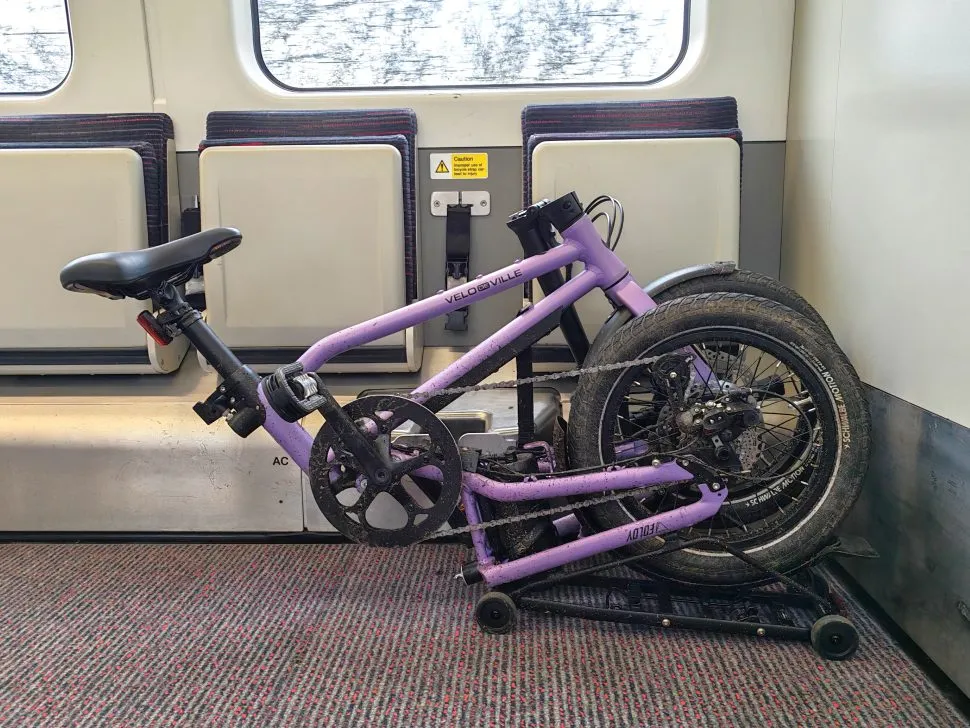
The fold itself is pretty good. Easy to manage in both directions, no major flaws in the design, an even weight distribution, and no great chance of pinched fingers in hinges. It even holds together very well when you apply the pair of magnetic straps, which hold taught the folded bike, enabling it to be rolled on its rear pannier rack, which is flanked by wheels that roll so well that you actually need to be careful it doesn’t roll away on a moving train.
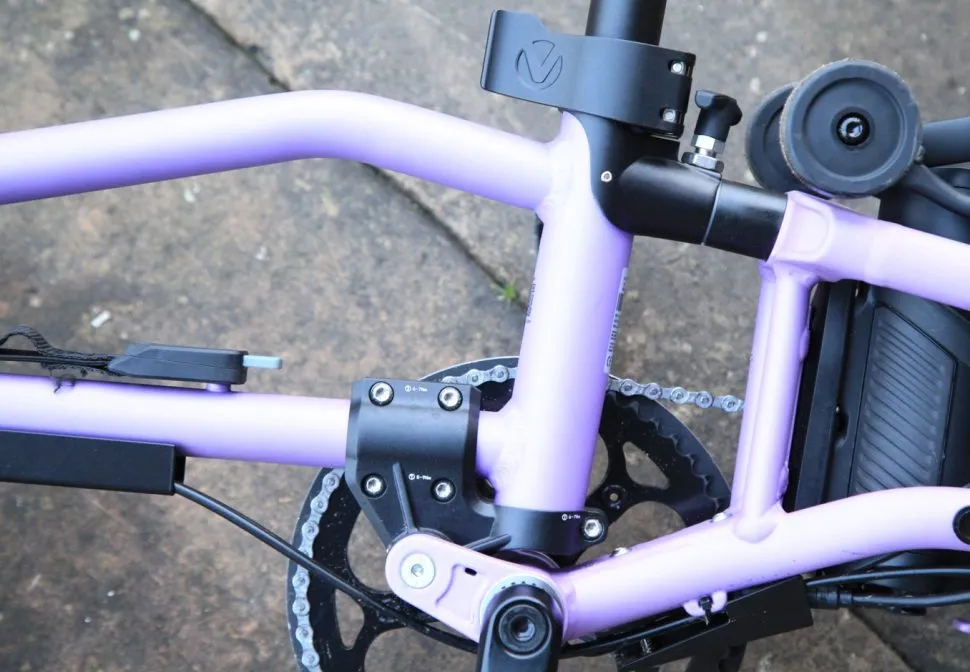
So, all good in the folding sense, it does its functional job well. Aside from the length comparison, my only other sticking point is the execution. Velo de Ville make beautiful e-bikes, but the e-Foldy just feels like it has too much in the way of bulky extra elements to the design compared to other cleaner aesthetics. While the magnetic straps are very good, they aren’t as good as a dropout clasp as seen on the Eovolt Afternoon, for example. The result is that extra distraction for the eye in the downtube strap. In design terms, it works, but it’s visually messy compared to some competition’s solutions.
I’m certainly a function over form kinda person, but the photo below, I think, illustrates the point; there’s a lot going on. Does there need to be? On the flipside, hosting everything externally makes this a very quickly and easily serviceable bike, perhaps aside from the proprietary cargo straps, which would need to come from Velo de Ville.
Related Articles
About the electrics
Somewhat in keeping with the design ideas of keeping key items external on the frame, it is Mahle’s dockable battery and 45Nm X30 hub motor driving the experience.
As you’ll quickly spot, the battery sits behind the seat tube, contributing to the slightly longer frame, which as before has the upside of greater ride stability, but compromises on folded length. You may appreciate another benefit here is that it’s very easy to take the battery with you, preventing theft, or indeed anyone asking you not to bring an electric folding bike on a train. This shouldn’t happen, of course, even TfL allow electric folding bikes on their services, but this design somewhat futureproofs things should that change. You can simply remove the battery and stow it.
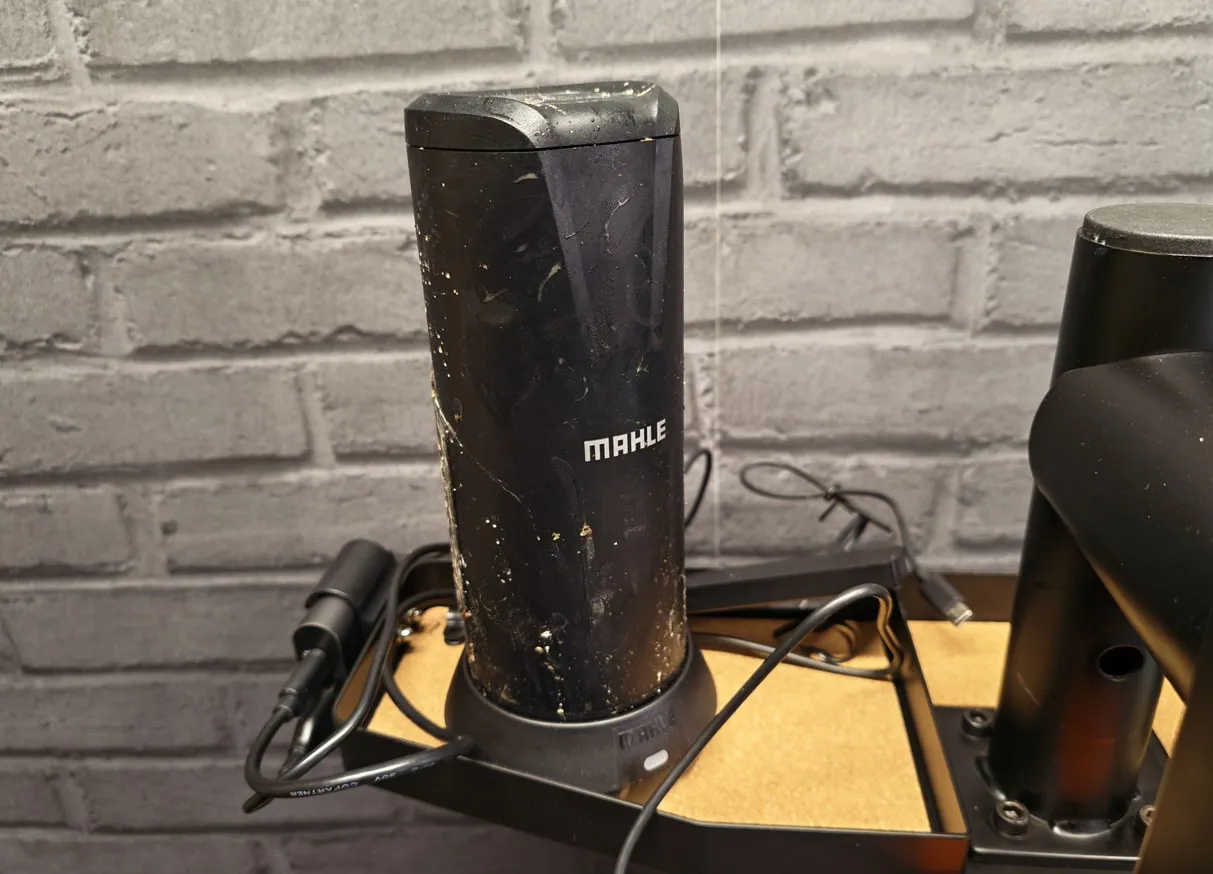
This battery system comes with a handy USB dock, which sits atop a desktop or in a garage, ready to take your battery for a charge at the end of the day. This is oddly routine-making. Sometimes I forget to put an e-bike on charge at the end of the day, but I found this remove and dock system to be quite convenient.
In use, the motor is pretty efficient at moving things along in the mid-level support, but truth be told, it’s easy enough on the flats to get to a cruising speed on low support. You only have 171Wh of battery to play with, so you can’t park in the highest (3rd) assist mode all day. This mode is best kept for hill climbs, because it’s quite easy to drain your battery down to the final 20% and then exhaust it on steep climbs, if you don’t moderate assist use through the day. That’s not a slight on the battery, which is compact for good reason, just the reality of how to deploy it effectively.
I found that a 15-mile (25km) range was an achievable range in what were admittedly horrible and challenging conditions. Perhaps unwisely, I rode this bike on winter-stressed canal paths, which technically speaking were cycle routes, but might have been better served by a kayak. Under these conditions, I spent most of the time in assist modes two and three, so it’s entirely possible that a more reasonable deployment of the assist would have added another 25%.
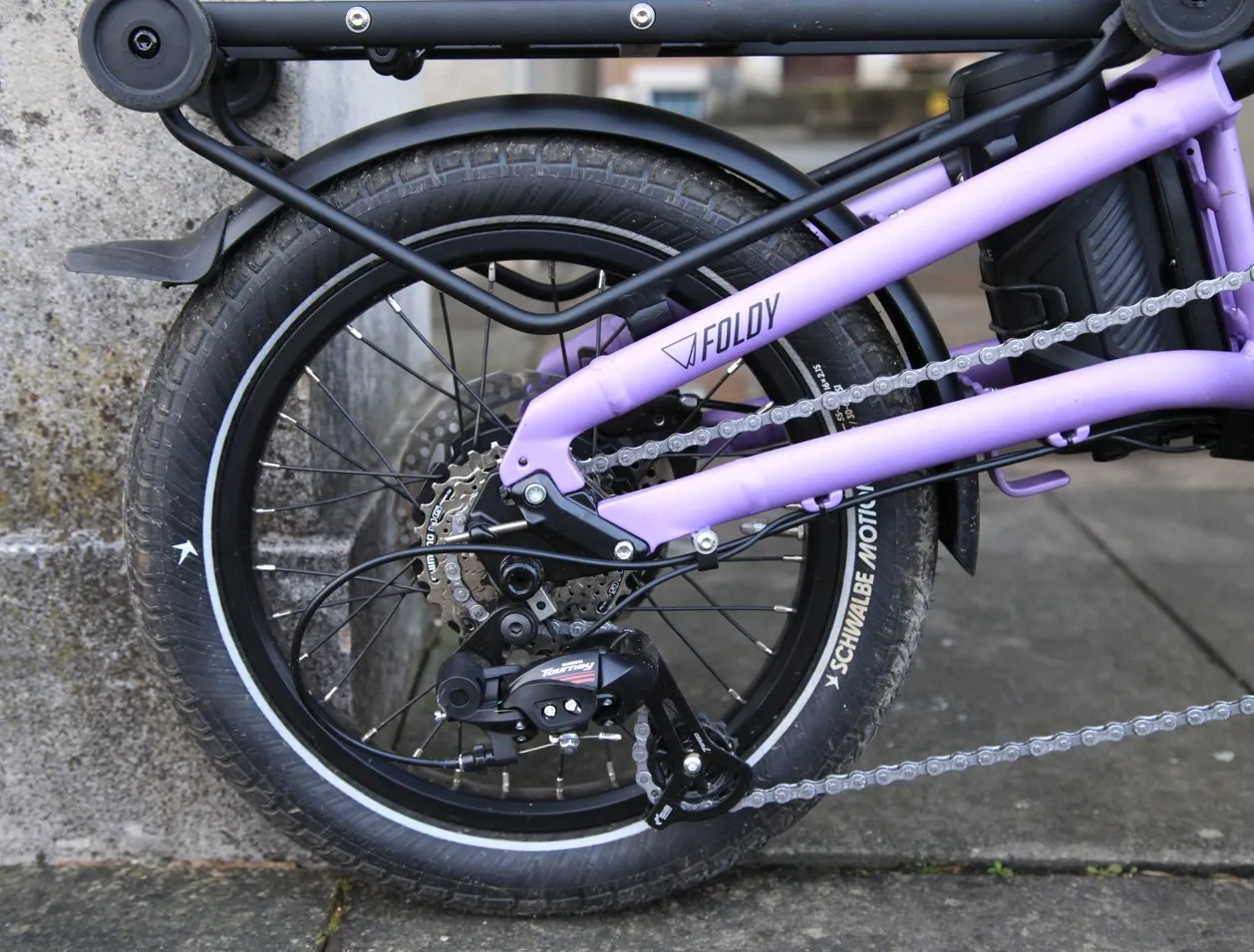
As hill climbing goes, 45Nm is enough for long and shallow hills, though a touch stressful on steeper ascents, in particular on account of the smaller wheels making climbs just seem longer. However, Velo de Ville is smart to equip a seven-speed Shimano Tourney groupset as an upgrade to the standard singlespeed found as soon as you land on the configurator. If it were me I would make this upgrade without hesitation. I think this bike would be less effective as a singlespeed, but the seven-speed derailleur gear was genuinely helpful to managing climbing and acceleration.
Pros and cons: The little things
There were lots of smaller details that produced positives and negatives. On the plus side, I thought the Selle Royal saddle was brilliantly comfortable, which is important on a 16-inch wheel bike where bumps can be heavily felt. I liked minor details like the reflectors stuck to the fork legs, adding some visibility. The folding pedals were well executed in the sense that they had a mechanism that doesn’t accidentally flip, as some cheaper units can. That said, in the wet, like most found on e-folding bikes, they were slippery, rather than offering that pinned grip standard pedals do.
I was a fan too of the level of adjustment in the bike, with the ability to raise or lower the front end of the bike and the rear easily to meet your ride preferences. Add to that, it’s good to have brand-name Schwalbe tyres with a reputation for puncture resistance, plus a nice rounded, but wide profile for stability and low rolling resistance.
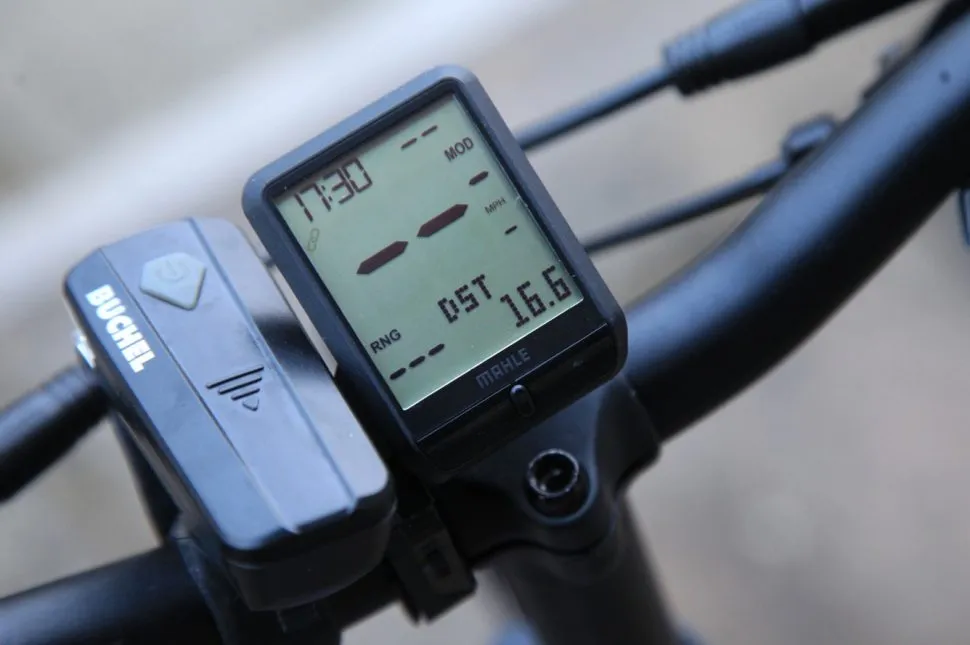
On the downside, there’s no on and off functionality at the bar, you have to lean down and turn the assist on at the battery. Plus, to plug the battery in after a charge, you’ll also need to get down low to clip in the cable. I don’t know whether or not I can blame the mudguards, because the January and February weather has been dire, but I did seem to get disproportionately mucky on rides, perhaps on account of puddle splash and being closer to the ground than I may have been on a larger-wheeled bike.
I always make a point of addressing my perception of fair value when conducting a review, and the Velo de Ville eFoldy is about as bang on the mark as any folding bike I’ve ridden. That I feel this is accurately priced is a reflection of the build quality, which is high; the component and electrics performance, which is largely good; and the overall experience, inclusive of the fold, which is about average. My feeling is that this bike is built to last, so a lot of value comes from serviceability, a good warranty and knowing that the bike is well engineered. Added value comes from the customisation, but you will of course start to pay extra for this, so this becomes very subjective on value addition. A few small upgrades could make all the difference to your experience, but you will have to know in advance how you intend to use the bike to reap these dividends.
Conclusions
I could comfortably recommend the Velo de Ville eFoldy after this review period, but that is not to say that I think it is the manufacturer’s best work.
We have reviewed the brand’s cargo bike experience, plus the leisure-suited SEB 990 and soon the short tail KEB will get a second spin with our testers having been ridden first at our annual Demo Day test ride experience, to which you are all invited. In every case previously, we have appreciated the Velo de Ville experience, noted each bike for its quality and the degree to which you can make the experience truly relevant to your lifestyle. Perhaps it is that this is harder to truly go into depth with on a folding bike, but my parting thought is that the e-Foldy is not Velo de Ville’s best work. There’s room for improvement, that is despite the fact that many things are done very well.
Some preferences are subjective, of course. How the battery integrates, or doesn’t, for example. You will have your own preferences on how simple it is to remove a battery and charge a bike. Quite often, I prefer a fully integrated design, which is part of the reason I have previously been critical of Brompton’s e-folding bikes, but warmed toward UTO’s (formerly Eovolt).
On the eFoldy I can appreciate the design idea for its perks, but also note the compromises. I will say that hosting the battery behind the seat tube and thus slightly boosting the wheelbase seemed to promote ride stability, which I loved on a 16-inch-wheeled bike. Generally speaking, I would always choose a 20-inch wheel folding bike, but Velo de Ville’s execution made for a comfortable ride position that had great handling.
How about the competition?
Read our Velo de Ville e-Foldy review and want to see what else we recommend? Here are some of our favourites tested through 2025 into 2026.
Ahooga E-max – £2,999
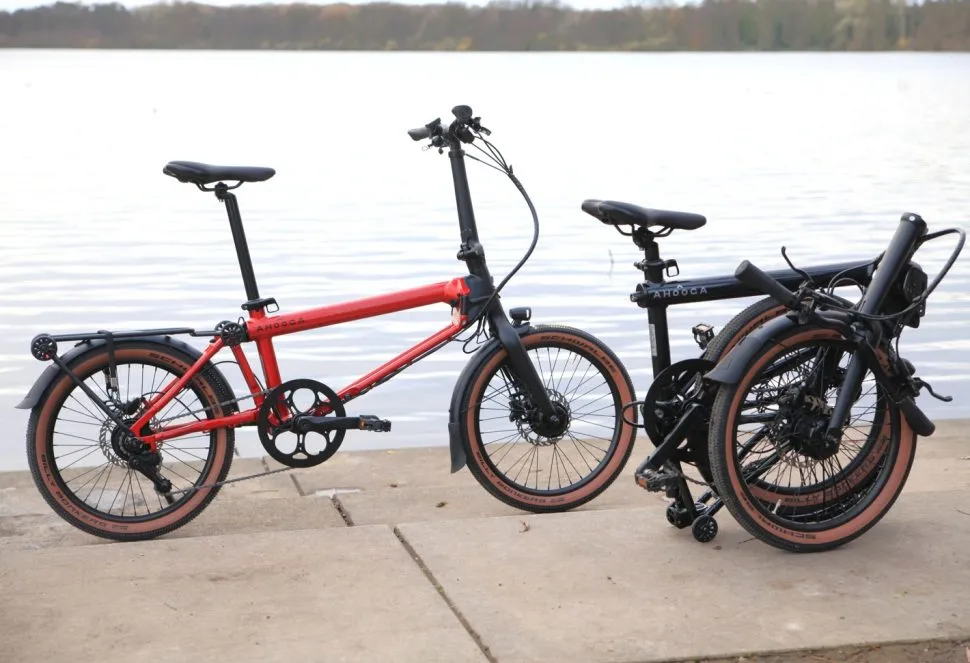
One of our favourite electric folding bikes is from Ahooga, whose latest generation E-Max has delivered some clever design notes that make it an expert piece of equipment for the multi-modal commute.
Folding into a compact square shape, it’s a good size for tucking underneath an office desk, despite the 20-inch wheels. When folded, it rolls in a controlled fashion with locking mechanisms keeping the package together and a set of small roller wheels balancing the folded package as it moves.
You can buy either a singlespeed or a derailleur gear version of the E-Max.
Read our full Ahooga E-max review.
UTO Afternoon Pro 16″/20″ (formerly Eovolt) – £2,699
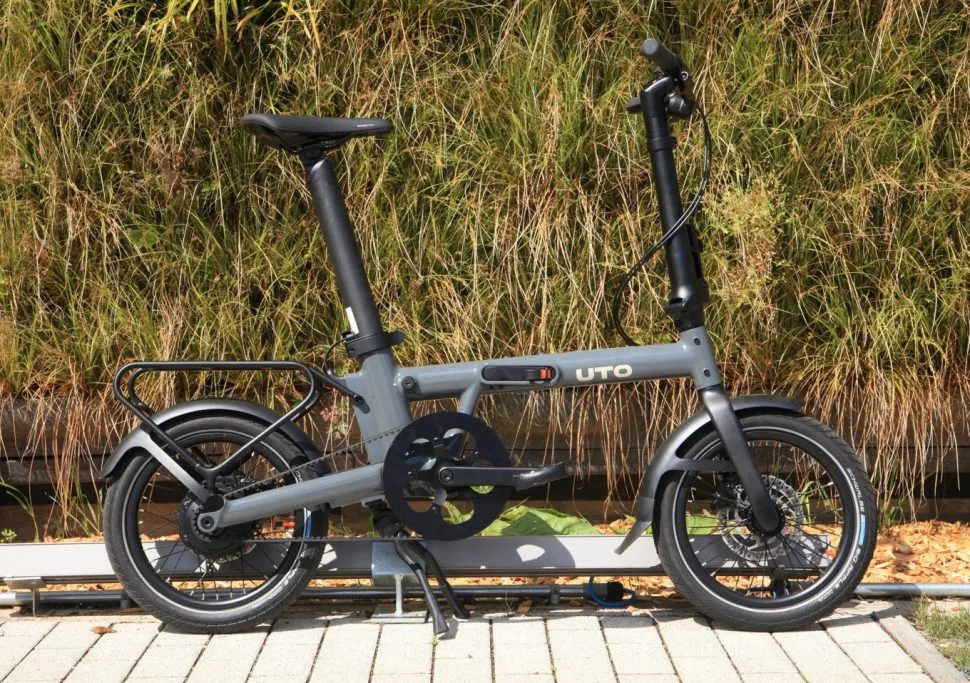
Still our favourite electric folding bike, the UTO Afternoon Pro is a bike that has perfected over the generations with incredible attention to detail on a micro level, adding up to a very user-friendly package.
We love how simple the fold is on this bike and you really needn’t get too involved, because the patented hinge system just snaps together automatically when you go from folded to unfolded. There are finger-friendly clasps that mean there’s no chance of pinches.
The hub motor system from Bafang is also very good, working seamlessly with the hub motor to manage your acceleration and assistance. Of course that means fewer gears overall, so this isn’t our first choice for really hilly commutes, but for most cities it excels.
Read our UTO Afternoon Pro (16″) review.
Tern Vektron P10 – £3,500
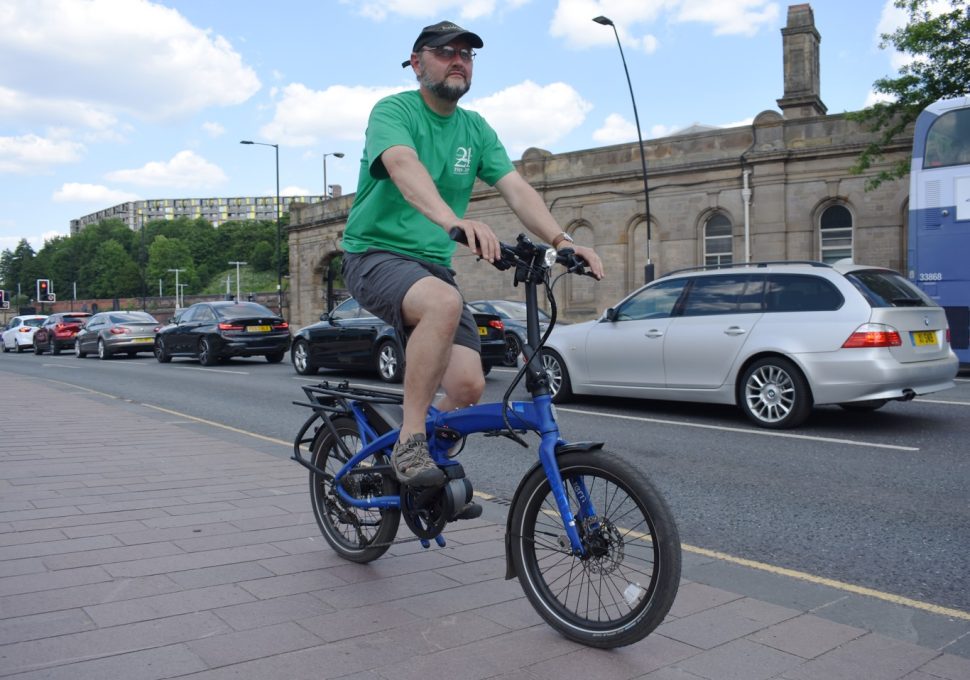
If you want a bike that can perform in the hills, then a mid-motor solution is smart. Few brands execute this as well as Tern with its Vektron, which leans on a Bosch motor to propel your pedal-assist. It’s worth bearing in mind that Tern has been doing this for much longer than most and is one of the most tried and tested brands on the market, often scoring excellent reviews.
Tern also do a fantastic job of equipping its folding bikes to handle utility and the Vektron has a rear racking system that is good to host a pair of pannier bags comfortably.