
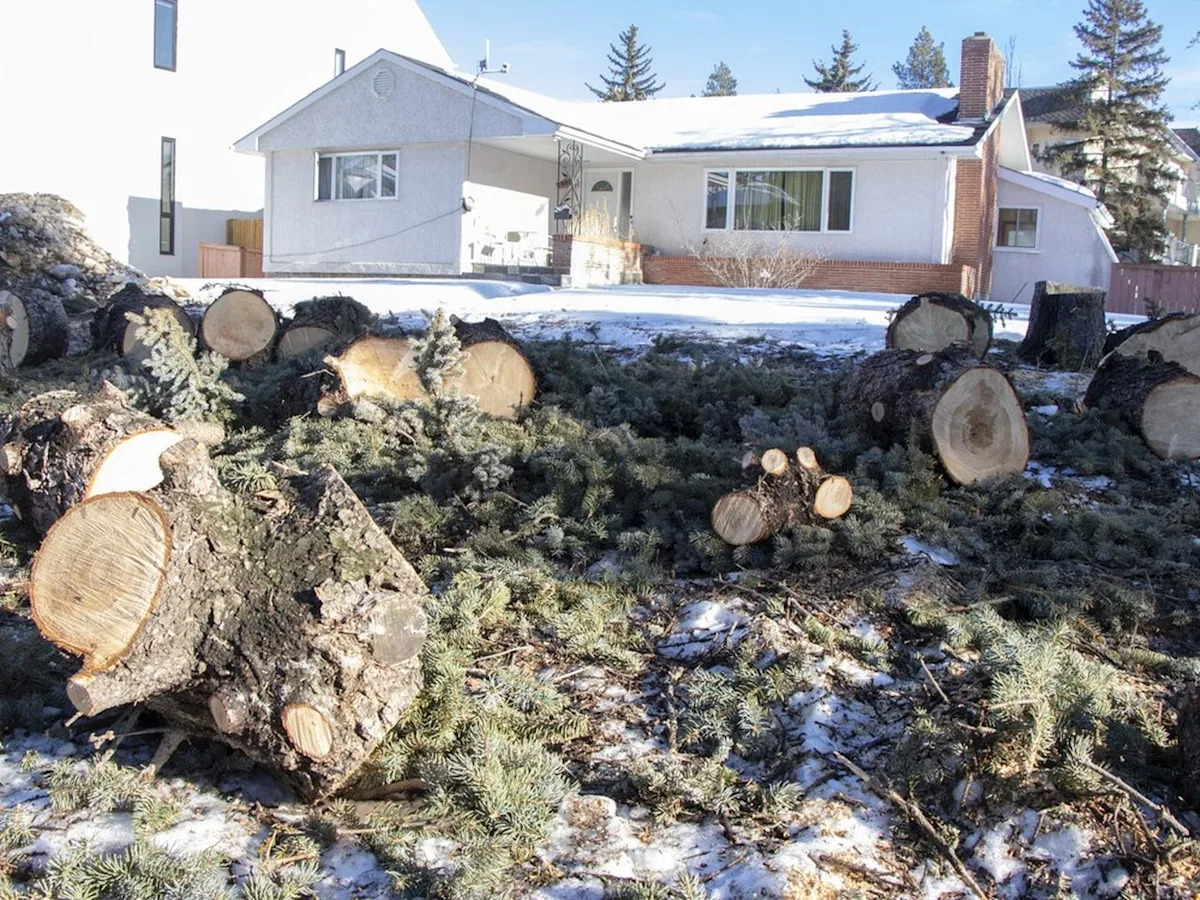
Walk through one of Edmonton’s older neighbourhoods and you’ll notice the yards feel layered. There are big trees overhead: elms, ashes, old poplars, but there is also something else: lilacs along the fence line, a row of currants tucked beside the garage, maybe a Saskatoon bush that looks like it has always been there. In some backyards, rhubarb and horseradish still pushes up every spring, even if no one remembers who planted it.
These are not accidents. They are living remnants of how Edmonton once grew. Before the 1950s and, before mass suburban development and global plant supply chains, most of Edmonton’s trees and shrubs came from nearby forests, local nurseries, or neighbours’ gardens. People planted what would survive. And they planted with purpose. Gardens were not just decorative. They were practical, resilient, and personal.
Shrubs like currants, gooseberries, and chokecherries were not fashionable, they were reliable. Lilacs and caragana hedges were not just pretty they blocked wind, trapped snow, and created warmer micro-climates so gardens could succeed in a harsh climate.
Over time, these private gardens quietly stitched together a shared urban ecosystem: shade in summer, shelter from wind, food for people and birds, soil that improved year after year, and a sense of rootedness — of belonging to a place.
Today, much of that legacy is disappearing not all at once, but steadily. When older homes are replaced through infill, the loss is often framed narrowly: a few trees removed, some lawn replaced with buildings. But what is really being erased is deeper and harder to see.
It is the layered garden system: the understory shrubs, the berry patches, the informal hedges, the soil built over decades. These rarely survive redevelopment. They are not protected, inventoried, or easily replaced.
New yards, when they exist at all, tend to be simpler: lawn, a couple of ornamental trees, maybe a patio. Understandable choices but ones that do not recreate what was lost. And unlike large public parks, these gardens were never designed to be permanent. Their value was cultural and cumulative, not formal. Once gone, they are usually gone for good.
This is not nostalgia for the past, and it is not an argument against change. It is about recognizing that Edmonton’s urban forest is more than what lines our streets. It includes the quiet spaces between houses, the places where people once grew food, shared cuttings, and shaped their yards to meet the realities of life on the northern plains.
It is also about recognizing that the benefits of trees and gardens are not evenly distributed. Higher-income households and neighbourhoods are more likely to retain larger lots, mature trees, and private green space and more able to compensate when those assets are lost.
This contrast is not random. It is emerging alongside one of the city’s most urgent priorities: the need to build more housing. Edmonton faces real pressures: rising rents, inter-generational inequity, visible homelessness, and limited housing choice. Infill is a necessary part of the solution. For many households, it means access to schools, transit, jobs, and stability. Density matters, but as Edmonton densifies, it is also quietly losing the living infrastructure that
makes dense neighbourhoods comfortable, healthy, and humane.
Ask long-time residents what feels different today, and many point to the same thing: The trees are disappearing. Tree-service trucks are now a common sight in mature neighbourhoods, particularly where older homes are being replaced. Infill almost always begins with demolition, and mature trees often conflict with foundations, basements, service connections, and construction staging.
Without strong expectations to retain them, removal is usually faster and cheaper. One redevelopment may seem minor. Thousands over a decade add up to a profound transformation — one that occurs largely on private land and therefore escapes public visibility and accountability.
Edmonton’s river valley forms the ecological backbone of the city — but most people live on the tablelands, where tree loss is occurring lot by lot.
When a mature tree is cut down, the loss is immediate. But the full cost unfolds quietly over time. Trees cool neighbourhoods, intercept rain, improve air quality, support wildlife, and shape how safe and welcoming a place feels. These benefits are not luxuries — they are everyday infrastructure. When trees are removed lot by lot: neighbourhoods heat up, storm water moves faster and costs more to manage, energy use increases and everyday contact with nature declines
For households with financial means, these losses can often be offset mechanically through air conditioning, upgrades, or travel. For renters, seniors, and lower-income residents, those options are limited or unavailable. What was once free, passive comfort becomes a recurring expense or a health risk. Reduced choice is one of the clearest markers of inequity.
Edmonton should not freeze neighbourhoods in time. But neither should it erase the everyday landscapes that quietly made this city resilient. Carrying that legacy forward means recognizing trees and gardens as living infrastructure — essential to ecology, equity, and long-term affordability.
It means learning from past land wisdom — Indigenous and settler alike — not by replicating it, but by understanding the principles that made it work. And it means ensuring that as Edmonton grows denser, comfort, shade, and access to nature remain distributed across the city — not concentrated where they are easiest to protect or afford. Edmonton did not just grow outward. It grew rooted. The question before us is whether we remember how and whether we are willing to grow that way again.
Grant Pearsell is an Edmonton-based urban planner with 45 years in the environmental field.
Letters welcome
We invite you to write letters to the editor. A maximum of 150 words is preferred. Letters must carry a first and last name, or two initials and a last name, and include an address and daytime telephone number. All letters are subject to editing. We don’t publish letters addressed to others or sent to other publications. Email: letters@edmontonjournal.com
Bookmark our website and support our journalism: Don’t miss the news you need to know — add EdmontonJournal.com and EdmontonSun.com to your bookmarks and sign up for our newsletters here.
You can also support our journalism by becoming a digital subscriber. Subscribers gain unlimited access to The Edmonton Journal, Edmonton Sun, National Post and 13 other Canadian news sites. Support us by subscribing today: The Edmonton Journal |The Edmonton Sun.