
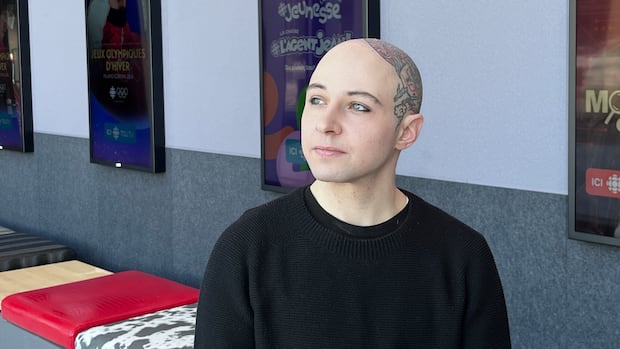
When Alexe Frédéric Migneault suddenly began experiencing hair loss, they thought a haircut would be just the thing to help them feel confident again.
But they didn’t realize trying to book an appointment at a Montreal-area salon would lead them to a years-long legal challenge.
That chapter came to a close for Migneault earlier this month, when Quebec’s Human Rights Tribunal ordered the Station10 hair salon in Longueuil, Que., to pay them $500 in damages as it ruled they were the victim of discrimination.
It all started in 2023, when Migneault went to book an appointment for a haircut at the Station10 hair salon.
Prices there are significantly cheaper when booking in advance and the only way to do that is by filling out an online form.
At the time, the form forced Migneault to specify whether the service was for a man or a woman.
“‘Choose whichever’ is something that is said a lot to non-binary people but it’s extremely tricky for us to do that,” Migneault explained in an interview Wednesday. “As soon as we pick one of these two options, we force ourselves to become either completely invisible… or we have to come out.”
Salon says it initially felt ‘extorted’
Migneault decided to reach out to the salon to try to find a solution, but was told the only way to book an appointment was online and to choose one of the two gender options.
In an email chain attached to the tribunal ruling, salon staff explains the choice would have no bearing on the haircut itself and says they have never had issues accommodating people in the 2SLGBTQ+ community in the past.
Migneault decided to take their case to Quebec’s Human Rights and Youth Rights Commission, known as the CDPDJ.
In the meantime, the salon offered Migneault three free haircuts and changed its website to include a non-gendered option.
In 2024, the CDPDJ determined Migneault was the victim of discrimination and recommended the salon pay $500 to the plaintiff to avoid the risk of being sued.
But Station10 refused.
Alexis Labrecque, the salon’s co-owner, said his colleagues would have been happy to cut Migneault’s hair, but when they did more research on the plaintiff they felt “extorted” because Migneault has made complaints about other businesses in the past.
Migneault received wide recogntion in 2023 when they went on a hunger strike to pressure the Régie de l’assurance maladie du Québec (RAMQ) to add a non-binary gender option – an X – to the province’s health insurance cards.
Tribunal upholds initial ruling, salon considering appeal
After the salon refused to pay the damages, Migneault went above the commission to Quebec’s Human Rights Tribunal, calling for more than $12,000 in emotional and material damages. They alleged the battle over the hair appointment contributed to the mental health issues they later faced, forcing them to go on sick leave at work.
The salon, for its part, tried to claim $5,000 in damages in return, claiming Migneault was abusing the use of the tribunal.
While the tribunal did not side with either party, it did agree that Migneault had been discriminated against and ordered the salon to pay the $500 proposed by the CDPDJ.
In its ruling, the tribunal says the salon could have, with little to no effort, made an exception and allowed Migneault to book the appointment without forcing them to choose between the two genders – all while having no impact on pricing.
The salon already charges clients by the minute.
“For me, it’s not about the money,” said Migneault. “To see the tribunal side with me on that and say that you know what, non-binary people shouldn’t be forced to pick man or woman … I was so happy and relieved to hear that because it’s not something that I hear enough.”
The salon is still trying to determine whether it will appeal.
“Now, every business who uses gender for their clients, if they don’t offer the non-binary selection they might be liable for lawsuits,” said Labrecque. “Many of our clients are sending us money asking us or telling us we should fight back in appeals.”
But Labrecque says he is open to social change and is not necessarily up for a fight.
Setting a precedent?
Pearl Eliadis, an associate professor at the Max Bell School of Public Policy and a human rights lawyer, said this case does not set any legal precedent and would not force all businesses to change their gender pricing, but it should make them think twice.
“The best possible thing to do would simply be for people to read the decision or read a summary of the decision and figure out how to make their services more accessible to others and make sure they’re behaving in a way that respects trans people or non-binary people,” Eliadis said.
Celeste Trianon, founder of Juritrans legal clinic, said this situation is far from being an isolated incident. They say trans and non-binary people often feel unsafe trying out new businesses because they’ve experienced similar discrimination or traumatic experiences in the past.
“[The ruling] sends the message that the treatment of transgender and non-binary people by so much of our private sector is intolerable,” said Trianon. “A lot of these folks are afraid from benefiting from these services because of the fact that they fear discriminatory treatment.”
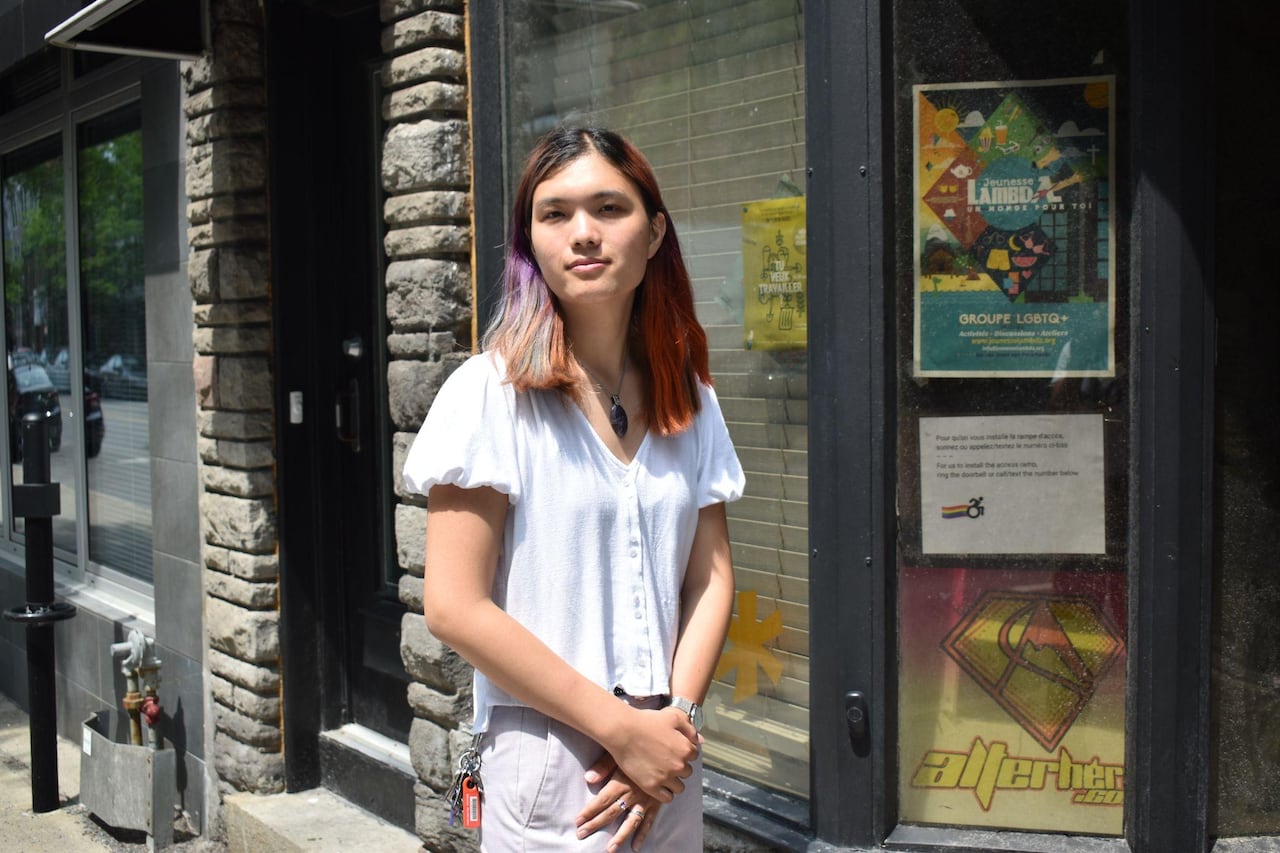 Celeste Trianon, an advocate for trans rights in Montreal, says this ruling shouldn’t be politicized. (Holly Cabrera/CBC)
They added salons, for instance, can easily avoid having people select their services by gender, by charging by the length of one’s hair or the duration of services instead.
“I hope this judgment will change things. I hope this means that trans and non-binary people will benefit from the same spaces as everyone else.”
Trianon is concerned, however, by some of the reactions the tribunal ruling has been generating. Some pundits and elected officials have said the ruling has gone too far and beyond the limits of reasonable accommodation.
“It is dangerous to politicize such cases, especially in a context where trans rights are vulnerable,” Trianon said.
Eliadis agrees.
“I think the message is: let’s accept people for who they are and who they say they are,” she said.