
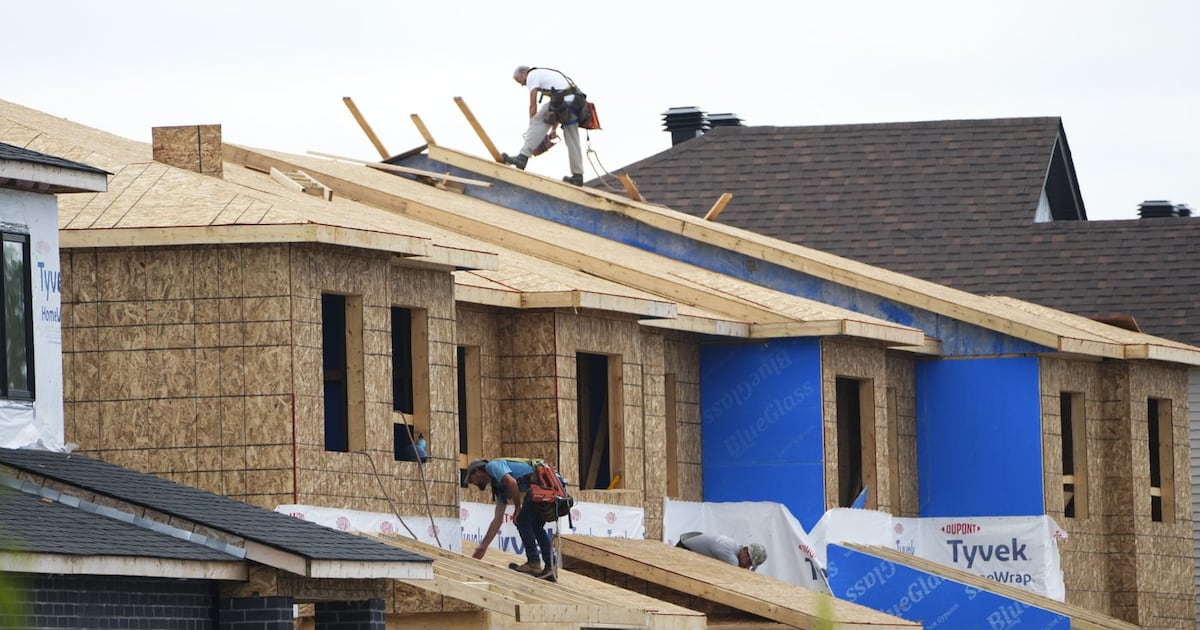
A Canadian developer is temporarily offering certain homebuyers a refund—that is, if they purchase a preconstruction home that drops in price before the closing date.
Mattamy Homes is offering this credit to eligible buyers in Ontario and Alberta until March 8 for its condos and low-rise homes across most of its communities.
The “Price Protection Program” policy promises to reimburse homebuyers the difference in cost of the home they purchased, should the price have dropped from the time of their initial purchase agreement. There are several Mattamy neighbourhoods across the Greater Toronto Area participating in the initiative, including Brampton, Mississauga, Oakville and Markham, as well as a condo building in Toronto’s High Park neighbourhood.
Sepideh Morshedizadeh, vice president of marketing at Mattamy Homes Canada, says if someone paid $800,000 on a home, for example, and there’s a downward change 30 days before closing, then that buyer would be refunded directly.
“We calculate it 30 days before closing your occupancy,” Morshedizadeh explained, pointing to administrative needs on the back end as the reason for that timeline.
The way they compare costs, Morshedizadeh says, is by looking at the base model of the condo or house the buyer purchased in that same community.
“It’s apples to apples … you don’t have to worry about, ‘Oh, well, this lot has a $50,000 premium and mine had a $20,000.’ It’s not based on that, it’s literally just based on, ‘Hey, what was the base price of that house,’” Morshedizadeh said, underlining that upgrades are not included in the comparison.
This program is meant to provide buyers confidence in entering the market, Sepideh Morshedizadeh, vice president of marketing at Mattamy Homes Canada, explains.
“That’s what this is really meant to help with, really, that end user who is looking to move and has good reason to and wants to but is just worried about (entering the market),” Morshedizadeh said.
Ontario saw a record low for new home sales last year, reaching the lowest ever seen in the 45 years the Building Industry and Land Development Association (BILD) has collected data for the Greater Toronto Area.
Justin Sherwood, BILD’s Chief Operating Officer, previously told CTV News Toronto that the dwindling home sales are putting tens of thousands of jobs at risk, likening it to the 1940s when there was a collapse in new home construction.
The Canada Mortgage and Housing Corporation recently published a report, however, that construction of new homes is declining over the next two years, particularly in Toronto. A factor playing into that decline, the report notes, is the glut of condo inventory collecting dust in Toronto’s market, reflecting the aftermath of condo developers’ push for these units during the pandemic when interest rates were low.
“The preconstruction market in the GTA is basically dead on arrival,” Ralph Fox, broker of record and co-founder of Fox Marin Associates, told CTV News Toronto in an interview. “People are really nervous, not just about the overall market, but they’re especially nervous when it comes to the preconstruction market or buying anything pre-built.”
That’s why some industry experts think Mattamy’s price protection policy is a good marketing campaign that will incentivize buyers.
“It’s something that we have not seen before in the past in the new build space,” Toronto realtor Daniel Zadegan told CTV News Toronto. “I think it’s a great incentive by Mattamy to kind of put a little bit more certainty in the uncertain market for buyers.”
While the program is a talker, Fox says he feels it’s more of a publicity stunt because of how Mattamy is comparing costs.
“When you start to look at the fine print, you realize that it’s not a protection for a buyer or purchaser based on the overall market, it’s based on the price of an identical model in the same phase dropping,” Fox noted, adding it means the developer has control, not the overall market.
“The idea of it being protection, if you’re buying something today and the market—the overall market—and the surrounding neighbourhoods go down significantly, the purchaser doesn’t seem like, by my understanding of the way this is written, to be protected from that.”
In Morshedizadeh’s perspective, a homebuyer—not an investor—will be more concerned about owning the house or condo they live in because that is their long-term goal.
“A true end user that’s actually living in these homes once they’ve closed, once they move into it, it really isn’t relevant whether the market goes up or down if you’re watching the resale market… in the short term, that actually doesn’t really matter because the whole point is homeownership,” Morshedizadeh said.
“It’s not a financial instrument to speculate on and trade on, and so that’s what this is really helping: that end user who really does want to move.”
Mattamy Homes’s initiative is temporary for now, though Morshedizadeh says there may be talks about its future, as there has been “really strong interest” from buyers so far.
With files from Elianna Lev