
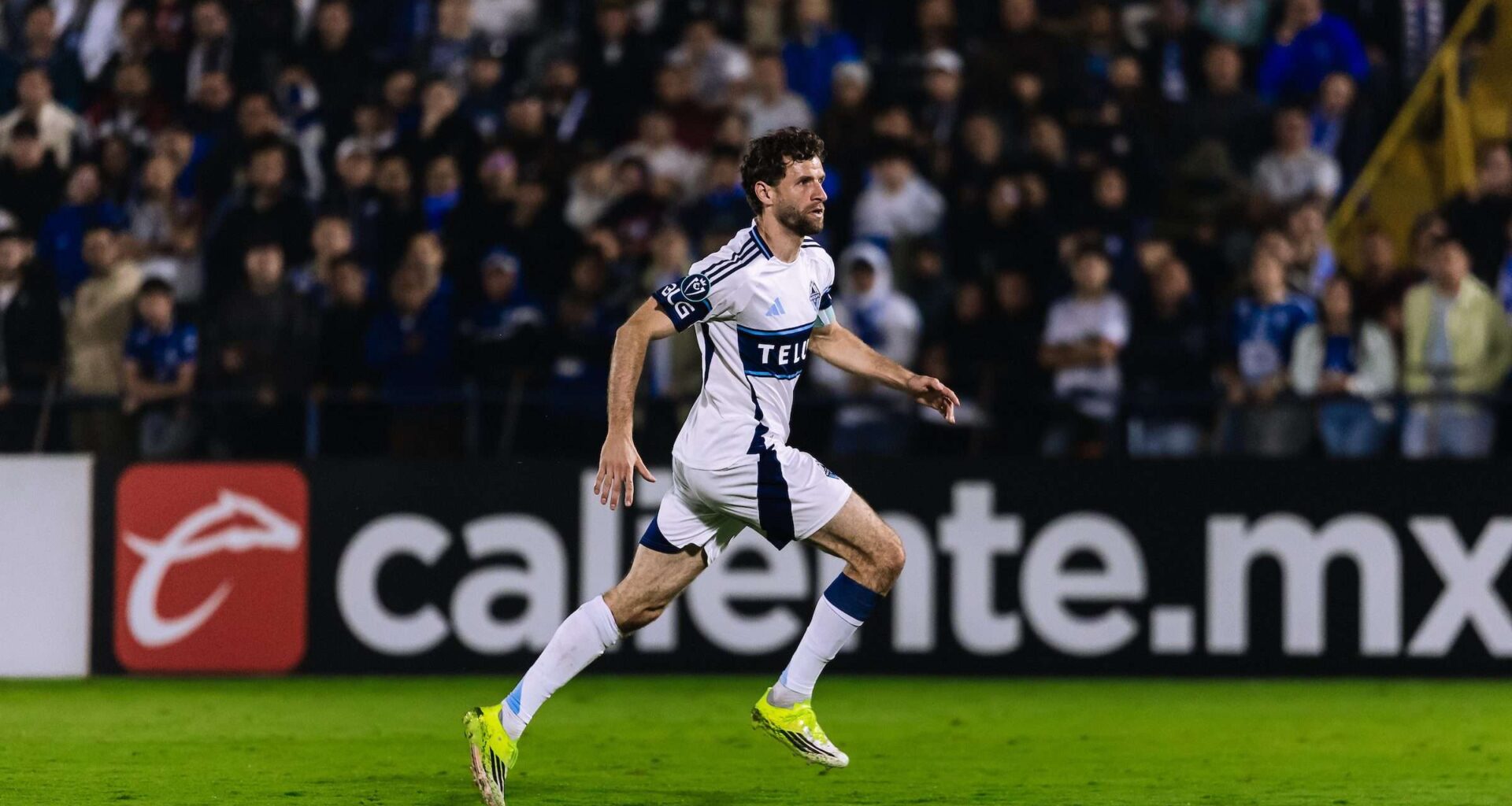
The MLS season begins Saturday for the Vancouver Whitecaps, and with that in mind (as is tradition), we rounded up our writing team to ponder some questions and make some predictions about the upcoming season.
Without further ado, let’s dive right in.
Where do you see the Vancouver Whitecaps finishing in the Western Conference this season, and if they reach the playoffs, how far will they go?
Andrew: The way things are in the Western Conference right now, I don’t think the ‘Caps have to do all that much to be a top-four team, which should be the expectation heading into this season. I think a second- or third-place finish feels about right. And while I’m hesitant to predict a return to MLS Cup, this is definitely not going to be a team anyone wants to face in the playoffs.
Caleb: I think it will be between the ‘Caps and LAFC for first in the West. At the moment, I think LA might have the edge, but if Vancouver can continue to pull off the excellent player development we saw last season and/or we see another mid-season transfer market splash, that could change. So I guess second in the West is my answer. On the same basis, I would pick them to reach the WCF.
Ian: This question feels a lot harder to answer than it should be. One of the standout themes from the 2025 team was their resilience; if one player goes down, another one steps up—rinse and repeat right until the cup final. But what if the club cannot again capture lightning in a bottle? If not a single player gets hurt this season, the Whitecaps are fighting for Top 2 with LAFC and San Diego; but since that’s not realistic, and if fortune somehow doesn’t favor the bold this time around, I’m going with a fourth-place finish. There’s an outside chance they miss out on a second-round home game, but that won’t matter when they make the WCFs again.
Alex: The Western Conference is a very strange place right now. There are probably only four legitimate contenders: LAFC, San Diego, Seattle Sounders, and the Whitecaps. After that, it’s a lot of middling teams that probably won’t threaten them (although this is MLS… so never say never). Because of that, I can comfortably say that the Whitecaps will finish in the top four, and more specifically, I’ll suggest that they’ll finish in second (behind LAFC). In the playoffs, though, they should have what it takes to reach another MLS Cup final, based on what they showed last year, as they demonstrated impressive ruthlessness and resilience in knockout games across all competitions (finals aside).
Kian: Well, last year we had some offseason chaos and the Whitecaps came pretty close, so this year with even more drama I think they’ll win the lot! I’m kidding, slightly. Sustaining success is hard in MLS, and although I really hope to be wrong, I just can’t see them being as dominant as they were across the regular season for the second year running. However, in the playoffs, the ‘next-man up’ mentality will become a big factor. That’s one area where the Whitecaps have an advantage, having experienced absences and adversity to make the final before, so I can very easily see them repeating the feat and playing for MLS Cup once again. So I’ll go 3rd, but they’ll go deep into the playoffs regardless.
Sam: As others have outlined, it really does feel like a four-way battle for the top spot in the West, and there’s not a lot separating those teams. I think that for Vancouver to be a top-of-the-table juggernaut, they’ll need Ryan Gauld and Thomas Müller to be healthy most of the season, and I’m just not sure if I want to bank on that. Nonetheless, Jesper Sørensen’s team plays a style of football where they are going to control proceedings against weaker teams, and not too many results should be left to chance, so they should still be right up there. I’m going to predict another second-place finish, and they make at least the WCF.
Vancouver posted a +28 goal differential in 2025, best in MLS. Do you expect them to remain a top-three team in this category in 2026? Why or why not?
Andrew: A lot of this hinges on what you think the attack can do this year without Ali Ahmed and Jayden Nelson. Defensively, this team will once again be solid, assuming Tristan Blackmon can stay healthy and Ranko Veselinovic can find form when he returns. I think the attack will ultimately be fine, but I could see some growing pains early that prevent them from being in the top three.
Caleb: I would say yes. The departure of Ahmed and Nelson probably means the team starts out a tad weaker than they finished 2025. But they were really good last year, and they have a lot more squad depth to start this season. I think that will insulate the ‘Caps against a mid-season slump and help them deal with fixture congestion better.
Ian: My answer is somewhat similar to Andrew’s, in that they’ll be on the periphery of the Top 3, but for a different reason. Again, I’m worried about player health: for example, the ifs and whens of Ranko coming back or how long before Ralph Priso is filling in. This isn’t to say Priso didn’t perform admirably when called upon, because he absolutely did. Instead, my thinking is that we could be one rolled DCM ankle away from seeing a drop in differential.
Alex: Yes. It’s hard to say if they’ll be better or worse offensively without Ahmed and Nelson, as they’ve replaced them in terms of talent but not profile, but even if they regress in that department, they’ve got enough juice in their ranks to avoid a big drop-off in goals scored. Then, defensively, you have to think they’re more or less the same team, as they proved that the hallmarks of their system (ball-dominant and aggressive) help them wear down teams and limit chances against. So based on that, they should still have a pretty good goal differential by the end of the season.
Kian: Call me miserable, but I’m going to go with no. Purely because maintaining dominance is really hard in this league, and other teams have strengthened enough to get themselves into that bracket. Teams will also inevitably have started to figure Vancouver out, so it will be hard to repeat last year. Having said that, I can only name two sides who I think are likely to top the Whitecaps, so yet again, I hope I am wrong.
Sam: It’s a very high bar, but I’m going to say yes. One of the reasons for that is the middle class of the Western Conference is a lot weaker than the East, and I think the Whitecaps will beat up on those teams, even if it’s much closer against the upper echelon. I think Vancouver could take a step forward defensively, even if the attack sputters a bit early on.
Which offseason addition will prove to be Vancouver’s most important?
Andrew: I really do like Cheikh Sabaly—if this were Houston or RSL, I think this signing would be getting much more positive attention, but Axel Schuster has become a victim of his own success, so it has flown under the radar. But I think the answer to this question is actually Oliver Larraz. Larraz is very high on the list of “middling domestic players who can become great with some Jesper Sorensen magic,” and midfield was an obvious area for depth this offseason. Larraz’s profile is a perfect fit for the Caps, and I suspect he will get chances to show it.
Caleb: Sabaly is probably the guy who excites me the most. But if Sebastian Berhalter or Andres Cubas draws a big offer (or can’t be re-signed, as the case may be), then Oliver Larraz becomes very important.
Ian: Cheikh Sabaly, no question. Filling in that Ali Ahmed-shaped hole on the wing will be tough, but I think Sabaly would be the one to do it.
Alex: I’ll go with Cheikh Sabaly (who would’ve seen that coming?). The Whitecaps have had some pretty good success when shopping in France recently, as seen with Andres Cubas and Emmanuel Sabbi, and Sabaly has the sort of statistical and athletic profile that should fit nicely in MLS. Plus, unlike other similar signings who have come to MLS, he doesn’t have to come in and light the world on fire right away—no matter if he comes in and produces Daniel Ríos numbers, or if he comes in and flirts with double-digit goals, both would bring bonus value to the Whitecaps attack. Of course, you’ll hope that he does the latter, not the former.
Kian: I don’t like using the flashy signings for the ‘most important’ part of the team (and like Andrew said, the correct answer is probably Larraz), but for better or worse, the success of Bruno Caicedo will be very important for Vancouver. The Ecuadorian has to replace both Ahmed and Nelson in the role of a pacey, dynamic winger who can offer the Whitecaps an outlet on the side. After the form Nelson showed at the start of the year and Ahmed at the end, that will be a tricky ask for the youngster.
If Caicedo can’t do that, then Vancouver suddenly might appear pretty one-dimensional out wide, simplifying the job of opposition fullbacks and in turn limiting their attack. However, if he shines and proves to be a dangerous threat, then the Whitecaps could take the next step-up and finally get their hands on more silverware beyond the Canadian Championship.
Sam: To answer the question without fully answering the question, it’s whichever wide/attacking player has the biggest breakout. I’d also lump Kenji Cabrera into this mix, because he barely played last year, with just 180 minutes. Cabrera and Sabaly are the most likely candidates to have instant impact, but with Caicedo being more of a straight-line burner, he might be the best answer to fill the Ahmed/Nelson hole from a stylistic perspective. The good news for Vancouver is they don’t need all three of these guys to be a hit, but they do need at least one or two of them. If Cabrera shows what we’ve seen in flashes over a full season, that could be massive for this club. I think he has the highest ceiling.
What is one area of weakness that opposing teams may be able to exploit this season?
Andrew: The biggest weakness isn’t even tactical: it is the reality that the Caps will once again be playing the most matches of any team in the league. Last season, Vancouver was able to thrive without their starting two centre-backs (one of whom won Defender of the Year and the other who would have won it had he stayed healthy), one of their two DPs, their DP-level striker, a TAM left-back, and several other pieces. That level of resiliency is basically unheard of in MLS history, and I think it is fair to wonder whether another gruelling season will push things to the limit.
Caleb: Pursuant to my last point, if Sebastian Berhalter can’t be retained for the full season, I think getting the ball from the defensive third to the final third will be a challenge.
Ian: I’m going with the low-hanging fruit of striker depth. Not gonna lie, I’m still living the “We might sign Robert Lewandowski!” fantasy, but until that actually happens, the Whitecaps won’t have an out-and-out #9 after Brian White. That isn’t inherently bad, but it does allow for easier planning from opposing defenses: stay compact, create traffic jams in the middle, and watch off-the-ball runs.
Alex: With no Ahmed and Nelson, there aren’t a lot of guys who will run at defenders with reckless abandon. For a Whitecaps team that will face a steady dose of low blocks, that lack of profile could hurt them, as they don’t necessarily have many players that can help break open defenses with their dribbling. Sometimes, it helps to have a wildcard like that in cagey games.
Kian: It’s definitely not particularly a bad problem to have, but does Jesper know when to use Müller and when to leave him out? It’s a cynical question, but at 36 he is not going to be able to play every minute in this system. Choosing which minutes he gets, and knowing when he has exceeded them and taking him off regardless of the risks of changing the game by doing so, will be crucial if Vancouver are to properly capitalize on the German. If they can’t successfully do this, then teams may be able to use his lack of energy to their advantage and hurt the Whitecaps.
Sam: I think I have two primary concerns about this group as currently constructed. The first is they have like 7–8 attacking midfield/winger-that-likes-to-cut-inside players, and part of me is concerned that there’s not enough diversity there. Secondary to that, and really feeding off the first point, is the lack of pure striker depth. I know the Moneyball strategy says that having the discipline to stick with Rayan Elloumi is the right call, and I have a lot of faith in the youngster, but Brian White does have a habit of missing some weeks of action here and there, and I wonder what the attack will look like in his absence. Maybe one of those attacking midfield types will play as a false nine? We shall see.
How has the team evolved tactically, and where do you expect the biggest on-field differences to show up?
Andrew: Jesper Sorensen knows one way of playing, and I have a hard time seeing a major change in how Vancouver plays. That is ultimately a good thing, though you wonder what opposing teams will do after having a full offseason to watch tape on Sorensen-ball.
I’m curious to see how Jesper Sørensen adapts to the change in personnel on the wing. With the departure of Ahmed and Nelson, the Whitecaps don’t have any wingers that hug the touchline, except for Bruno Caicedo. Everybody else likes to get narrow, which might be difficult to balance.
Ian: Honestly, I hope Sorensen has addressed this. For those of you refusing to visit Reddit, it’s a ranking of MLS teams by the % of goals allowed in 2025 in the first 15’ and after 90’. To be fair, that’s the percentage of all goals a team conceded, of which Vancouver did not allow many to begin with, but giving up early or late goals can shape matches, or even have unforeseen consequences. If Sergio Ramos doesn’t get a PK in the 97th minute for Monterrey, maybe us Vancouverites could have been the ones to give Cruz Azul food poisoning.
Alex: What I like about Jesper Sørensen is that he is more of a principles guy than a formation guy, and that allows him to be tactically flexible. We saw that last year with his switch from a 4-3-3 to a 4-2-3-1 after Thomas Müller’s arrival. This year, something to watch will be the way he handles the fact that the Whitecaps have a lot of tweener attackers that can play in a multitude of different positions centrally. I think that will manifest itself in two ways: 1) I expect a lot of fluidity in terms of player deployment, so don’t be surprised if we see experiments such as Müller playing on the wing and at striker, Sabaly and Sabbi playing up front, and others. 2) The Whitecaps will have to rely on their fullbacks to provide a lot more width than they did last year.
Kian: Unfortunately, I couldn’t catch most of preseason or the Champions Cup opener, so I don’t have too much to go off. However, I will assume the big question is the same as the one we had at the end of last year, and it’s how can you adapt this team to maximize the collective following the arrival of Müller?
Sam: Jesper has mentioned that this year will be more about small details, now that the principles of his playstyle have already been established. I think that as a result, we could see the Whitecaps be more fluid in terms of their shape, as it’s easier to do that when your players already know all the basics of the system. Equally, as Alex mentioned, Edier Ocampo and Tate Johnson will be asked to do more direct attacking and be a little less possession-minded, which I think suits their games, especially Ocampo.
Which player faces the most pressure to take a major step forward this year?
Andrew: Sometimes the obvious answer is the right one, and for this question, the answer is Kenji Cabrera. Cabrera went from a rather hopeful U-22 signing to supplanting Jayden Nelson and being the first attacker off the bench. I think there is a real chance for Cabrera to match or surpass Ali Ahmed’s 2025 season statistically.
Caleb: I think Tate Johnson is probably the young player facing the most pressure because the other options at his position have major question marks around them. Will Sam Adekugbe ever crack 1,000 minutes again? Can Mihail Gherasimencov hack it at this level? I certainly don’t know the answer to either of those questions with a level of certainty.
Ian: Strangely, it may be Ryan Gauld. He made limited cameos at the end of last season, but he’s still recovering from the knee injury he suffered last March. Has the locker room dynamic changed without him? If so, where and how does he fit in, particularly after Thomas Müller arrived to become a deserving de facto leader? This isn’t to say there will be a clash of egos, but once he’s fully fit, Gauld will for the first time have competition for playing time. Unless Sorensen delivers on some clever roster navigation to reveal a Ted Lasso-esque “Two Aces” scenario, of course.
Alex: Ralph Priso playing at the level that he did last year at centre-back would offer the Whitecaps a good amount of flexibility at that position going forward. With Ranko Veselinovic coming back at some point, that would create a logjam at the position, and that could open the door for the Whitecaps to use someone like Mathías Laborda or Tristan Blackmon as a trading chip. While not easy to make, that’d be the exact sort of aggressive move that top teams would tend to make to stay at their apex.
Kian: Kenji Cabrera. With two of his competitors for wide minutes leaving, and Ryan Gauld out until April, the Peruvian has an opportunity to make the starting spot his own. If he can’t take a step forward then, like I said when talking about Caicedo, Vancouver may become limited in attack, so the pressure is on for him to step up from being an impact player and turn into a starter and a core component of this team.
Sam: I am going to say Sebastian Berhalter. Hear me out. I think that despite the big names in Müller and Gauld, this Whitecaps team will only go as far as Berhalter takes them. So, for the Whitecaps to lift a trophy, the young American has to build on last season’s success and truly establish himself as one of (if not the best) central midfielder(s) in MLS. That’s a massive ask, and it’s a lot of weight to carry on your shoulders in a World Cup year. Berhalter in many ways reflects the challenge the Whitecaps have in front of them this season; having a breakout is one thing, but cementing your place as a “big dog” can sometimes be just as challenging.
Are there any players currently on the roster that you wouldn’t be surprised to see moved before the end of the season?
Andrew: The fact that there haven’t even been rumors about Sebastian Berhalter and Tristan Blackmon’s contract status makes me fear they are strong contenders here. I’ll toss out Sebastian Schonlau, who feels like a player the Caps could bail on this summer, given the volume of other options they have at centre-back.
Caleb: My differential pick is Rayan Elloumi. If he goes on a hot run, I think that will trip enough alarms at big clubs in Europe that someone comes in with a big offer.
Ian: Not a single name is jumping out at me as a player who might be moved, including Tristan Blackmon after all the sniffing around Miami had been doing. That said, and I hope I’m not manifesting destiny here, but if forced to pick a name, it would be Sebastian Berhalter. This has no basis in reality other than him balling so hard at the World Cup this summer that European teams could come calling in late July.
Alex: There aren’t any obvious names that stand out to me, and I don’t want to say anyone obvious, so let’s throw out a wild one here… Emmanuel Sabbi. As an American, you could probably sell him to another MLS team for a pretty good fee via a ‘Cashfer,’ and while he would be sorely missed, you have enough attackers (and a few youngsters) to overcome that. And at 28, he’s at an age where you’d listen to the right offer if his hot streak last year convinced someone to pony up a healthy amount of cash.
Kian: Sebastian Berhalter. How someone hasn’t made a big bid for him, I don’t know—he was immense in all aspects of midfield when it mattered most last season. I will be amazed if he is in Vancouver beyond the end of his contract, but the question is how much will they get for him?
Sam: Berhalter obviously is the biggest name that could be due for a move, while Schonlau could just be a victim of the numbers game at CB. Outside those names, here’s one worth thinking about: If Tate Johnson continues to grow in year two as a 20-year-old in MLS, I think alarm bells will start to ring amongst clubs in Europe (much like Caleb’s thought above), and he could be scooped up in the summer window by a savvy front office.
(Image: Vancouver Whitecaps FC)
Related