
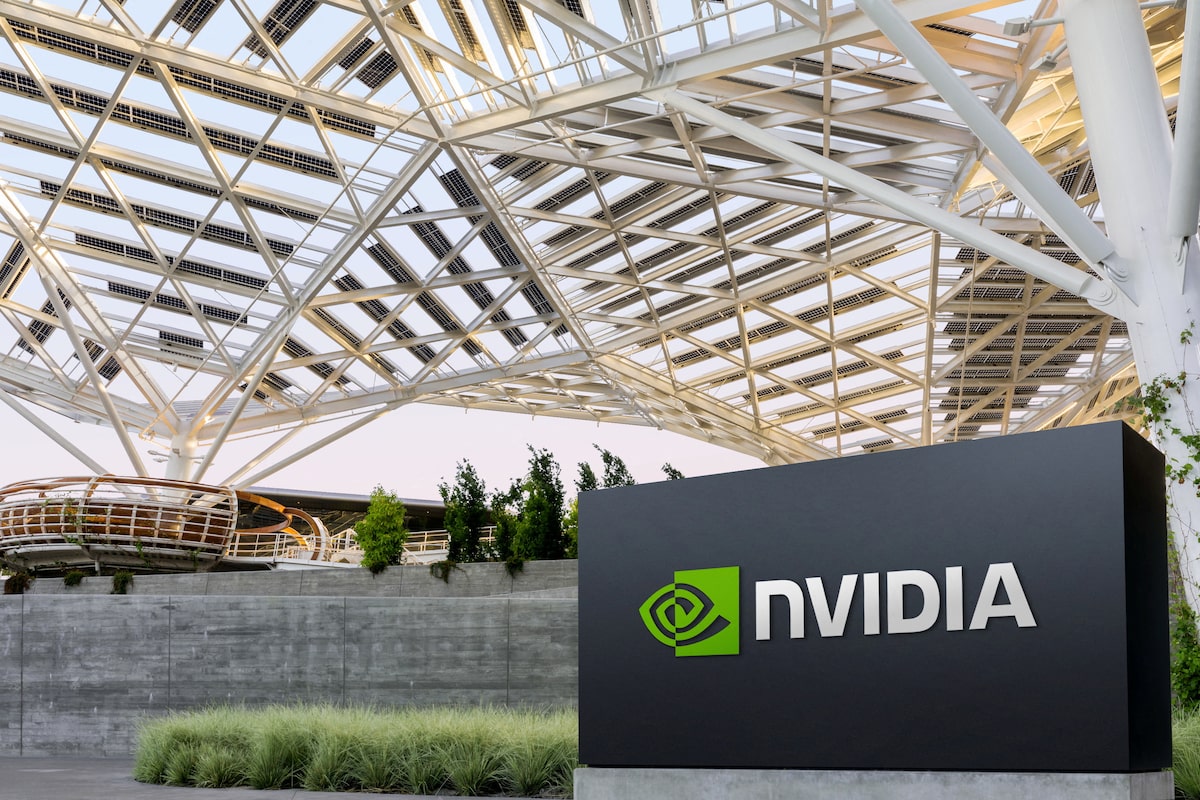
Dominant players in the AI race, such as Nvidia, have seen their stock prices fall since the start of the year.NVIDIA/Reuters
John Rapley is a contributing columnist for The Globe and Mail. He is an author and academic whose books include Why Empires Fall and Twilight of the Money Gods.
After years of double-digit gains, when so much money flowed in that the U.S.’s biggest companies grew larger than Canada’s economy, New York’s stock markets have entered a period of turbulence.
The dominant explanation on Wall Street is that the AI shakeout has begun – with companies that are likely to be hurt by AI getting dumped by investors. Last week’s trading brought large sell-offs of software companies whose business models appear most likely to be disrupted – such as legal or accounting firms whose clients might now build their own software using AI applications. At the same time, chipmakers posted strong gains, interpreted by some as a sign that investors think companies will need to boost compute capacity to stay afloat in the AI revolution.
This analysis dovetails with recent talk among analysts that the technology is on the verge of a major breakthrough. AI entrepreneur and blogger Matt Shumer recently posted an essay titled ‘Something Big Is Happening’, arguing that AI was on the verge of a quantum leap. He suggested that AI would soon be able to emancipate itself from human control, and ultimately surpass human intelligence.
How AI is reshaping the work of software developers
The post generated a lot of buzz in the tech blogosphere and reinforced an emerging American narrative that, after years of laying the groundwork, the AI revolution is about to begin.
However, outside the U.S., this tipping-point story seems to be getting little purchase. In China, the other country in the vanguard of the AI revolution, researchers aren’t neglecting the pursuit of artificial super-intelligence, but they appear to think the more important development is coming in practical applications of existing AI (including robotics, where China enjoys an edge).
This appears to be the prevailing view in much of the world – that AI will be transformative, but that the belief it will be an emergent new species, superior to humans, reflects Silicon Valley groupthink more than reality. It could be that the rest of the world is wrong on this and is about to be overwhelmed by a U.S.-controlled super-technology. Then again, it could be the Americans who are wrong.
And, in fact, the action on the stock markets raises doubts about whether what we’re seeing is a tipping point that will enrich some companies and wipe out others. Because if this were so, we’d be seeing the share prices of the perceived winners of the AI race rising. We are not. The dominant players in the AI race, such as Google, or the partners of privately owned Anthropic and OpenAI – including Oracle and Nvidia – have all seen their prices fall since the start of the year.
Opinion: AI won’t take your job, but the AI bubble might
Equally, while the U.S. market is turbulent, other, more traditional markets are rallying strongly. If the U.S. is really on the verge of a breakthrough that will upend the world economy, the rest of the world isn’t buying it. Since the start of the year, the U.S. stock market has struggled to move at all. But Britain’s is up 6 per cent, Mexico’s by 11 per cent, Japan’s by 13 per cent and Brazil’s by 16 per cent. In short, ‘American exceptionalism’ now refers to it being the exception in a world of rallying stock markets.
It’s possible that rather than an AI shakeout, what we may be seeing is the AI bubble deflating. A growing body of analysis supports this conclusion. Most recently, UBS argued the ‘hyperscalers’ driving the massive build-out of data centres may have gone too far – that these companies might not generate returns justifying their spending and may soon have to scale back their plans, which would carry negative implications for companies that have profited from the expansion, especially chipmakers.
Moreover, in a market that has become unusually politicized by the U.S. President’s meddlesome behaviour – rewarding companies he likes and penalizing those he doesn’t – the approach of the midterm elections may put an end date on the AI rally.
With growing expectations that the Democrats will win back the House and possibly put the Senate in play, there is talk in Washington that companies perceived as too cozy with Donald Trump will be in the crosshairs of Congressional inquiries. The Magnificent Seven rally benefited from the U.S. President’s determined push to block any regulation of the industry, so it may encounter headwinds if Mr. Trump is hemmed in by Congress next year (an explanation which would also seem to account for the recent floundering of crypto, another sector patronized by the U.S. President).