
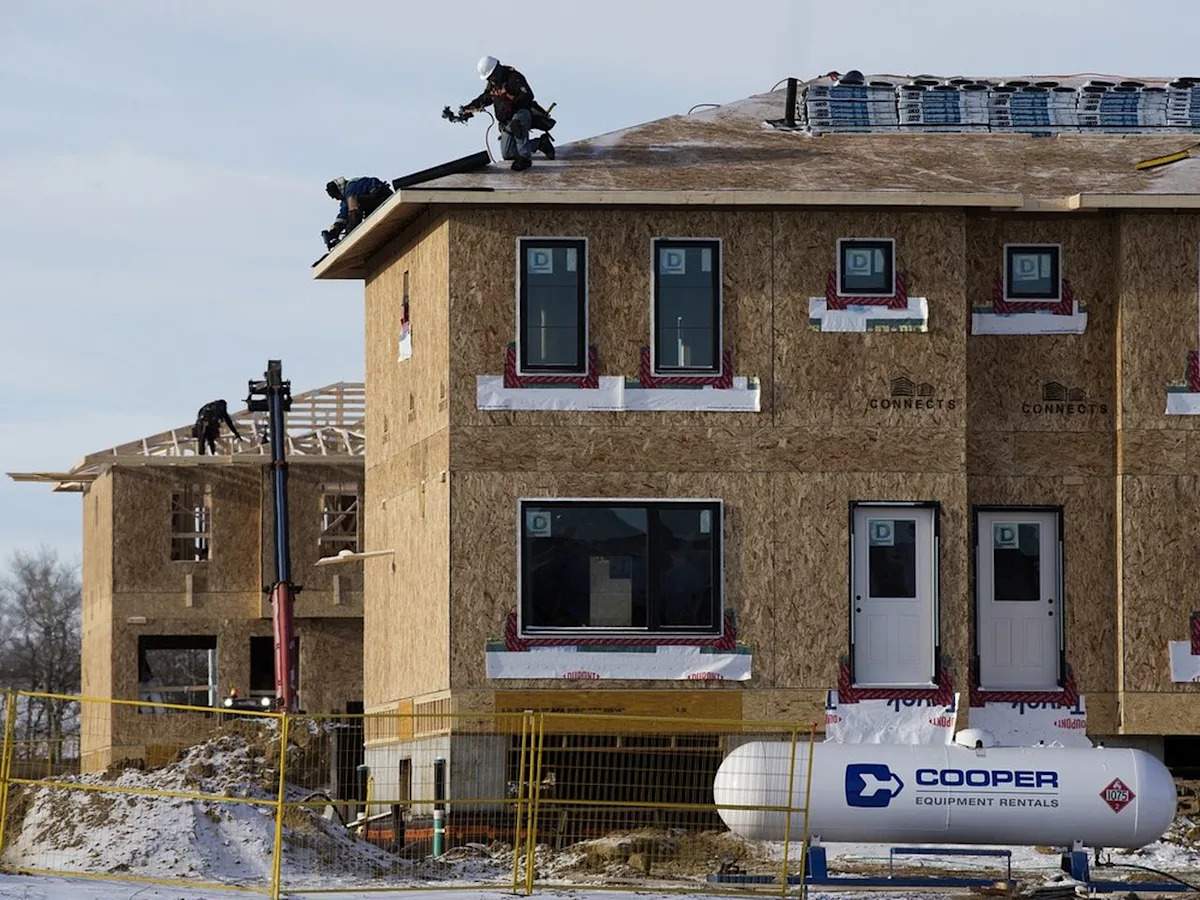
For the first time in at least three years, Calgary and Edmonton — Canada’s hottest housing markets — are showing signs of a winter cooldown.
Sales in Edmonton fell by more than 27 per cent in January, compared to a year earlier, while Calgary sales dropped by 15 per cent over the same period. Nationally, home sales also appeared to freeze, falling by 16 per cent last month, the second weakest January since the global financial crisis, according to an RBC report.
The benchmark price for a home in Calgary fell 4.7 per cent in January, with Greater Edmonton’s benchmark price falling one per cent.
Typically, dips in sales might be concerning, but Darlene Reid, board chair with the Realtors Association of Edmonton, said the market is finally “balancing out.”
Spurred by several consecutive years of population growth, year-over-year increases in both prices and sales were the norm for Calgary and Edmonton’s real estate markets since 2023. Whether it was prices or sales activity, both cities showed remarkable strength, often bucking yearly and national real estate trends during seasonal winter slowdowns.
Alberta has had a significant slowdown in newcomers to the province, and it’s showing in the housing sector. Compared to January last year, Edmonton has 1,100 more homes for sale compared the same time last year.
Reid reflected on what was a chaotic few years for the city’s housing market.
“It was so hectic because realtors had to be on the ball 24-7. The second a property hit the market, your client wanted to be there within like 15 minutes. So, you were on call 24-7 to try to get that property for your client,” Reid said.
The effect was that buyers tried to move fast with little time to fully consider a property. Even though sales were busier over that time, Reid believes a balanced market is better for everyone.
“This is absolutely better for buyers. I would argue that it’s even better for sellers, because sellers aren’t rushing to get homes on the market, they’re taking their time,” Reid said. “It’s better for the lenders. It’s better for the home inspectors. They’re not being asked to be out at a home within 24 hours. So, I think it’s taken the pressure off every aspect of this market, which is healthy for everybody.”
As most of the market balances out, supplies of apartments and condos continue to surge in both of Alberta’s biggest cities.
“Apartment condos, that’s really the segment that will likely continue to see some pressure and it’s not because demand is completely gone. It’s not. It’s just now that demand is being stretched amongst more supply,” said Ann-Marie Lurie, Calgary Real Estate Board’s chief economist.
Rents dropping
The benefit of a strong supply of condo and apartment options is that it’s putting a lid on rents, which — like home prices — had inflated over the past three years.
According to a monthly report from Rentals.ca, Calgary rents dropped 5.7 per cent in January, compared to a year earlier, hitting a three-year low. Edmonton also saw a drop in rents by more than 2.5 per cent.
Lower rents bode well for affordability across the province, but home prices might not follow suit. Lurie said just because sales have slowed doesn’t mean the home prices will come down.
“Through that population boom, there was a lot of price growth, and it’s not erasing all of that, but it is definitely returning to levels that are more consistent with longer term trends,” Lurie said.
Economists at Alberta bank ATB Financial expect the province’s monthly average for housing starts to come down to 45,000 in 2026 compared to the 55,000 average per month in 2025.
Even with all those new units, neither Reid nor Lurie predict an oversupply.
Referendum uncertainties
It would take a significant economic shock to reverse any of the gains made over the past several years for prices to come down in the detached, semi-detached or row-house categories, said Lurie.
“Where I get concerned is if we start to see outflows,” she said.
Even as migration slows in Alberta, it’s still one of the fastest growing provinces in Canada. The trend could stop, she speculated, with a big economic downturn, perhaps triggered by an unfavourable trade agreement with the United States, or if Alberta initiated a referendum to separate.
Lurie said the uncertainty around either scenario would be problematic, but that a possible referendum is not a front-burner issue.
“At this stage, I don’t know if it’s quite top of mind in terms of uncertainty, because we’re not actually getting to a vote stage. If you’re going to a referendum, that’s a very different scenario. And I think you would start to see the uncertainty impact be far more significant,” Lurie said.
Related
Bookmark our website and support our journalism: Don’t miss the news you need to know — add EdmontonJournal.com and EdmontonSun.com to your bookmarks and sign up for our newsletters here.
You can also support our journalism by becoming a digital subscriber. Subscribers gain unlimited access to The Edmonton Journal, Edmonton Sun, National Post and 13 other Canadian news sites. Support us by subscribing today: The Edmonton Journal | The Edmonton Sun.