
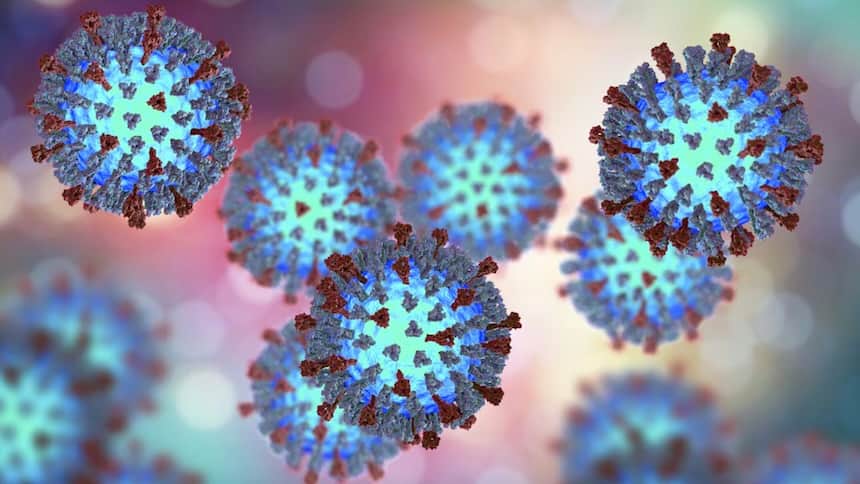
Vaccinations are the best protection, say experts
⭐️HERE’S WHAT YOU NEED TO KNOW⭐️
Cases of measles are rising in Canada and abroad.
There are outbreaks in popular travel spots like Mexico and parts of the United States.
Most Canadian kids are already protected, but some might not have been vaccinated.
Experts say it’s important to get vaccinated.
Read on to find out why measles is on the rise. ⬇️⬇️⬇️
If you’re travelling down south for March Break, public health experts say it’s a good idea to check your vaccination status.
That’s because a rare illness called measles has been circulating more and more in recent years, and outbreaks are popping up in popular travel destinations.
Since Jan. 1, Mexico has reported more than 2,700 new measles cases this year and almost 1000 have been detected across the United States.
There have been 197 reported in Canada.
If you haven’t been already, experts say there is still time to get vaccinated before traveling to keep you and your family safe.
What is measles?
Most people who get measles make a full recovery, according to Dr. Jacqueline Wong, an infectious diseases specialist at McMaster Children’s Hospital in Hamilton, Ontario.
The problem is that it spreads so easily that people who are not vaccinated are vulnerable to getting it if they are in the same room as someone who has it.
The illness is spread through droplets in the air from people sneezing, talking and coughing.
At first, contracting measles may feel similar to having a cold or the flu. Kids may develop watery eyes, a cough and a runny nose.
However, a few days later, a red rash often appears on your face, growing larger and travelling down the rest of your body.
If you aren’t vaccinated against measles, you can get really sick and, in some cases, even end up in the hospital.
To learn more about measles and why it’s so contagious, check out the following article:
Why have cases been increasing?
In November, Canada lost its elimination status for measles after having it for decades.
This happens because of “sustained transmission of the same measles virus strain in Canada for a period of more than one year,” according to the government of Canada.
Experts say the return of measles is a result of several factors.
First, during the pandemic, many families missed out on routine vaccinations for their children.
Second, there’s been a growing distrust in vaccines.
According to experts, that distrust stems, in part, from misinformation on social media in recent years about vaccines being unsafe.
Even though vaccines are safe, many Americans have lost trust in them, according to Dr. Demetre Daskalakis, a senior public health adviser for the Los Angeles-based community health centre Wellness Equity Alliance.

People in Mexico City, Mexico, line up for a measles vaccine at a subway station amid recent outbreaks in the country. (Image credit: Eduardo Verdugo/The Associated Press)
He said that mistrust has created an “ecosystem where people won’t get vaccinated,” and anti-vaxx conversations are spilling into other countries around the globe.
That’s a problem since measles is one of the most contagious known illnesses, meaning that high vaccination rates are key to keeping it under control.
Wong said that health-care workers like her have worked really hard for many years to make sure people are immunized and protected.
“It is really disappointing to hear [that we’ve lost elimination status] because this is a preventable thing,” she told CBC kids News.
She said she and other doctors need to work to rebuild public trust.
“It is an important wake-up call and reminder that, for vaccine-preventable infections, we can’t become complacent.”
Check your vaccination status, says expert
If you plan to travel to Mexico or the United States for March Break, experts say it’s a good idea to ask your parents about your vaccination status.
This is especially important if there are newborns in your home, since infants are particularly at risk and the measles vaccine isn’t usually given until 12 months old.
If you haven’t received a vaccination, don’t stress.
Depending on what province you live in, your parents or guardians can make an appointment with your local public health office or pharmacy, even if you don’t have a family doctor or pediatrician.
Wong said the vaccine can sometimes have side-effects like pain, swelling, redness or fever.
In extremely rare cases, there can be more severe side-effects, but Wong said the protection you get from the measles vaccine far outweighs the risks.
“It’s one of the safest vaccines that we have because we have had so much experience with it after decades and decades of using it.”
While Wong says that full immunity will only come two weeks after receiving your final dose, it is considered “life-long protection against measles.”
If you find out your parent chose not to vaccinate you over concerns about the safety of vaccines, Wong said it’s worth a conversation with them.
She said it’s a good idea to do further reading on measles or talk to a school nurse beforehand so that you can talk to your parents with some knowledge.

The measles virus is one of the most contagious viruses because the airborne particles that spread it can linger in the air for hours. (Image credit: Dr. Erskine Palmer/CDC)
“It’s helpful if you can prepare beforehand so that you can express to your parents why the benefits outweigh the risks for you and talk through concerns they may have.”
If that isn’t possible and you are travelling, Wong said try your best to avoid crowded indoor areas as much as possible where viruses can more easily spread.
Have more questions? Want to tell us how we’re doing? Use the “send us feedback” link below. ⬇️⬇️⬇️
With files from Lauren Pelley/CBC