
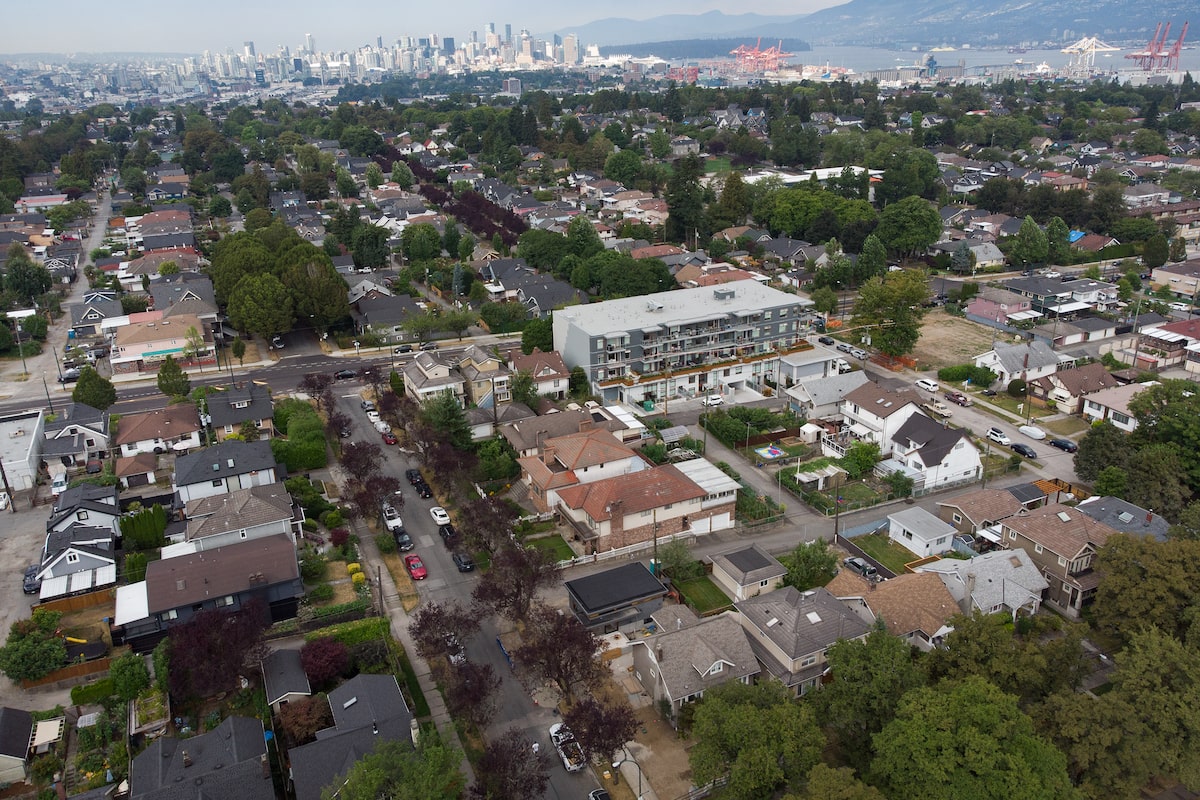
It takes a village of people, according to the African proverb, to raise a child. That village also needs a school. Which is why it’s so unfortunate that, in the Olympic Village area of Vancouver, a long-planned elementary school was delayed again this month.
This facility has been promised since in 2007. Assuming council approves a rezoning for the property after more hearings on Thursday, the school is still years away from opening.
That’s absurd. It shouldn’t take more than two decades to build a school for a growing neighbourhood. And the delay speaks to a bigger problem: there’s a disconnect between cities that plan development and provinces that pay for schools to serve new residents.
A common feature at construction sites in Canada are signs warning that children moving into new housing will not necessarily get access to the local school. These are seen not only at downtown high-rises but also at suburban subdivisions. That’s a failure of public policy, and about as logical as building homes but barring new residents from the nearby community centre.
Provincial funding for schools has to be more closely linked to development approvals. If provinces want to encourage housing, as they say they do, growing neighbourhoods can’t be left with insufficient schools.
For provinces to wait to fund schools until there are hundreds of parents clamouring for space is unfair to these families. It also misses a key planning logic. Knowing there isn’t a school will discourage parents from moving to an area. Conversely, knowing there is one attracts them. The presence of a school can help create its own student body.
This matters in the urban context because cities want more families. Without them, they risk becoming essentially large retirement villages. Families help make cities more vibrant, interesting and successful.
In Vancouver, the city planned the Olympic Village as a high-density growth site. The area has been successful at attracting lots of families. But this has left local schools struggling and forced some parents to drive their children to distant facilities. That’s contrary to good city-building practice.
Which makes it doubly galling that provincial funding for a new school has been so long in coming.
The city zoned the Olympic Village site for a three-storey school in 2007. But the province didn’t make a a funding commitment until 2020, which in turn allowed the city and school board to negotiate a lease for the land. The province then allocated money in 2024. At best, the school will open in 2029.
Nothing about this process suggests urgency.
As this process plodded along, the need was growing. So last year the city sought to change what could be built at the site. The building that had been zoned for in 2007 could house 350 pupils. The new plan calls for a fourth storey and a larger building, to accommodate 630 students.
That rezoning prompted another round of public hearings.
Supporters pointed to the growing population of children and the need to make Vancouver welcoming to families. Opponents, worried about the impact on local green space and how much traffic the school would cause, want a return to the smaller school design, with leftover money used to expand other schools in the area.
But there’s no guarantee the province would be willing to reallocate any extra money. Also, expanding those schools risks starting a new wave of opposition from the people living next to them. And how long would all this take?
Instead, council should make the zoning change to allow the new school design.
If there’s any good news in this story, it’s that building the smaller school a decade ago would have turned out to be short-sighted decision. The number of families in the catchment area is bigger than expected, an urban success story.
Even if the protracted process results in a school better suited to the local population, that’s no reason to celebrate. The need for an Olympic Village school was identified so long ago that, in theory, a child born in that neighbourhood around the time it was proposed could have grown up and competed in the Games in Italy.
The fact that it will take at least 22 years for the project to go from a proposal to a functioning school is a failing grade and an indictment of political will.