
The Olympics are over, the United States won the gold medal in men’s ice hockey, and the NHL trade deadline is only 12 days away.
Yes, it’s time for us to whiplash away from the high-octane, best-on-best tournament we watched in Milan and focus our attention on the NHL’s 32nd-place Vancouver Canucks, the remaining 25 games on their schedule, and what this franchise can do to begin to get back on track.
Across the next two weeks, for obvious reasons, our focus will be far more on what the Canucks plan to do off the ice than how they perform on it.
Coming out of the Olympic trade freeze, the Canucks are a motivated seller with three key pending unrestricted free agents to move between now and March 6. Based on what I’m hearing, however, there are other items that Vancouver would like to accomplish or would at least be open to considering ahead of the deadline, too.
As of Sunday morning, team sources indicated to The Athletic that the Canucks didn’t have a nearly consummated trade queued up for the expiry of the trade freeze at 8:59 p.m. PT on Sunday night. That detail, however, was qualified by Canucks management’s belief that trade talks were likely to heat up throughout Sunday afternoon and into Monday morning.
For the Canucks, the focus in the lead-up to the deadline is straightforward: Vancouver wants to acquire as many good assets as possible, consistent with its rebuilding direction.
This is a team that’s willing to listen on just about everybody on the roster, but isn’t proactively seeking to move the half dozen or so expensive veterans with significant term remaining and some form of no-move or no-trade protection on their contracts.
Ideally, the assets that the Canucks are looking to net ahead of the trade deadline will come in the form of draft picks, but it’s worth noting that management is also open to purchasing or acquiring players that can play a role for the club across both short- and medium-term horizons.
The priority, obviously, is future assets and young players, but there’s a possibility that Vancouver could target an older player in need of a change of scenery. The sort of player who could help Vancouver supplement its roster this season and next, and potentially increase their trade value ahead of the 2027 trade deadline.
Acquiring a veteran player on a contract that no longer fits for their current team, or even a player with term that their current team may find inconvenient, will be a consideration for the Canucks ahead of the trade deadline. Especially, though not necessarily, if that player comes attached to future assets.
With the deadline approaching, the Canucks are focused on moving their pending UFAs. The team also still wants to further supplement their depth at centre and acquire young players. They’re a motivated seller, in other words, but not necessarily a pure seller.
We’ll see what the club is actually able to accomplish before the deadline comes and goes. Some of the items on Vancouver’s shopping list may ultimately wait until the offseason.
While the Canucks are looking for futures and hoping to further lean into the rebuild, they still want to add centres and good young talent, and are open to executing trades that would accomplish those goals ahead of the deadline if the right opportunity comes along.
Here’s what I’m hearing about where the Canucks stand as NHL trade activity resumes.
Evander Kane interest
The biggest domino to fall for the Canucks between now and the deadline is 34-year-old winger Evander Kane.
Kane is on an expiring contract that carries a $5.15 million cap hit. With nine goals and 25 points for the Canucks this season, it’s fair to say that Kane has underwhelmed since joining his hometown team in June.
Kane is drawing some interest, with several teams kicking the tires on acquiring him during the trade freeze. The Canucks are willing to do everything possible to facilitate a trade that would send Kane to a playoff team. They’re willing to retain 50 percent of his contract, and they expect to do so if he’s traded.
The Canucks are motivated to move Kane, and Kane’s camp is motivated to find a new team for him to play for. While he’s been an inconsistent performer for Vancouver, all sides are hopeful that Kane’s cachet as a power forward with a proven track record as a playoff performer will prop up his value. However, I still don’t get the sense that the market for Kane is extremely robust.
I’ll be curious to see if he’s more of a fallback option for teams like Dallas, Los Angeles, Tampa Bay and Colorado, who may prefer to first explore the availability of one of the difference-making centres who may shake loose ahead of the deadline, like Vincent Trocheck and Ryan O’Reilly, to boost their heavy skill quotient.
The unrestricted free agent centres
Every NHL executive you talk to right now is obsessed with centre depth. There’s a real crunch around the league down the middle, and seemingly every team is scrambling to land quality centres.
This is a dynamic to keep in mind as it pertains to Teddy Blueger and David Kämpf, a pair of reliable depth pivots that the Canucks will be shopping aggressively.
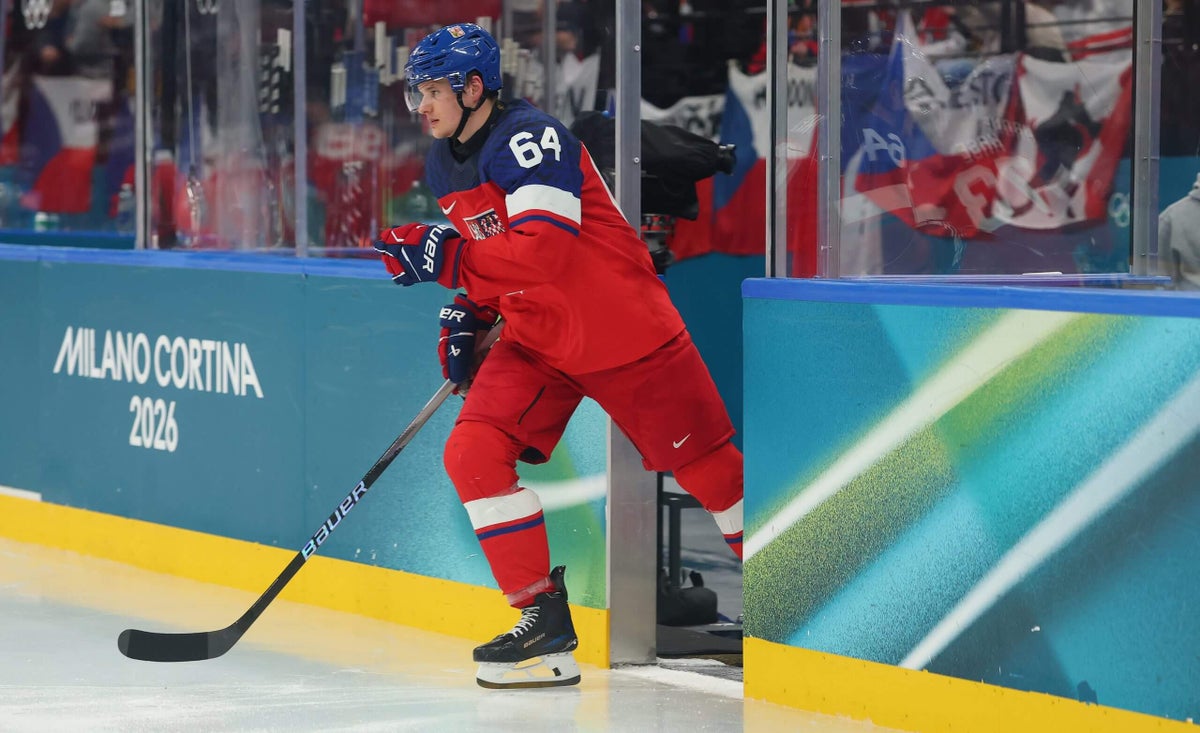
For one, it doesn’t appear as if Kämpf or Blueger’s strong performances for their countries (the Czech Republic and Latvia, respectively) at the Olympics had a material impact on either player’s projected trade value or the level of interest in their services.
What’s probably more important for the Canucks, however, is that both depth centres have returned from the Olympics fully healthy and ready to go. That will help simplify a pair of trades that the Canucks really must find a way to execute.
Based on what I’m hearing, there’s a level of general interest for teams in adding centre depth on the trade market. Blueger and Kampf aren’t starry additions and aren’t likely to net the Canucks a haul, but Vancouver should be able to garner a couple of additional mid-round picks in return for the two expiring unrestricted free agent centres.
Weaponizing cap space? In this economy
It’s no secret that this is going to be a very different trade deadline than what we’ve become accustomed to over the years.
In previous seasons, the Canucks might’ve been able to more easily net future assets in exchange for taking on an inefficient contract from a contending team, given how pressed up against the upper limit of the NHL salary cap teams typically were during the flat cap era. That’s far more difficult to accomplish now.
As of this writing, there are only six teams that are both holding down a playoff spot and are within $2.5 million of the upper limit of the cap. Even most of the inner circle contender-level teams have surplus cap space heading into the trade deadline this season. That has significantly diminished the value of cap space on the trade market, making it more complicated for a rebuilding team to utilize its cap space in order to net quality assets in the manner that the Chicago Blackhawks and Montreal Canadiens consistently did during their rebuilds.
Furthermore, changes in the collective bargaining agreement, which have been implemented in a staggered fashion this season, have made it illegal for a team to acquire a player in a retained salary transaction and then trade them again within 75 regular-season days. It’s a rule change with significant implications for the trade deadline, since it takes the ability of a rebuilding team to get involved as the third team in a three-team deal for the purpose of netting a draft pick in exchange for laundering a portion of a deadline acquisition’s cap hit off the table.
For the Canucks, and for every other NHL team, management will be learning more about this new value dynamic as they go.
From the sounds of it, however, the Canucks are considering utilizing what cap space they have available — $4.3 million or so, with the opportunity to open up more with a Kane trade of some variety, according to PuckPedia — to help contenders solve their cap problems for the purpose of accumulating assets.
The club is even discussing taking a long, hard look at adding an inefficient salary with term, provided that the player being acquired came attached to a future asset that Vancouver valued.
It won’t be as straightforward for the Canucks to effectively “buy” additional assets at this deadline as it might’ve been in previous years, but with a bit of creativity, these avenues aren’t entirely closed. Based on what I’m hearing, it seems as if the club is actively exploring its options in this marketplace.