

Listen to this article
Estimated 4 minutes
The audio version of this article is generated by AI-based technology. Mispronunciations can occur. We are working with our partners to continually review and improve the results.
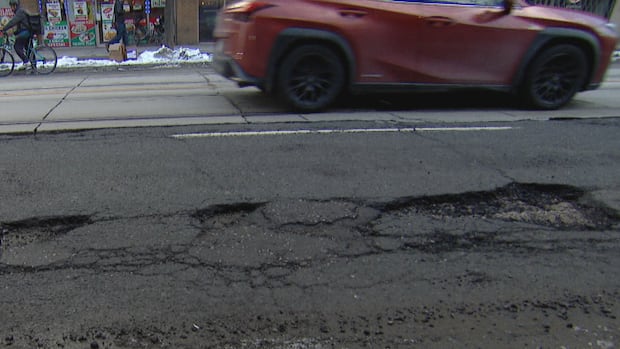
Toronto’s harsh winter has led to some “outrageously big” potholes, its mayor says, and city crews will soon fan out to fill them as part of a repair blitz.
Crews have already begun shifting their efforts to fixing potholes, but can’t fill them if they are moving snow, Mayor Olivia Chow said Monday. That said, a concerted effort to fill potholes is coming, she promised.
“We just had four weeks of deep freeze and now it’s warm again … We will have a blitz soon. We just need for the weather to have some consistency,” Chow said. “We’re ready to fix it.”
Chow said she has seen some “gigantic” potholes that “eat your tire” and “wreck your alignments,” thanks to year’s “brutal” winter.
 Mayor Olivia Chow speaks to reporters on Jan. 28. On Monday, Chow the city will have a pothole-filling blitz soon. ‘We just need for the weather to have some consistency,’ she said. (Laura Proctor/The Canadian Press)
In a statement Monday, the city said it is seeing a higher number of requests for pothole repairs this year than in previous years.
City crews have begun “proactively” to identify, document and repair pothole and road damage during routine patrols and repair operations, the city said.
Pothole repair blitzes are typically held in the spring when the weather thaws, which is also when potholes become more common, the city added.
Toronto’s 2026 pothole budget is about $6.2 million, compared to $5.5 million last year, according to the city.
The annual pothole repair budget is an based on the expected number of potholes to be filled. Each year is determined by the number filled the previous year, the city said
How do potholes form, anyway?
As for how potholes form, the city said it’s all due to freeze and thaw cycles.
“After the moisture freezes and expands, sections of the pavement are forced upwards and the weight of vehicles travelling over this section of the road breaks the pavement, creating a pothole,” the city said.
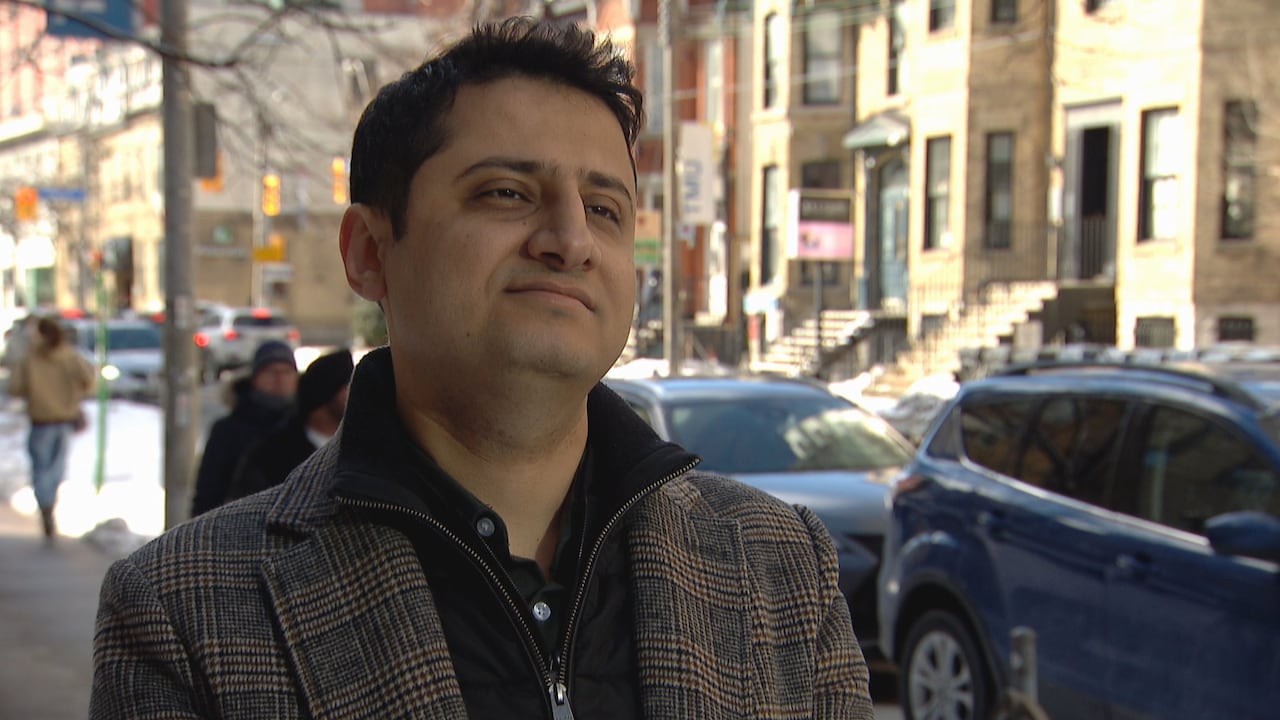 Madeh Piryonesi, a civil engineering assistant professor at Toronto Metropolitan University. says: ‘A pothole is something that happens at the end of a chain of other stresses that occur. Originally, we have small cracks. They turn into bigger cracks and come together to form a pothole.’ (CBC)
Madeh Piryonesi, a civil engineering assistant professor at Toronto Metropolitan University, said freeze and thaw cycles can be made worse by the precipitation amounts and drainage quality. If there is a lot of snow, he said, the water that accumulates from melting snow will affect the pavement, particularly if drainage is poor.
“When snow melts, it is going to turn into water, and when it freezes, it is going to expand and contract again. And this expansion is going to break off the structure of the pavement,” Piryonesi said.
This year, Toronto received a lot of snow, and that means the city will see the impact when the snow melts, he said.
Piryonesi said road salt is also a factor because it can have a corrosive effect on city streets.
“A pothole is something that happens at the end of a chain of other stresses that occur. Originally, we have small cracks. They turn into bigger cracks and come together to form a pothole.”
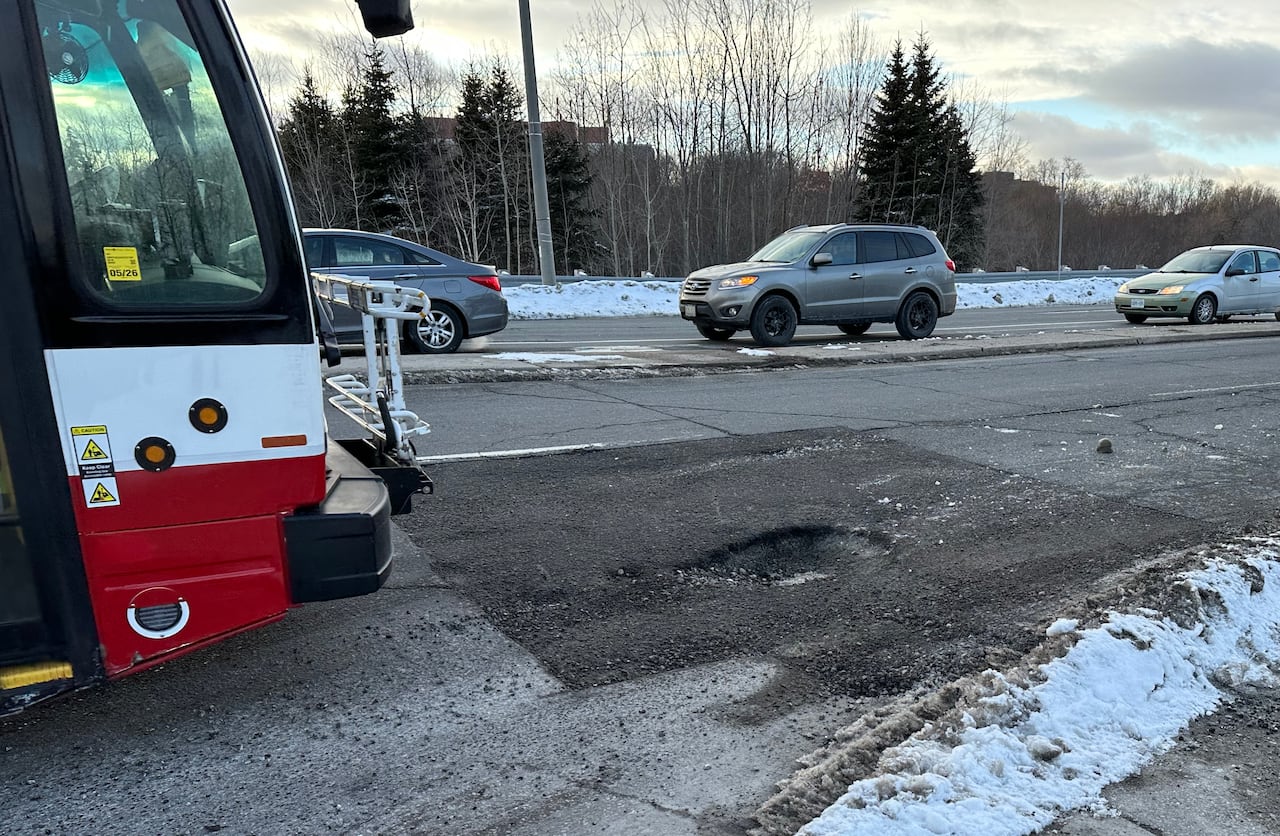 A TTC bus is about to go over a pothole in Scarborough in this photo. The city says on its website that it has filled 20,097 potholes so far this year. (Muriel Draaisma/CBC)
While deteriorating roads can cause financial damages for drivers, they can also cause personal injury for cyclists.
‘You can’t buy a new collarbone’
Ava Williams, a lawyer at The Biking Lawyer LLP, said potholes are road hazards to cyclists and she usually sees an increase in calls about potholes as the weather gets warmer.
“You can’t buy a new collarbone, or you can’t buy a new cheekbone. Those are just two examples I think of when I think of cases that we work on at The Biking Lawyer,” she said.
“Folks who have been cycling, they hit a pothole, they go over the handlebars, or they somehow fall off and slam on the concrete, and it typically results in some pretty nasty orthopedic injuries.”
Torontonians can report potholes through 311, through the city’s 311 app, on its website, or by calling. City crews aim to repair the potholes within four days if the roads are not covered in snow or ice.
The city says it has filled 20,097 potholes so far this year. In 2025, the city filled 32,901 potholes, while in 2024, it filled 47,373.