
“Game-changer.”
French cycling’s chosen one uses the phrase to describe the 2025 European Championships road race. The October event enhanced his confidence and served as his arrival at the very top of the sport.
When Tadej Pogačar and Remco Evenepoel attacked with 90km to go, Paul Seixas waited, weighed his effort, and rode up to their back wheels to make it three prodigies up the road.
That attack did not stick but he was a protagonist for the rest of a gruelling race, with 3,400 meters of climbing. On the final climb, with those two world champions minutes up the road, he dropped rival Juan Ayuso then launched an all-out, 30-second attack on the race’s final climb to get rid of Italy’s Christian Scaroni.
It left Seixas clenching his fist as he crossed the finish line, sharing the podium with the reigning road and time-trial world champions.
Four months later, Seixas shows his self-belief when asked whether he is afraid of Pogačar and Evenepoel.
“I’m never afraid,” Seixas tells The Athletic before February’s Volta ao Algarve in Portugal. “Something I always have in me is that you cannot be afraid of someone in a race. You have to have respect for those guys, of course, because they are amazingly strong. But I am never afraid of someone before a race. Because if you are afraid, then you have already lost.”
Seixas himself can be a game-changer: for his Decathlon CMA CGM team, for French cycling, even for the sport after a neo-pro season that underlined why he is the most talked-about talent in the peloton.
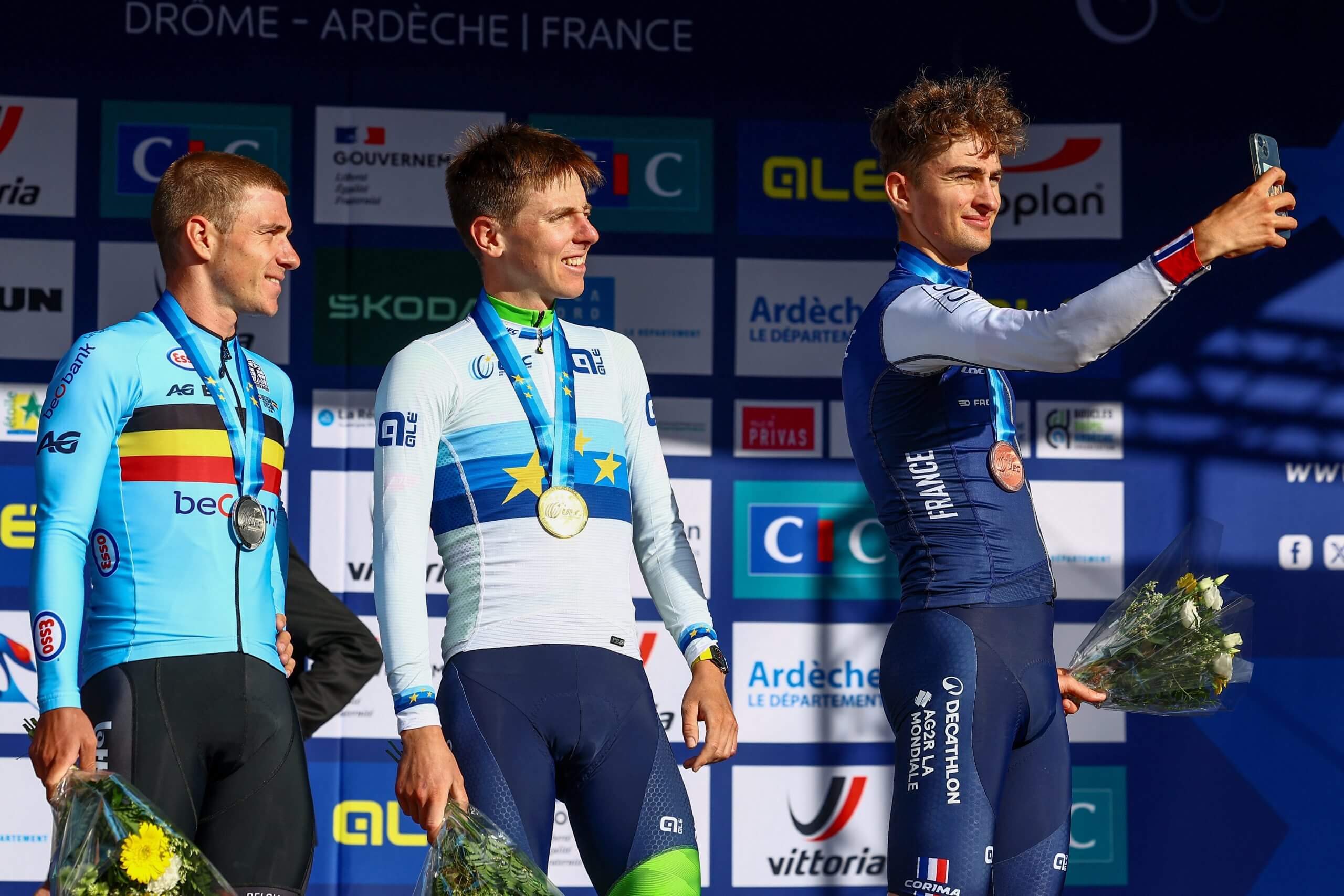
Seixas takes a podium selfie with Evenepoel and Pogacar at the 2025 European Championships (DAVID PINTENS/BELGA MAG/AFP via Getty Images)
There is a chasm between possessing white-hot potential and achieving concrete, consistent results at the highest level, but Seixas is bridging that gap with apparent ease.
A year ago, the reigning world junior time-trial champion abandoned his first WorldTour race, the UAE Tour, after a crash. However, every passing month has brought progress. Alongside that podium finish to two of the sport’s biggest stars, he won the Tour de l’Avenir, was seventh in Il Lombardia, the youngest rider to finish in the top 10 of a Monument since 1917, eighth in the Critérium du Dauphiné and 13th in a grueling World Championships road race in Rwanda. Already, the 19-year-old belongs among the WorldTour’s best.
“I feel really more confident, but in a different way. Because this time last year, it was just discovering the world of professional cycling,” Seixas says. “Now I’m fully in it, I start to know how each race goes and how my level is compared to other riders. So I have clear goals in my mind now. And I’m also a lot more confident about what I can do and what I can aim for. Last year, I already had some really good power, but now it’s getting better.”
Going straight from the under-19 ranks to the WorldTour usually requires patience, time and readjustment of a rider’s goals. The races are longer, harder and far deeper in terms of quality, with a cohort of similarly-talented physiological specimens competing. His Decathlon team managers did not know where to set the benchmarks.
“Because we’ve already had some French junior world champions and afterwards: pfft…,” directeur sportif Julien Jurdie says. “For me, he really confirmed an exceptional level in 2025. We saw it week after week, month after month … in every race, we put the bar a little higher and he goes over it.”
“He is learning every day,” Jurdie adds. “For example, in the debrief [after the opening stage of the Volta ao Algarve], Oliver Naesen said about positioning, ‘Paul, you need to be more present with us.’ And Paul’s response was, ‘Yes, but I’ve always been used to being all alone in the peloton, getting into position by myself [in junior racing].” I said, ‘You have riders who are paid to place you, you have to take advantage of that’.”
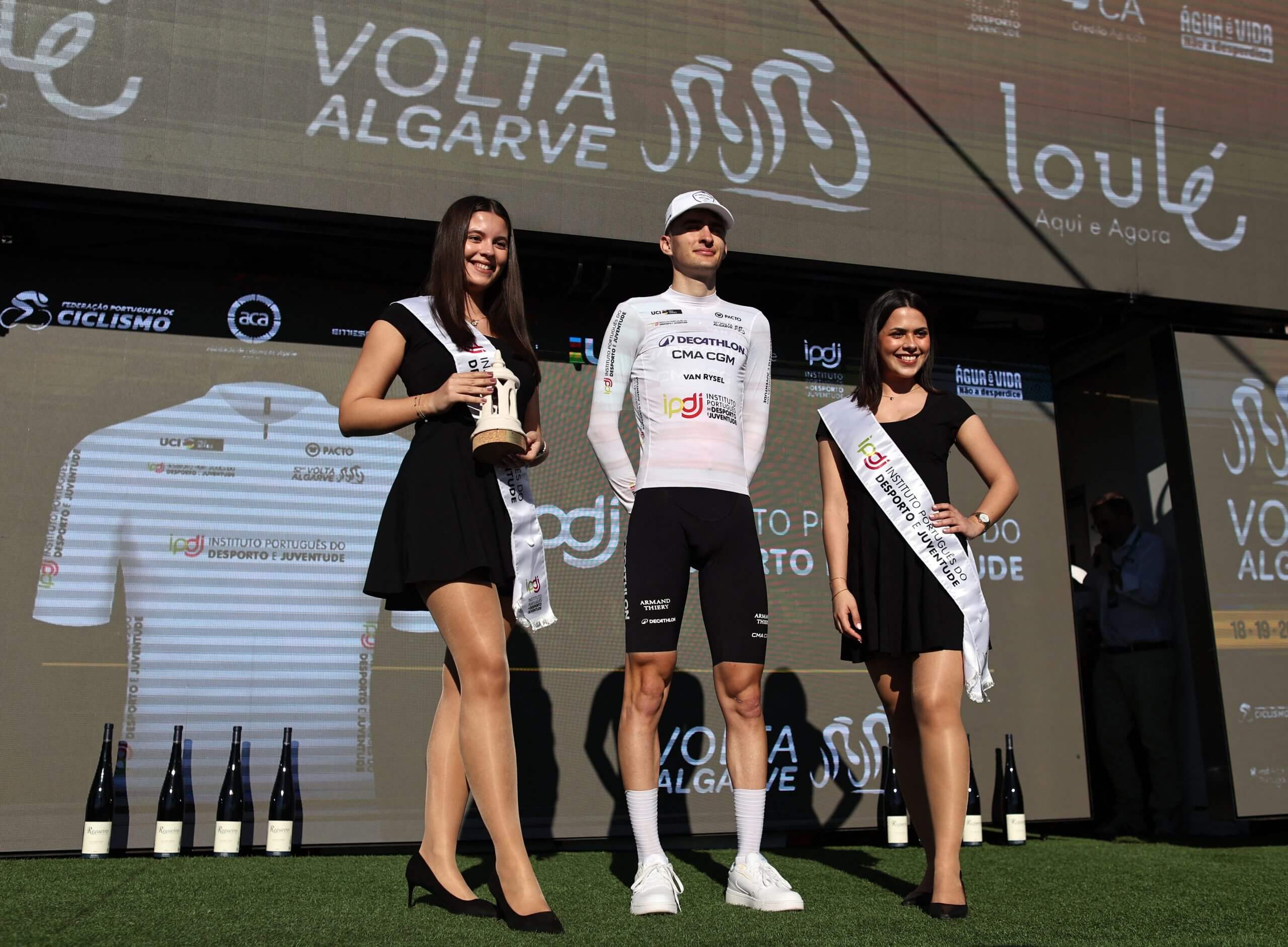
Seixas won the white jersey for best young rider at this month’s Volta ao Algarve (João Matos / AFP via Getty Images)
Seixas’s sense of the collective shone through when he gave up a stage win at the Tour of the Alps last April to team-mate Nicolas Prodhomme after the pair broke away together, overruling instructions from the team car to win himself. “That was the best thing he did in 2025, for me,” Jurdie says, struck by his intelligence and lucidity.
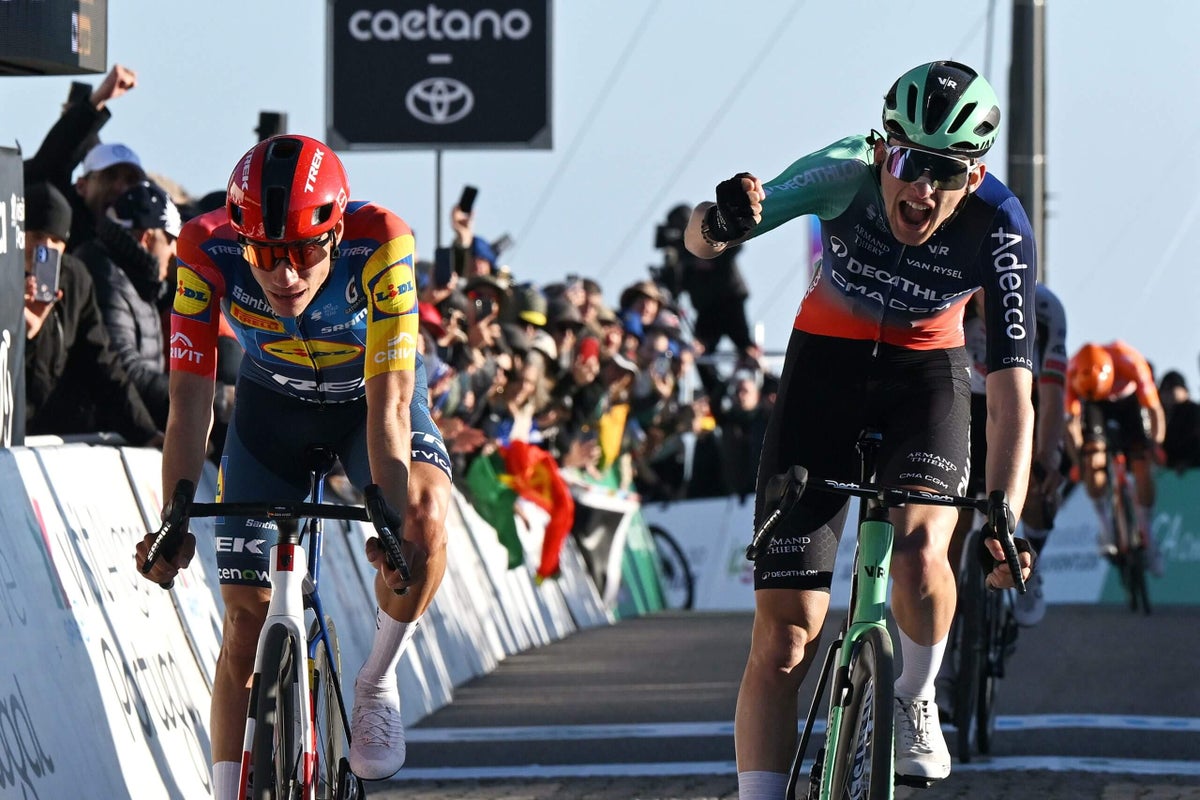
Seixas probably knew that his own first success was only a matter of time. His goal for the 2026 season was to win as soon as possible and he ticked that box on just his second race day, narrowly outsprinting Ayuso (Lidl-Trek) on stage 2 of last week’s Volta ao Algarve atop Alto da Fóia.
Ayuso lost that battle but beat him into second place overall by 14 seconds. A Vuelta podium finisher days before his 20th birthday in 2022, the Spaniard knows full well that if you’re good enough, you’re old enough. “I don’t really take his age into account — I was also there quite young, already fighting for victory,” Ayuso said pre-race, adding later that Seixas is “going to be one of the greats”.
Seixas’s lofty hopes fit with that prediction. “I always say that my biggest dream is to win the Tour de France. I think it’s the biggest achievement you can have as a cyclist,” Seixas says. “And then, to win the World Championships in 2027 in Haute-Savoie. It’s something really personal to me because my grandfather from my father’s side, the one who gave me the desire to start cycling, lives five kilometers from the course.” Seixas has a home advantage: he first rode the Côte de Domancy at the age of 10 and knows the finishing circuit inside out.
Spending most of his childhood in the village of Anse, 25km north of Lyon in southeast France, he would watch the Tour de France with his grandfather. As a kid, Seixas looked up to Peter Sagan’s “unique, crazy” style and was inspired by Romain Bardet, Thibaut Pinot and Chris Froome.
He has long been ahead of the field, becoming French national road race champion as a first-year youth rider at the age of 14 in 2021. “I won a lot of races, but I also lost a lot because there was always someone on me. Sometimes when you’re young, it’s difficult,” he reflects on his teenage years racing. “When I was junior, I learned to take a step back from what I achieved.”
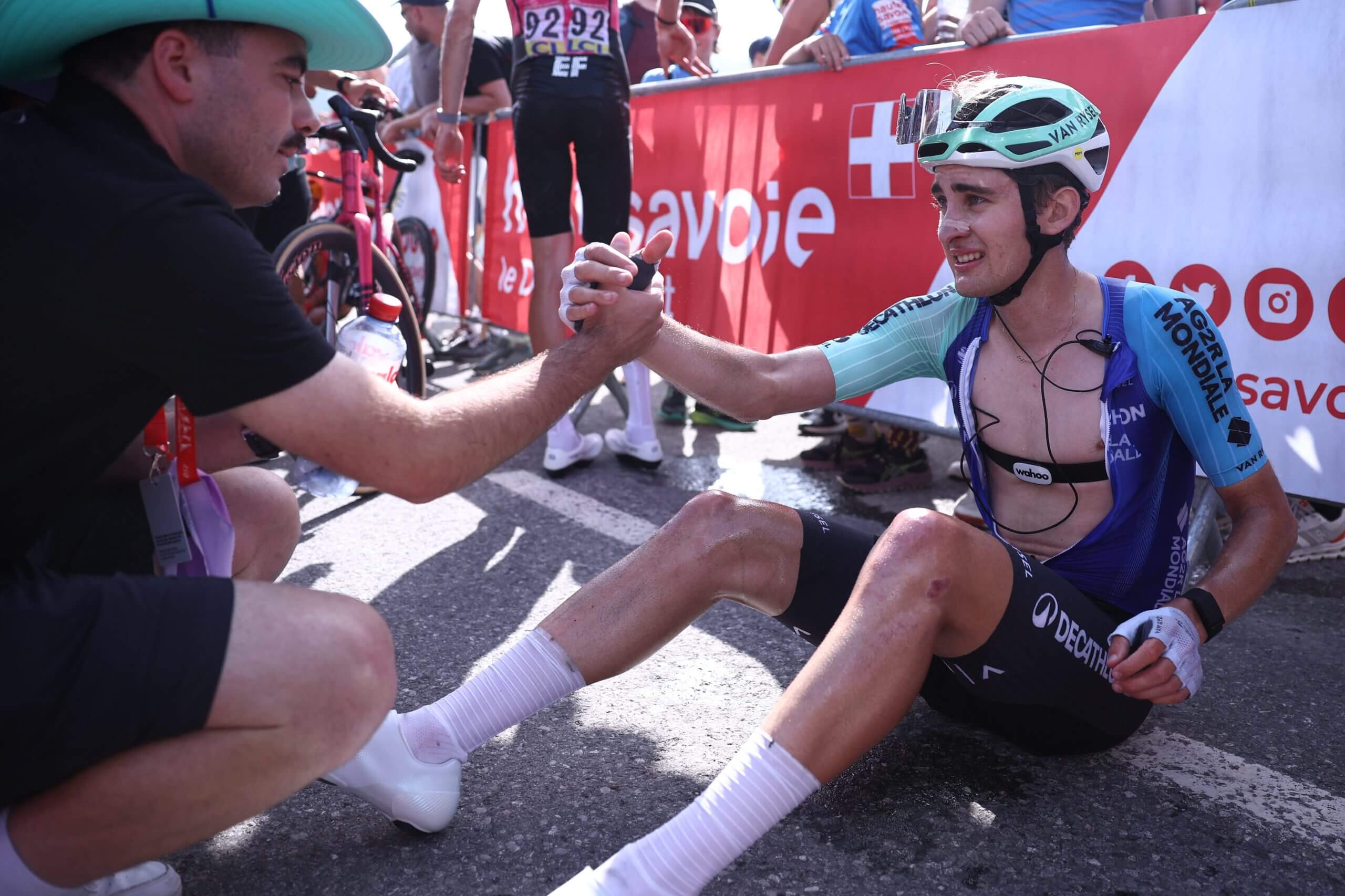
Seixas finished eighth at the 2025 Critérium du Dauphiné at the age of just 18 (ANNE-CHRISTINE POUJOULAT/AFP via Getty Images)
There have been precious few setbacks for the fledgling talent, but a significant disappointment was finishing seventh at the 2024 junior world championships road race in Zürich, frozen by cold. Winning the rainbow jersey in the time-trial a few days earlier at least softened the blow.
This is still just the beginning for Seixas. “I think I can improve on everything,” the Frenchman says. “Everyone can. You’re never at the end of the game. But I have a few points in particular. It starts with food: I was eating healthy but not watching it so much. Now, I did more focus in the training camp, eating good things for my body really precisely.
“Then I also started doing some breathing exercises to improve my capacity. Also, it takes time: I’m just 19 so I’m still improving and I’m still gaining muscle. I’ve put on two kilos and now I feel better.”
Tour de France. Seixas has already heard those three charged words a lot, and they will crop up even more in the future. His home nation has endured 40 winless years in the sport’s blue riband event and as Seixas seemingly makes progress with every passing race, it is difficult for some to not get carried away.
He is already among the top 10 favorites for this year’s edition with several bookmakers, despite never having raced a three-week Grand Tour. L’Équipe are currently working on a film following him behind the scenes this season.
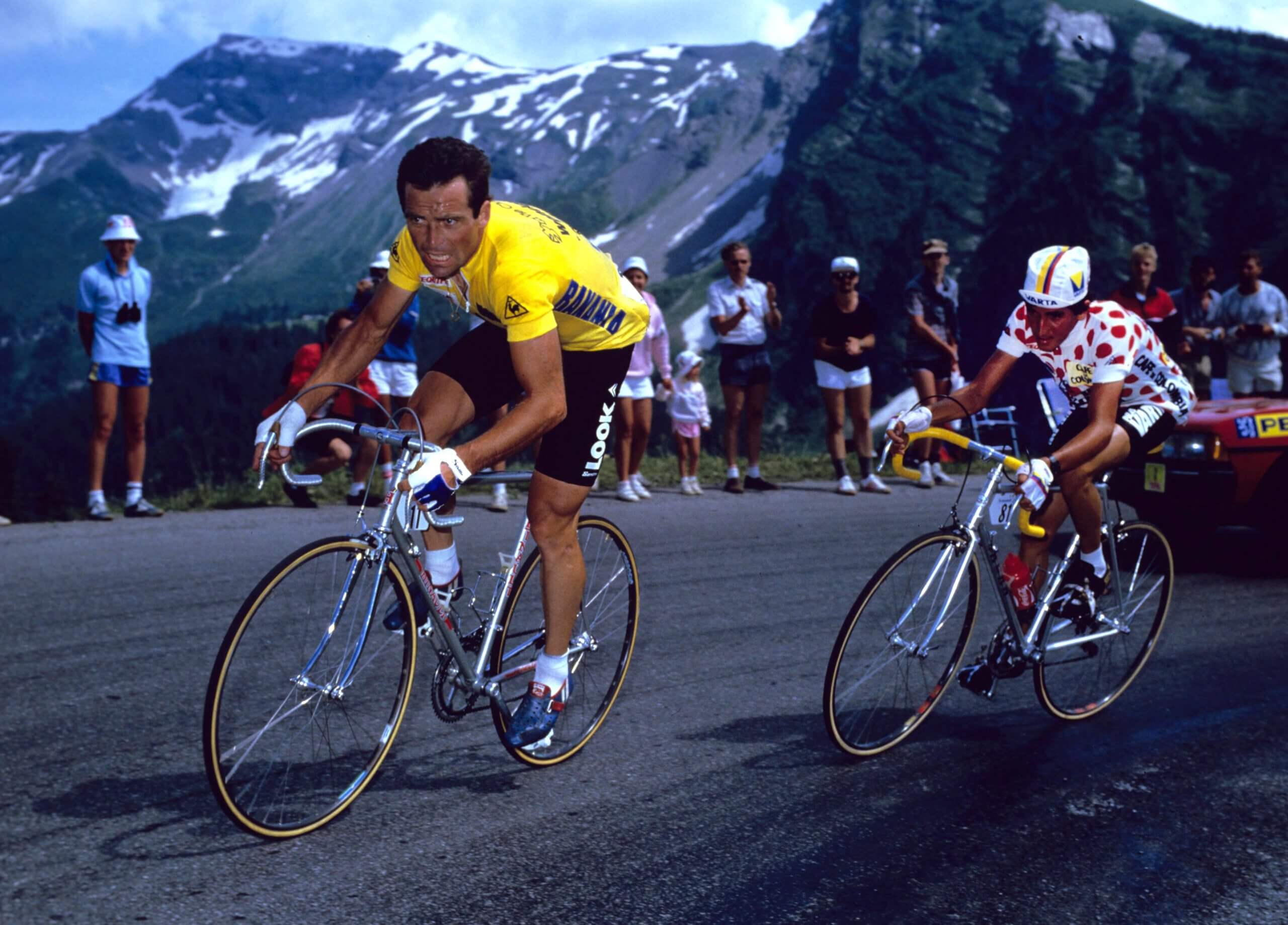
Bernard Hinault is the last home rider to win the Tour de France, in 1985 (Graham Watson/Getty Images)
“Media-wise, he has an effervescence,” Jurdie, who has never had so many requests to talk about one rider, says. “We have this dream, this fantasy: who will be the first Frenchman to win the Tour since Bernard Hinault? That creates something a ‘bit mad’ media-wise … everyone understands that Paul will surely become a great champion cyclist if he does not have any problems, someone with the capacity to be world champion, to win Liège-Bastogne-Liège, Il Lombardia, a Grand Tour — maybe the Tour de France. But he takes that with a lot of perspective.”
Jurdie can understand the hype. He has seen Seixas flow around corners on his TT bike at 55 kilometres per hour (34 mph) at the national championships as if it is a natural extension of his body.
“He is a natural, someone for whom cycling is innate… Paul still dazzles us at every race,” Jurdie says. After following the youngster on a recon of last year’s Il Lombardia, he asked Seixas how he found the final climb, the Passo di Ganda. “Easy,” was the response.
Decathlon CMA CGM Team CEO Dominique Serieys suggested last summer that he is in favor of Seixas doing the 2026 Tour de France. The decision has not been made: the young man himself suggests it is “more up to the team, it depends on their strategy and also my shape. We’ll see in May or June if I do it or not.”
If he pins on a race number in Barcelona, the 19-year-old would be the youngest Tour rider since the Second World War.
Amid all the noise and attention, how does he handle it all? “I really need to stay calm because I guess there’s a lot of pressure on me,” Seixas says. “I take it as a positive effect. It’s quite good, I manage it well and the people around me are very wise, which is also important.” Seixas was recently assigned his own press attaché, the former L’Équipe journalist Dominique Issartel, who sits in on our interview at the team hotel in Albufeira.
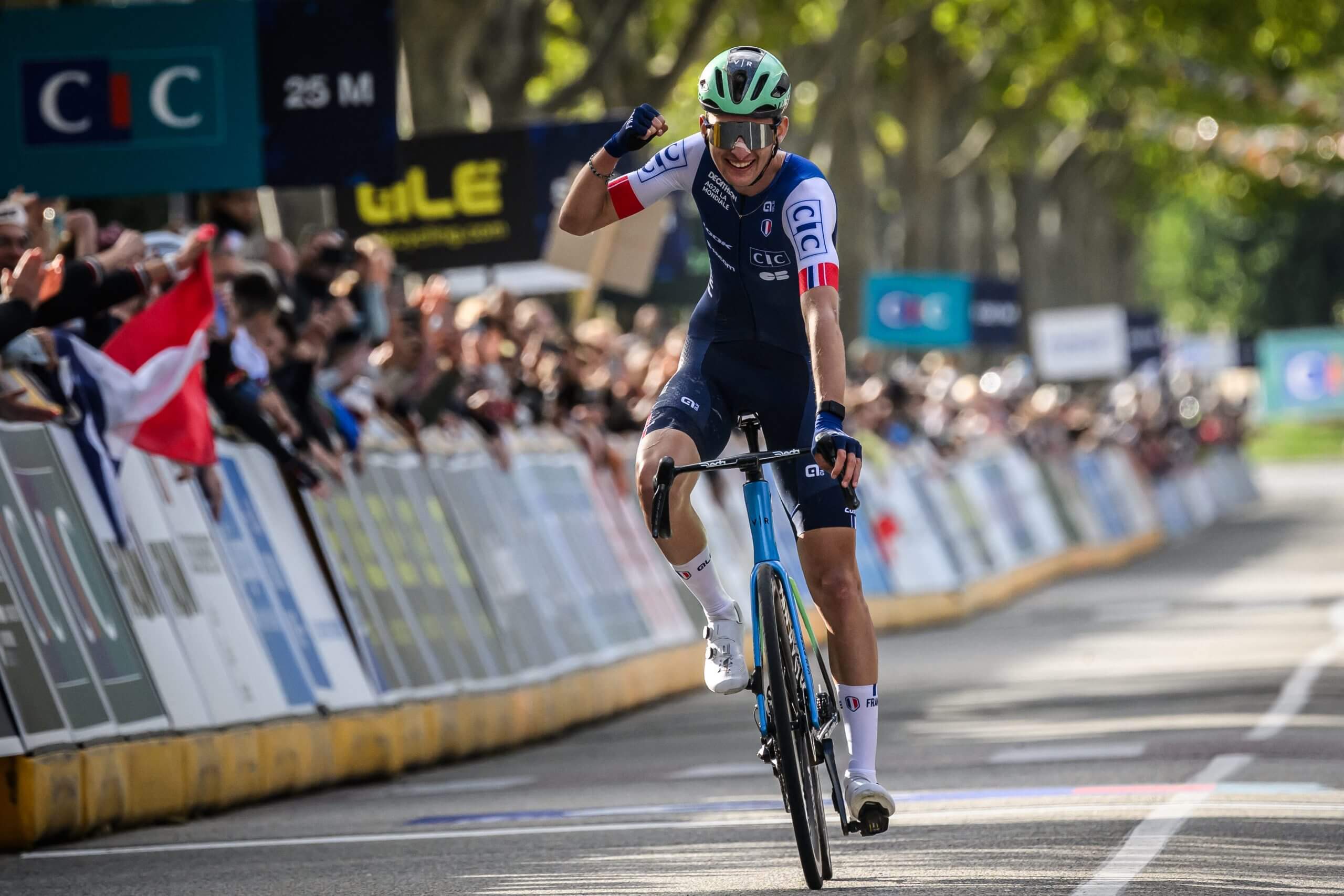
Seixas has described his third place at the European Championships last year as a ‘game-changer’ (JEFF PACHOUD/AFP via Getty Images)
Decathlon directeur sportif Jurdie says he has not seen any weak points in Seixas the cyclist. His only minor flaw comes off the bike. “He is a bit absent-minded, he forgets things,” Jurdie says. “He could leave his cycling shoes in his bedroom tomorrow, for example. But in the race, he is not distracted.”
“I’m someone who is really quiet and really calm,” Seixas explains. “So when I’m in a hurry, I can make mistakes because it’s not my nature. Now, I try to improve that side because sometimes it can be cool to be calm — I will stay calm in any situation, I will not lose energy in a race or something.”
“I really manage my emotions well,” Seixas adds, with characteristic serenity. “But it can sometimes be difficult because I’m too relaxed in some moments. And I’m not always on my phone, so sometimes I can miss information. Like some mornings, some timings change and when you see it too late, then you’re in a hurry.” In order to remedy this, Seixas says he is always making lists on paper or his phone of what he needs and tries to arrive 10 minutes early.
His growing success and doubtless considerable salary has not gone to his head: Seixas drives a grey, second-hand Volkswagen Tiguan, which he got after passing his driving test 18 months ago.
He is still in the fresh, exciting discovery phase — competing in races for the first time, before limits appear or perceptions change, before the pressure to repeat or improve upon results comes, before certain ceilings or sizeable setbacks.
No question seems to faze Seixas. He exudes a quiet self-confidence, divorced of arrogance, speaking in flowing English at the age of 19. It is simple for him. “I want to be the best version of myself, so I can achieve the best I can do,” he says.
His demeanor after winning on the Alto do Fóia climb is similar, fulfilling his media responsibilities as his six-foot frame shakes slightly in the wind up at 900 metres, smiling as he speaks. Teenage kicks, so hard to beat.
He is happy, but not too happy, not surprised or phased. His victory is surely the first of many, in the exact same location as Tadej Pogačar’s maiden triumph as a professional, seven years ago.
It seemed inevitable, just like Paul Seixas’s ascension into the sport’s elite.