
Pride in one’s ethnicity varies from person to person. Some will wear the flag of their family’s origin proudly, while others have little to no interest from where they came from.
For three members of the Toronto Argonauts, being born in Africa is something they’re incredibly proud of.
Brian Harelimana, Anim Dankwah, and newcomer Jonathan Kongbo were born on The Mother Continent, each having a unique story about how their families ended up in Canada.
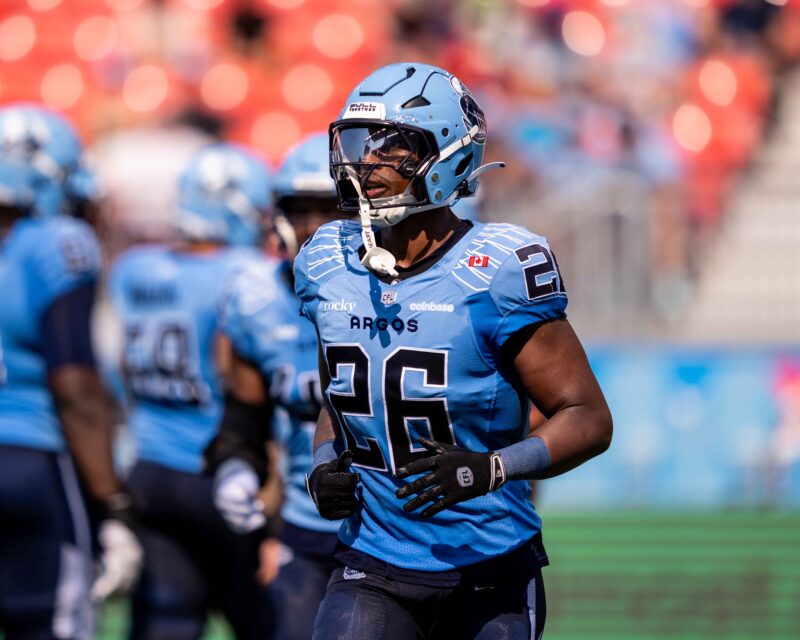
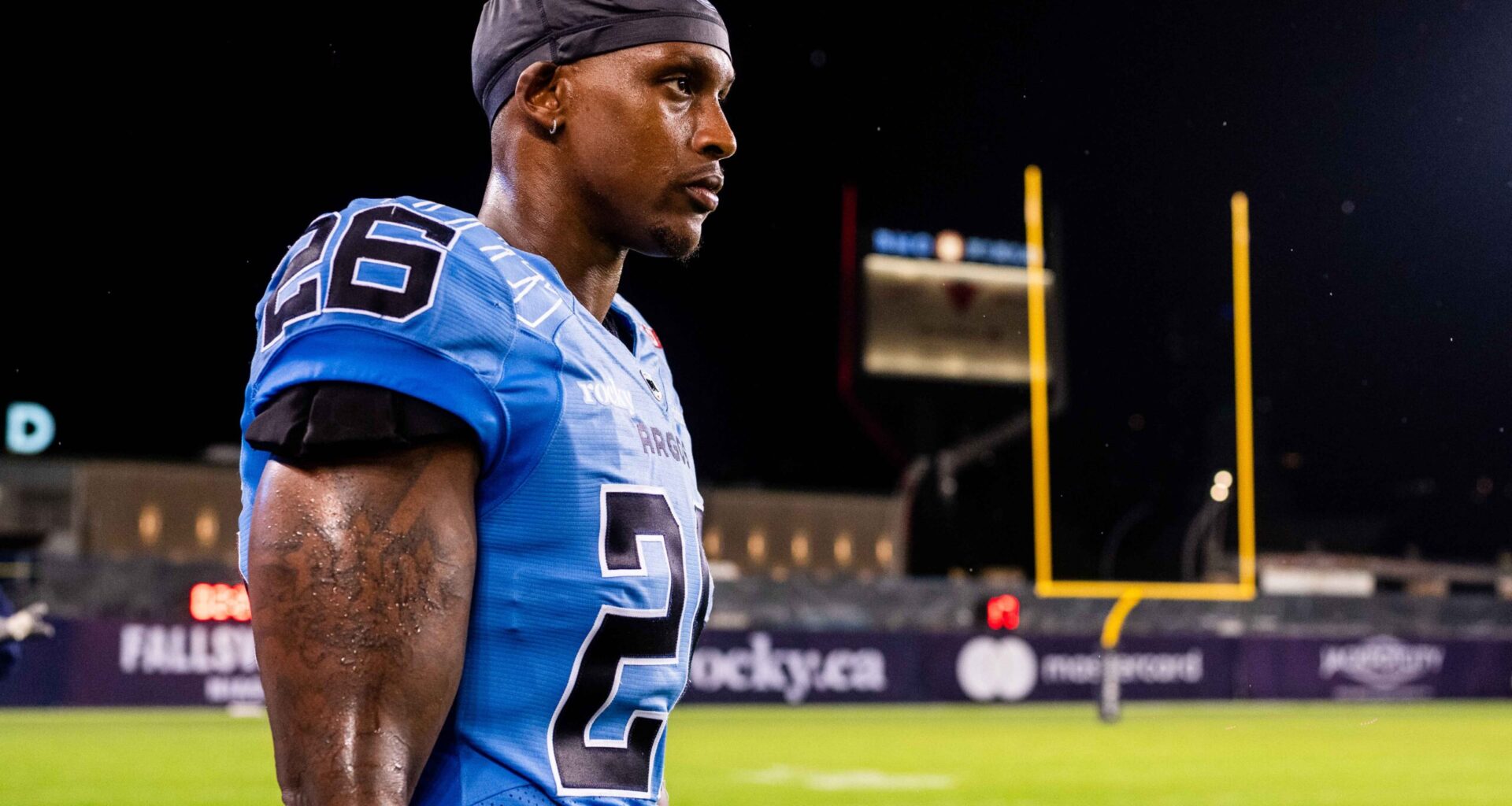
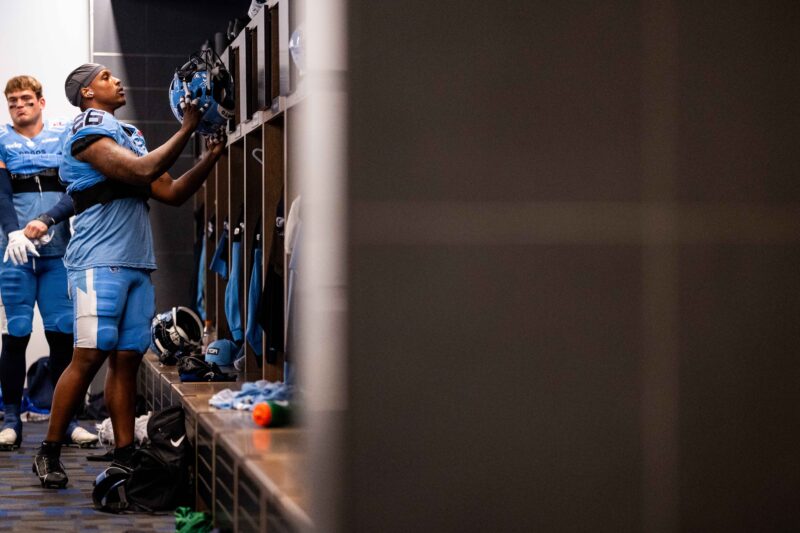
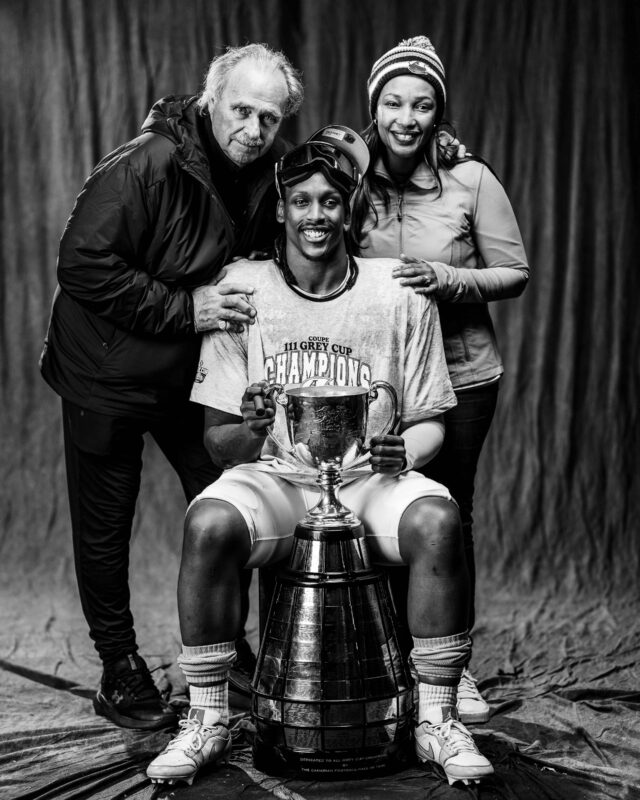
Harelimana is the longest tenured member of the three, both in his time with the Argos and his family’s time in Canada.
His story is by far the most dramatic and most tragic of the three.
The linebacker was born in in 1995, the year after there a gruesome genocide in his family’s home country of Rwanda. The brutality resulted in the murders of somewhere between 500,000 and a 1,000,000 people, and the rapes of between 250,000 and 500,000 women. The violence between Hutus and Tutsis lasted for over three months, sparked by the assassination of the Rwandan president.
Virtually every family in the country, which in 1994 had a population of roughly 7,000,000, was impacted by the violence. The Harelimana family was no exception, with his mother’s family being decimated by the carnage.
“She lost her mom and dad and five siblings. She had a family of eight and there’s three left, she has a brother and sister left,” Harelimana told Argonauts.ca, confirming the parents and other siblings were all murdered. “It puts a lot of things in perspective for me.”
Thankfully, Brian’s parents were out of the country when all hell broke loose.
“My dad had a business in Kenya,” explained the linebacker. “They wake up in the middle of the night with hysterical screams, people saying there was a genocide, mass killing in the country and they can’t reach their families. You could imagine waking up and baking everything sweet, then the next morning you wake up and the whole world shifts.”
The family was eventually able to go back to Rwanda after the massacre, then left for good, first heading back to Kenya, where Brian was born. The family then moved to South Africa for a while before moving to Canada when the future Argo was two years old.
“They gave us a better opportunity education wise,” Harelimana said of his parents. “Obviously I’m really grateful for that because they changed my life. I didn’t know that at the time, but now that I’m a bit older, I can look back and realize this really helped us grow and get opportunities that we wouldn’t have if we had stayed there.”
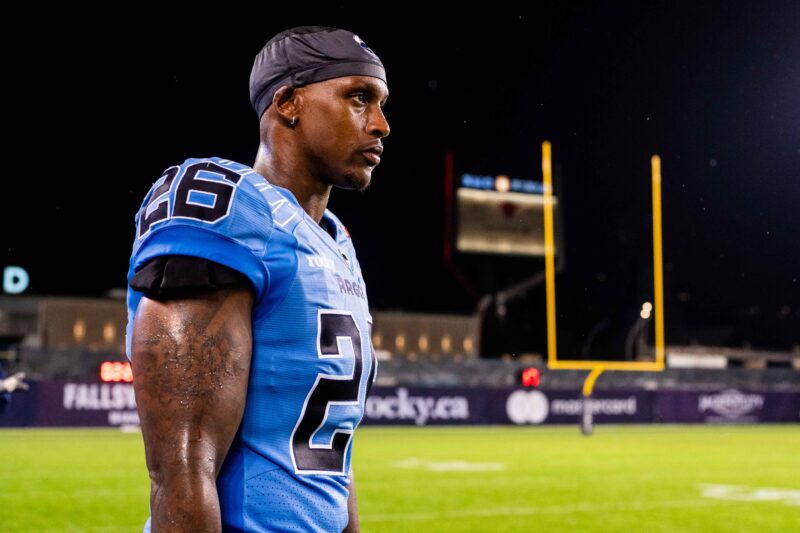
While the family settled in Laval, just outside Montreal, they had options to go to either Belgium or France but chose Canada instead. “My mom ended up choosing here because at the time they had a program for immigrants,” said the graduate of the Universite de Montreal.
The genocide was documented in the 2004 movie Hotel Rwanda, a film that earned Academy Award nominations for Don Cheadle and Sophie Okonedo. Harelimana has watched the movie, but not everyone in his family has.
“My mom refused to watch it because it was too devastating for her to have those memories. She said when you are ready you can watch it because it represents what happened and how people were saved in the genocide.
He’s been back to Rwanda three times and wants to return.
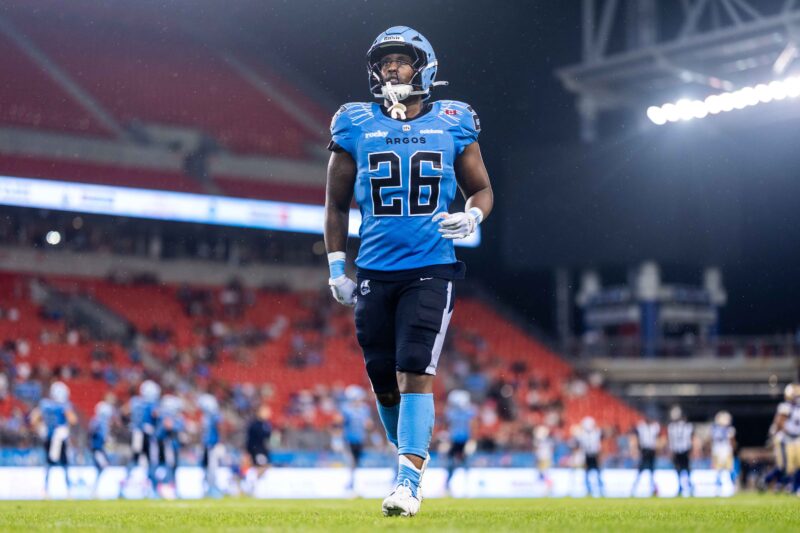
“I’m extremely proud to be from there,” he said. “What my people lived. We’re going to be resilient and successful today, and being able to raise me, it’s a weight on my shoulder to carry the rest of my life.”
The transition from Africa to North America wasn’t as dramatic for two of his teammates.
One of the newest Argos, Jonathan Kongbo, was born in Kinshasa in the Democratic Republic of Congo, formerly Zaire. He was just five-and-a-half years old when his family moved to North America, making a couple of stops before settling in Surrey, B.C.
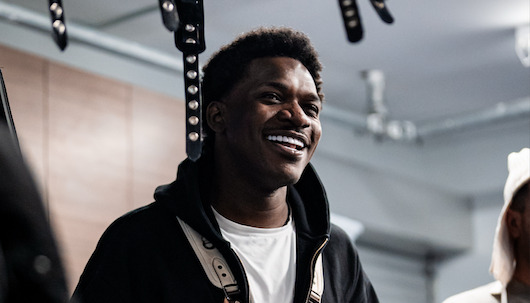
“To be honest, life was pretty good in Africa for us,” Kongbo recalled for Argonauts.ca. “My father had a great job with the United Nations; he was the head of agriculture for the region. The only issue was that there was no stability, so he didn’t see a future for his kids there. He made a bold decision to leave the Congo and leave a well-paying job.”
But where to go? Kongbo’s father would be leaving on his own to try and establish himself before bringing the family to join him. There were options, and the first choice was one made by millions of people over the years, coming from all around the world.
“He first went to New York, he kind of did the ‘American Dream’ thing there,” Kongbo explained. “But it was oversaturated and someone sent him up to Quebec. It was a little bit oversaturated, but it was a lot easier because he spoke French as well. Then he ran into someone there that suggested Vancouver, that at the time was a small up-and-coming city on the west coast. There was a better opportunity there for work and to raise a family, so he made that sacrifice, moved over to B.C., worked up in Northern B.C. in the lumber industry for several years, and then brought us over in 2001.”
Canada provided a stable life for the family, and while Kongbo appreciates the opportunities the country has given them, he still loves to celebrate his African background.
“That’s what’s so special about Canada, right? You can bring your culture with you; you can come in and assimilate. I have to tip my hat to Canadians and Canadian society because it was never a peer pressure thing to assimilate. I describe it as potluck; you bring the best of what you’ve got, we bring the best of what we’ve got and then let’s just all put it together.”
The University of Tennessee graduate’s early days in Canada weren’t as difficult as they could have been for a five-year-old making such a dramatic move.
“Coming from Africa and coming to a new country, you have to maybe learn some new cultural norms and how things are done, but overall, it was pretty smooth. I just think growing up it was more confusion that anything, being raised with Congolese values, but here I am in Canada and they’re telling us things are done this way. It was a lot of not really finding my place and my spot, but the older I got, I got more comfortable and found where I fit in.”
He hasn’t been back to the DRC but plans to return at some point.
“I think it’s so important to know where you’re from, know where your heritage is, because in a way it allows you to be a more authentic version of yourself,” said Kongbo. “I don’t just want to go back, I want to go back and bring something to my community, either throw a football camp or something to offer back.”
Anim Dankwah remembers his younger life in Accra, Ghana. He was only nine years old when he hopped on an airplane, by himself, for a flight to Brampton where he joined his father.
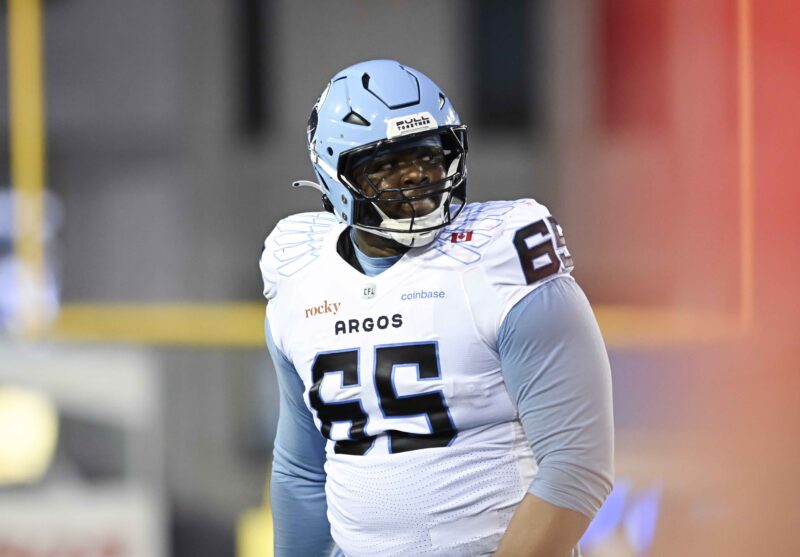
“My dad left Ghana when I was really young, from what I was told I was under three years old,” Dankwah told Argonauts.ca. “I grew up in Ghana with my mom and was going to school, but my mom and dad both wanted me to have a better education, so when I got to a pretty decent age, nine years old, they both decided it would be best for me to pursue an education in Canada.”
He then boarded the flight for Brampton at age nine, which turned out to be an adventure for the youngster.
“It was about 18 hours,” the graduate of Howard University recalled. “We made a pit stop in Dubai and stayed there for a few hours. The flight attendant that was in charge of babysitting me moved me to first class after Dubai, so half the flight was spent in first class talking to random people. I was a really excited young kid, asking them what Canada was like. It was a pretty fun flight.”
He’s enjoyed living in Canada, appreciating the multicultural aspect of the GTA, noting that while there are only a few Ghanaians in Brampton, there’s a pretty big group of expatriates in Toronto. It’s a community he’s proud to be a part of.
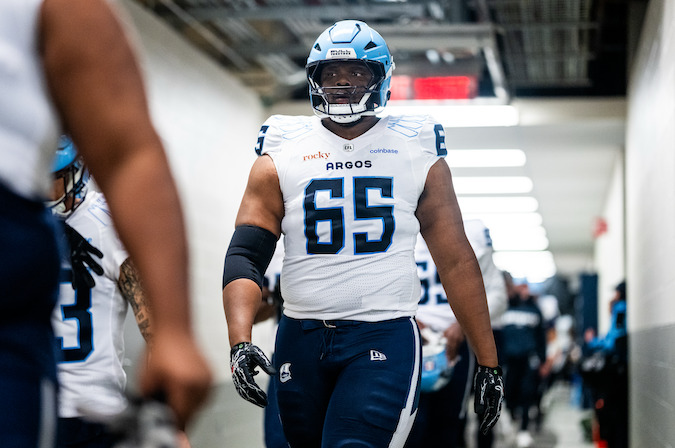
“I think about it a lot,” Dankwah said of his heritage. “My roots never left me even though I haven’t been back there, I’m still very rooted in it. I do identify myself to a lot of people as Ghanaian, so I haven’t forgotten. I love the food, the music, I love so many things about our country. I hope to go visit there next off season, which would be an exciting trip for me.”
It should be no surprise that the first Ghanaian thing the 6’8”, 360-pound offensive linemen mentioned was the food. When asked what he would first serve to someone who wasn’t familiar with Ghanaian cuisine, his answer came quickly.
“I would absolutely serve you the Ghanaian jollof rice. It’s an aromatic rice, it’s really delicious, very tasty. I’d serve it with some chicken on the side. I’m sure you’d enjoy it very much.”
The trio of Argos have all lived most of their lives in this country but continue to celebrate their African heritage; proud of where they are now, but also of where they were born.