
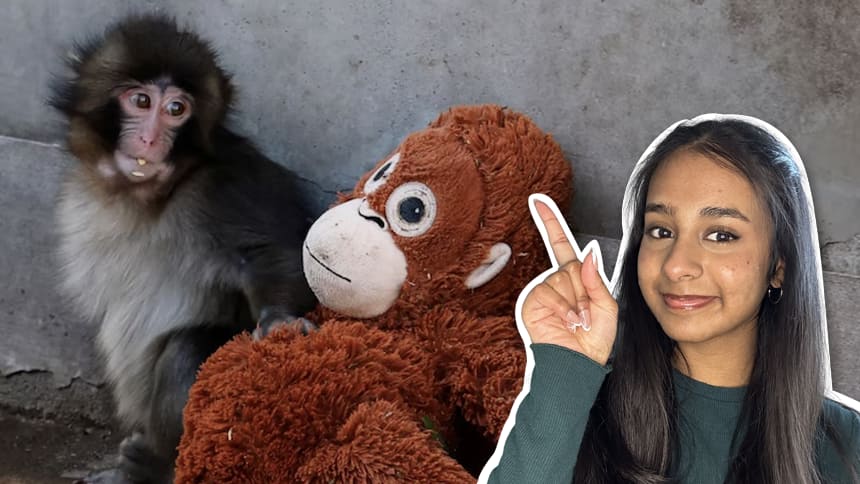
Baby primate ‘bullied,’ but getting closer to acceptance
A baby monkey who was abandoned by his mother has gone viral for tugging — or swinging from — the heartstrings of zoo visitors on his journey to acceptance.
Punch the monkey, a Japanese macaque, was born and then abandoned seven months ago at the Ichikawa City Zoo in Japan.
Since then, videos of him ranging from adorable to heartbreaking have attracted large audiences to the zoo and many are keeping a close eye on his progress.
A new, stuffed animal mom
When Punch was born back in July, zookeepers knew they needed to find some sort of replacement for his mom after she abandoned him.
That’s because baby macaques get a lot from their mothers.
They not only rely on them for a sense of safety but also build strength by clinging to them.
Zookeepers gave Punch everything from rolled-up towels to a fleet of stuffed animals.
Punch eventually settled on one in particular — a stuffed orangutan made by the furniture chain Ikea.
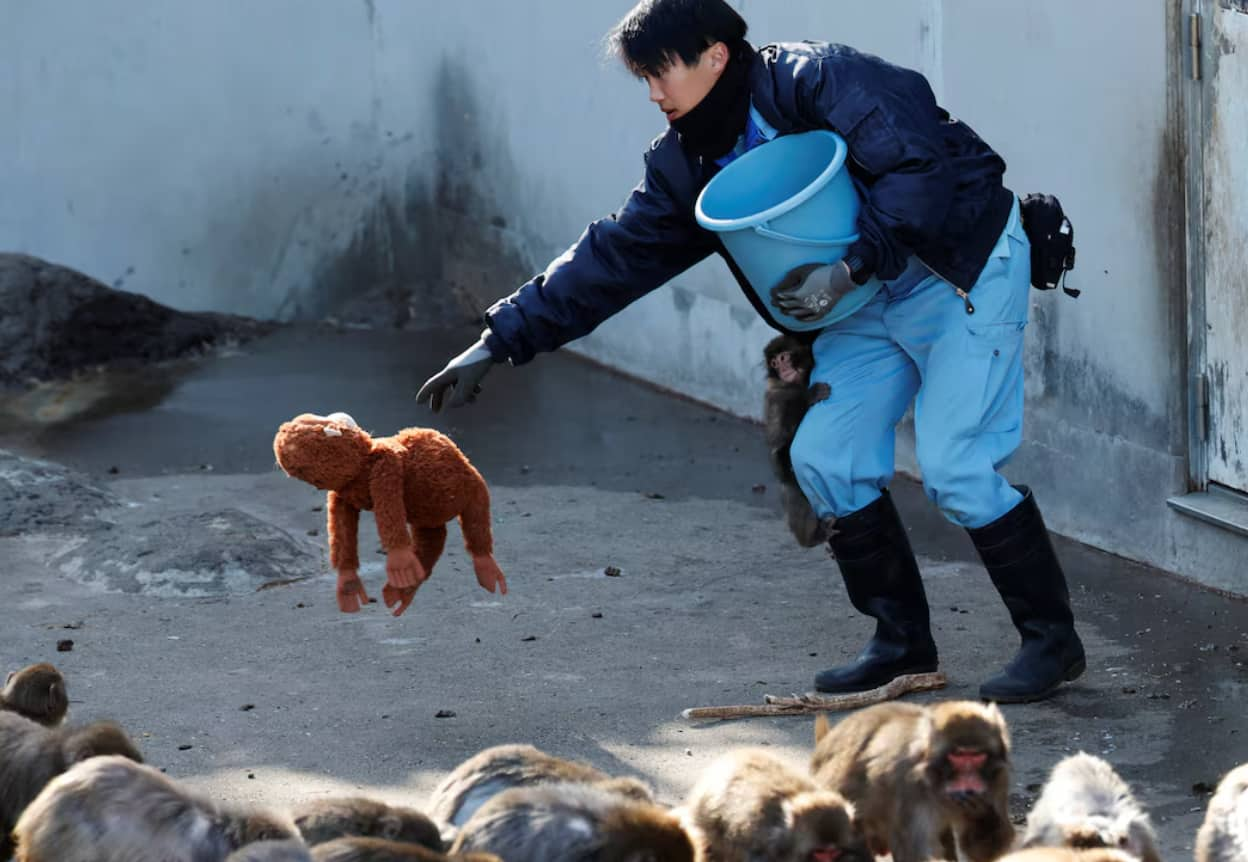
Zookeepers tried giving Punch several fuzzy things to use as a substitute for his mom, but settled on a stuffed orangutan. (Image credit: Kim Kyung-Hoon/Reuters)
Videos of him dragging the much larger orangutan all over his enclosure have gone viral.
Punch and his plushie have also attracted large audiences to the zoo.
“The bond between baby and mother in Japanese macaques is very strong,” said Sarah Turner, a primatologist at Concordia University in Montreal, Quebec, who has worked in Japan with Japanese macaques since the 1990s.
“It’s very natural, therefore, that he would be attached to a comfort item, something fuzzy, warm, and a bit monkey-like,” she told CBC Kids News.
Want to see how Punch and his stuffie are getting along? Check out the following video:
Punch’s struggle for acceptance
Turner said that it’s incredibly rare for Japanese macaques to be abandoned by their moms in the wild.
“It really doesn’t happen. In fact, mothers will go to great lengths in order to not abandon their infants,” she said.
She said Punch’s story likely represents one of the downsides of animal captivity.
“If a mom abandons their baby, it’s because she doesn’t know how to care for it, and that’s likely because she was also raised in captivity and lacks the skills.”
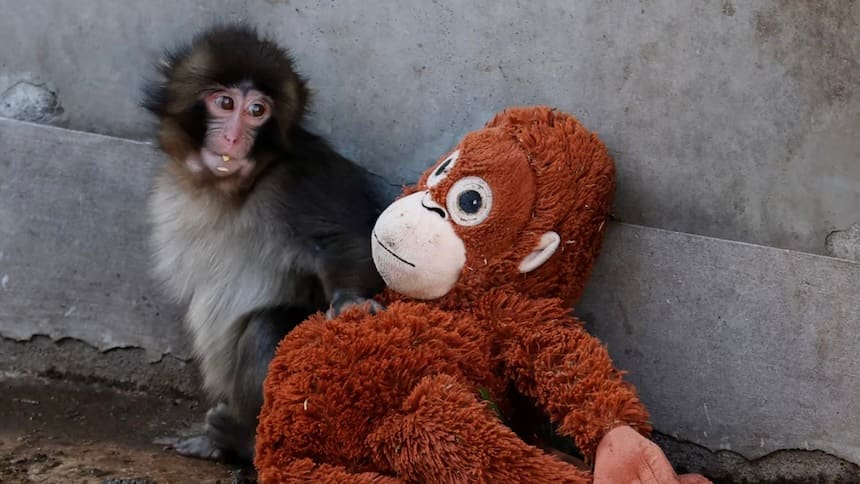
Punch has gone viral for videos of him dragging his stuffed orangutan everywhere he goes. (Image credit: Kim Kyung-Hoon/Reuters)
Turner said that zookeepers in these cases go to great lengths to try to have other monkeys in a zoo accept the abandoned outsider.
That’s partly why zookeepers chose the orangutan for Punch.
“We thought that its resemblance to a monkey might help Punch integrate back into the troop later on,” zookeeper Kosuke Shikano told Reuters.
But that integration hasn’t been totally smooth.
Another viral video showed Punch being dragged by another monkey in the enclosure, prompting users on social media to ask if he was being bullied.
Turner said this isn’t surprising when it comes to trying to integrate monkeys from different families into one troop in a zoo setting.
That’s because, like humans, babies are taught how to socialize from their parents, and in Punch’s case, he has no teacher.
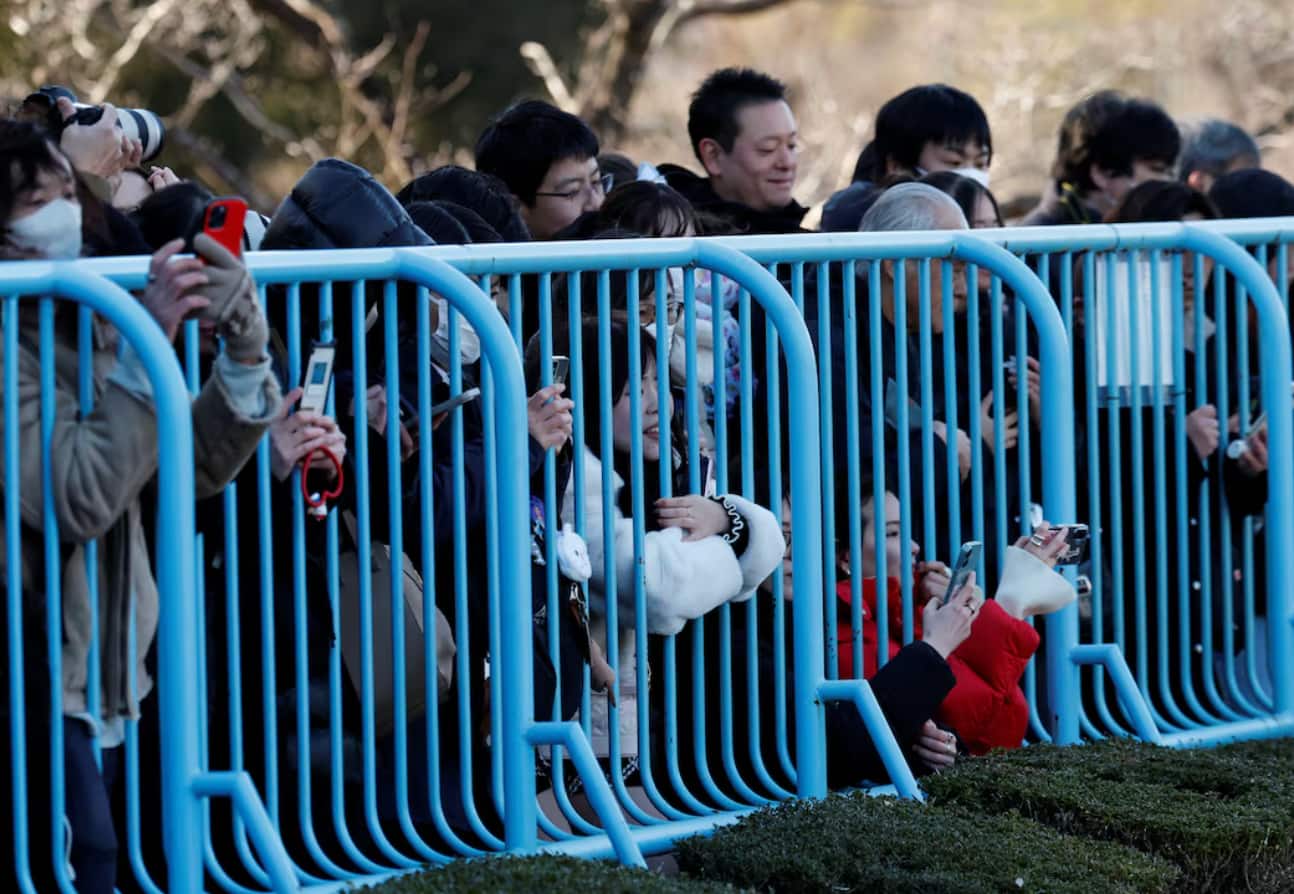
Japan’s zoo has seen an uptick in visitors wanting to get a glimpse of Punch in his enclosure. (Image credit: Kim Kyung-Hoon/Reuters)
“He probably doesn’t speak Japanese macaque. These monkeys have a complex social structure with specific signals for how to be friendly and get along,” she said.
“Maybe he’s giving the wrong signals without meaning to, running up and essentially threatening somebody, for example.”
Adding to the difficulty, Turner said, it’s likely that other monkeys in his enclosure have also been partially raised by humans, meaning their social skills could also be lacking.
Notes of hope for Punch
Despite his hurdles, zookeepers say that Punch’s journey to integration is going steady.
“I think there will come a day when he no longer needs his stuffed toy,” Shikano said.
Last week, videos showed Punch receiving a hug from one of the other monkeys.
Another clip showed Punch grooming another monkey, another positive sign of integration.
Going forward, Turner said Punch’s tiny stature is also to his benefit.
“He is little and young, and by definition not very threatening, so thankfully that will help in the long term for him to integrate into the group,” she said.
Have more questions? Want to tell us how we’re doing? Use the “send us feedback” link below. ⬇️⬇️⬇️
With files from Reuters
Top image credit: Kim Kyung-Hoon/Reuters, with graphic design by Philip Street/CBC