
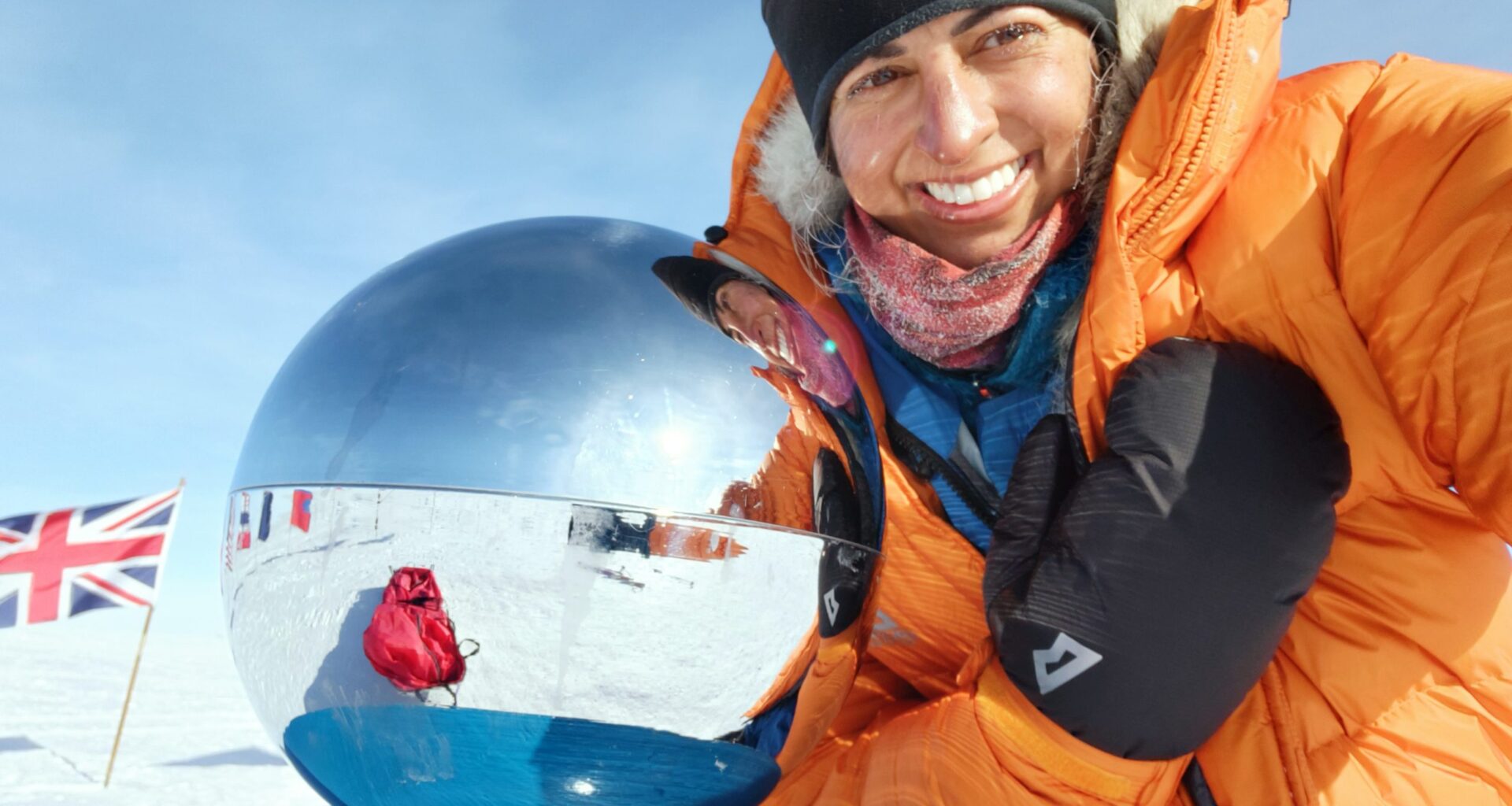
Polar explorer Harpreet Kaur Chandi, widely known as “Polar Preet,” is preparing to make history again as she heads out on a solo, unsupported expedition to the North Pole in early March.
“The North Pole is so different from the South Pole,” she said. “Antarctica and the South Pole expedition were on land. I had 24 hours of daylight in the summer season, but the North Pole is in the middle of the sea.”
Chandi, a former British Army officer and the first Punjabi and first known woman of colour to complete a solo journey to the South Pole, will begin her trek from Ellesmere Island, Canada.
“I am travelling on sea ice, which shifts. It moves, it’s dynamic,” she said. “There is no logistics company, and that’s why I am trying to raise the money to charter the plane to drop me off at the start point.”
The journey is expected to take about 60 days as she skis toward the northernmost point on Earth, where temperatures can plunge to –50 C, and the ice constantly drifts. She will haul two sledges carrying food, fuel, a tent and essential supplies.
A record‑breaking endurance athlete, Chandi set the fastest solo unsupported women’s time and completed the longest solo unsupported one‑way polar ski journey. She has spent the past month training in Canada to prepare for the Arctic.
“You need strength,” she said. “I had a harness; I would drag tires — big car tires… as part of my training. I went to Norway and Iceland for training because England doesn’t have that much snow.”
She recently trained in Churchill, Man., to practice travelling on sea ice.
“I went to Churchill basically to get on the sea ice, pulling my sleds, getting into the routine … carrying my firearm with me, dragging weight over big blocks of ice to get a sense of how it would be on my North Pole expedition.”
Chandi will face extreme isolation, harsh weather and the threat of polar bears, for which she will carry a firearm.
“It’s insanely hard. Nobody has been to the North Pole from Canada in 12 years,” she said. “The good thing is I have done the South Pole before. I was alone in Antarctica for 70 days, then 40 days and then 30 days. If I could do it once, I can do it again. The mental strength you build up … every time you push out of your comfort zone, it gets bigger and you build more resilience.”
She said it is a scary journey but with this expedition, she wishes to inspire communities to step out of comfort zones and chase their dreams.
“It doesn’t matter where you come from, what you look like, even if you know absolutely nothing about something when you start. I started on a Google search. You can go and achieve anything.”