
Read: 4 min
Canada is extending and expanding Operation UNIFIER, its flagship military training mission for Ukraine.
The federal government announced the extension Feb. 24, the fourth anniversary of Russia’s full-scale invasion of Ukraine.
The operation will run for three more years, until 2029, and will include a significant increase in the number of Canadian Armed Forces personnel dedicated to the operation, an online statement from the Department of National Defence said.
The Prime Minister’s Office also released a statement Tuesday, reinforcing Canada’s commitment to backing Ukraine as U.S.-led negotiations to end the war continue.
“Canada and the members of the Coalition of the Willing will continue to stand firmly with Ukraine for as long as it takes to achieve a just and lasting peace,” the Prime Minister’s Office said in its statement.
The coalition is an alliance of more than 30 countries, led by the U.K. and France, that was established in 2025 to provide sustained support for Ukraine and guarantee its security against Russia aggression.
The timeline for any negotiated settlement between Ukraine and Russia is unclear. Washington’s top diplomat said at the Munich Security Conference earlier this month that the key questions have narrowed — and that is part of the problem.
“The good news is that the issues that need to be confronted to end this war have been narrowed,” U.S. Secretary of State Marco Rubio told reporters. “The bad news is they’ve been narrowed to the hardest questions to answer.”
UNIFIER extended
Canada launched Operation UNIFIER in 2015 following Russia’s annexation of Crimea.
Since 2015, Canadian soldiers have trained more than 47,000 members of Ukraine’s armed forces, including roughly 13,000 since Russia launched its full-scale invasion on Feb. 24, 2022.
The extension of Operation UNIFIER to 2029 will enable CAF members to continue training Ukrainian recruits and leaders, Defence Minister David McGuinty said in the DND statement.
“We are ensuring Ukraine has the tools to defend its sovereignty, protect its people, and pursue a just and lasting peace. Canada will continue to stand with Ukraine.”
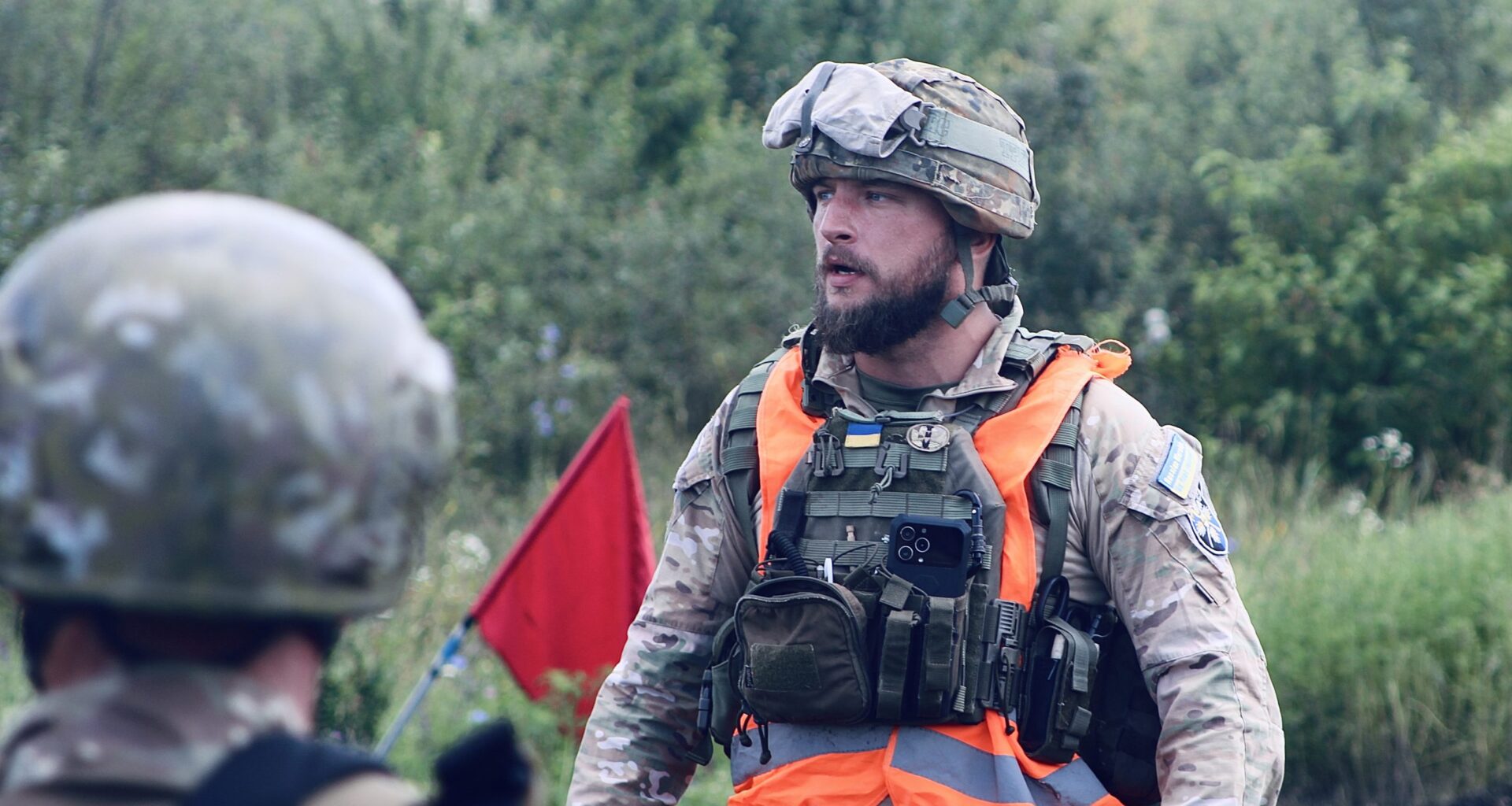
Ukrainian soldiers previously told Canadian Affairs that the training they have received through the operation has made a real difference on the battlefield.
“We learned a lot of different techniques that we can use to keep us safe,” Lt. Bohdan Gyshchuk told Canadian Affairs at a Ukrainian combat engineering facility in August 2025.
This week, Carney also announced what his office described as significant new military commitments: about $2 billion in military assistance for Ukraine this fiscal year and 400 donated armoured vehicles.
Canada is also contributing to multinational efforts to train Ukrainian pilots and maintain Ukraine’s F-16 fighter aircraft.
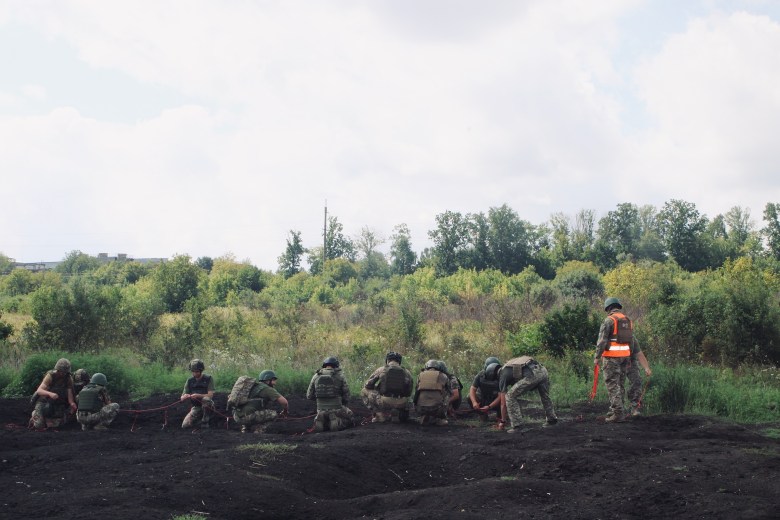 Ukrainian combat engineering trainees set charges at a training facility in Khmelnytskyi Oblast, Ukraine, August 11, 2025 | Sam Forster
Sanctions, oil cap, energy support
Ottawa also unveiled new measures aimed at constraining Russian revenue and logistics, with a particular focus on oil exports and the shadow fleet of vessels used to move crude.
The Department of National Defence said Canada will sanction 21 individuals and 53 entities and add 100 vessels to its sanctions list.
Canada is lowering its price cap for Russian crude oil from US$47.60 to US$44.10 per barrel.
The price cap is part of a G7-led mechanism that prohibits companies in participating countries from providing shipping, insurance and financial services for Russian oil sold above the capped price. The measure is designed to limit Moscow’s energy revenues while keeping Russian crude flowing to global markets to avoid supply shocks.
These new measures are intended to raise the cost of the war for Russia by targeting financial enablers, the department said.
Speaking to reporters ahead of a Feb. 24 cabinet meeting, Foreign Affairs Minister Anita Anand said the anniversary is a mark of Western endurance. She described sanctions as part of a strategy to defend what she called “the international rules-based order that has kept us safe since the end of the Second World War.”
“Russia must be held accountable for the damage, destruction, and loss caused by its unprovoked aggression,” Anand said in a separate government statement.
Anand also announced an additional $20 million for the Ukraine Energy Support Fund, which will help procure and deliver equipment to repair and rebuild energy infrastructure damaged by Russian strikes.
Since February 2022, Canada has committed more than $25.5 billion in overall aid to Ukraine, including $8.5 billion in military assistance, according to the Department of National Defence.
Negotiations uncertain
As Ottawa adds new funding and extends its training mission, Canadian officials are aligning their messaging with a familiar two-track approach: press Russia economically while reinforcing Ukraine militarily, and support international diplomacy efforts.
In Munich, Rubio said the United States does not yet know whether Moscow is committed to a diplomatic resolution, or whether acceptable terms can be found for both Ukraine and Russia.
“We don’t know the Russians are serious about ending the war,” Rubio said, adding that Washington would continue to test whether a “just and sustainable” negotiated settlement is possible even as sanctions and arms support continue.
One measure of skepticism can be found outside government. On Tuesday, Polymarket, the U.S.-based prediction market platform, showed bettors place the odds of a Russia-Ukraine ceasefire being reached before the end of 2026 at 39 per cent.
Ottawa, for its part, is using the war’s four-year-mark to project inevitability rather than uncertainty.
“The duration of this war is uncertain, the outcome is not,” said the PMO.
Related Posts