
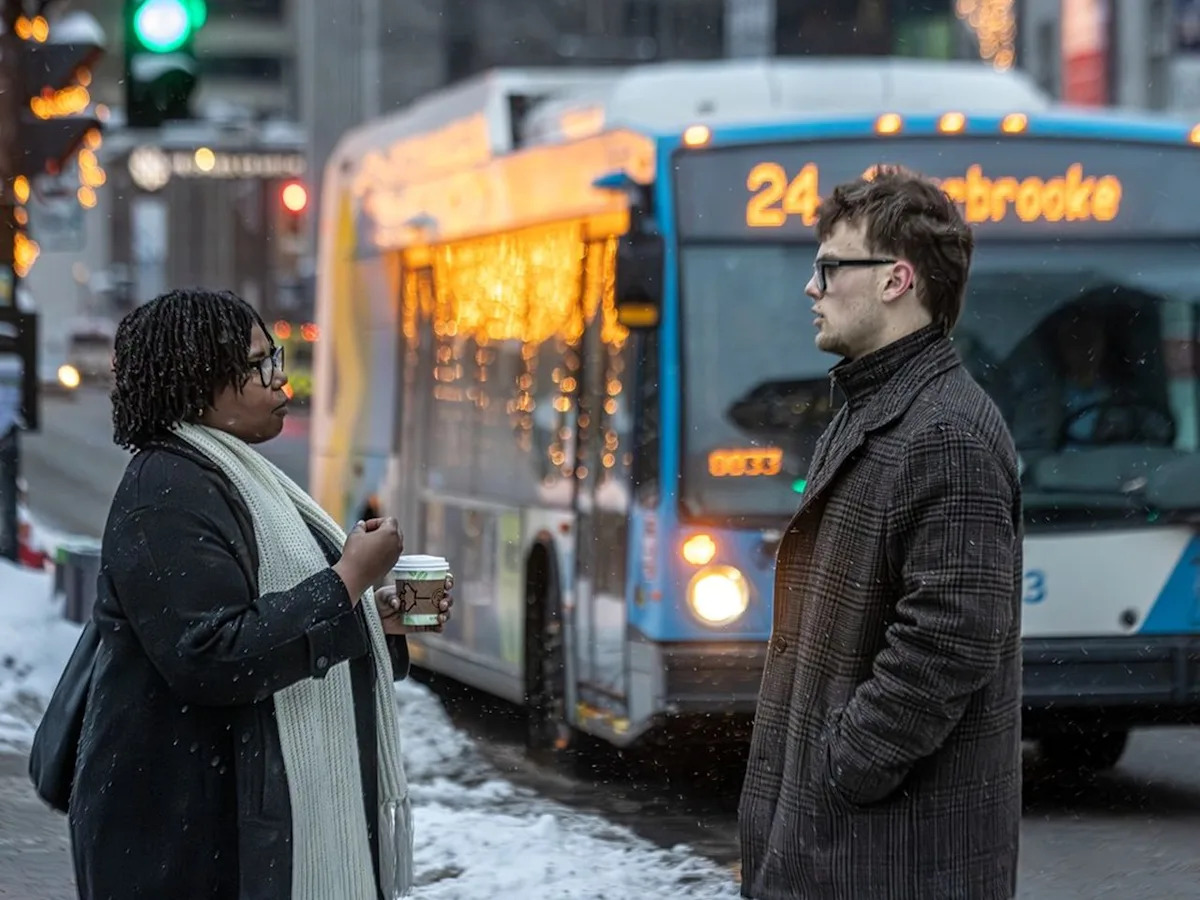
While it may not be a perfect comparison, Alexandre Fabien Gagné feels it nonetheless illustrates the issue he and most other young people in Montreal’s east end face:
For a student living in Rivière-des-Prairies—Pointe-aux-Trembles, he says, it can be faster to drive to Université du Québec à Trois-Rivières than to take public transit to reach Université de Montréal.
“It shows that our sector is extremely isolated,” Gagné said in a recent interview, decrying the lack of adequate public transit options in the area. “And how it restricts access to higher education.”
Gagné, 19, is a member of the Conseil jeunesse de RDP-PAT, which brings together young people in the borough to discuss issues and give them a voice with the borough council.
At the borough’s February council meeting, they submitted a 28-page report titled “Forgotten at the terminus: The network that turns its back on east-end youth.”
The report argues the lack of transit options in the area not only restricts access to education, but also makes it harder for young people to find or hold jobs and contributes to social exclusion.
The goal, Gagné said, is to push all levels of government to commit to addressing the situation.
The Quebec government has committed to a tramway project that would eventually serve the area, known as the Projet structurant de l’Est, to replace the once-planned REM de l’Est light-rail project.
But with the project in its infancy, the youth council is calling for temporary solutions, such as dedicated bus lanes on Sherbrooke and Notre-Dame Sts.
As it stands, the group says, the average student relying on public transit to reach downtown universities spends more than 12 hours a week on the bus and métro.
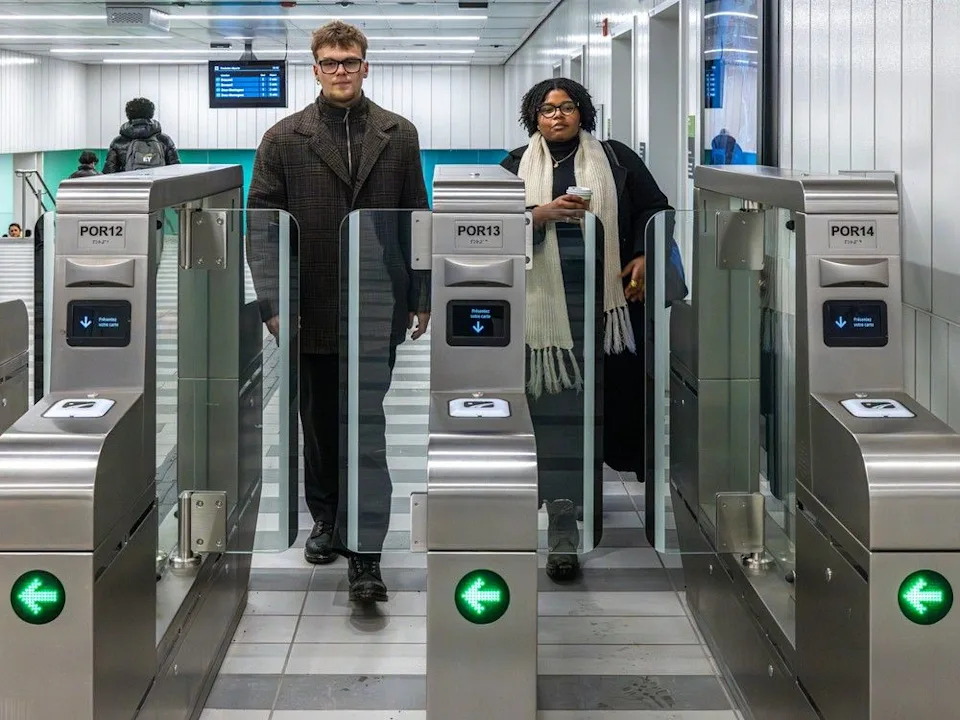
Young people in Montreal’s east end, like Alexandre Fabien Gagné and Darlene Jean Jacques, are speaking out against limited public transit options. “It’s as if I lived off the island,” Jean Jacques says.
Gagné’s commute to McGill University is about an hour and 20 minutes each way. While it’s bad enough during the day, he said, it’s especially painful after night classes.
“There’s almost a kind of humiliating aspect to being from the east end, because it’s so complicated and so long to get anywhere,” said Gagné. “We spend our lives on the bus.”
The report also raises security concerns, with students often forced to wait up to an hour at poorly lit bus stops in what they describe as “unfrequented, unprotected, or isolated areas.”
“There are a lot of young people who are left in vulnerable places,” said the youth council’s co-president, Darlène Jean Jacques.
Jean Jacques, 20, is also behind an online petition that calls on the federal government to better fund public transit in the area, stressing the “significant gap” in transit options between people in Montreal’s west and east ends.
Since she lives in Rivière-des-Prairies and studies at Concordia University, her usual commute consists of driving to Olympic Park, where she pays for a monthly pass to park, before taking the métro to reach downtown.
“It’s as if I lived off the island,” she said. “It’s not fair. And it shows how little value the city has placed on the east end.”
Contacted for this article, the Société de transport de Montréal said it has made efforts since 2018 to add bus routes and stops in the sector, including one route to better serve students attending CEGEP Marie-Victorin.
As for safety concerns, the transit agency said it has taken note of the issues raised in the report. Where possible, they added, the STM always tries to plan stops near existing light sources.
“We remain attentive to the needs expressed by local communities and regularly analyze opportunities for improvement,” they said.
At the council meeting where the group tabled its report, so many young people were in attendance that they had to stand behind the city council members to fit in the room.
Gagné was met with applause after presenting their findings.
In response, borough mayor Denis Pelletier said he understands their concerns and vowed to use whatever power the borough has to push the issue forward.
“These realities shape the daily lives, aspirations, and life trajectories of our residents,” Pelletier said.
Related