
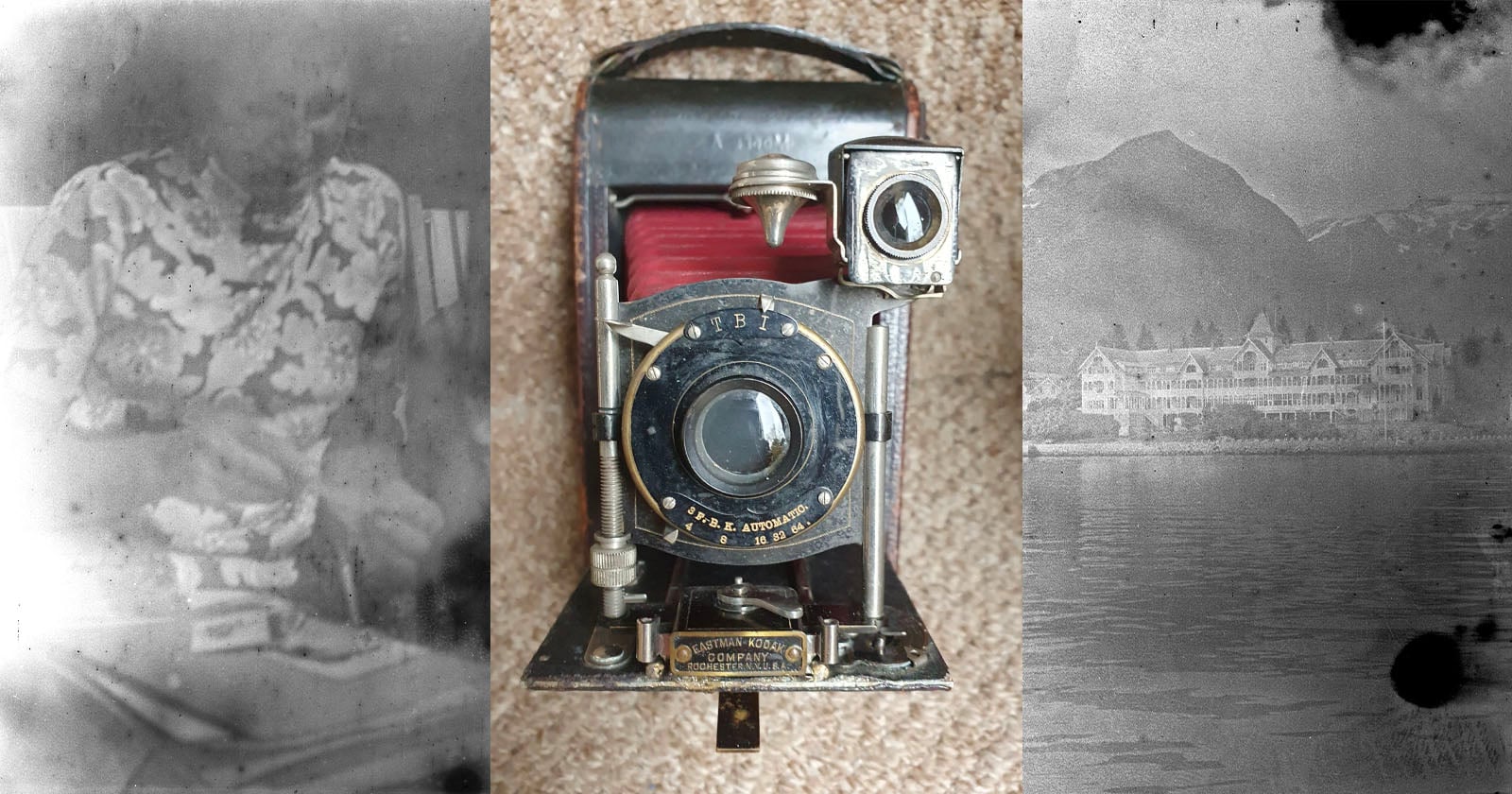
After a film lab technician developed a 70-year-old roll of film showing a group of skiers in post-war Switzerland, he was contacted by a man who had an even older roll of undeveloped film.
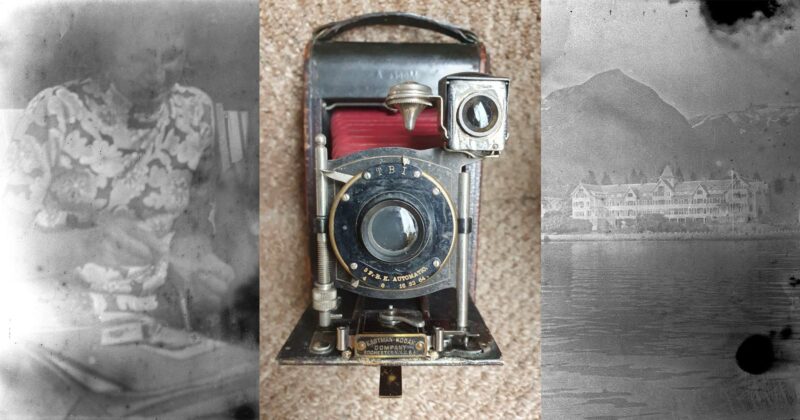
Ian Scott of Salisbury Photo Centre in England was contacted by a Mr. Bennett from Manchester who had a 3a Folding Pocket Kodak that still had film in it — and had been in it for 100 years.
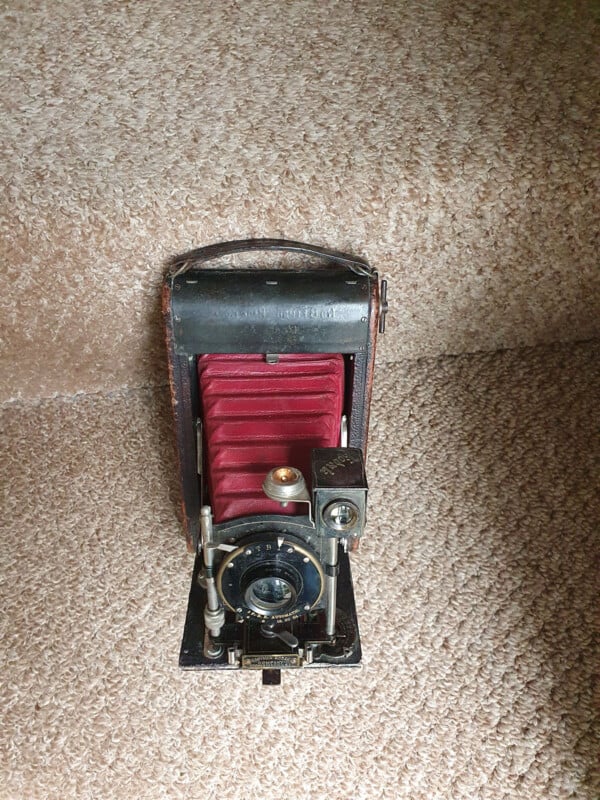 The Folding Pocket Kodak that held the film.
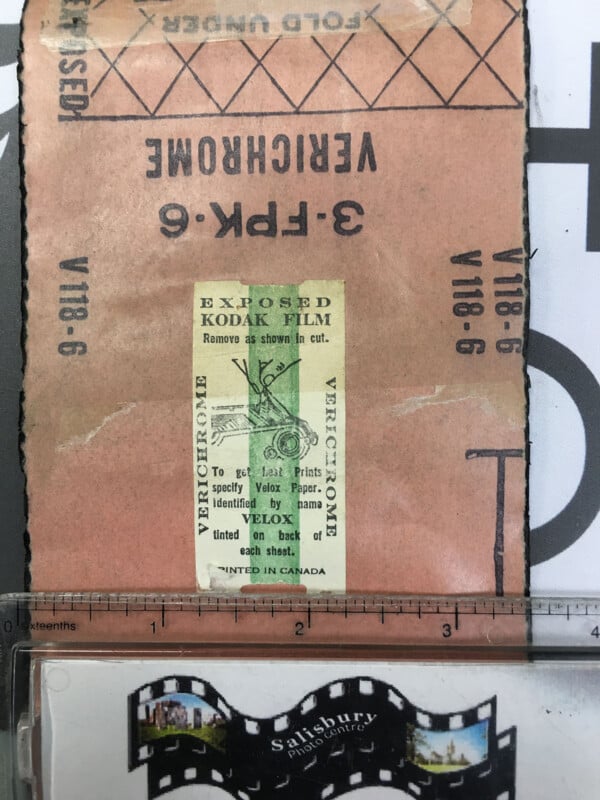
 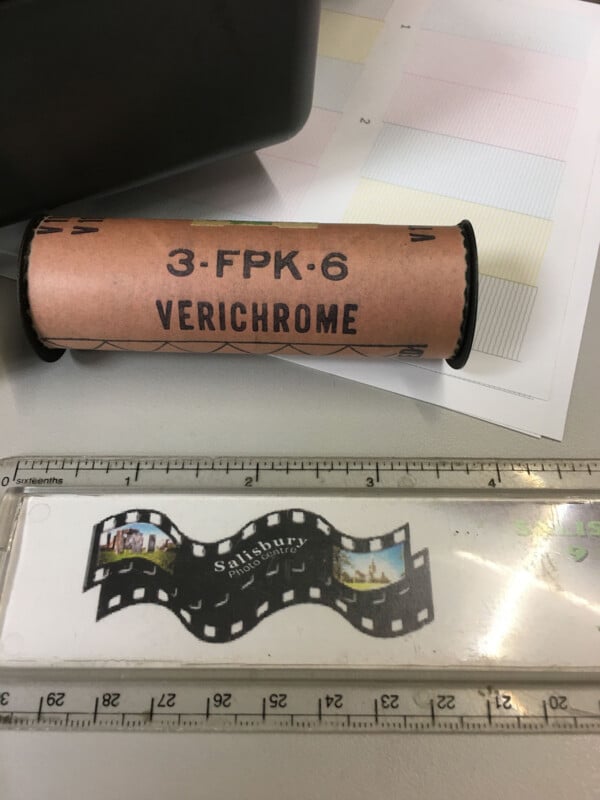 The old Verichrome film inside that was an unusual size.
“It was a Kodak Verichrome black and white V118 film, which was made from 1900 to 1955,” Scott explains. “I knew it was an early version because it wasn’t panchromatic film; it would be orthochromatic. The film was much larger than the 120 or 620 films — it is 3.5 inches wide.”
The folding camera was taken from a “waste bin” at a Christian Aid charity store in Manchester 40 years ago. The bin was made up of items the store couldn’t sell.
“Mr. Bennett had known there was a film inside, but never got it processed until now,” adds Scott.
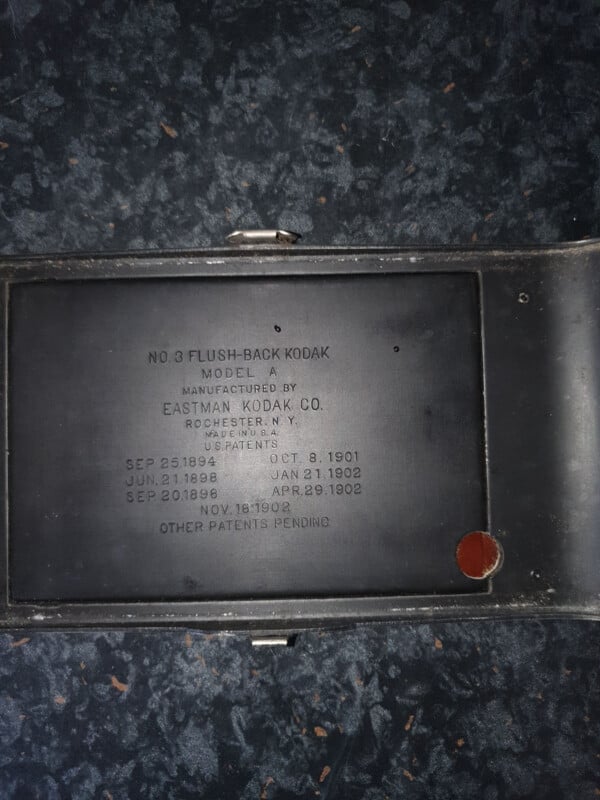 The back of the folding camera.
 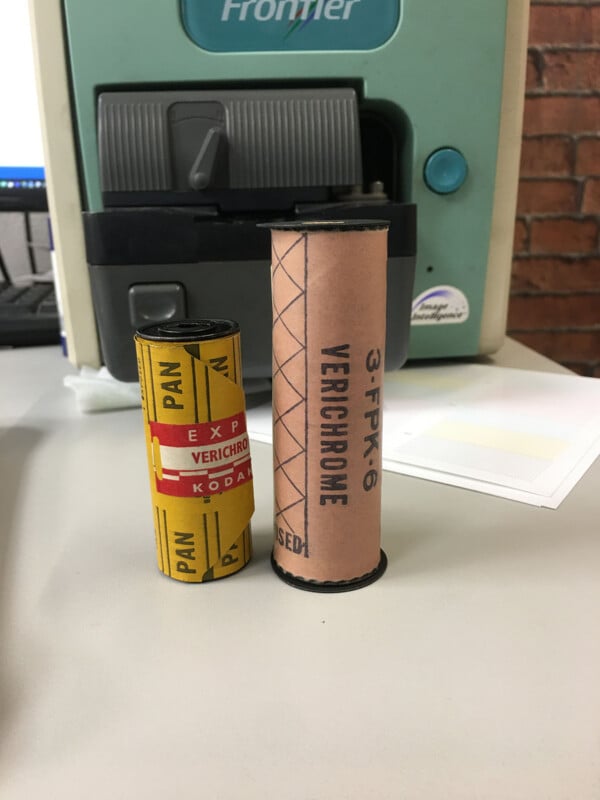 The 3.5-inch V118 Verichrome film, right, compared in size with a regular roll of 120 Verichrome Pan. Scott believes the older roll is orthochromatic instead of panchromatic. Processing 70 Year Old Film
Before Scott could even develop the ancient roll, he had to break one of his film spindles to accommodate its unusual size.
“When we processed the film it was very dark and I thought it was blank but with close inspection against a bright strip light there were two images,” Scott says.
“So we got the film dry and scanned the two images. There was lots of base fog and age damage.”
Scott says that while there wasn’t much to work with, he enjoys the challenge and proceeded to scan them into positive images anyway. He adjusted the photos best he could in Photoshop.
After conducting research, he believes the photos were taken in the 1920s — 100 years ago. For reference, the oldest film ever developed by Film Rescue International was 134 years old.
“This might be the oldest processed film in the U.K.,” adds Scott.
The hotel in the photo is Kviknes Hotel in Sognefjord, Norway, built in 1877. The woman in the other photo is unknown, but is apparently dressed in fashionable garb from the 1920s.
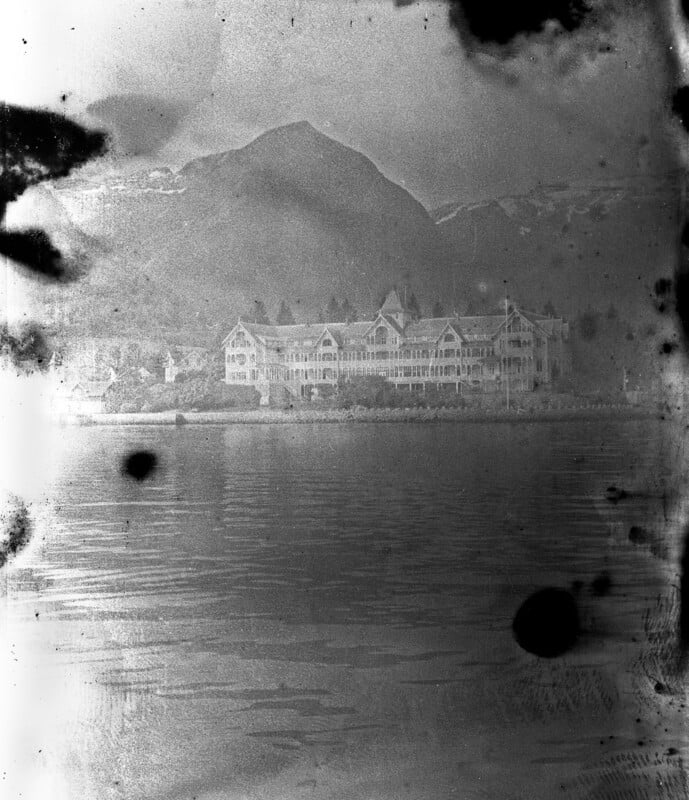 Kviknes Hotel in Norway.
 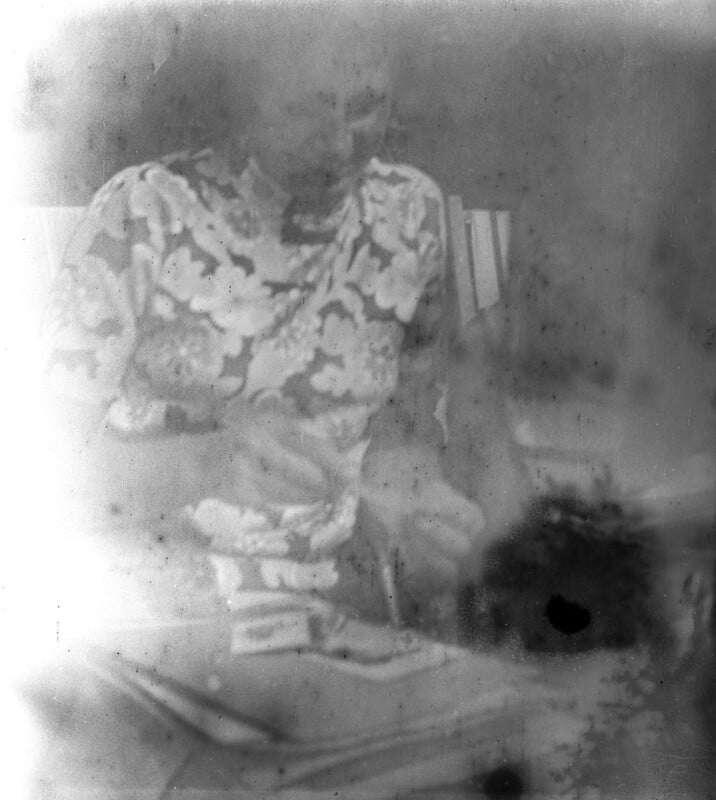 Unknown woman. Using AI to Enhance the Photos
Scott decided to enhance the photos using ChatGPT. But the results have to be taken with a pinch of salt because AI doesn’t restore an image the same way a photo restorer would; instead it takes the original photo as a reference and creates a novel image that closely resembles the original.
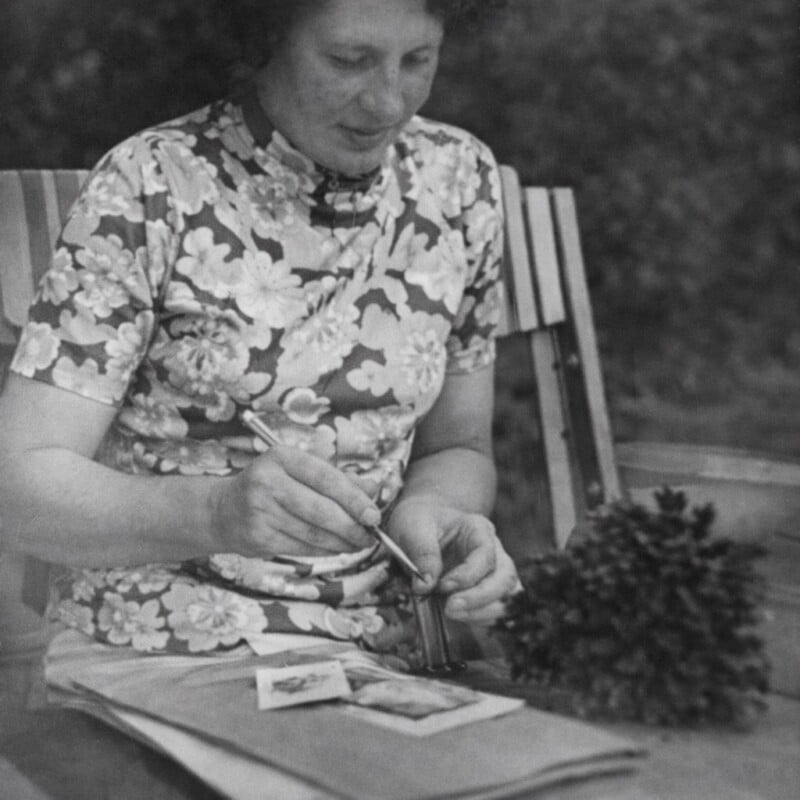 The AI made up details, such as the shrub. It’s also far from clear in the original image what activity she is doing in the photo.
 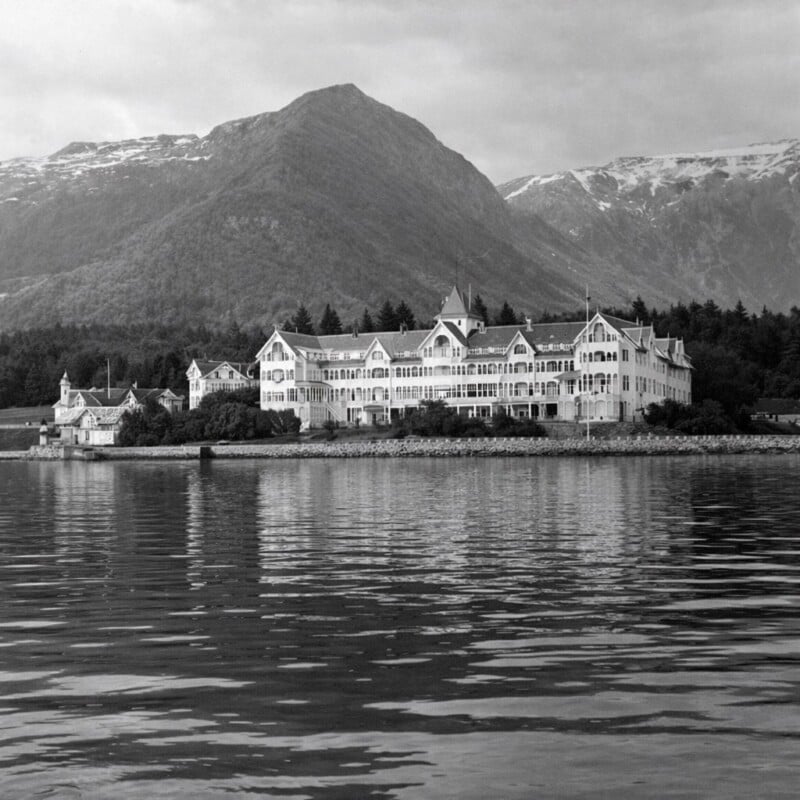 AI restoration.
While they are much clearer than the actual scans, there are some clear mistakes such as the woman’s left hand pointing in a different direction than the original and it added a random shrub.
Image credits: All images courtesy of Ian Scott / Salisbury Photo Centre