

Listen to this article
Estimated 3 minutes
The audio version of this article is generated by AI-based technology. Mispronunciations can occur. We are working with our partners to continually review and improve the results.
Winnipeg city council’s public works chair wants to skip a plan for temporary bike lanes on Wellington Crescent and move straight to building permanent protected bike lanes.
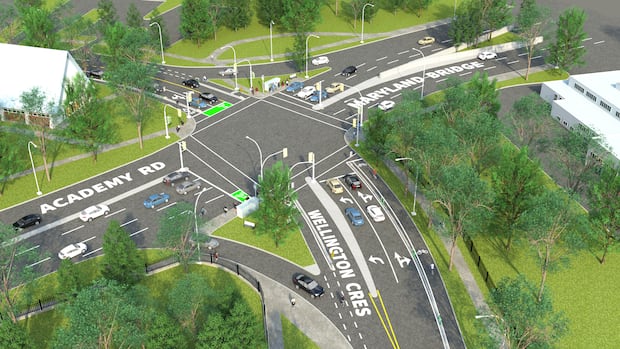
A new city administration report released on Wednesday recommends council approve an updated interim bike lane design that would use temporary materials, including flexible marking posts, and lower the speed limit to 40 km/h between Academy Road and Stradbrook Avenue. The city budgeted $400,000 for the interim plan.
Speaking to reporters at city hall, Lukes said the city already has funding earmarked in 2029 for permanent bike lanes along the stretch and should consider moving that timeline up.
“We’ve got funding budgeted for it in 2029, for permanent. Let’s see if we can start that right now,” Lukes said.
“Why throw away half a million dollars? Why not just do it permanent?”
The report, written by transportation planning manager David Patman, says the plan would prohibit turning at some intersections, reduce street parking by 29 stalls and create a new loading zone on Cockburn Street south of Wellington.
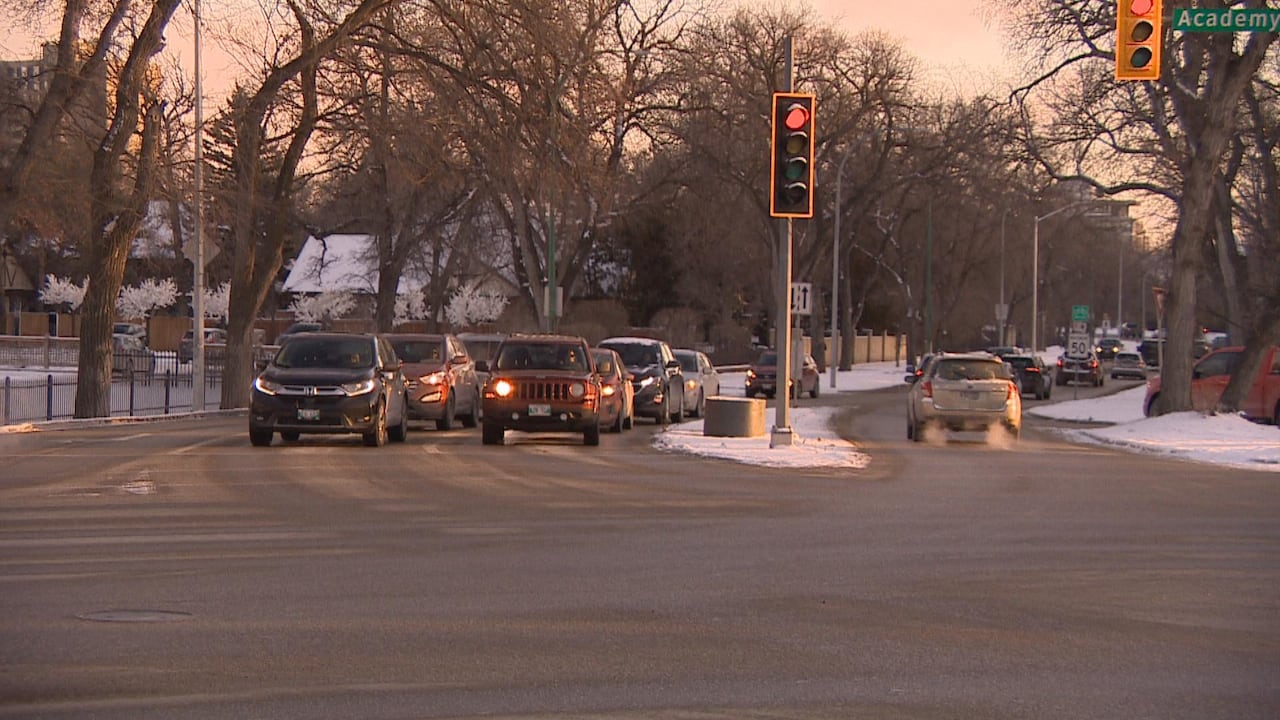 Wellington Crescent at Academy Road, in its current configuration, is shown in this 2024 image. (Randall McKenzie/CBC)
The changes are expected to divert 15 to 20 per cent of traffic and cause delays of five to 30 seconds at peak times.
The temporary lanes would remain in place until a permanent design is completed and built.
Lukes said permanent infrastructure would offer stronger protection for cyclists and could address some of the concerns raised during public consultation about loading zones and parking.
In an online survey, 83 per cent of respondents consider the section of Wellington Crescent unsafe for cyclists, and 84 per cent of cyclists believe the proposed interim bike lanes would have a positive impact.
Opinions on the plan among residents on the street were split, with 46 per cent viewing it positively and 48 per cent negatively.
Lukes argued 74 per cent of survey respondents wanted to see a permanent design in the future as reason to skip the interim plan.
She also criticized aspects of the administration plan, particularly the plastic marking posts, which she considers “useless” in the winter because they break easily.
Cycling safety advocates have demanded the city take action to address safety concerns on the street. Cyclist Rob Jenner was hit and killed by a speeding driver while riding on Wellington Crescent in June 2024.
Lukes would like design work on a permanent solution to begin immediately, with construction potentially starting as early as next year.
A group of protesters gathered in the lobby at city hall, criticizing Lukes for wanting to delay work on installing new infrastructure. They held a sign saying, “Whose kid is next?”
“We can’t trust her when she says it’s going to come next year and it’s going to be permanent and it’s going to be great,” Lucky Adams said.
“They’ve had a plan for well over a year, what the temporary bike lane project would look like, and now they’re cancelling it. They’re breaking their promise. They told people on Wellington that temporary infrastructure is coming in the spring this year.”
The public works committee is expected to debate the interim design and speed limit reduction this week before the matter heads to city council.