
Stay up to speed with stories written by drivers, for drivers.
Get automotive news, DIY tips, market trends, in-depth car profiles, and more right in your email inbox.
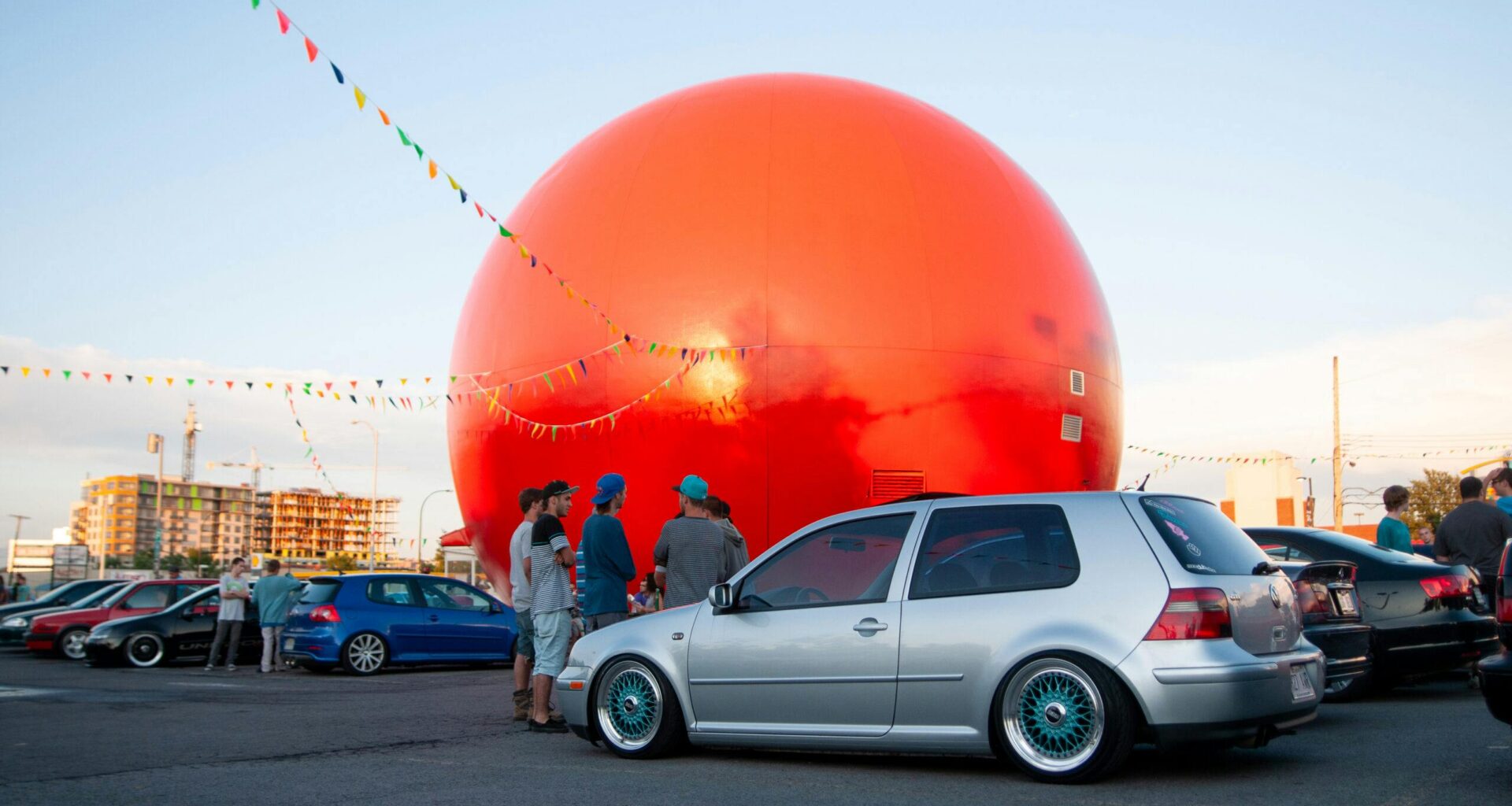
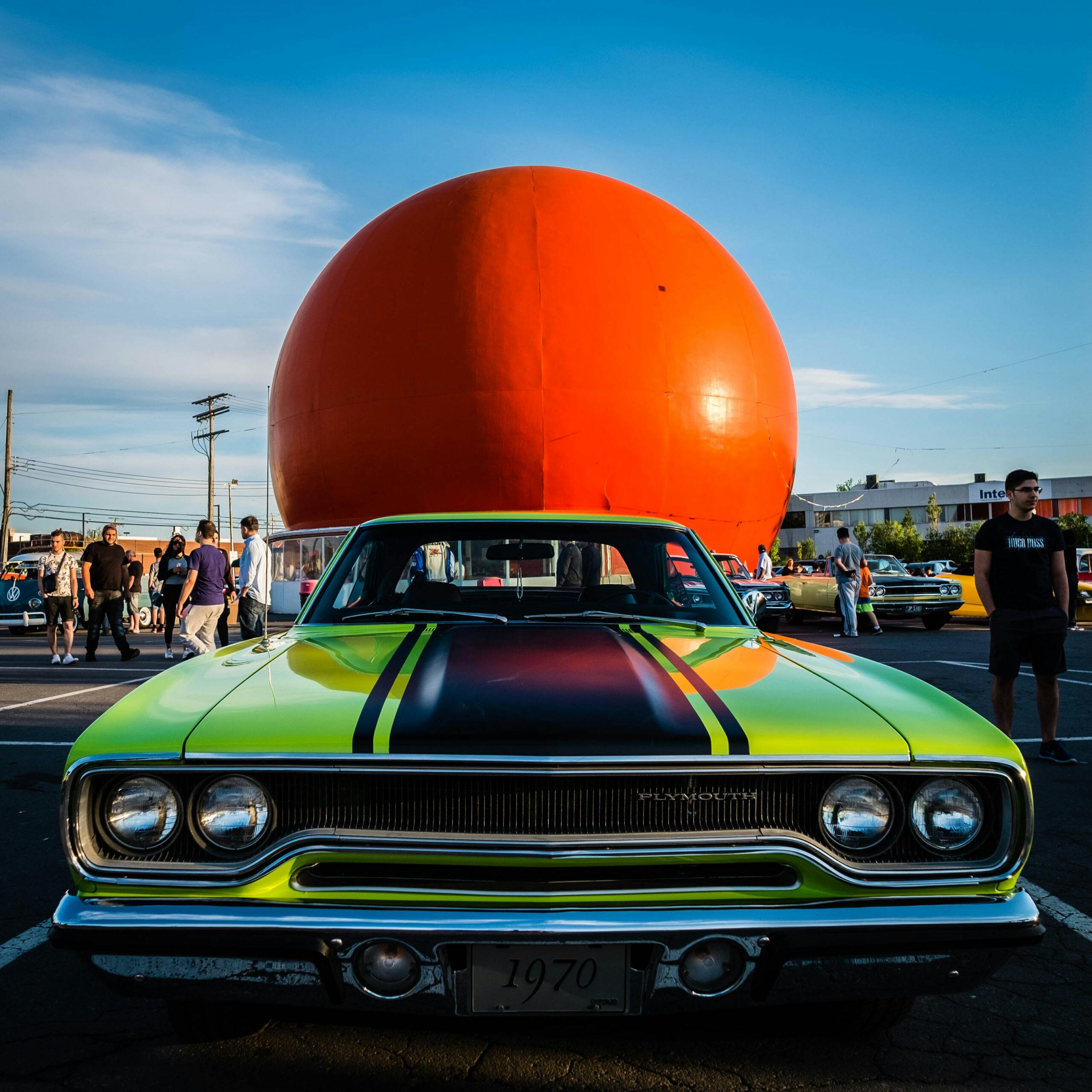
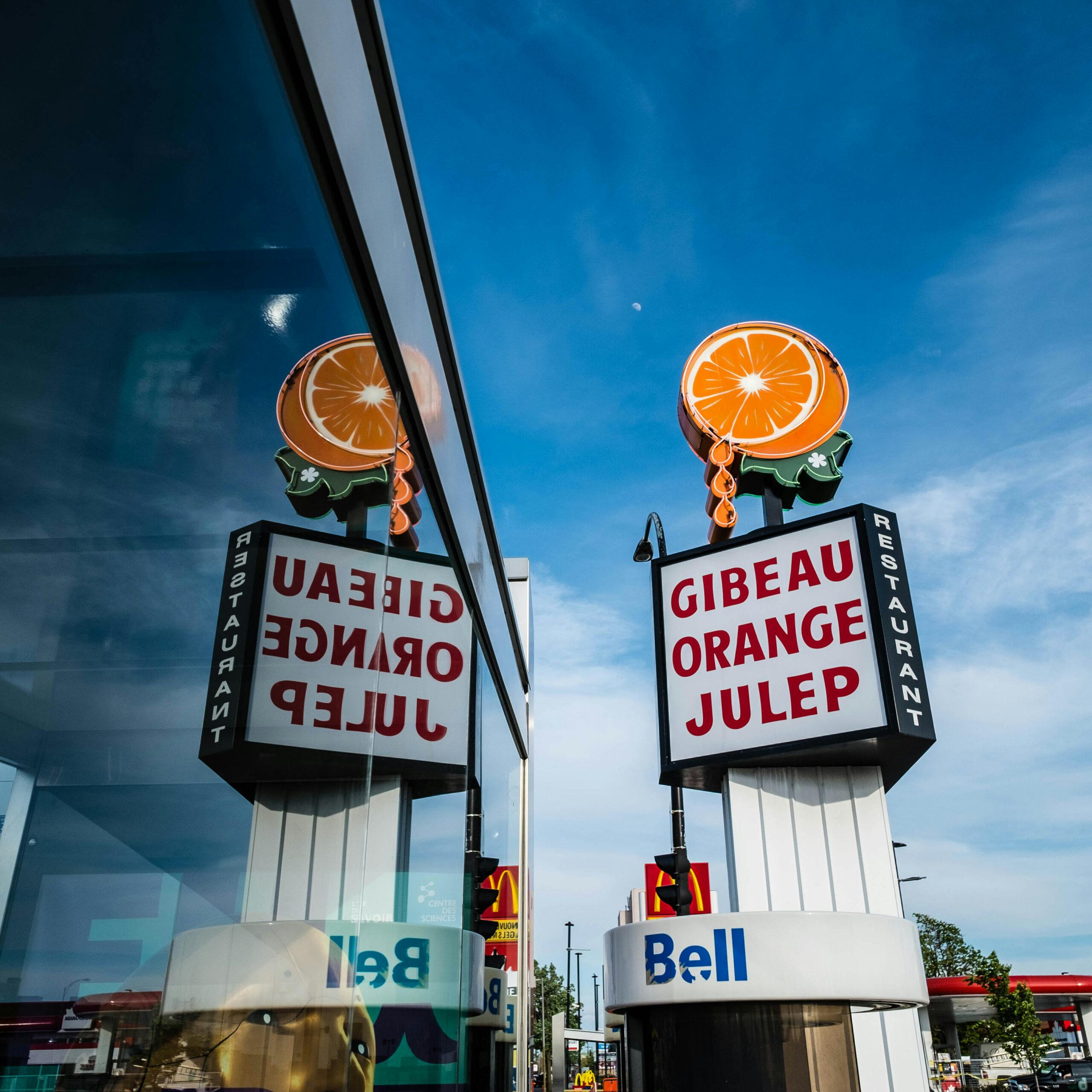
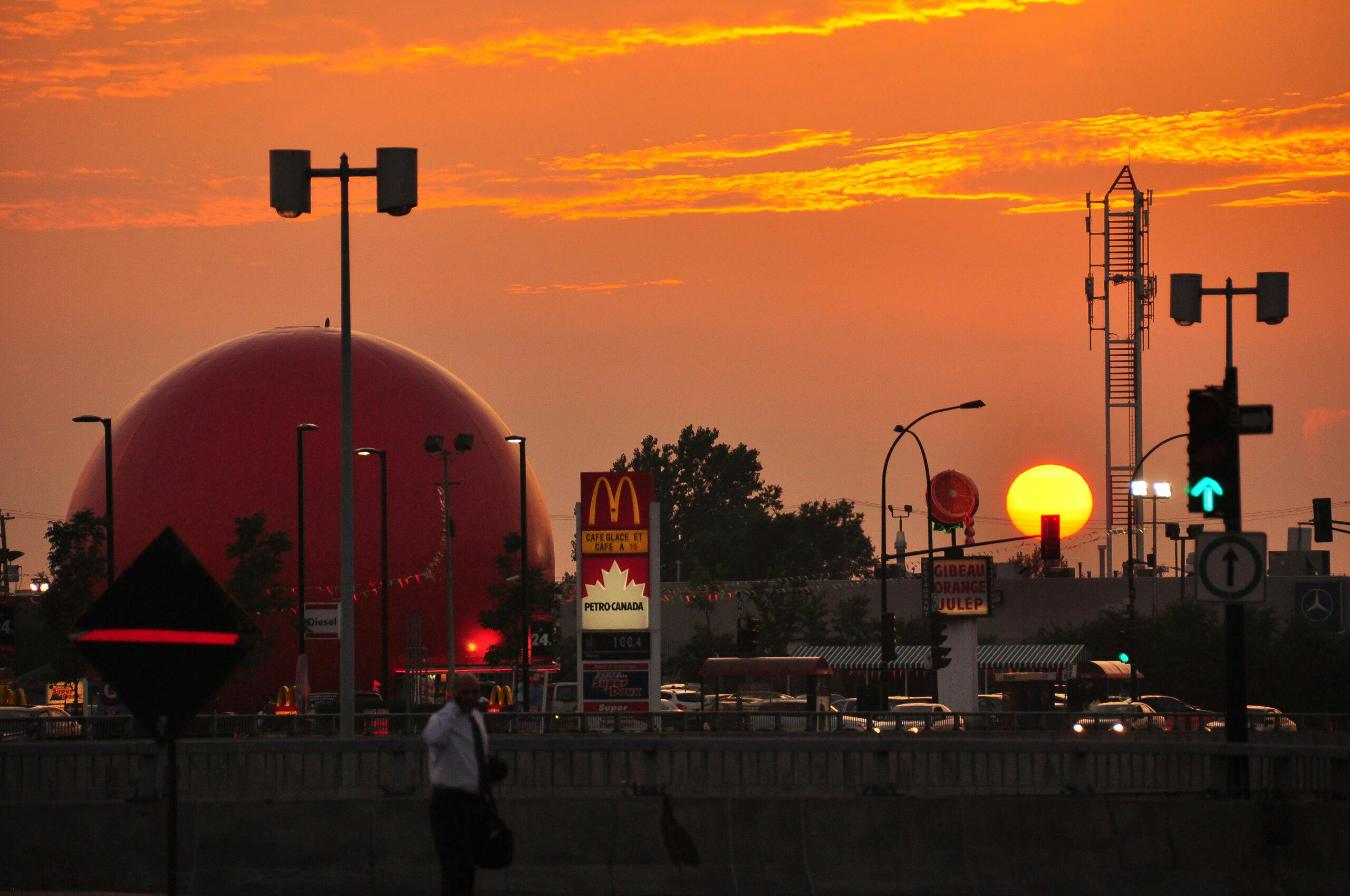
Gibeau’s Orange Julep rises like a second sun over one of Montreal’s busiest boulevards, glowing 24 hours a day, seven days a week, either under the rays of the sun or in the reflected beams of the hundreds of headlights that have gathered around it.
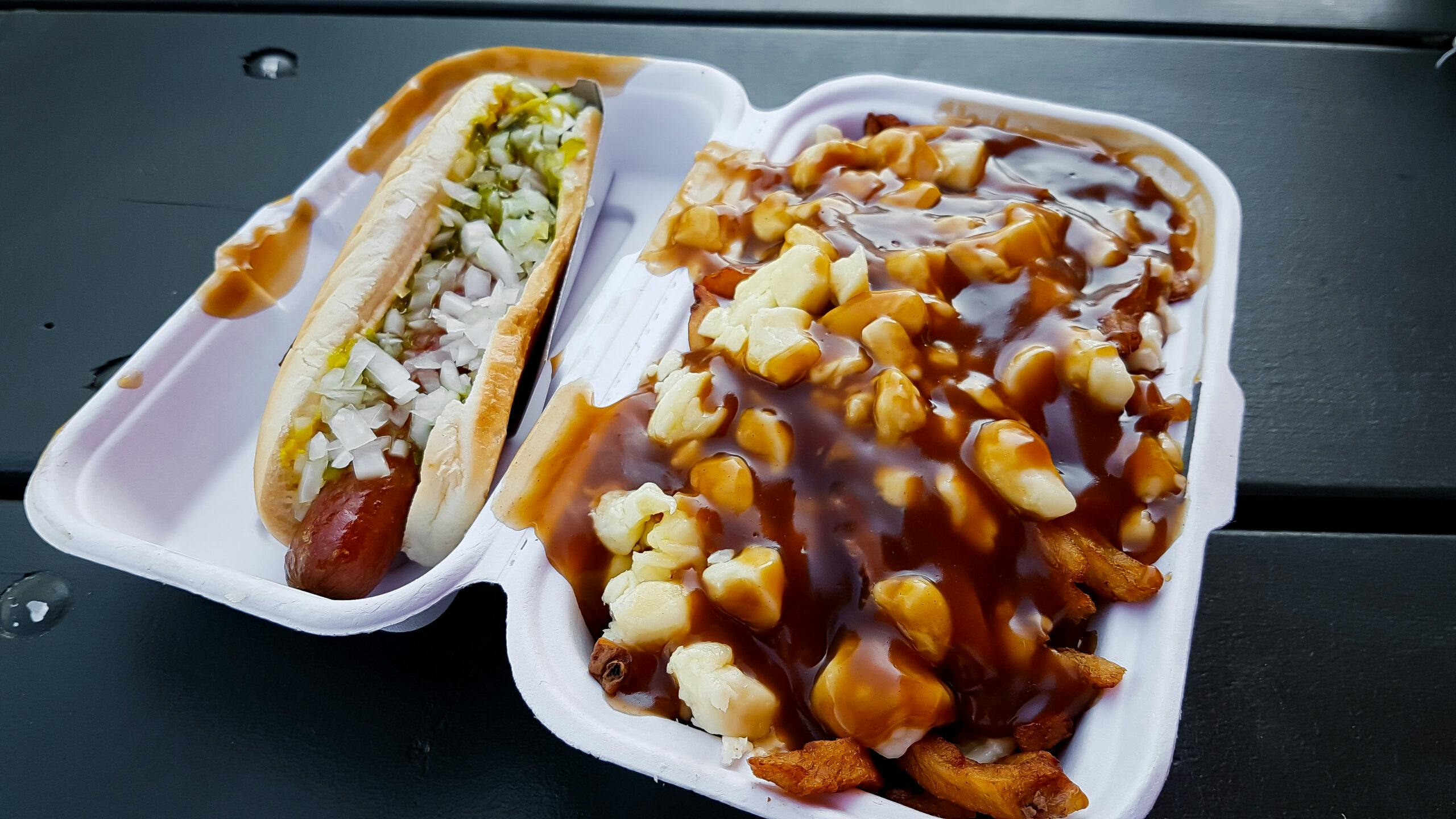
For more than 60 years, this popular snack spot has called the faithful to its generous parking lot, ostensibly drawn by the promise of its creamy, frothy citrus drink of the same color. Close to a century after Hermeas Gibeau debuted his delicious “Orange Julep” at a small park stand across town, his legacy lives on, and not just in the gallon jugs and tallboy cups that stream from the doors of the enormous, orange sphere, because for many decades this building was a nexus of Montreal’s automotive subculture.
Drive-In Culture, Canadian-Style
There’s not much about Montreal’s layout that could be considered similar to American cities of a similar size. Founded in 1642 as an island fortress, Montreal is now a metropolis whose sprawl is hemmed in by the island edges that serve as its borders and the mountain (Mount Royal) that sits at its center. Combined with the twisting topiary of its streets, its geography staves off the ‘50s suburban planning that has defined the unchecked growth of much newer cities south of the U.S.-Canada border.
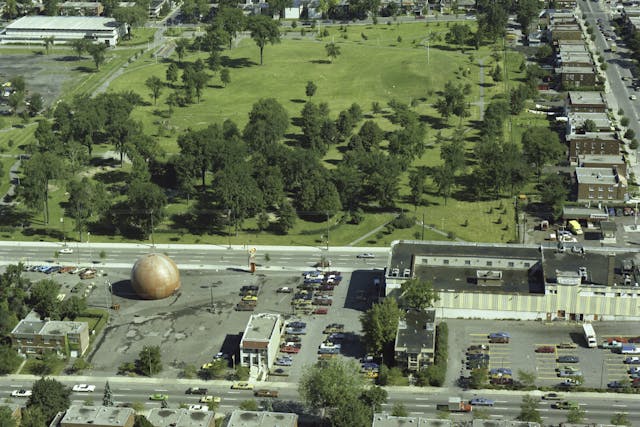 An aerial view of Montreal’s Orange Julep, c. 1974Flickr/Montréal Archives
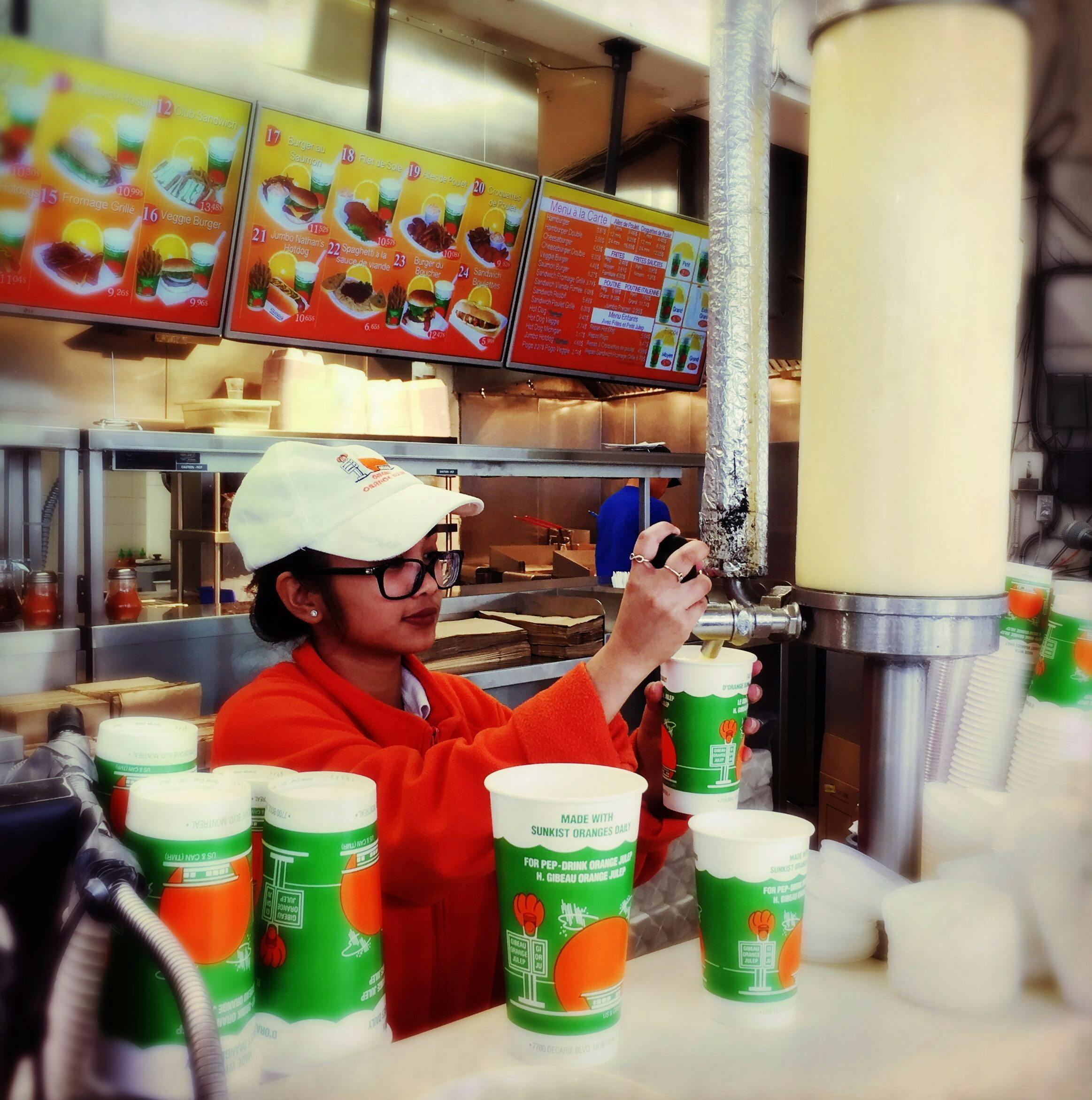
The Gibeau Orange Julep is a unique addition to Montreal’s already unusual architectural anthology. Yes, it’s named after the delicious beverage that, legend says, is aged to perfection within the upper reaches of its spherical structure before trickling through a network of flavor-enhancing plumbing to the nozzles at ground level.
The stretch of Boulevard Décarie where the Julep sits has been largely unremarkable to the eye, for most of its history, with first a horse racing track directly to the east of the restaurant, and today the featureless steel of modern condo and mall development encroaching from two other cardinal points. Only the sunken Décarie express highway in front of it serves as protection from the surrounding gentrification.
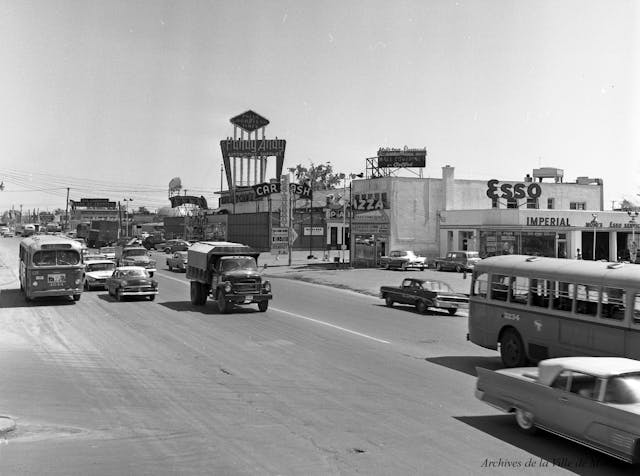 c. 1961Flickr/Montréal Archives
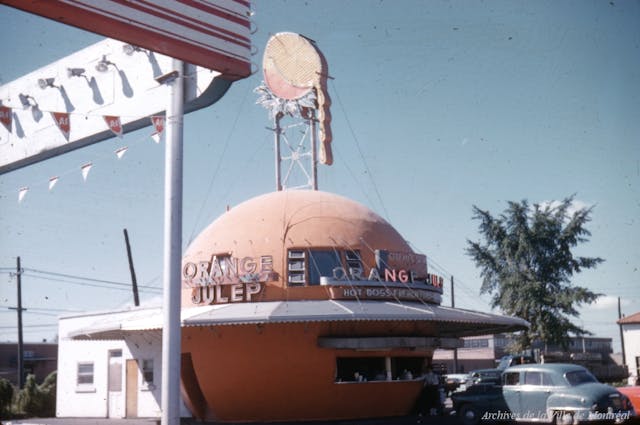 c. 1964Flickr/Montréal Archives
The Orange wasn’t always so mighty, of course. It grew along with Gibeau’s business. In the beginning, people flocked to a more modestly sized, orange-shaped restaurant made of cast concrete. As car culture began to ramp up in the period after World War II, Gibeau embraced the marketing potential of his restaurant’s namesake and in 1966 cleared a large area around his building, which he dismantled then rebuilt into the massive fiberglass orange that exists today.
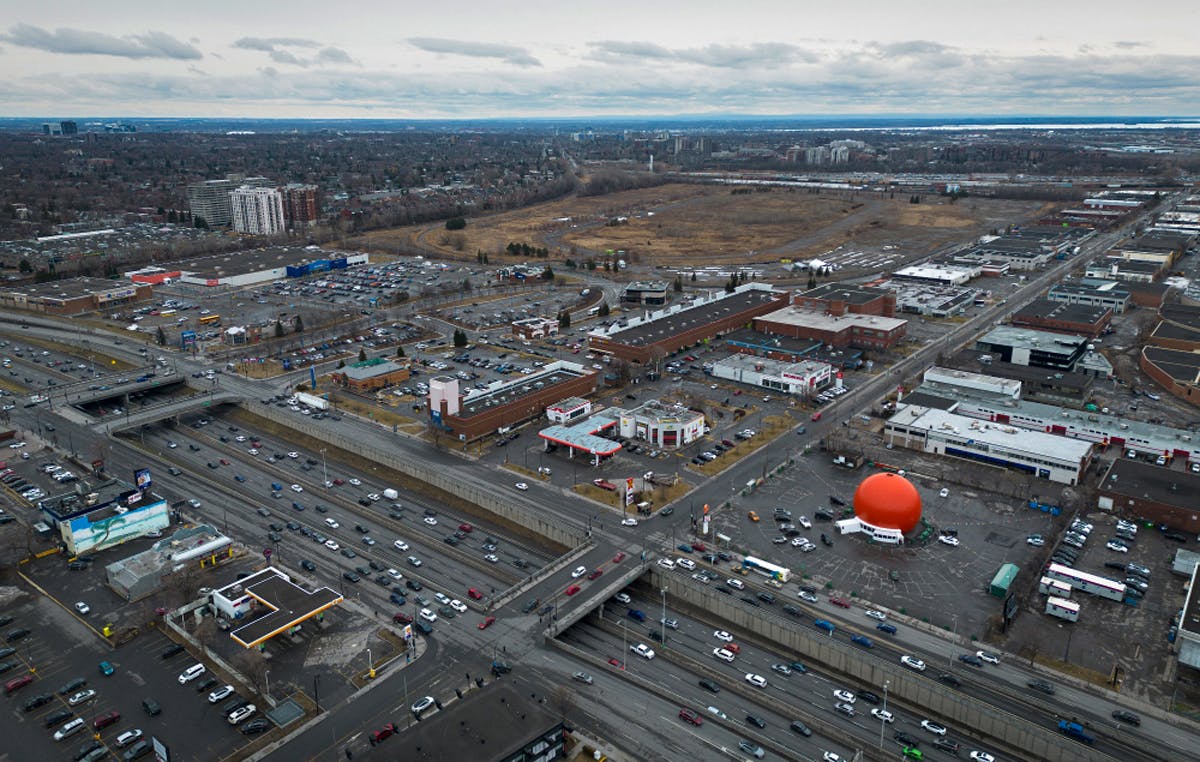 c. 2024Flickr/Axel Drainville
Originally, the orange was backlit from within by spotlights that made it resemble a fallen Christmas ornament, easily visible from the glide path into the city’s airport. Sadly, the rigors of Montreal winter weather ensured that the Julep could not be kept clean enough to keep up appearances. A thick coat of fresh orange paint meant that the lighting system had to move to the outside.
Hot Rod Culture Meets Homebrewed Delight
 Flickr/Montréal Archives
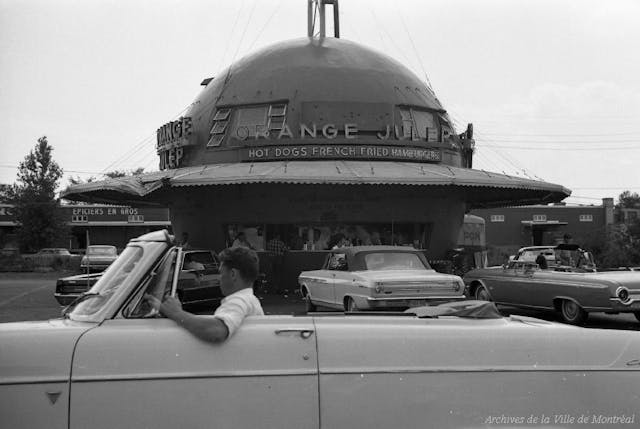
If the Orange Julep were merely a kitschy roadside attraction within the borders of a major city, we wouldn’t be talking about it here. In the six decades or so years since the current structure has been in existence, however, it has gathered generations of gearheads to its shadow.
First, Montreal’s hot-rod clubs made the Julep their unofficial HQ, meeting up for hot dogs, burgers, and fries prior to planned or impromptu cruises through the city. That spirit remained in full force as the 1970s became the 1980s, as those former ruffians and miscreants graduated into the corporate jobs and lifestyles they had once rebelled against, gaining the disposable incomes required to keep their hobby alive through the darkest days of the malaise era.
 Flickr/Andy Vathis
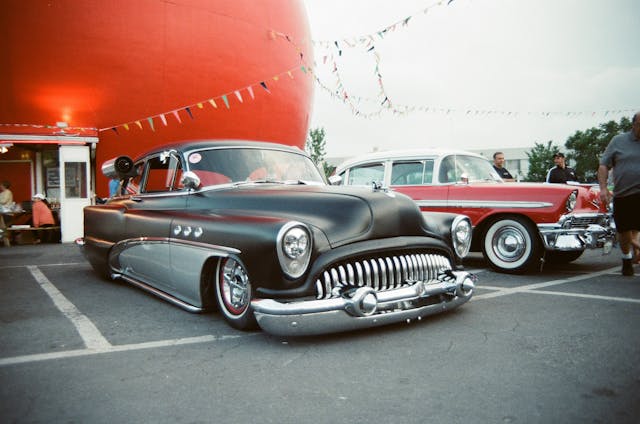
By that point, the appeal of Gibeau’s restaurant had spread beyond its original greaser roots to include classic car clubs seeking a spot within Montreal’s increasingly dense urban confines where they could gather to admire each other’s rides. Centrally located near the intersection of two major highways, and for a long time far enough from the sensitive ears of residential neighborhoods and their dial-a-cop noise complaint habits, the Julep crowd’s cruise nights grew and grew, with both formal events and more casual late-night prowls sharing space in a spot that rarely slept.
The Center of (My) Universe
 Flickr/Abdallah
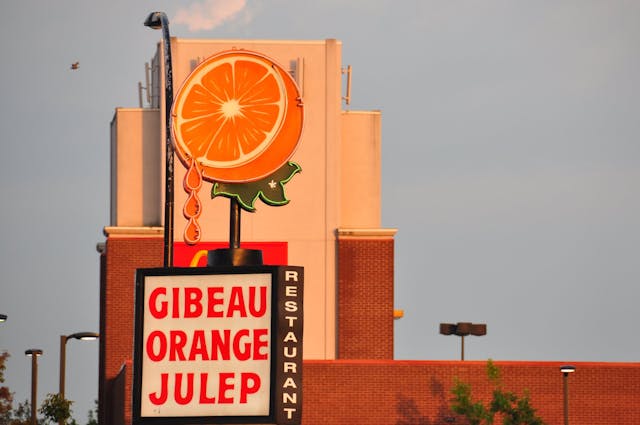
My own personal experience with Orange Julep car culture began at the end of the 1990s, when I moved to Montreal from small-town Quebec as a young teenage broncin’ buck. I didn’t have a pink carnation, as Don McLean once sang, but I did have a pickup truck, a 1986 Ford F-150 with the unkillable 300-cubic-inch I-6 under the hood, which I was, of course, modifying on a continual basis as much as my limited knowledge and budget allowed.
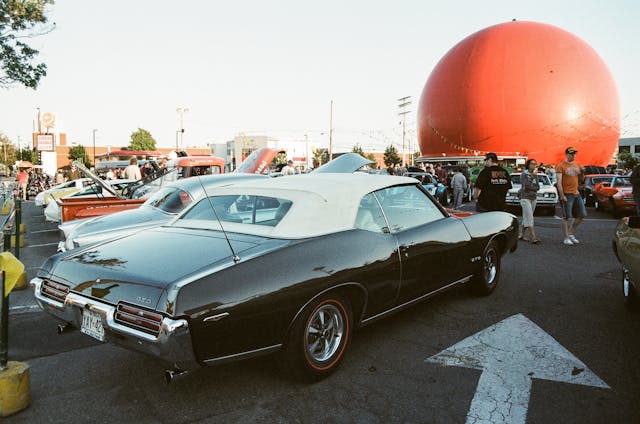
By this point in time, the Julep faithful had divided into several distinct tribes. Wednesday nights belonged to the muscle-car and hot-rod crowd, and as the cohort around these machines grew older, the event evolved into a more organized car show, complete with trophies handed out as attendees voted on their favorite cars.
 Alan Glover
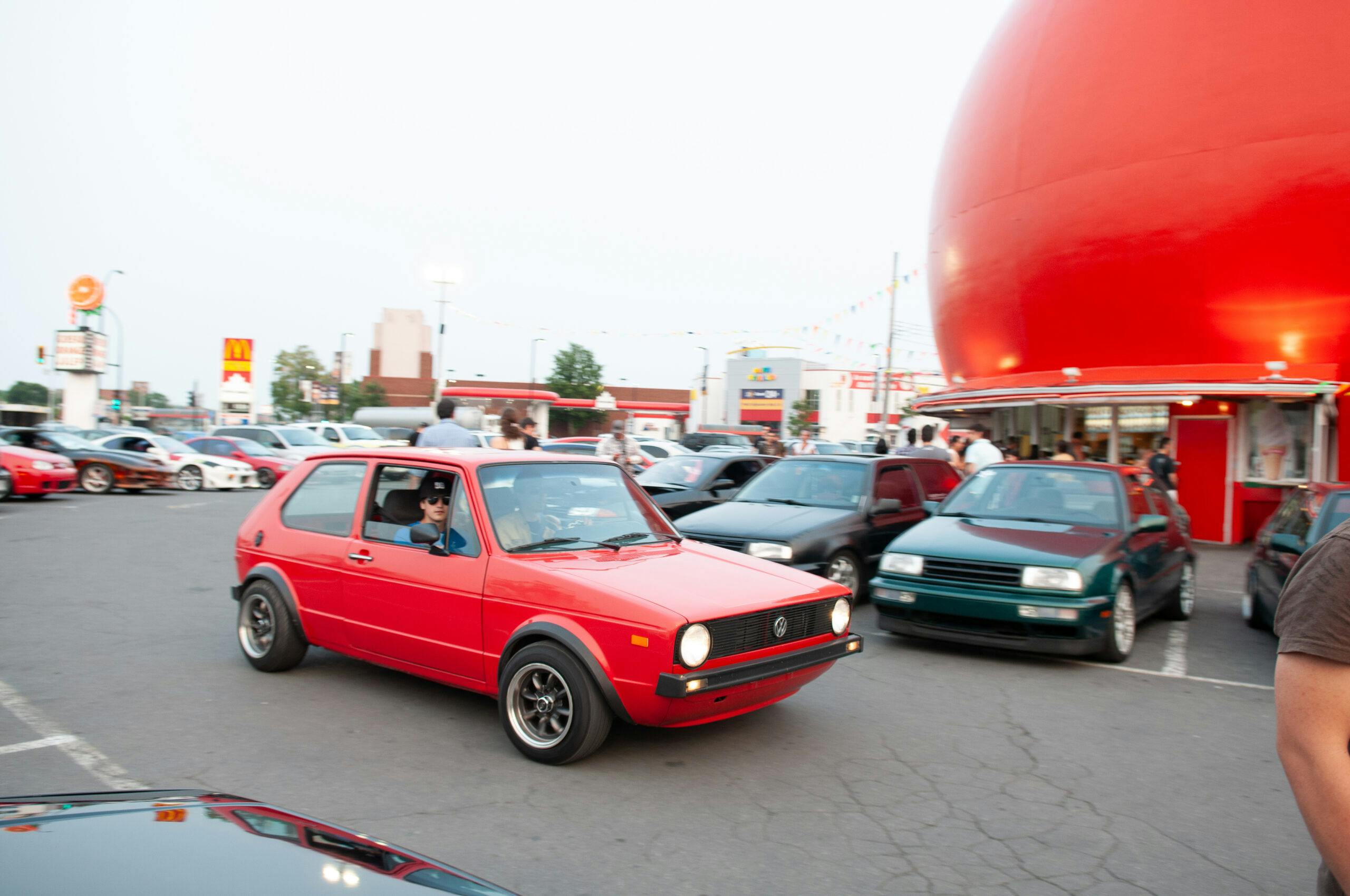
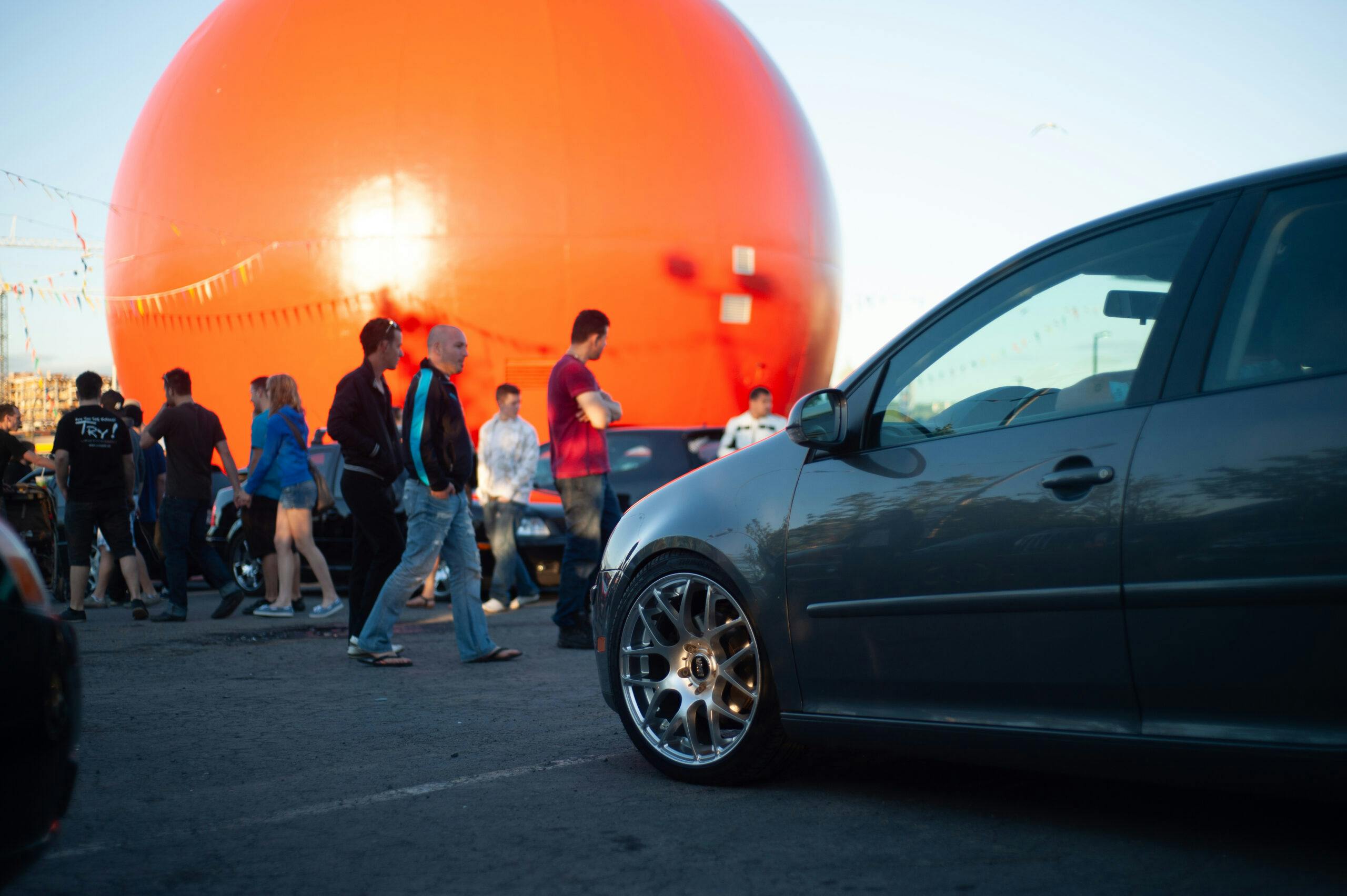
Tuesdays belonged to the Euro scene, dominated by Volkswagen crews with modified Jettas and Golfs and spiced up by small groups of BMWs and Audis, with little British cars and sport bikes shuffling in where they could (the latter eventually graduated to their own dedicated evening).
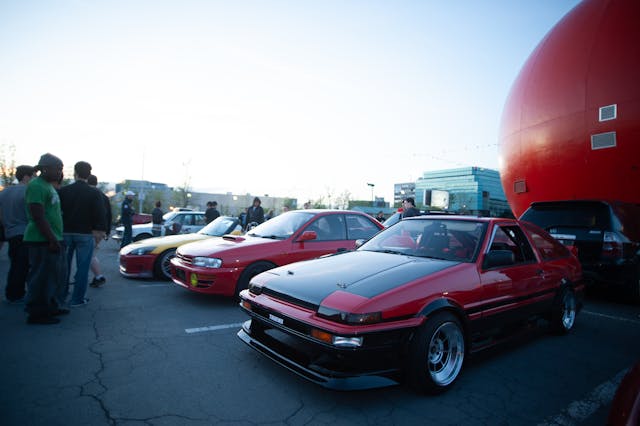
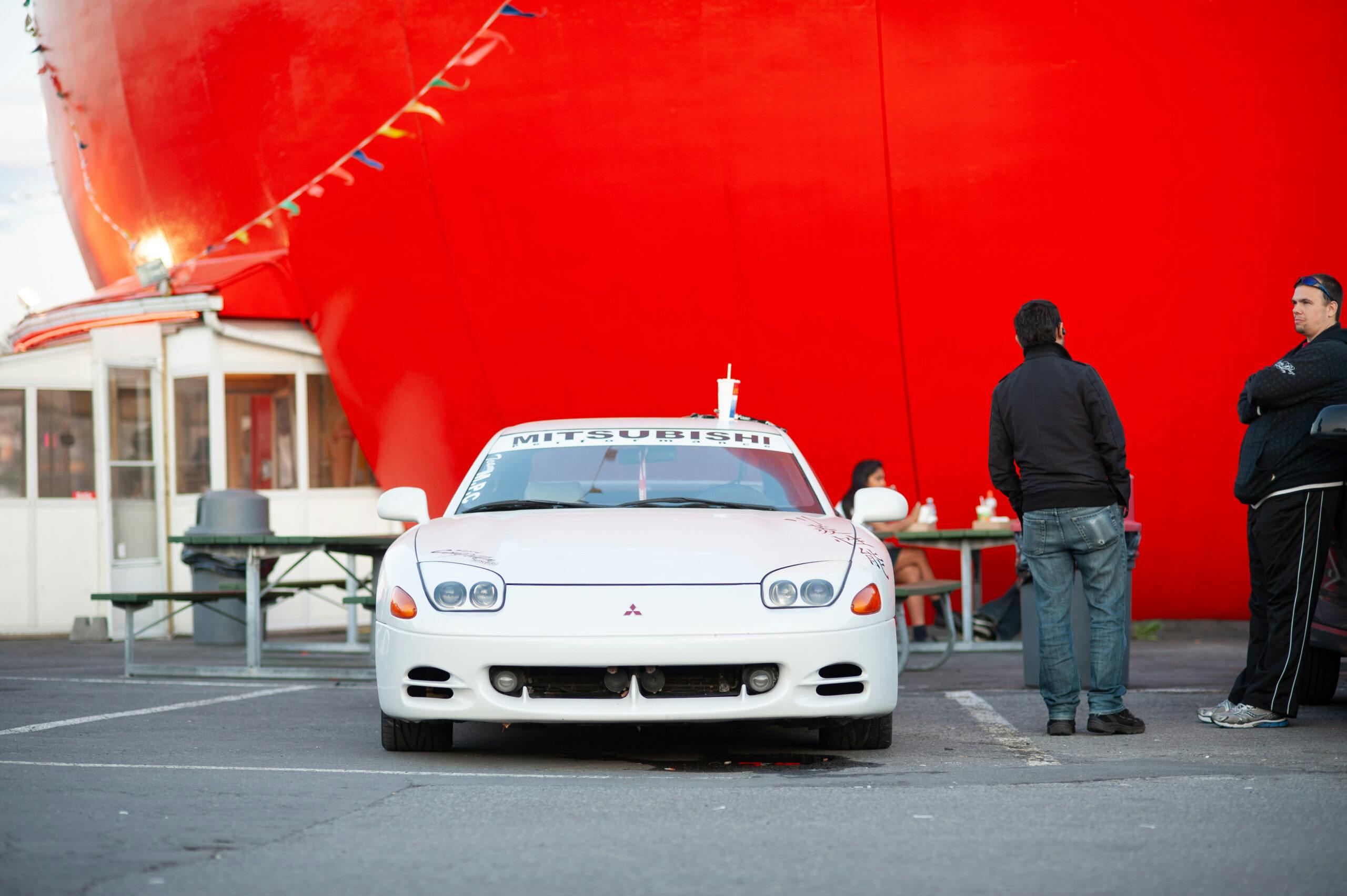
Thursday nights hosted what was by far the largest gathering during this period. It was the dawn of the sport-compact performance scene in Montreal, which was chronologically a little behind similar scenes in southern California. I made sure to crash the party in my pickup to gawk at—and, in my ignorance, initially to scorn—the Honda Civics, Toyota Supras, Eagle Talons, Mazda 323s, and Nissan 240SXs that served as the backbone of the scene at that time. Tuesdays at the Julep were where I made my first real friends in Montreal, relationships that have in many cases endured for more than 25 years.
 Alan Glover
“I remember the ‘ohhhhhh’ factory when the well-done cars would arrive,” remembers Adam Miller, a longtime supporter of the Montreal car scene and the owner and builder of some of its stealthiest and quickest turbocharged machines during the glory days of the Julep. “The shop cars and the sound demo cars, and people with more pride in their builds.”
Alas, Orange Babylon
 Flickr/Andy Vathis
Miller also recalls how, at least at first, the Julep was one of the more respectful import meets in the Montreal area, self-policing against the cut-off revs and burnouts that typically doom any gathering where unbridled displays of horsepower attract the local constabulary. It was only a matter of time before that kind of behavior infiltrated the Julep, however, and by the mid-2000s intense attention from law enforcement pushed import meets to the fringes of the city. They went first to the West Island, and then eventually off the island entirely into the industrial parks of Laval, where they merged with the same street-racing scene that authorities had been trying to suppress.
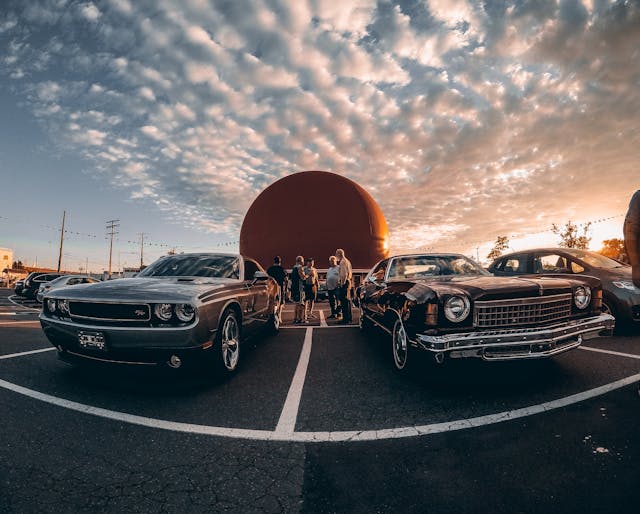
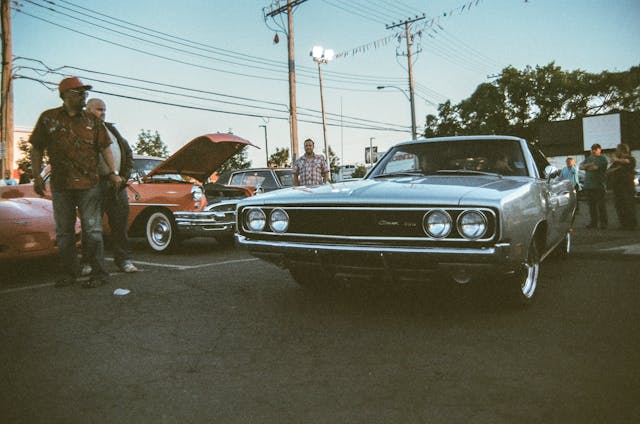
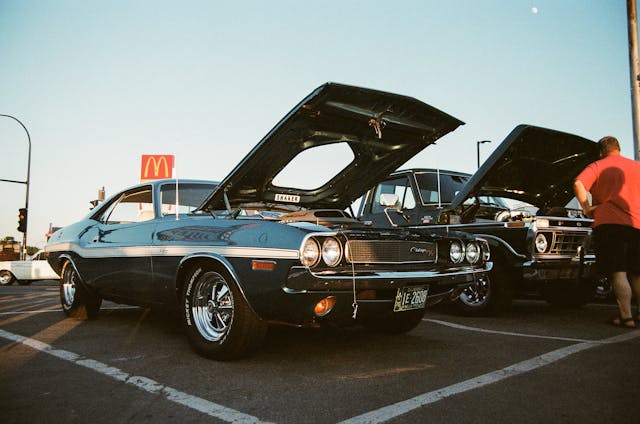
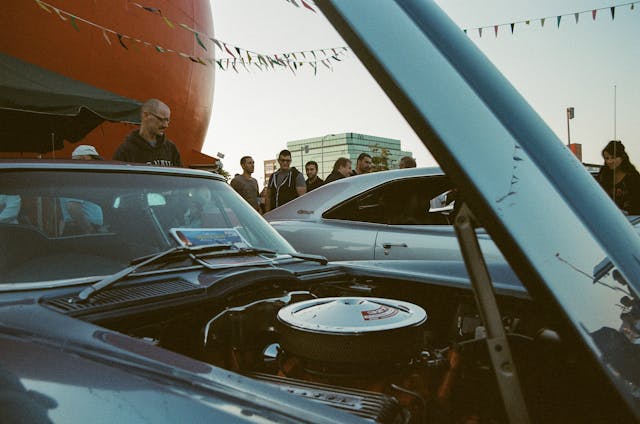
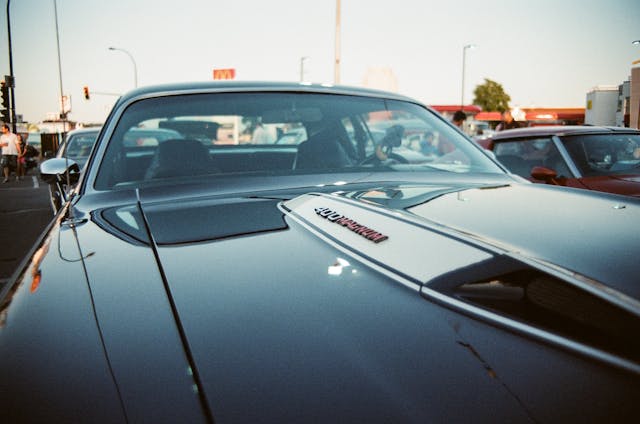
While the compact performance presence had largely diffused by the early 20-teens, the muscle car meets kept going strong thanks to a good relationship with the restaurant’s owners (and more organized crowd control).
 Flickr/Jason Thibault
 Flickr/Andy Vathis
 Flickr/Andy Vathis
 Flickr/Andy Vathis
 Flickr/Andy Vathis
 Flickr/Andy Vathis
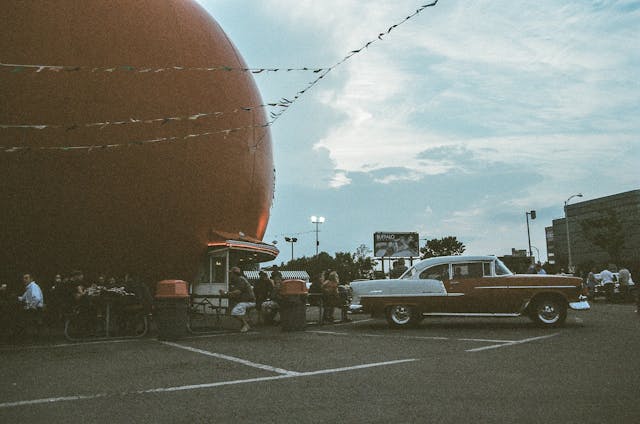
“For so many years, we went to the Wednesday evening hot-rod meets,” says Eric Descarries, a classic car collector and longtime automotive writer. “A friend of mine, writer Michael Hozjan, organized several events at the Julep and was even featured on Anthony Bourdain’s No Reservations show discussing the importance of the big orange building as one of the hot spots for car maniacs in Montreal.”
All good things eventually come to an end, even for a landmark like Gibeau. Just before the pandemic, the Julep was sold, and the new proprietors had little interest in maintaining an active role in the more formal classic car meets taking place on its grounds. Although it’s still possible to show up on Wednesdays and catch more than a few muscle machines enjoying a sip of Julep—and motorcycles also maintain a regular presence on other nights—organized events have moved elsewhere, with the Epicure market across the Décarie trench in particular picking up much of the slack thanks to its gearhead owners.
A Resilient Symbol of a Changing City
 Flickr/Henning Muhlinghaus
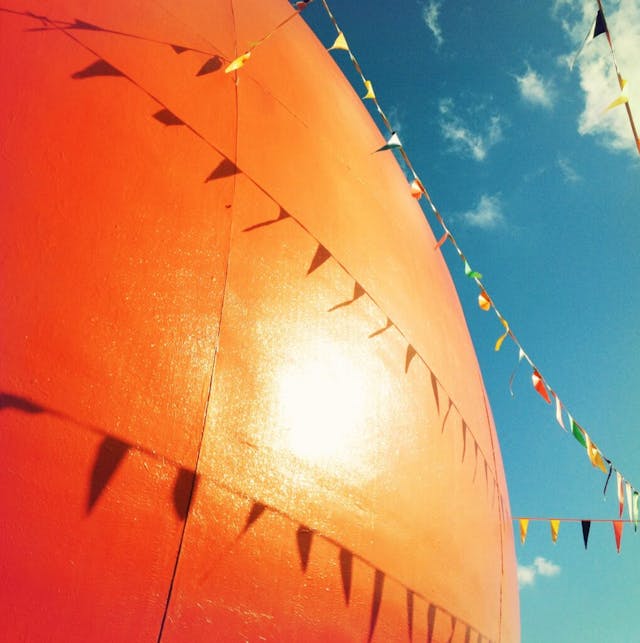
Despite no longer holding the (in)formal title of Montreal’s car-meet mecca, Gibeau’s most prominent restaurant still resonates as a vital part of the city’s identity and cultural landscape.
“For me, Orange Julep is a symbol of Montreal that’s just as iconic as the Olympic Stadium and St. Joseph’s Oratory,” says journalist Germaine Goyer, calling out two of the town’s other easily recognizable architectural highlights. “I have very fond memories of pulling into the parking lot [of the Julep] in my ’72 Chrysler Newport, the first summer I got my driver’s license, to see old friends and make new ones. It was the focal point in Montreal for car fans hailing from a period of time, not that long ago, when it was still possible to be passionate about cars in this city.”
 Benjamin Hunting
 Alan Glover
 Flickr/Hubert Figuière
The Julep’s automotive fade-out reflects the general crumbling of the city’s transit infrastructure, which makes it nearly impossible to get from one side of the island to the other without encountering rim-shredding potholes, unannounced construction, or major delays. At the same time, a spike in the cost of living in what was once one of the most affordable cities in North America has kicked off a steady exodus of once-proud Montrealers, myself included, who can no longer stomach what the city has become.
I may no longer live in Montreal, having transferred my cobbled-together network of scattered rental garage spots and off-street parking to a multi-bay garage buried deep in the woods of southern Quebec, but at least once a week I still travel to the city. Inevitably, I find myself passing by the Julep, which towers over me as I crawl through the traffic of the Décarie trench.
 Flickr/Hubert Figuière
 Nefasth
 Flickr/Amy Meredith
 Flickr/Alan Teo
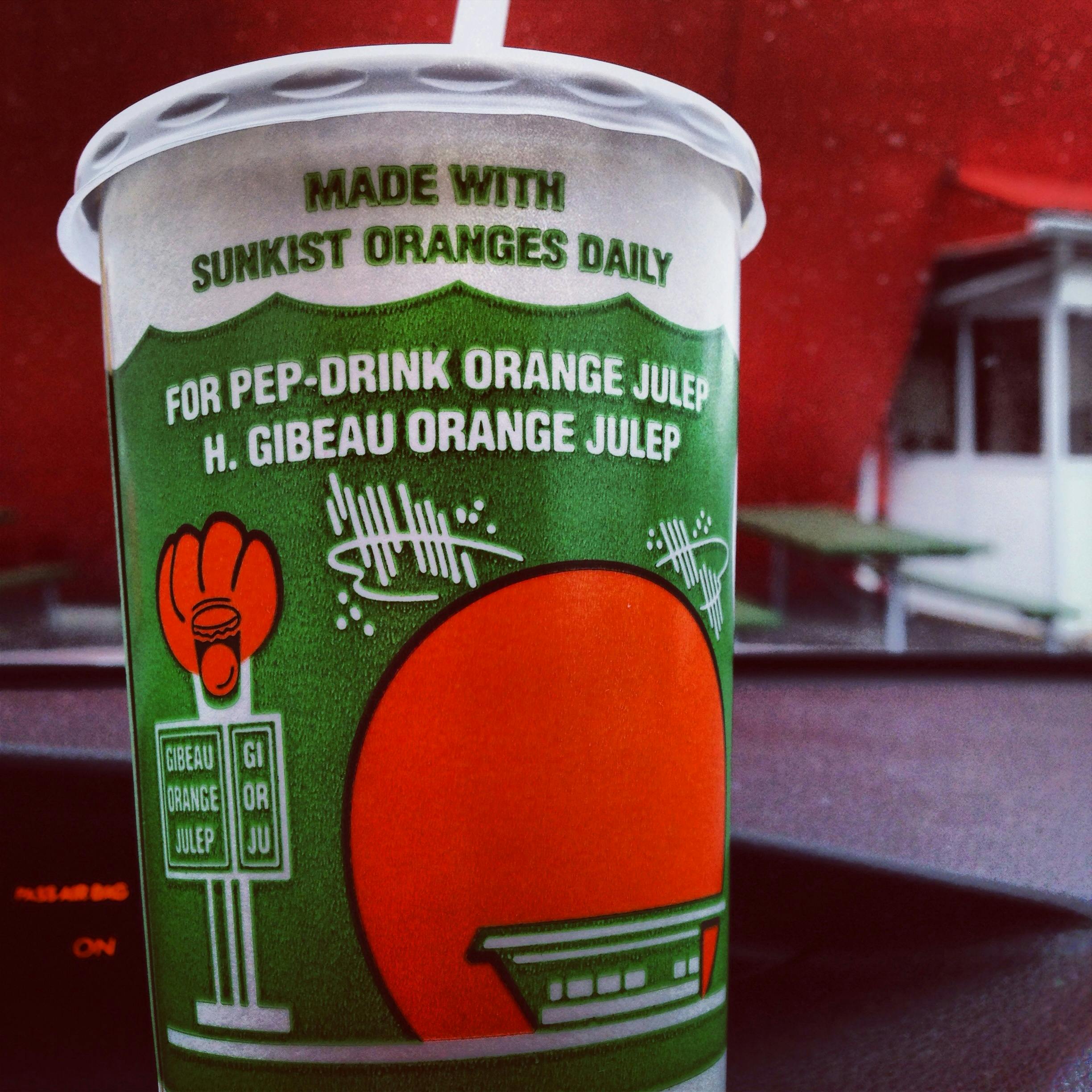
Every so often, the lure of that sweet, milky drink pulls me up the familiar exit, so close to my old stomping grounds, bringing me into the shadow of the sphere where I spent so many hours of my youth surrounded by the living, beating heart of the city’s car culture.
That parking lot might be filled with more ghosts than lead sleds these days, but not all hauntings call for an exorcism. In the case of the Orange Julep, they just ask for a straw.
 Flickr/abdallahh