
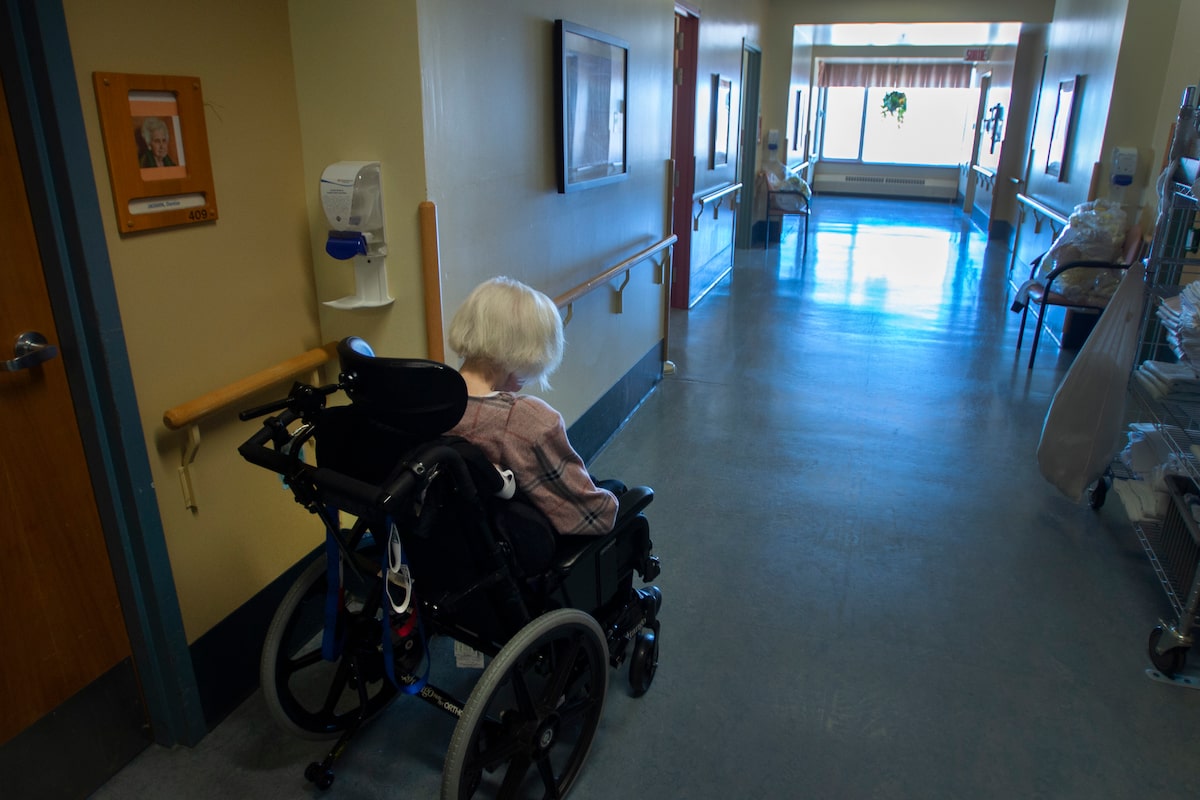
A resident makes her way down a hallway at a seniors residence in Laval, Que.Ryan Remiorz/The Canadian Press
One in four Canadians living in long-term care homes were prescribed anti-psychotic medication without a diagnosis of psychosis, according to a new report that highlights serious risks associated with using the powerful drugs.
The report, released on Thursday by the Canadian Institute for Health Information, examines the safety and well-being of residents in long-term care homes. It found the rate of anti-psychotic medication use in long-term care homes was higher in Canada compared to several other countries, including the United States, Australia and Sweden.
Health professionals say anti-psychotic medications are largely used to manage symptoms of psychosis, including delusions and hallucinations. However, the medications are sometimes given to residents in long-term care facilities, such as those with dementia, to manage aggressive behaviour.
“Inappropriate use of antipsychotics can carry serious risks, including adverse reactions, cognitive decline, falls and even death,” the report cautioned.
The CIHI report stems from a commitment in 2023 between Ottawa and provincial and territorial governments to provide extra funding for specific health care improvements. Long-term care was among those priorities.
Number of nurses working in long-term care shrinks, report shows
Long-term care homes received heightened attention during the peak of the COVID-19 pandemic, when outbreaks took place inside facilities and existing challenges, including staffing shortages and the quality of patient care, were underscored.
Advocates say these issues persist and are expected to worsen as demand exceeds capacity with an aging population. By 2030, Statistics Canada says more than one in five Canadians will be 65 or older.
CIHI’s report found about 24 per cent of long-term care residents in Canada were given anti-psychotic medication in 2024-25 to manage behavioural and psychological symptoms without a diagnosis of psychosis.
Before the outset of the COVID-19 pandemic, CIHI said the potentially inappropriate anti-psychotic use was steadily declining, but it rose again in the early years of the pandemic.
Andrea Foebel, CIHI’s manager of indicator research and development, said clinicians should evaluate the risk and benefits of using anti-psychotic drugs carefully.
“The challenge here in long-term care especially is some of the side effects of these medications can include falls,” she said.
Many seniors want to age in place, but few are prepared for the financial and emotional costs
Ms. Foebel added that it can decrease an individual’s quality of life and result in fewer interactions with families, caregivers and other residents. Drowsiness is a very common side effect associated with the use of the medication.
The CIHI report did not capture data from Manitoba, Quebec, PEI and the territories because Ms. Foebel said they did not have access to enough information from those jurisdictions to include them.
A group of national and provincial organizations focused on effective medication use known as the Appropriate Use Coalition, which includes CIHI, formed in 2023.
A panel of independent experts met in 2024 to set a target of no more than 15 per cent of long-term care residents should receive anti-psychotic medications without a diagnosis of psychosis. No time frame was associated with the target.
Hitting this national target in 2024–2025 would have meant about 21,000 fewer people across Canada received potentially inappropriate drugs compared to 2023-2024, CIHI’s report said.
The Appropriate Use Coalition says the national rate of potentially inappropriate anti-psychotic use is 10 per cent in the U.S., 18 per cent in Australia, and 15 per cent in Sweden.
The CIHI report also looked at other safety measures in long-term care homes. It found around one in six long-term care residents, or 17 per cent, had a fall in a 30-day period before they were assessed. Those living with dementia or who broke a hip previously are considered at a higher risk of falling.
Domenico Caggianiello, a director of resident long-term care programs at Sienna Senior Living in Ontario, said in the CIHI report that falls are common when shifts change because residents see staff members going home and they, too, want to leave.
Mr. Caggianiello also said it is important that caregivers know which residents fall frequently so that staff can engage with them and ensure they feel safe.
The report also identified other ways to reduce falls including increasing staffing levels to offer residents more support with tasks such as going to the bathroom, getting in and out of bed, and sitting down or standing up from a chair.
The CIHI report also found that in 2023-24, about 8 per cent of total hours worked by direct care staff in long-term care homes were overtime.
Based on available data, representing a quarter of long-term care homes in Canada, the report said this amounted to more than three million overtime hours – the equivalent of more than 1,500 full-time jobs.
“High overtime rates signal staffing pressures that can affect both staff well-being and the quality of resident care,” the report said.