
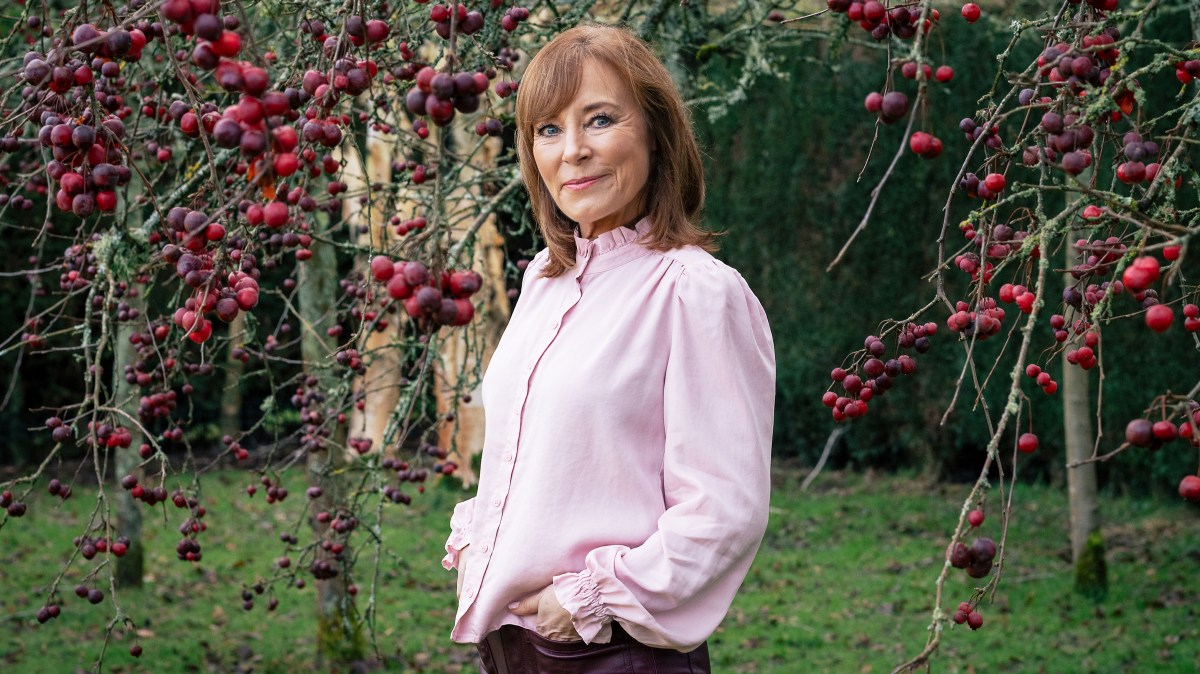
During the BBC’s live broadcast from the opening of the Diana, Princess of Wales Memorial Fountain in 2004, the presenter Sian Williams fainted — unbeknown to the audience at home. It was a hot day and she’d been sitting on a high stool in a marquee for hours. She was filling time, keeping the commentary going as the cameras waited for the royal family, when her video feed of arrivals cut out, leaving her with nothing to talk about.
As the stress of the situation peaked, things went haywire: her vision swimming, she became incoherent. A panicked producer cut away to Nicholas Witchell broadcasting from the fountain, just as Williams lost consciousness and collapsed to the ground.
Within a few minutes, however, she had eaten three custard creams and returned to finish the programme. “I thought, get off the floor, get back on the stool. Do the job that you’re here to do, Sian, because there are millions of people watching,” she says. “I also thought, I hope nobody ever, ever finds out about this — I mustn’t tell anyone. It can be hard to reveal yourself to other people when you think you’ve failed in case that’s the end for you. I think I would absolutely be much kinder to myself now.”
Today she’s Dr Sian Williams, having retrained and qualified as a chartered counselling psychologist in 2021. And she has written a book that divides all of us into “dandelions” and “orchids”. In The Power of Anxiety: How to Ride the Worry Wave she outlines a theory that dandelions are sturdy, extroverted and able to flourish in almost all conditions; the orchids are sensitive, highly attuned to danger and anxious. Psychological research suggests that these dispositions are partly decided by our DNA — and Williams is aware she’s an anxious orchid. “When I was six anxiety was there, and now I’m 61 anxiety is still here,” she says.
• How anxiety became an epidemic for young people
Not that being an orchid seemed to hold her back. Williams presented BBC Breakfast from 2001 to 2012, was Channel 5’s main news anchor between 2016 and 2022, and has fronted royal weddings and the London 2012 Olympics. She now hosts BBC Radio 3’s Classical Unwind and Life Changing for Radio 4. Yet when the BBC first offered her a job as a presenter, she didn’t want it. “When I was growing up I wasn’t Mary in the Nativity, right? I was at the back as a sheep. I wouldn’t ever put myself forward for stuff. I wasn’t in the popular group. I was not the kind of person who you would think would become a presenter.”
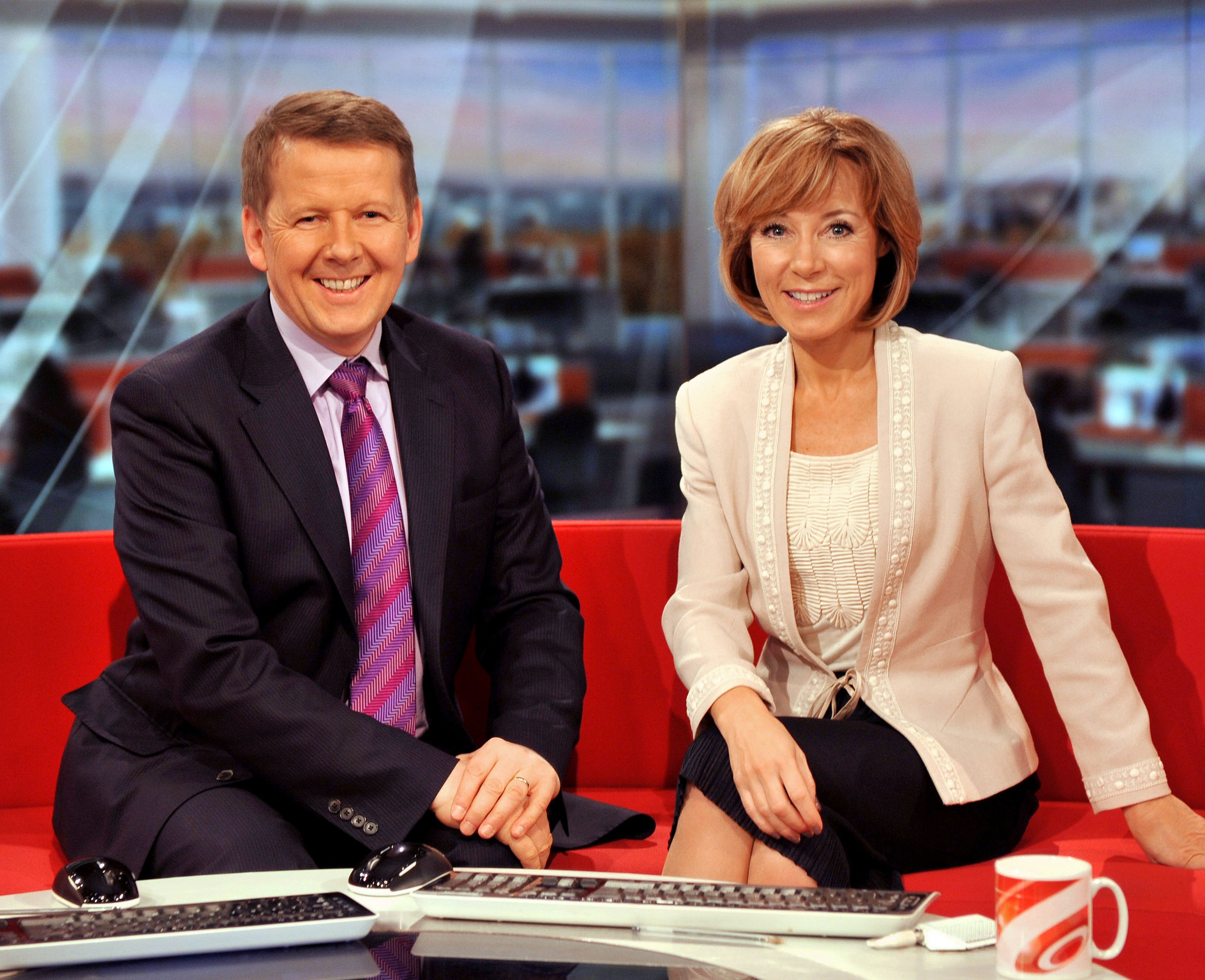
Presenting BBC Breakfast with Bill Turnbull in 2011
BBC
We’re in Williams’s kitchen in rural Kent, with her husband, Paul Woolwich, a television producer, pottering in and out. She’s drinking herbal tea, having given up coffee because it makes her too anxious. Born in London to Welsh parents, Williams started her career in 1985 as a BBC radio reporter in Liverpool. Then she became an editor, working first at Radio 4 and later on the launch of the BBC News 24 channel. After being persuaded to take a screen test, she was offered a role in front of the camera.
She was apprehensive but found she loved the job, despite its nerve-frazzling moments: a dodgy Autocue, an Awol guest or five minutes of air to fill with only one line of breaking news. “You go up a gear, there’s no doubt about that. You can feel your hormones doing their thing. The adrenaline rises, the cortisol rises. I have absolutely felt on air that my heart was beating so fast, people at home must be able to see it.”
She couldn’t always conceal as much as she would have liked. “Sometimes an email would ping in, saying, ‘You look tired,’ ” she says. “I went back on air too soon after my mum died in 2009, for example, and I lost a lot of weight and didn’t tell anyone. The viewers could see that sadness because you can’t hide yourself in three and a half hours of live telly.”
When Breakfast moved to Salford in 2012, Williams, whose son Alex was doing his A-levels, chose not to go with it. That year, around presenting news bulletins, she began an MSc in psychology at the University of Westminster. She had already dipped a toe into this world by joining a team who were trained to help BBC colleagues deal with difficult news events, but it was the traumatic birth of her third son, Seth, in 2006, that galvanised her to learn more about mental health. “He was born oxygen-deprived, blue and flat and had blackout fits as a baby and toddler,” she says. “I wanted to know how to equip him, and us, with tools to navigate his life.” The fits subsided; now aged 19, Seth is at university.
• Sian Williams: ‘My son and I were both very lucky to survive’
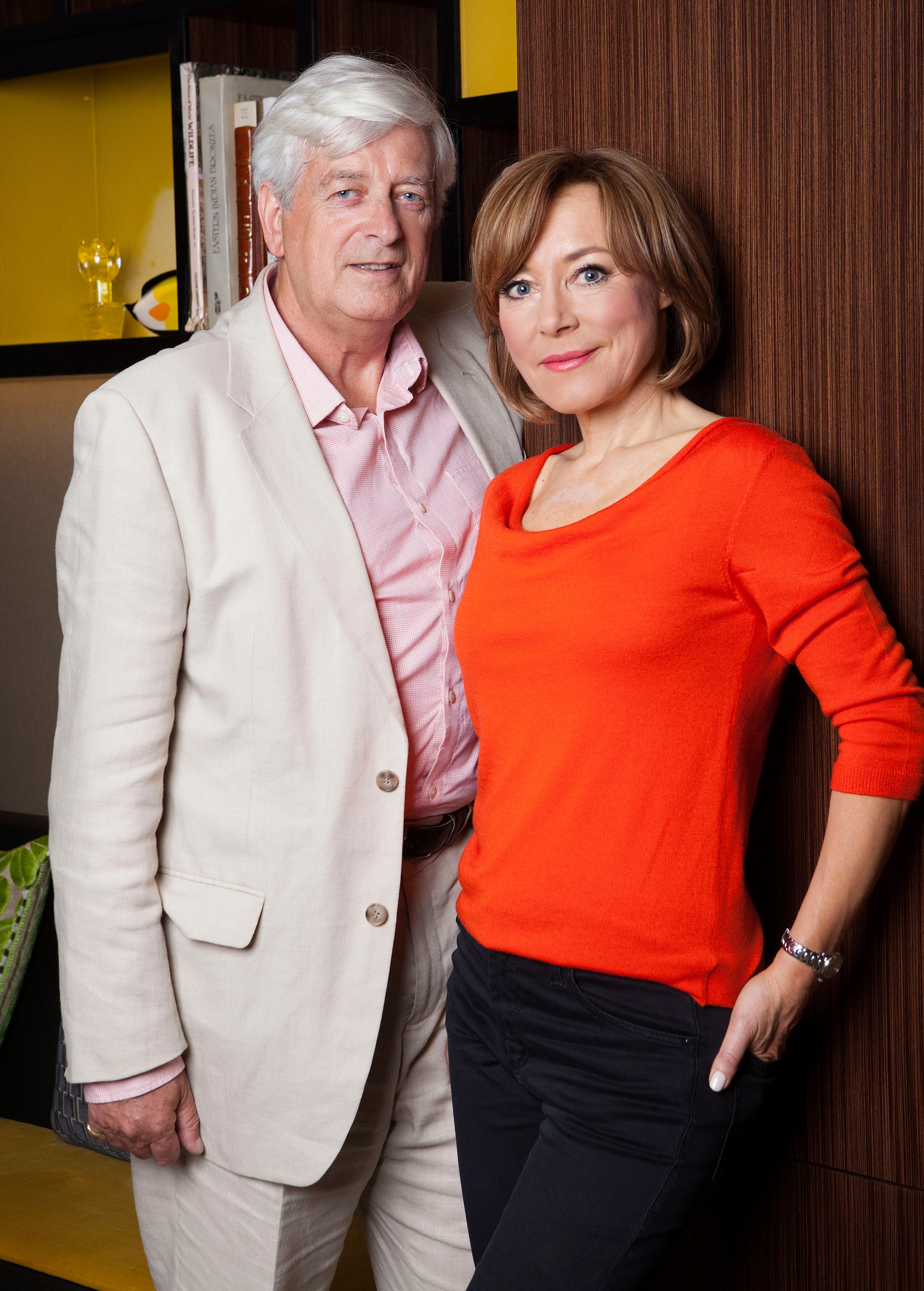
With her husband, the television producer Paul Woolwich, in 2016
RII SCHROER/EYEVINE
In 2016 she became the lead anchor on 5 News on Channel 5. While there, she completed a professional doctorate, working mornings and evenings and publishing academic research along the way. She now thinks she knows why she fainted on that day in 2004. In psychology there are five Fs associated with human stress responses: you might be someone whose reflex is fight, flight, freeze, faint or fawn (meaning appease). She says her therapy clients often feel shame around how they react under duress and part of her work is to remove that shame. “You don’t choose your stress response and it’s not your fault your body reacts like that,” she says. “Your body is just trying to keep you safe.”
Today most of her clients are emergency service workers who have experienced trauma. These include first responders from the 2017 Grenfell Tower fire — a disaster she witnessed up close, reporting from the scene for Channel 5. “They have PTSD symptoms, acute anxiety and sometimes depression as well,” she says. “It’s about what happened to you and how you make sense of it. The shit stuff that happens to us is always going to be part of our experience, so how do we live so that it doesn’t define us and we can go forward?”
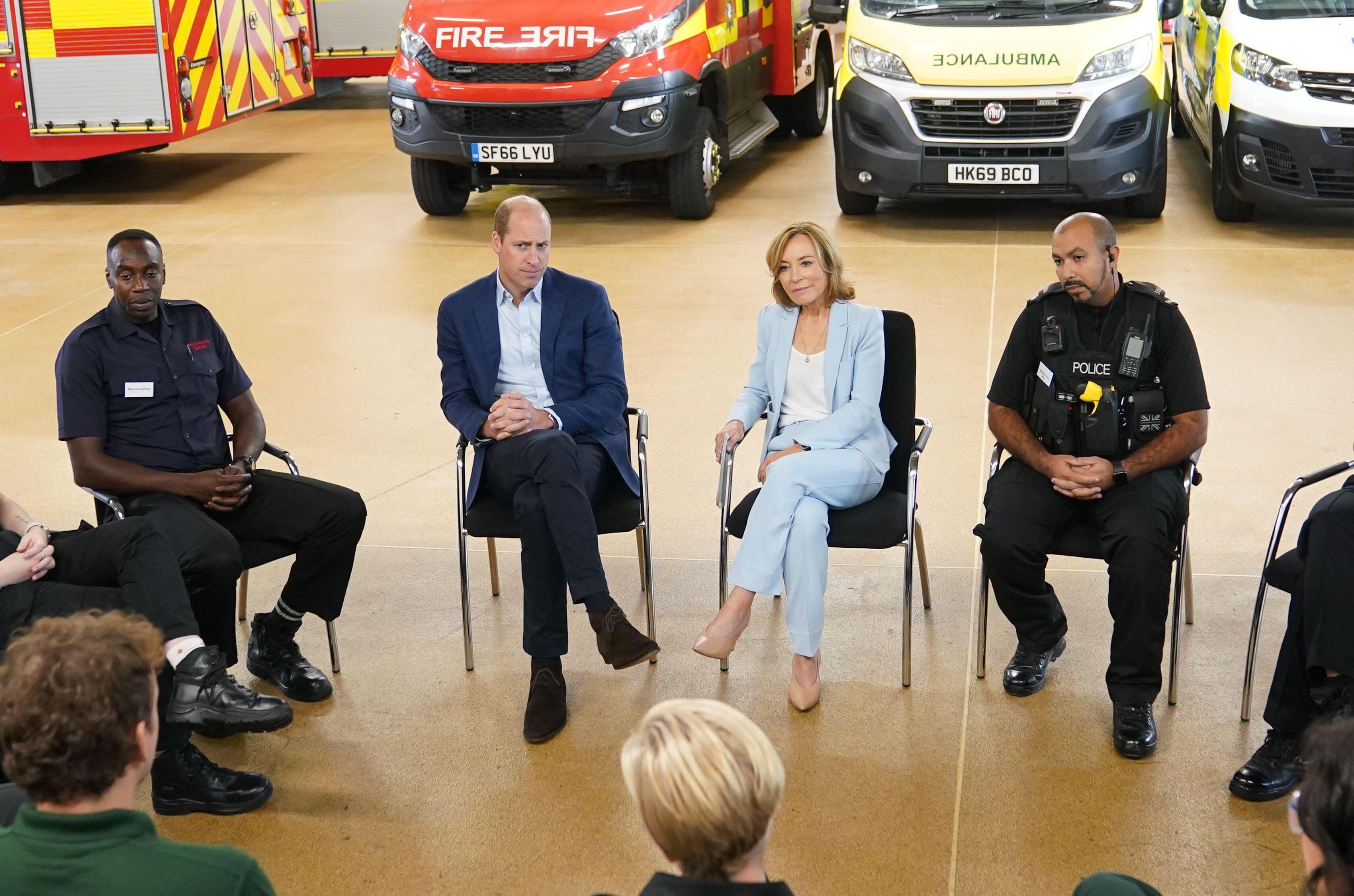
With Prince William on World Mental Health Day in 2023 talking to emergency responders in Milton Keynes
ALAMY
It was when working as a young reporter that she first met the victims of serious trauma and witnessed its impact. She was sent to cover the Hillsborough stadium disaster in 1989. In 1993 she was a reporter on the story of Jamie Bulger, the toddler who was murdered by two ten-year-olds in Merseyside. “It was a ghastly story,” she says. “I’d spent seven years in Liverpool and so there was a connection with the city, but also I had a child the same age. As a journalist, you see stuff that will never make it on air, and some of that stuff will stay with you. It was then that I first thought, I’m going to have to put something in place here to help me deal with this.”
She has since worked with newsrooms, including Sky, ITN and the BBC, on how they support staff with difficult reporting. “When you do hostile environment training as a young journalist, you’re told to put on a protective flak jacket when you go into the field. But nobody tells you how to put on an emotional flak jacket — or they didn’t in those days. You need to be prepared even for things that you don’t know are coming down the line, and this goes for everyone, not just journalists. What’s in my toolkit that I can get out when the going gets really tough?”
One of the most traumatic periods of Williams’s own life came in 2014, when she was diagnosed with breast cancer. She had a double mastectomy and when she woke up from reconstructive surgery was told that her heart had stopped on the operating table. She still has regular mammograms and writes in her new book that she struggled initially with worries about a recurrence. “It was a revelation to me that I didn’t have the control over my life that I thought I had,” she says. “There was a realisation of, ‘Oh, life can trip you up.’ ”
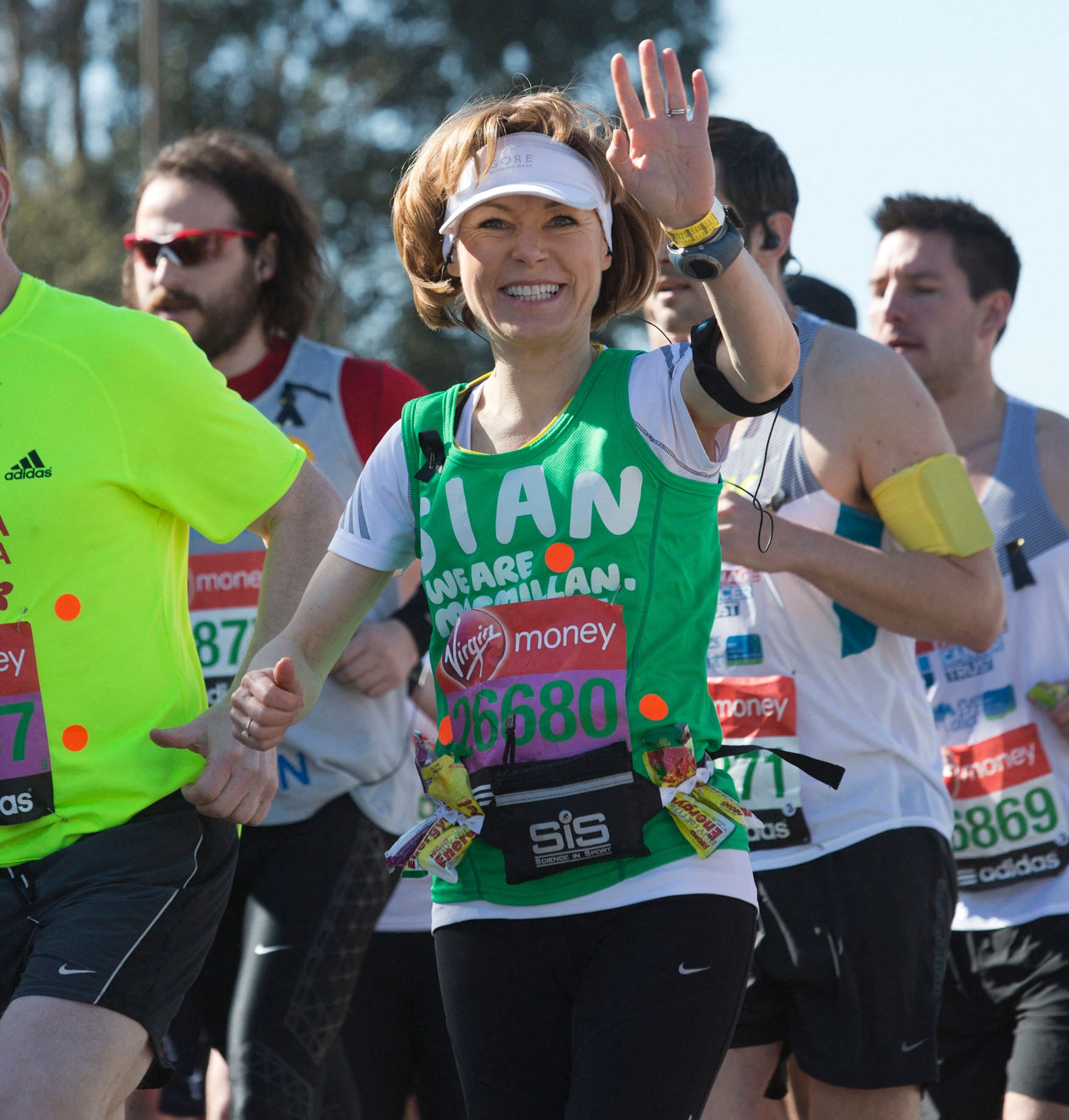
Running the 2013 London Marathon
ALAMY
We can’t eradicate anxiety, Williams explains, because it plays an important role in keeping us safe, but we can bring it down to a volume that’s easier to bear. She does that by walking her dog in the fields twice a day and avoiding her phone for the first part of the morning. “I also stopped drinking. I love red wine but I would often feel more anxious the day after, even if I just had a couple of glasses.”
Like most aspects of modern life, anxiety has been dragged into the culture wars. Some believe it is overdiagnosed, has become a “label” or excuse, and that young people are no longer encouraged to be resilient. Williams chooses her words carefully. “I grew up in the Seventies and Eighties, and we didn’t say how we were feeling then. We’re in a better place now in terms of acknowledging mental health. We’ve got to be careful that we don’t tell people, ‘You don’t deserve that feeling that you say you have. I think you’ve just been weak.’ ”
What about the cynicism around people taking time off for “mental health” reasons? What happened to the stiff upper lip? Williams looks pained.
• The link between heavy social media use and teenage anxiety
“We know that shutting up and just getting on with it doesn’t work, because that internalised anger and hurt and stress and anxiety becomes corrosive,” she says. “Society and organisations need to work on good systems of supporting people to be at work while living with things that might be difficult, because it’s better for everybody if you can manage that. And if it gets too overwhelming and you can’t, then the organisation needs to support you there as well, to help you get back into work.”
Sian’s tips to manage anxiety
1. Sensitive people are more open to stimuli, so noise and mess can be exhausting. If that’s you, it’s important you take control of your environment and schedule, factoring in space to recharge.
2. Anxiety can drive perfectionism, which can in turn increase anxiety. Doing a flow activity — something you enjoy so much that you forget everything else, such as gardening — is an effective way to take a break from your inner critic.
3. If you dread parties due to social anxiety, redirect your focus to other people. Tell yourself you’ll meet interesting people and you may find yourself asking questions rather than being self-conscious.
4. In moments of stress, your body primes to run away, and does this by speeding up your breathing, which can cause dizziness. Breathe slowly and deeply through the nose to help restore equilibrium.
5. There are positives to being a sensitive person — being more receptive to nature, for example. Even looking out of a window, nurturing plants or painting a room green have been shown to reduce stress.
Orchids, she insists, are an asset to society. They often work in jobs that help other people and they tend to be the first to notice and address emerging problems. She predicts great things from young people who worry about the climate crisis, for example. “I think highly sensitive people make great leaders,” she says. “They are empathic, they are very creative, but they are also agents of change and I don’t want to see that drummed out of society because people are being told to grow a tougher skin.”
Williams has five children, spanning two decades. She has two sons, Joss, 34, and Alex, 32, from her first marriage to Neale Hunt, an advertising executive. With Woolwich, whom she married in 2006, she has 19-year-old Seth, 16-year-old Eve, and a stepdaughter, Emily, 29.
The house is full of family photographs. Her kids have taught her a lot, she says. “I’m quite conflict-avoidant. I would rather leave the room than be anywhere where conflict is. But I remember when Eve was 12, she was angry with me one day and she said, ‘You have to be here to hear my anger!’ It was such a grown-up thing to say. I realised, yes, I do actually, because behind anger is often fear or sadness, and leaving the room is the wrong thing to do. As somebody who would never raise my voice, it felt like, ‘Whoa,’ ” she says. “But my daughter’s going to need to stand up for herself. I want her to be able to express herself, because I couldn’t, not in the same way.”
Eve arrives home, the dog emerges to be fussed over and Williams turns towards family life with what seems like relief — perhaps that the interview is over and another challenge has been surmounted. Therapy and journalism, she says, have something else in common: “When you’re holding somebody else’s story, it’s like holding a precious vase. And I think that’s the other thing I like — that actually, the job is never about you.”
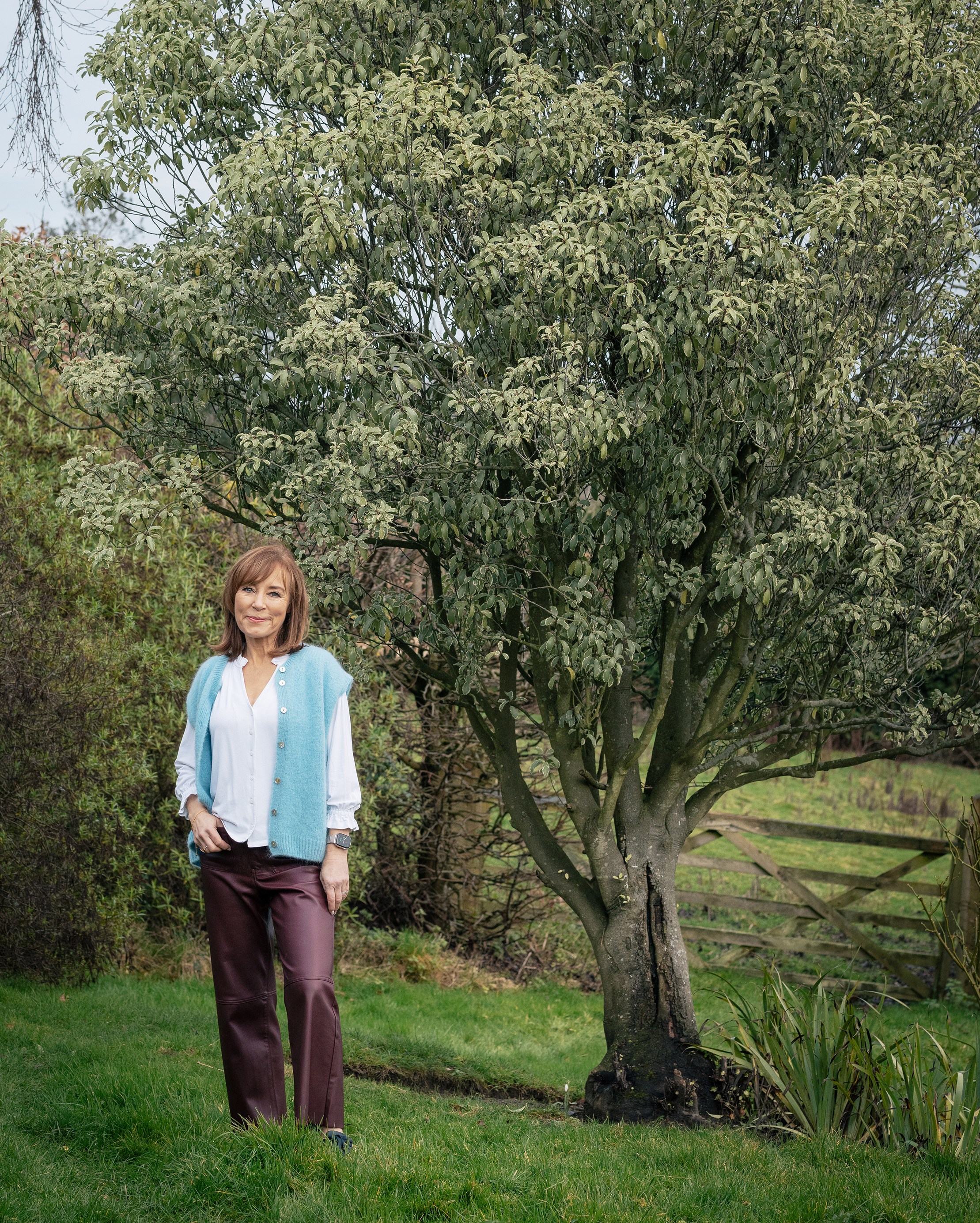
ANNA BATCHELOR FOR THE SUNDAY TIMES MAGAZINE. HAIR AND MAKE-UP: HEATHER KING
The Power of Anxiety: How to Ride the Worry Wave by Dr Sian Williams (Atlantic £14.99) is published on Thursday. To order a copy go to timesbookshop.co.uk. Free UK standard P&P on orders over £25. Special discount available for Times+ members