
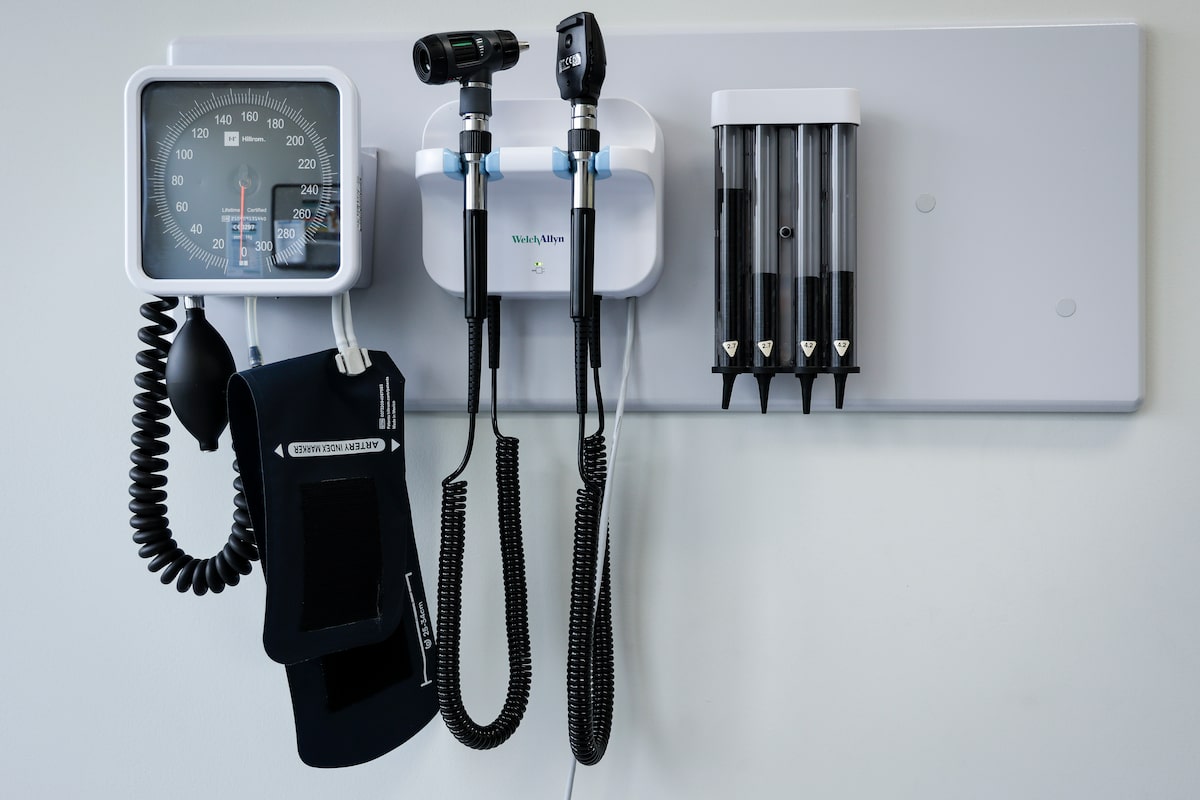
In 2023, in Quebec alone, each month 30,000 patients did not go to their medical appointments.Jeff McIntosh/The Canadian Press
Shannon Moneo is a writer living in Sooke, B.C.
It seems not a day goes by in Canada without a story about long medical wait times, shortages of family physicians and hellish emergency rooms. On the dysfunctional flip side, not a day goes by in Canada when hundreds of patients don’t show up for doctors’ appointments. In 2023, in Quebec alone, each month 30,000 patients did not go to their medical appointments. The cumulative effect of the “no-shows” is a showstopper.
In my Vancouver Island community of Sooke, the medical clinic serves a population of roughly 20,000 people. Over a 12-month period (July 1, 2024 to June 30, 2025), 1,727 booked appointments were missed. Based on 252 working weekdays for the year, that’s about seven appointments each day. A notice in the clinic stated: “This is equivalent to one of our doctors waiting here at the clinic for nearly 3.5 months straight, fully booked, with no patients showing up.” Just think what could have been done for ill or injured people during those 75 days.
I’ve been a patient at my clinic for almost 15 years, and while waiting to see my family doctor, I’ve observed stressed and unwell people who need to see a doctor relatively quickly. It could be a mother with a sick infant, a logger with a wood chip in his eye, a fisherman with a hook in his arm or a senior who’s had a fall. The clinic does offer an urgent-care clinic where those with or without a family doctor can book a same-day appointment, which means waking up at 6 a.m. to get in the queue, but demand exceeds capacity. If those needing prompt care cannot be seen, they have to drive at least 30 minutes to a walk-in clinic where care is not guaranteed. The other option is a further 15-minute drive (if it’s not rush hour) to Victoria General Hospital’s emergency room, and we all know what awaits in that swamped environment, where waves of misfortune fester.
Family doctor study finds disparities in primary care across Canada
More Canadians have primary care now compared with three years ago, study finds
As well, the seven daily missed appointments carry value beyond failed opportunities for care. The financial aspect is notable. As of this month the Sooke clinic had 12 physicians, four registered nurses, two addiction counsellors, one dietitian, one social worker and 15 medical office assistants. Revenue lost from the 1,727 unattended appointments amounts to a minimum of $164,410. It’s understandable the clinic would want to recoup the missed money so the clinic now posts a “no-show declaration” when people book online. It reads: “I acknowledge that if I fail to attend this appointment, I may be billed for a no-show fee of $95.20.” The clinic regularly bills for missed appointments and at the risk of losing access to their doctor, most patients cough up the $95.
Sooke is not an outlier. Medical clinics across Canada are increasingly implementing no-show penalties. Charges start at $25 for the first missed appointment and increase from there. In Saskatoon, for example, one clinic bills $100 for the third missed appointment and warns that the patient may also be removed from the doctor’s practice or banned from the clinic.
In August, 2024, a Research Co. survey found that 57 per cent of Canadians believe no-show fees are justified when a doctor or medical specialist appointment is missed, with 15 per cent of survey respondents saying they have missed an appointment with a doctor or specialist. Seven per cent of respondents who missed a medical appointment report that they paid a no-show fee. The biggest excuse for not honouring an appointment? “Personal issues,” representing 40 per cent of no shows. Is that code for forgetfulness or apathy, given that the other reasons were scheduling, transportation, work, family and the weather?
Dr. Adam Thompson, the 2026 president of Doctors of B.C., told me his organization, which represents more than 16,000 physicians, has no formal policy regarding no-shows. Individual physicians are free to set their own policies. But when it comes to striking a patient from their roster, they must follow regulations set by the College of Physicians and Surgeons of B.C.
Dr. Thompson, who has practised in Courtenay, B.C., for 15 years, has experienced instances of five daily no-shows. He sees about 40 patients per day, and recently the no-show rate has been one or less per day. His patients are billed $25 if they miss an appointment.
There are multiple reasons why a patients wouldn’t show up for an appointment, including that the patient went to an emergency room after health problems worsened.Graham Hughes/The Canadian Press
“I started to charge because of the imposition on other patients’ care. It reduces access for others,” he told me. Dr. Thompson cited multiple reasons why people don’t show up: The patient may have dementia or mental health challenges, concerns may have resolved, or problems may have worsened so the patient went to an emergency room. But the majority forget. “There’s no sense of value attached to an appointment,” he said. But outside the public health realm, if one pays $300 for a service, they will certainly use it.
In Sooke, it’s young mothers with children, older, ill or housebound people and younger folk who are most likely to miss an appointment.
About half of Canadians are turning to AI for health information, survey says
For many years, Canada’s public health system did not penalize no-shows, likely indicative of a less strained, less costly health system. I recall that, in the early 2000s, I could see my doctor on the same or following day after calling his office – something that is hard to imagine now. Around 2007, booming Alberta began charging for medical-appointment no-shows after rising rates of missed appointments.
Further evolution relates to technology. Most clinics now use e-mail, text messages or phone calls to remind patients of upcoming appointments. As AI implementation grows, expect even more ways to get your attention. So with almost everyone in possession of a phone, are there many reasons to miss an appointment, or at the least, for not cancelling? Perhaps AI will develop an ability to get the inconsiderate, lazy or forgetful to heal their ways.
Addressing the medical “no-show” headache, via financial injections, doesn’t cure the problem. No-show billings are providing one appendage with sustenance, but the full body is not being addressed. Perhaps it’s the best we can do in a world of imperfect humans.