
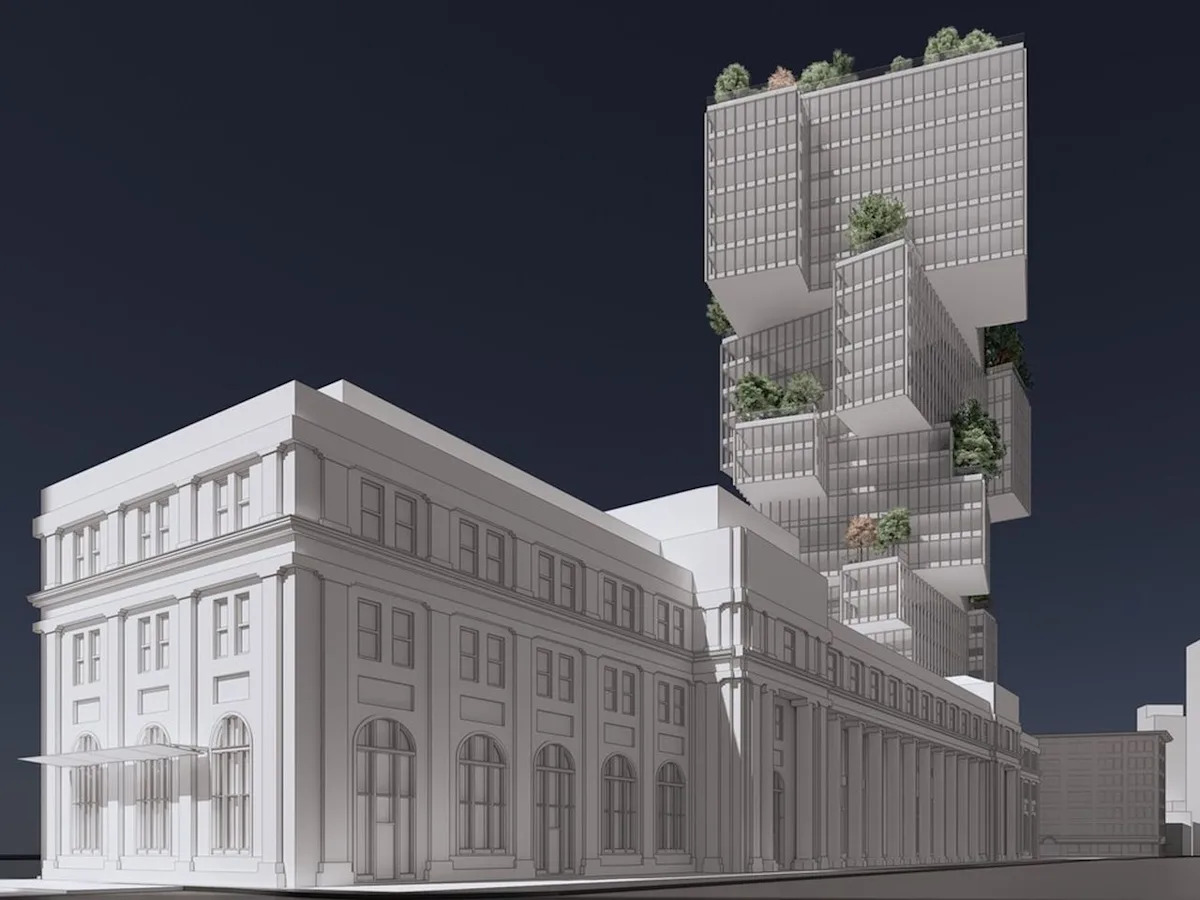
A 22-storey office building shaped like a Lego tree has been proposed to replace a parking lot alongside Vancouver’s heritage Waterfront Station.
Project architect James Cheng said the concept of a building atop a concrete core is not new to Vancouver, referring to the 15-storey Westcoast Building, also known as Qube, on the 1300-block of West Georgia Street that opened in 1969 and still generates interest because of its illogical-looking design.
However, this building would differ in that stacks of floors would be built off-centre to each other with open areas used to plant small trees and shrubs. Early design illustrations show those stacks would be between two and six storeys high, with the goal of resembling a maple tree.
“I was a young architect in Vancouver working for Arthur Erickson when the (Qube) was built, it was quite a departure,” said Cheng, principal at James KM Cheng Architects.
“So the idea of doing that is not new. It’s just that the technology and construction science and how to build it has got better and better.”
Cheng said the design is needed to make use of a difficult lot, with heritage buildings on either side and the West Coast Express track running below. The design would also retain sightlines allowing views of the water and mountains from Cordova Street.
The proposal shows the core rising to the height of the Waterfront Station with the western floors above the heritage building. By building atop the core, there will be no impact on the Waterfront Station’s foundation, Cheng said.
“Some people like it, some people don’t like it. That is why it is a preliminary development application to get feedback from the public,” Cheng said.
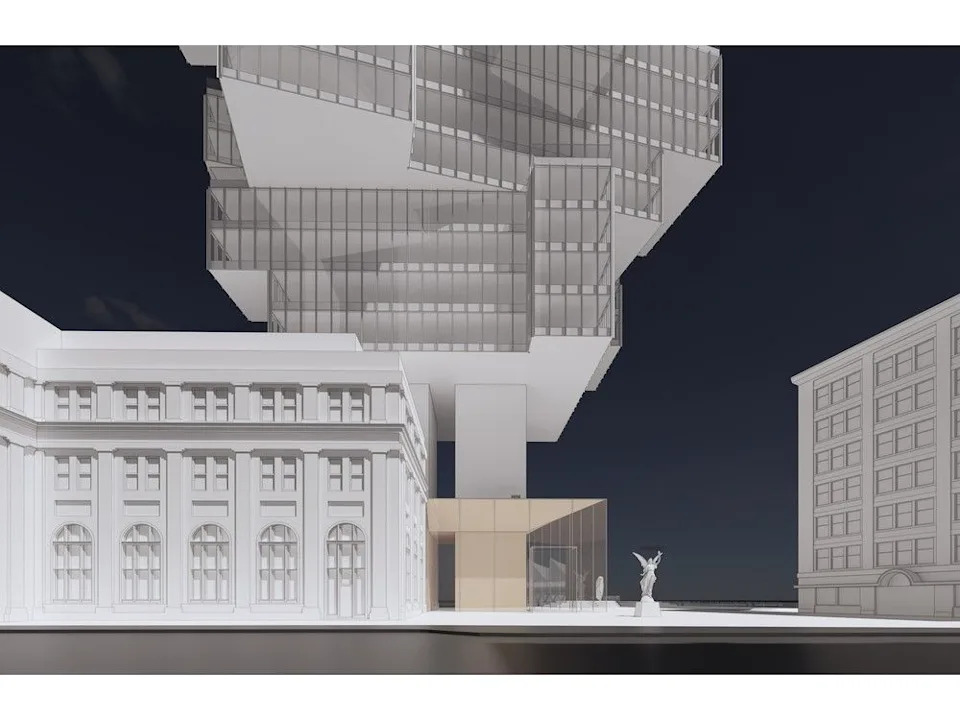
A 22-storey office building shaped like a Lego tree has been proposed to replace a parking lot alongside Vancouver’s heritage Waterfront Station.
He said that the design would be costlier than a standard office tower, but because the site is beside a transit hub there is no need to build a multi-level parkade underneath, which can cost $50,000 per parking space.
The preliminary development application says the building would be 126-metres tall with retail at grade and general office space above.
Cheng said there would be a public plaza around the building’s core.
The preliminary development application was submitted in November, and a community open house was held on Feb. 23.
A heritage impact report will be presented to the city’s Vancouver Heritage Commission on March 9, after which the Urban Design Panel will examine the project. The Development Permit Board will make a decision on the preliminary application on May 11.
In particular, the heritage report looks at options for relocating the Angel of Victory First World War memorial either to the plaza or inside the station, and whether to reopen part of a mail tunnel that was once used to link the station to the old Canada Post building on Georgia Street.
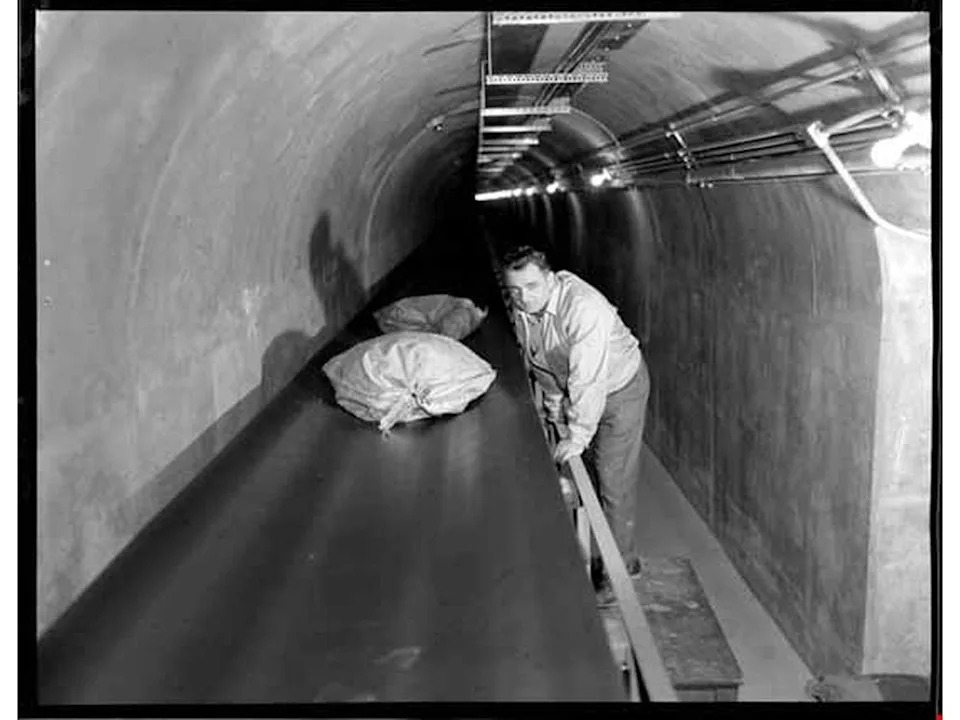
A worker inside a tunnel that once linked Vancouver’s Waterfront Station with the old Canada Post building on West Georgia Street.
The proposed building is within the Central Waterfront District, which according to city reports has been well studied with no change over the past few decades.
“It will probably be years before a building will be built on the site,” Cheng said.
The site is owned by the Ontario Teachers’ Pension’s Cadillac Fairview Corporation, which also owns the Waterfront Station building.
Related