
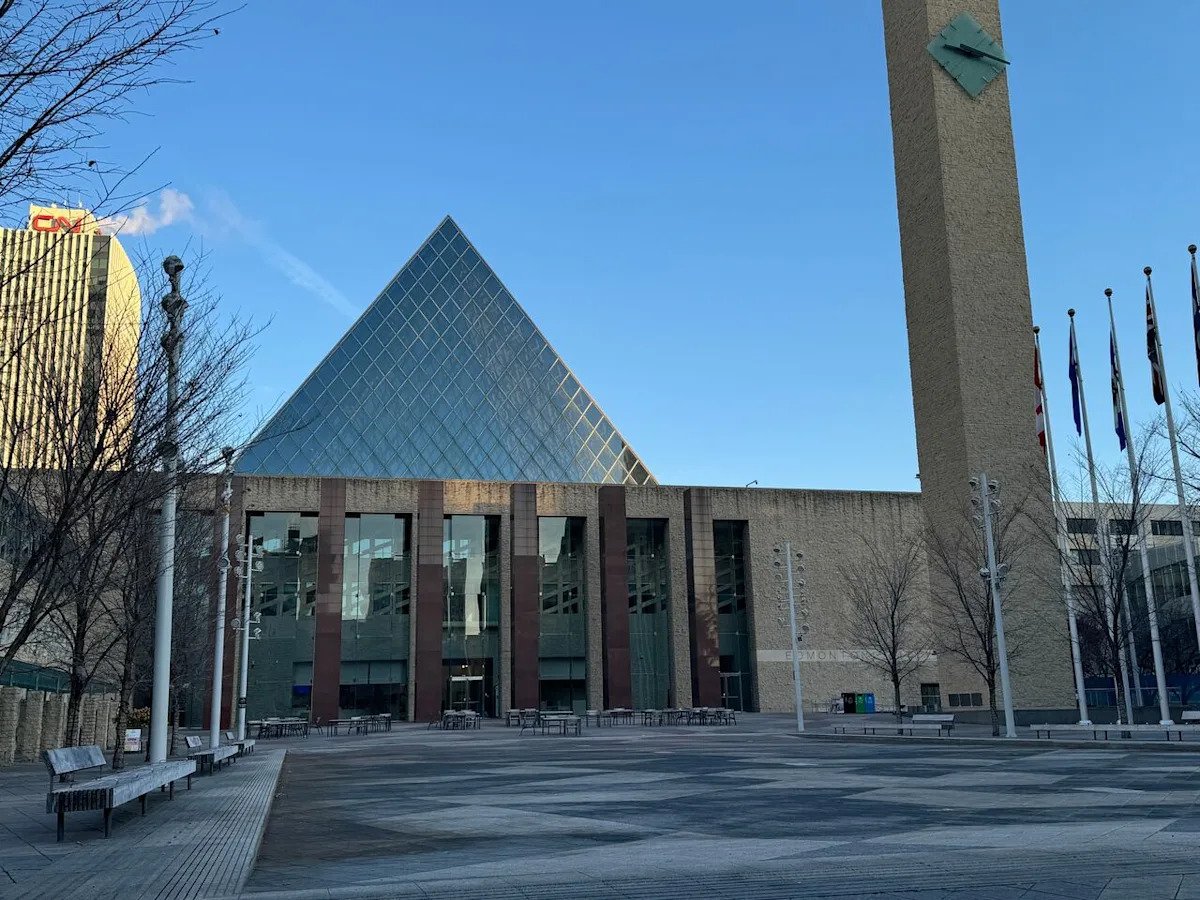
Alberta’s government is set to release its 2026 budget and Edmonton’s mayor says the city has one top priority on its wish list: replacing and upgrading aging infrastructure.
That includes roads, recreation centres, parks, pools, firehalls, transit and community spaces.
Mayor Andrew Knack said in a perfect world, Edmonton and other municipalities would see substantially more infrastructure funding.
“We’re being realistic. I don’t think we’re going to see that.”
The province has signalled that significant budget challenges lie ahead. Knack said he’s aware of that, but said the city also has a renewal deficit of $1.5 billion.
He’s hoping that the province at least maintains infrastructure funding, with some extra help on specific projects.
“Where the province can provide some strategic and targeted investment to help us close that gap, I think that’s going to be important.”
Alberta Finance Minister Nate Horner told municipal leaders in November that they shouldn’t expect extra support from this budget.
Reports presented to the city’s infrastructure committee on Monday outline the state of infrastructure in Edmonton.
The city has been able to improve the proportion of assets considered poor, keeping it hovering around 10 per cent since 2017.
However, there is a growing list of infrastructure that needs renewal and not enough set aside to pay for it.
Councillors heard from city staff that now is a critical period to focus on renewal and getting value for money.
Transit is one area that was flagged. More than half of the city’s bus fleet is considered to be in poor or very poor condition. The cost to replace the entire fleet is estimated to be nearly $1 billion.
Just under half of LRT cars are also considered to be in poor condition. City administration said there is money set aside to replace only some of them.
Staff from the city infrastructure department told councillors that they could not have predicted the cost pressures created by the pandemic, or tariffs.
Council has a plan to build up a dedicated renewal fund, but even that won’t be enough to generate all the revenue needed.
A report presented to council last month forecasted that even with small successive tax increases to fund renewal, by 2036, 28 per cent of the city’s assets could be in poor or very poor condition.
Knack said a focus of this council is finding how to build “dual-use infrastructure” with the provincial and federal government. For example, improving roads and transportation corridors to nearby military bases with help of federal dollars.
“Those are the types of ideas and creative solutions we’re going to need to approach throughout 2026, setting us up for 2027.”
Coun. Anne Stevenson said she hopes Edmonton’s infrastructure needs are factored into Thursday’s budget.
“We have really limited revenue options. Property taxes are basically the only major tool we have and it’s not a great one,” Stevenson said.
“We just can’t reasonably afford all the infrastructure that Edmontonians need without input from other orders of government.”