
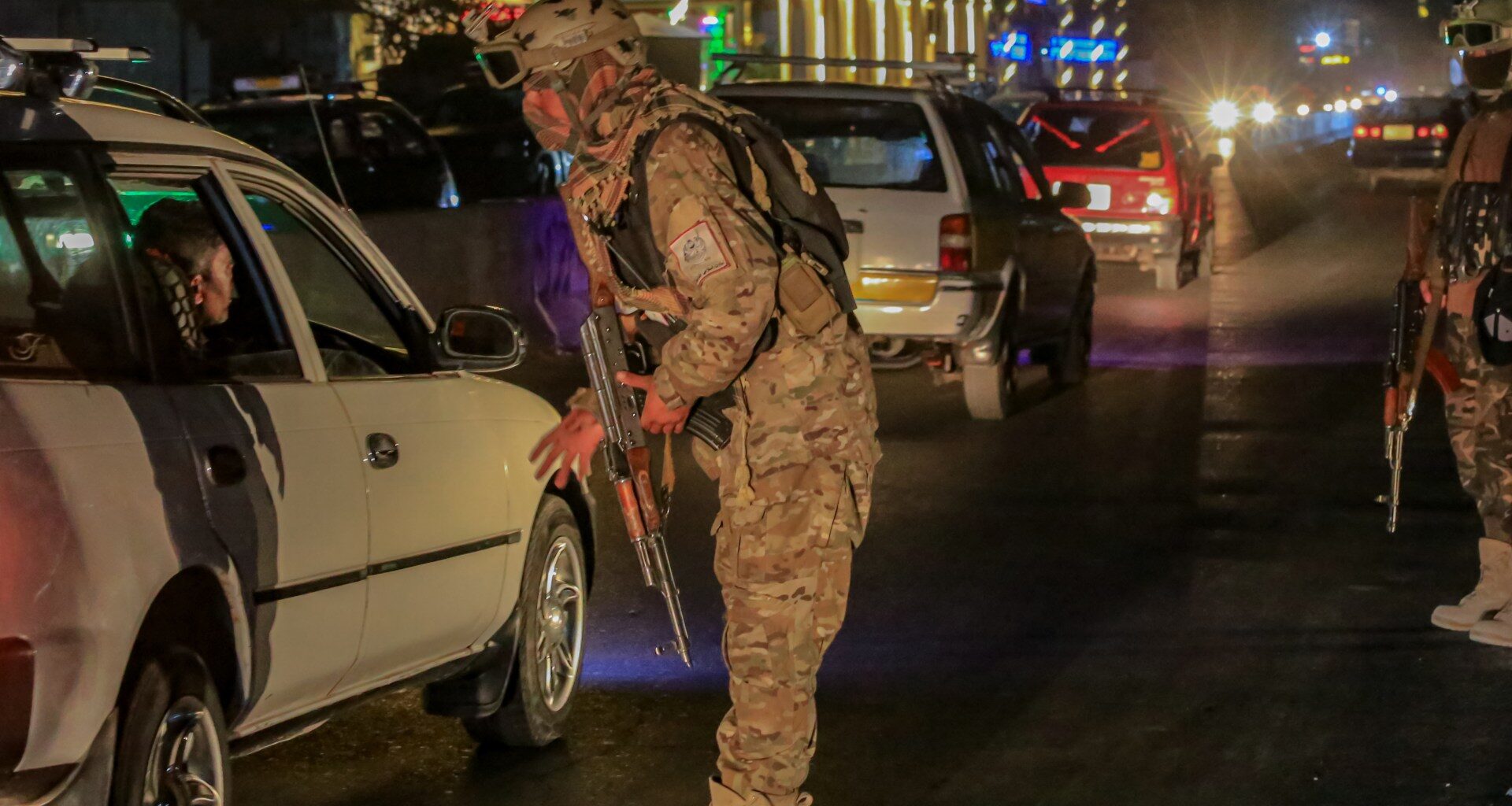
Pakistan has bombed Afghanistan’s capital Kabul and other cities, claiming to have killed scores of Afghan Taliban fighters, as Defence Minister Khawaja Asif said Islamabad would now be waging “open war”.
In a major escalation of the simmering tensions into all-out conflict between the neighbours, Asif said on Friday that his country’s “patience has run out” with the Taliban authorities in Afghanistan, following attacks by Afghan forces against Pakistani military positions along their shared border earlier.
Recommended Stories list of 4 itemsend of list
Asif framed the attack as one that his country had been forced to make, and followed “aggression” from Afghanistan.
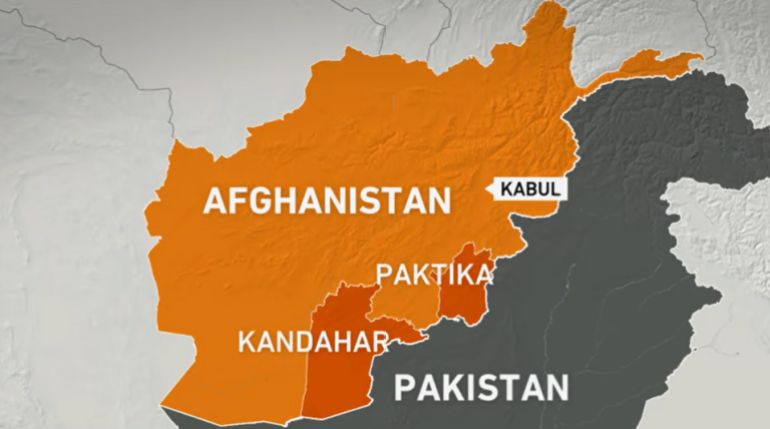
Afghan government spokesperson Zabihullah Mujahid said that Pakistani military had struck targets in Kabul, Kandahar, and in Paktia province, but claimed there were no casualties.
Meanwhile, gunfire and shelling was reported near the key Torkham border crossing between the countries, an Al Jazeera team and AFP reported.
AFP reported that Afghan troops were seen headed towards the frontier early Friday.
Al Jazeera’s correspondent in Kabul, Nasser Shadid, reported early on Friday that a bombing raid targeted the Afghan capital at 1:50am local time (21:20 GMT, Thursday), followed by a second air raid.
Afghan anti-aircraft guns opened fire after the first raid and continued firing after the second, according to Shadid.
An Afghan government source confirmed to Al Jazeera that an air strike had hit Kabul, and Pakistani warplanes also hit a military base in Kandahar province in southern Afghanistan.
Mosharraf Zaidi, the spokesperson for Pakistan’s prime minister, claimed that 133 Afghan Taliban fighters had been killed in Pakistan’s attacks on Friday, and more more than 200 wounded, and that Taliban positions had been targeted in Kabul, Kandahar and Paktia.
Zaidi said that nine Taliban positions had been captured and 27 destroyed, while adding that Pakistani attacks were continuing.
Pakistan’s Ministry of Information also said it was also targeting Afghan Taliban forces in several districts of Pakistan’s Khyber Pakhtunkhwa province – Chitral, Khyber, Mohmand, Kurram and Bajaur.
Al Jazeera has not been able to independently verify the various claims of casualties inflicted by either side.
Earlier attacks
Pakistan’s strikes came after Afghanistan said it had carried out “large-scale offensive operations against Pakistani military positions and installations on the border shared by the two countries on Thursday.
Afghanistan’s Defence Ministry claimed that 55 Pakistani soldiers had been killed, including some whose bodies were taken into Afghanistan, and that “several others were captured alive.” It said eight Afghan soldiers were killed and 11 wounded.
The ministry said it destroyed 19 Pakistani army posts and two bases and that the fighting ended around midnight, about four hours after it began Thursday.
Pakistan claimed that its attacks on Sunday had killed at least 70 fighters, but Afghanistan rejected the claim, saying that civilians had been killed.
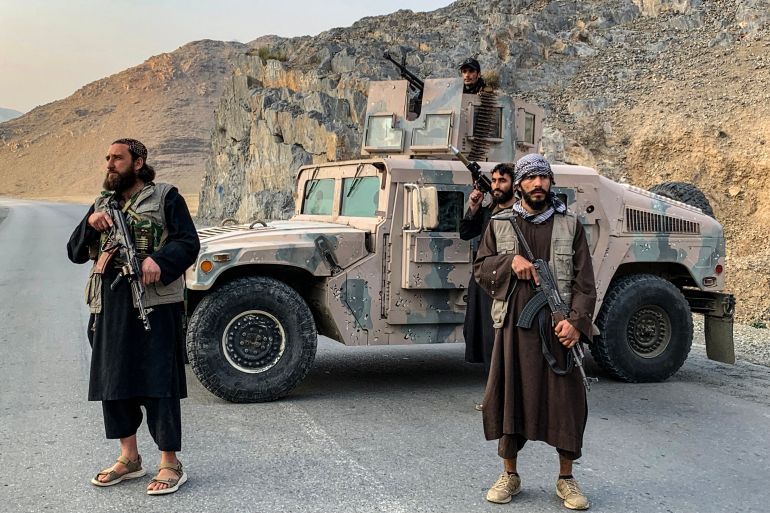 Taliban security personnel stand guard near the Torkham border crossing between Afghanistan and Pakistan in Nangarhar province [Aimal Zahir / AFP]Poor relations
A statement from the office of Pakistani Prime Minister Shehbaz Sharif said that the whole country was united behind Pakistan’s armed forces.
“The people of Pakistan and its Armed Forces are fully prepared to safeguard the nation’s security, sovereignty, and territorial integrity,” the statement said. “There will be no leniency in defending our beloved homeland, and any aggression will be met with a fitting response.”
Relations between Pakistan and Afghanistan, which share a 2,611-kilometre-long (1,622-mile) border, have nose-dived since fighting in October killed more than 70 people on both sides of the border.
The tension stems from Pakistani accusations that Kabul has allowed armed groups such as the Pakistan Taliban to use Afghanistan as a base and launch attacks on Pakistan.
The Pakistan Taliban shares deep ideological ties with the Taliban in Afghanistan, but is a distinct movement.
“Pakistan made every effort to keep the situation normal through direct means and through friendly countries,” said Asif. “It engaged in full-fledged diplomacy. But the Taliban became a proxy for India.”
“In the past, Pakistan’s role has been positive. It has hosted five million Afghans for 50 years. Even today, millions of Afghans are earning their livelihood on our soil. Our cup of patience has overflowed. Now it is open war between us and you,” Asif said.
Former Afghanistan President Hamid Karzai said on X that Afghans would “defend their beloved homeland with complete unity in all circumstances and will respond to aggression with courage” amid the attacks.
“Pakistan cannot free itself from the violence and bombings – those problems it has created itself – but must change its own policy and choose the path of good neighbourliness, respect, and civilised relations with Afghanistan,” he said.
‘Grave escalation’
Reporting from Islamabad, Al Jazeera’s Kamal Hyder said that “from what we have seen so far, heavy casualties have been inflicted”.
“This is a grave escalation, probably the worst since the Taliban took over.”
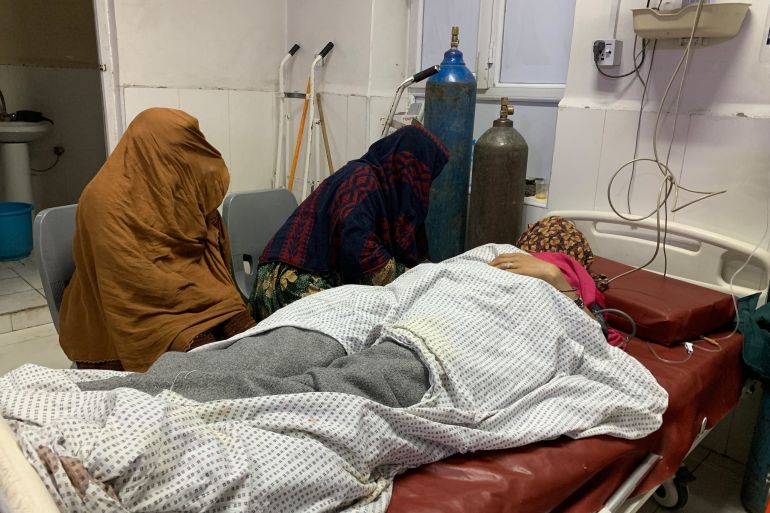 A wounded Afghan woman receives treatment at a hospital in Jalalabad after an overnight Pakistani mortar shell hit a camp for people returning from Pakistan during clashes bnear the Torkham border crossing [Aimal Zahir / AFP]
Elizabeth Threlkeld, director of the South Asia Program at the Stimson Center think tank in Washington, DC, said the latest clashes came as no surprise following months of “frayed” tensions between the neighbours.
“It is significant to the extent that it represents perhaps a shift in strategy,” Threlkeld said, noting the “more aggressive, kinetic attacks” from Pakistan.
“We’ve seen a couple of terrorist attacks within Pakistan that were quite significant,” she said. “I’m not surprised that after those cumulative attacks, that tensions have frayed and things have again gone in this direction, unfortunately.”
Calls for restraint
The United Nations has called for urgent de-escalation. “[UN Secretary-General] Antonio Guterres urges the parties to uphold their obligations under international law, including international humanitarian law, and to ensure the protection of civilians,” Stephane Dujarric, the spokesperson for the UN Secretary-General, said.
“The Secretary-General urges the parties to continue seeking to resolve any differences through diplomatic channels and commends the mediation efforts undertaken by several Member States in recent months,” he added.
Iran’s Foreign Minister Abbas Araghchi urged Afghanistan and Pakistan to resolve their differences through dialogue and good neighbourly principles, saying in a post on X his country was ready to support the process.
Russia also urged Afghanistan and Pakistan to halt the attacks and resolve their differences through diplomatic means, state media reported, adding Moscow would consider providing mediation if requested.
Meanwhile, Zalmay Khalilzad, a former United States ambassador to Afghanistan, said earlier on Thursday that the tit-for-tat attacks over recent days were a “terrible dynamic that must stop”.
“A better option is a diplomatic agreement between the [two] countries that neither would allow its territory to be used by individuals and groups to threaten the security of the other,” Khalilzad said.
“The implementation of the agreement should be monitored by a trusted [third] party, for example, Turkiye. This approach is a much wiser course than continuing with attacks and counterattacks.”