
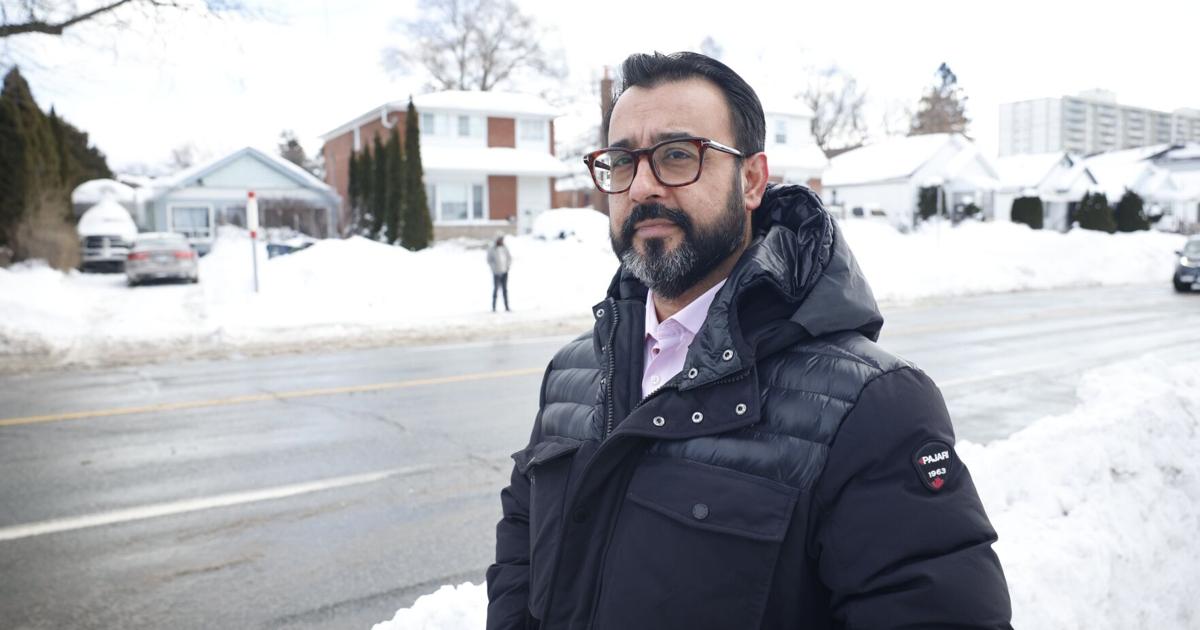
Developer Romit Malhotra says he had every confidence his building proposal in Scarborough would be approved.
The apartment plan had endorsements from three divisions of city staff. It was supported by a new policy encouraging gentle densification on major streets. Malhotra said he and his team felt it was exactly the kind of midrise, purpose-built rental all three levels of government insist Toronto needs to ease its housing crisis.
“It had a simple, straightforward, family-oriented design,” he said. “Everything looked great — until it was time to put pen to paper.”
The proposal was rejected outright last month by the Scarborough committee of adjustment, a tribunal appointed by council to rule on requests by property owners to slightly bend zoning bylaws.
Members said they found Malhotra’s plan both inappropriate and undesirable — too tall for the street at six storeys, even while they acknowledged its height would be within regulations under a new law and therefore not subject to their approval.
For some local residents, the decision on Malhotra’s proposal was a rare bright spot for the committee of adjustment, which has approved more than 90 per cent of applications in the last decade, according to city data. They applaud its members for empowering their fight to preserve their lowrise, suburban lifestyle.
Toronto developers were rattled by it. Planners, architects and housing advocates all expressed frustration with the committee of adjustment, which they accuse of going rogue to try to counteract the city’s push for so-called “missing middle” or medium density homes as a vehicle for more affordable housing.
“We need consistency and predictability to deliver more housing,” said Malhotra, who has filed an appeal. “Without it, people, developers, institutions and sources of capital could be scared away.”
Local opposition weighs in
Neighbours, admittedly, hated Malhotra’s proposal.
The developer said he was rebuffed or ignored when he knocked on the doors of the one- and two-storey homes near his property. Six neighbours submitted letters to the committee of adjustment, opposing the project over privacy and parking concerns.

The lot at 397 Pharmacy Ave. where developer Romit Malhotra proposed to build a six-storey apartment building.
R.J. Johnston Toronto Star
One nearby resident said the proposed building would “stand out as a significant eyesore,” destroying the area’s “visual harmony.” A next door neighbour worried that increased traffic on the street would make kids walking to school unsafe. One person living the next street over wondered what the “target demographic and income bracket for prospective tenants” would be and whether their trash might attract coyotes.
Bob and Sandra Lukewich have lived in the area for 30 years. They appeared at the committee hearing for the project last month to voice their objection. They said in an interview they were “quite happy” the proposal was rejected, even if it did conform to some city planning policies. The policies are wrong-headed, they believe, and committee was right to recognize that.
Rendering of the rejected six-storey apartment building at 397 Pharmacy Ave. in Scarborough.
Noam Hazan Design Studio
Their beloved yard, where their grandkids come to play, would be overshadowed by the midrise — they’d feel uncomfortable with it looming over at them, they said.
“The privacy issue is huge,” said Sandra. “This is a very sweet little area. Why can’t they just let this continue to be a sweet little residential area?”
Bob said he only learned about the development when the city notified him.
“To us, it’s basically a rooming house,” he said. “It’s like 20-something rooms. To have 25 families, 50 to 60 people putting an excess strain on the sewer and water system in our area is something that shouldn’t be allowed. We do appreciate the need for housing and all that, but it doesn’t have to be this extreme.”
Schematics for the rejected building show it would have had had space for 25 people — not families. It had eight two-bedroom apartments, a four-bed with a den and a five-bedroom spanning two floors.
Local councillor Parthi Kandavel also came out against the 10-unit building, writing in his own letter to the committee that it would be “unprecedented” in the low-density neighbourhood. Allowing it could entice more developers to build mid-rises there, which would not be fair to the people who moved to the area expecting “stability” and enduring quiet, wrote Kandavel, who did not return requests for comment from the Star.
‘Thankfully, I am not part of the city’
None of these concerns matter, legally speaking.
As of September, developers no longer need to file rezoning applications to construct six-storey buildings on arterial roads, such as Pharmacy Avenue in Scarborough, where Malhotra’s company owns this and another property. City council, including Kandavel, voted in support of the so-called “major streets” policy change in 2024.
Local councillor Parthi Kandavel, who opposed the 397 Pharmacy Ave. development, voted in favour of city council’s “major streets” policy change.
R.J. Johnston Toronto Star File Photo
“The fact that the surrounding area is lowrise is not, under the policy framework, a reason to prohibit apartments on major streets,” said Malhotra. “In fact, that’s what the major streets policy is supposed to provide.”
All Malhotra’s planner needed from committee was permission to make the building a few feet longer and closer to its neighbours than regulations allow, in order to make the units a bit bigger and accommodate a parking space.
But that wasn’t what committee took issue with.
“What we have here is an apartment building of 19 metres, six storeys, stuck right between two single-family homes,” said committee member Eric Hou at the January meeting. “I just can’t see this being desirable or appropriate.”
Hou also felt there wouldn’t be enough parking, even though council voted in 2021 to eliminate minimum parking requirements for most new builds with the goal of reducing development costs and encouraging transit use.
Developers on the project argued that residents would make use of the bus stop right outside the property instead of driving. And while the building would tower over its immediate neighbours, there are apartment complexes with hundreds of units just down the street, the closest being about 400 metres away.
At committee, Hou said he foresaw more six-storey proposals like this coming to his desk soon, now that they are technically legal. It was the first test of the new major streets bylaw at Scarborough committee.
“This is what the city has said is desirable,” said Anne McCauley, a veteran land-use planner and committee member since 2019, of the project. “Thankfully, I am not part of the city. I’m an independent committee member. I listen to what the city says. I don’t have to always agree.”
She moved to reject Malhotra’s proposal. Her motion passed unanimously.
In contrast with committee’s remarks during the hearing, the written notice of refusal made no mention of the building’s height. It said the application was rejected because of Malhotra’s minor variance requests, which included extending the balconies and building closer to the street than bylaws allow.
All five members of the Scarborough committee of adjustment declined interview requests from the Star.
A growing city needs housing
Malhotra described the Pharmacy project as modest, long-term homes for families priced out of property ownership.
Decisions like the Scarborough committee of adjustment’s threaten to “demolish all the progress the city has made in housing,” said to Zakerie Farah, a member of advocacy group More Neighbours Toronto.
“If these committee members don’t like city policy, they should resign,” he said. “What’s the point of having these policies if a committee of unelected people can toss them away?”
Who is on the committee?
The committee of adjustment has 35 members across four borough divisions. Many are experienced urban planners or architects. Some are real-estate lawyers. But nearly half of them have no training in planning and development mentioned in their online biographies.
According to an official list of requirements, someone would be qualified to sit on the committee if they had a “strong interest” in the “complexities and challenges of city building,” an “understanding” of Toronto’s diverse neighbourhoods, “knowledge” of “citizen advocacy,” and communication skills. Each member is appointed to a four-year term.
Coun. Gord Perks (Parkdale—High Park), who chairs the city’s planning and housing committee, said he couldn’t believe what McCauley said about the latitude she has to make decisions as a committee of adjustment member.
“We don’t appoint them and say, ‘You get to make up planning law on your own,’” he said. “They’re independent, but they’re independent within a limited scope. They’re not allowed to step outside their authority.”
Coun. Gord Perks, who is chair of the city’s housing and planning committee, said the committee of adjustment handles the numerous bylaw deviations in construction that council does not have the time for.
Andrew Francis Wallace Toronto Star File Photo
Generally, he said, that authority is well placed. Council doesn’t have time to “referee” millions of little bylaw deviations in construction — it needs to focus on big-picture zoning policy.
If it weren’t for the committee, all council would have time for is minor variance requests, he said. And if decisions were left solely to planning staff, he said that would create a lack of transparency.
The tradeoff is that by delegating to the committee, council loses its say in these matters. It can’t overturn committee decisions.
In fact, councillors shouldn’t be putting their thumbs on the scale in any way, Perks said. “The advice I got from the integrity commissioner years ago is that because council votes on committee appointments, and because they’re independent, we should not attempt to influence their decisions,” he said.
Kandavel did not respond to questions from the Star.
All in all, it’s a good system, Perks went on. Property owners can appeal to what he called a “higher level of expertise”— the Toronto Local Appeal Body, an 11-person panel set up by the city in 2017. Its members must have experience with land use planning, not just an interest in it.
Malhotra is waiting for it to hear his appeal. No date has been set.
He has an application for another six-storey building on the same street heading to the committee of adjustment in the near future.
The local councillor there, Michael Thompson, doesn’t want it built. In a letter to committee, he wrote that the lack of parking “outweighs the benefits of creating new affordable housing.”
Coun. Michael Thompson opposed a second development by Malhotra on the same street because of a lack of parking.
Nick Lachance Toronto Star File Photo
Thompson told the Star he weighed in on the proposal because his constituents raised many issues with the proposed development. He said he will continue to “amplify their voices and concerns at city council, at community council and before agencies, boards, and decision-making bodies.”
Malhotra said he’s bracing for a loss on this application.
Even if the committee of adjustment’s decision is overturned by the appeal panel, the initial refusal could delay construction up to eight months, Malhotra said, in the process costing his company tens of thousands of dollars.
Every delay like this will make developers “less driven” to work on medium-density housing, he said.
It can make the units more expensive for renters in the end, too. Developers told the Star they might be willing to take a hit on their margins, but only up to a point. Eventually, they will raise rent prices to compensate for losses incurred by delays.
Time to tweak the committee?
Builders the Star spoke with stopped short of calling for the abolition of the committee — but there needs to be more stringent qualifications to sit on it, they said.
All said they felt members lacked training, particularly on newer housing legislation.
“I spend half my time explaining to committee what the rules are,” said planner Blair Scorgie, who worked on the rejected Pharmacy Avenue project. “I’m concerned they’re not able to make informed decisions.”
And if they vote to undermine city housing policy, there should be repercussions, he said.
“What happens if people routinely let their egos and personal biases get in the way?” he said. “Where’s the accountability there?”