
 (CBC)
(CBC)
Welcome to our weekly newsletter where we highlight environmental trends and solutions that are moving us to a more sustainable world.
Hey, it’s Vivian. I’m an immigrant. So watching ICE raids unfold south of the border is gut-wrenching. It also got me thinking about how migration and climate change are linked, and how migrant justice goes hand-in-hand with climate justice.
This week:
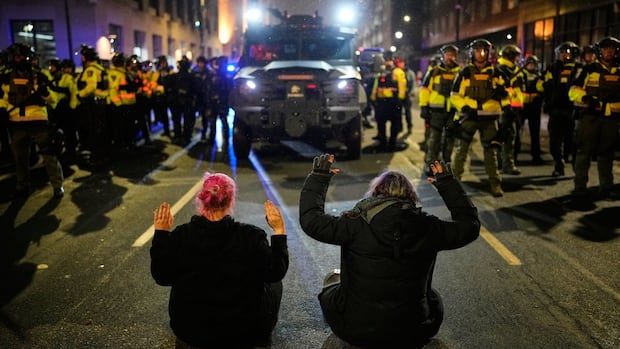
What immigration crackdowns have to do with climate The Big Picture: A nuclear reactor takes a plane rideNew Nova Scotia levy on EVs, hybrids feels ‘punitive,’ some drivers sayWhat immigration crackdowns have to do with climate 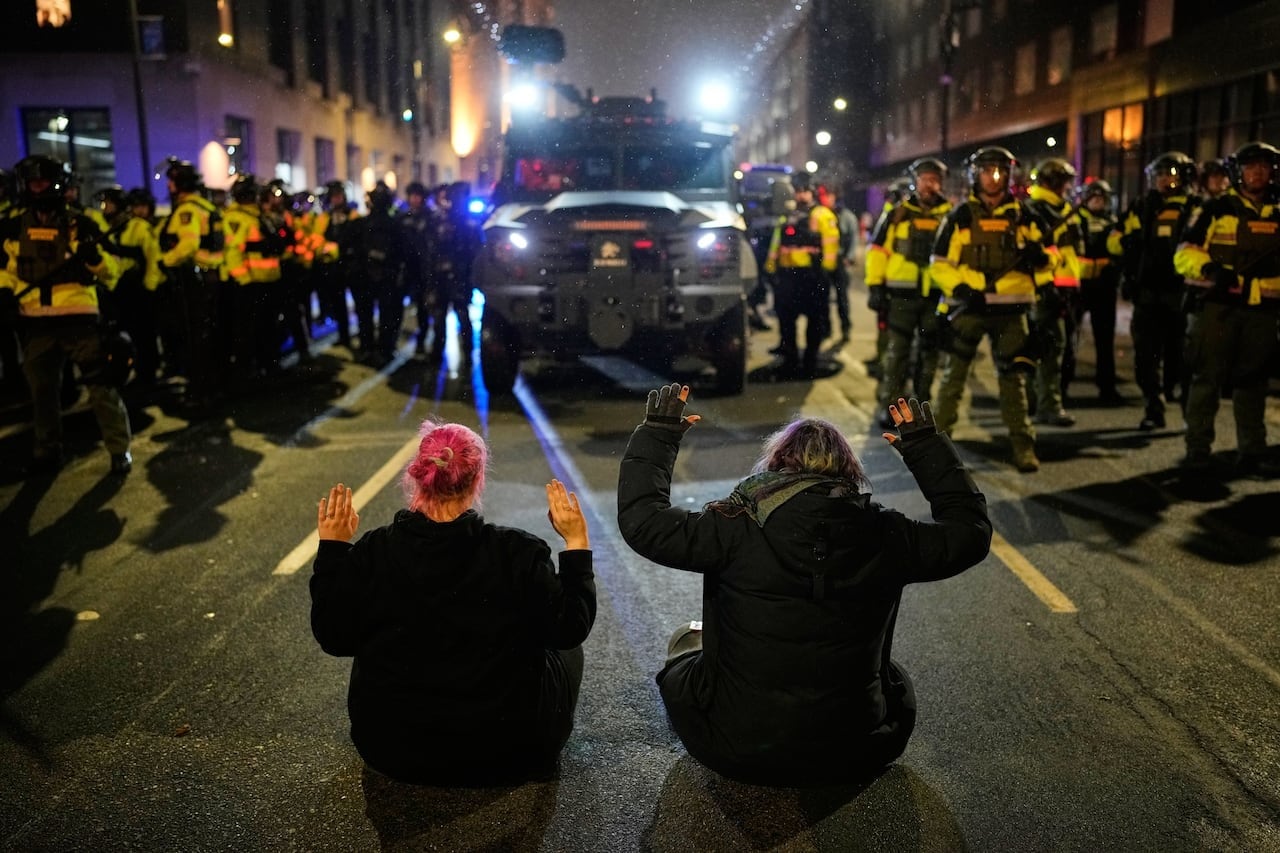 Protesters raise their hands in front of Minnesota State Patrol during a January protest calling for an end to federal immigration enforcement operations in the city. (John Locher/The Associated Press)
As a kid growing up in Los Angeles, Isaias Hernandez remembers making plans with his siblings in case their parents – who are from Mexico – or other family members were ever arrested or deported.
So when Immigration and Customs Enforcement raided several areas in L.A. last June – leading to massive protests and the deployment of the National Guard – Hernandez quickly got in touch with his siblings.
“We read through the laws, we read through … what to do if your loved one is detained,” the environmentalist and author told What On Earth host Laura Lynch.
Hernandez considers himself a “proud immigrant kid” whose parents came to the U.S. to give their children a better life. So despite preparing for the worst, Hernandez says he felt “broken inside.”
“So many people in the community are terrified,” he said.
“How can we look into … trying to fix the Earth when our communities down the street – people that we know and love — are reporting that they can’t go out at work, or that they fear being deported?”
Migration, climate change and border enforcement are interconnected, according to Dana R. Fisher, a professor in the School of International Service and director of the Center for Environment, Community and Equity at American University in Washington, D.C.
As fossil fuel companies continue to produce carbon emissions that heat up the planet, people who live in the Global South and who are disproportionately impacted by climate change are forced to relocate, Fisher says.
“Droughts are becoming more common, floods are becoming more common, places are getting hotter and drier, which means that [they] can’t engage in agriculture the way [they] might have before,” she said.
According to the United Nations High Commissioner for Refugees, 90 per cent of refugees – many of whom are internally displaced – come from countries on the front lines of the climate emergency.
Yet some of the same communities that are trying to escape the impacts of climate change by moving to the U.S. – the world’s largest historical emitter and second largest current emitter of greenhouse gases – are being targeted for deportation, Fisher says.
 Environmentalist and author Isaias Hernandez grew up in Los Angeles, the son of immigrants from Mexico. (Submitted by Isaias Hernandez)
Immigration crackdowns and climate change are linked in other ways as well, according to Hernandez.
Last year, he wrote a piece on Substack referencing a 2022 report about how some of the world’s largest asset management companies were invested in both border and surveillance industries – including artificial intelligence, biometrics and detention centres – and the fossil fuel industry and agribusiness.
In other words, the migrant justice movement and the climate justice movement have a “common oppressor,” said Hernandez.
“Just noticing how all of these industries are interconnected,” he said. “Who’s investing in these industries and bankrolling the climate crisis?”
Hernandez encourages migrants rights activists and climate advocates to educate themselves about tech companies that are implicated in immigration enforcement and global warming.
They can also demand that these companies end contracts with U.S. Customs and Border Protection, Immigration and Customs Enforcement, and the Department of Homeland Security.
Protests against Immigration and Customs Enforcement spread across the U.S. after the fatal shootings of two people by federal agents in Minneapolis. A stalemate in Congress over major ICE reforms demanded by Democrats has also led to a partial government shutdown on Feb. 14.
Fisher says she is optimistic about the pushback against ICE operations under the Trump administration. The nation-wide general strike called for on Jan. 30, for example, is part of what she calls “Resistance 2.0.”
“More people are protesting, more people are getting involved, more people are demanding that their elected officials take a stand,” she said.
“What we’re seeing is … as the wheels come off of our democracy here, we’re seeing people aren’t just standing up and demanding immigration reform, demanding ICE leave, ICE gets defunded.
“They’re also demanding their rights, and they’re building these types of dense networks of communities that can push back against the climate crisis as well.”
– Vivian Luk

Old issues of What on Earth? are here. The CBC News climate page is here.
Check out our podcast and radio show. In our newest episode: Clues to Earth’s climate future lie buried in the ancient ice sheet covering Greenland. Climate scientists have been working for decades to uncover answers that can help us understand what’s coming. But as the U.S. government continues to push for more control over the island, some are worried that a Greenland controlled by Donald Trump would put their access to the ice in jeopardy. Security expert Whitney Lackenbauer tells us why fears about a warming Arctic due to climate change are stoking the current geopolitical tensions, and glaciologist Martin Siegert explains why a politically stable Greenland matters for the whole planet.
LISTEN | Another reason Greenland’s not for sale: climate change:
What On Earth25:33Another reason Greenland’s not for sale: climate change
What On Earth drops new podcast episodes every Wednesday and Saturday. You can find them on your favourite podcast app or on demand at CBC Listen. The radio show airs Sundays at 11 a.m., 11:30 a.m. in Newfoundland and Labrador.
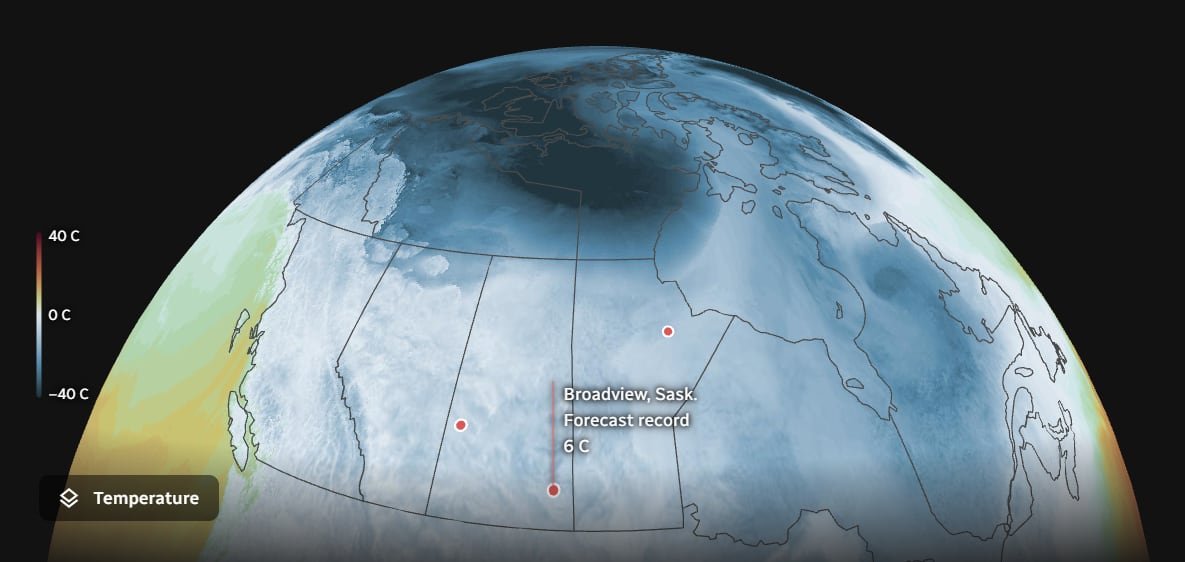
Check the CBC News Climate Dashboard for live updates on record-breaking weather and current conditions across the country. Set your location to find out how today’s temperatures compare to historical trends.
 Reader feedback
Last week, we spoke to data scientist Hannah Ritchie about the concerns some have about the trade-offs of climate solutions, for example, the waste from renewable energy. Ritchie showed that coal generates far more solid waste than wind and solar.
A number of readers, including Mark Boertjes, wrote to us and wanted to know more. He thought the data on solid waste alone gave an “incomplete” picture when comparing the environmental impacts of fossil and renewable technologies. He pointed out that coal has to be mined and wind turbines have to be manufactured from mined resources. “The whole process, beginning to end, should be considered,” he wrote. “It may not change the final conclusion. I would be happy if it didn’t because I want to support sustainable energy, but without a complete analysis, I am unsure.”
In Clearing the Air, Hannah Ritchie breaks down whether manufacturing renewables and EVs is going to lead to more mining. The answer is no — compared to fossil fuels, renewables leave a staggeringly small mining footprint. To power ourselves by coal, for example, we have to dig 30 times as much out of the Earth. To be clear, we may need to mine hundreds of millions of tonnes of minerals annually as part of our clean energy transition. But as Ritchie points out, we’re currently extracting 15 billion tonnes of fossil fuels every year out of the Earth.
The answer is similar when we look at the complete carbon footprint of renewables, from digging minerals out of the ground to the energy needed to build them, which can still come from fossil fuels. As per Ritchie’s calculations, solar and wind do emit carbon during their lifecycles, but a lot less than fossil fuels. Solar, for example, emits 19 times less than coal — and onshore wind a whopping 84 times less.
In her book, Ritchie answers 50 of these types of quandaries. We recommend checking it out for more information on how “green” our climate solutions really are.
Write us at whatonearth@cbc.ca (and send photos there too!)
The Big Picture: A nuclear reactor takes a plane ride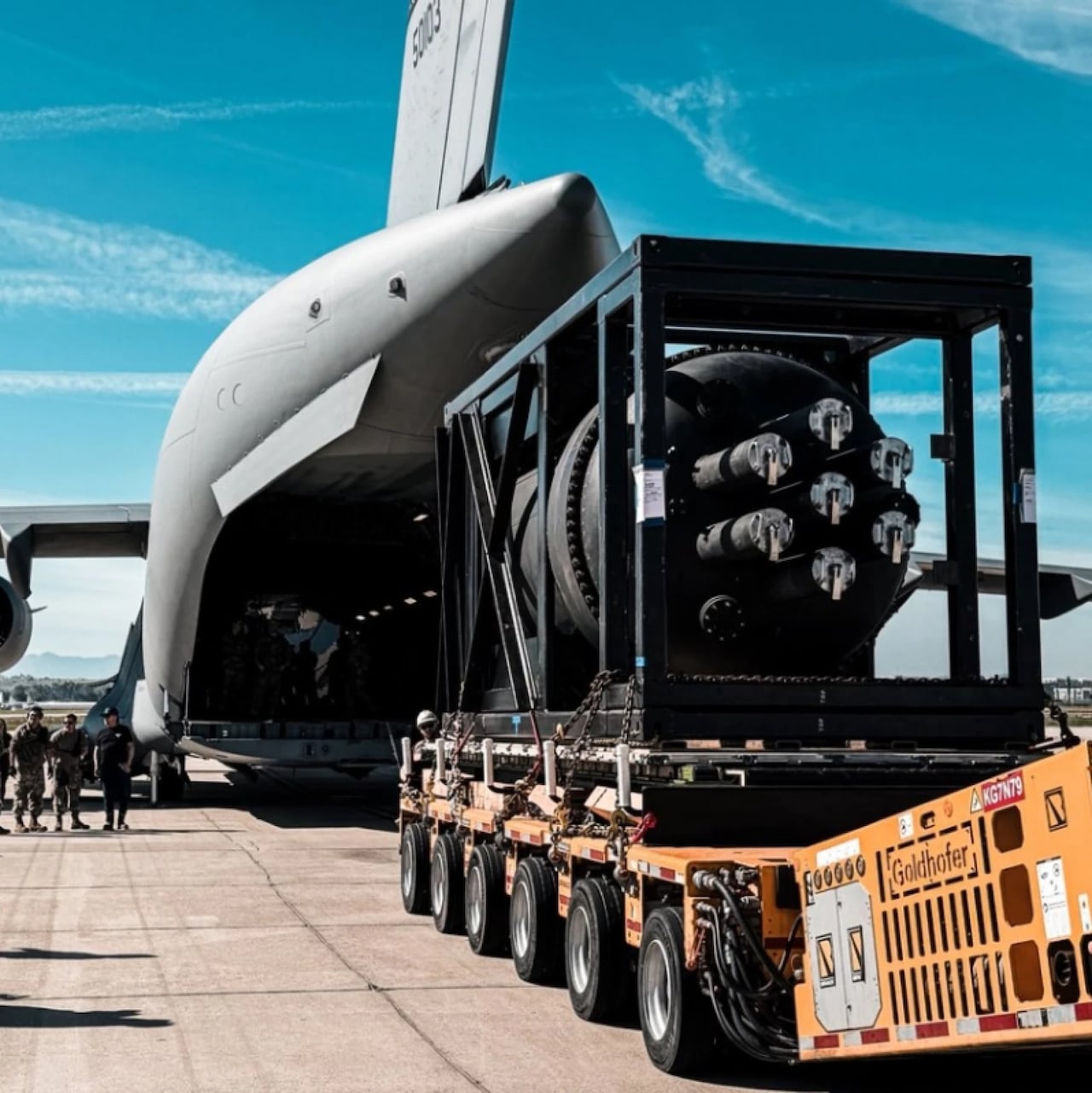 (Valar Atomics)
We’ve been hearing for years about the development of nuclear reactors with modules small enough to be built in a factory and transported by truck for use just about anywhere, from remote northern communities to Alberta oilsands facilities. They’ve been touted as a future option to generate reliable power without burning fossil fuels and emitting greenhouse gases.
Now, just such a tiny reactor has been built in a California factory, loaded onto a truck, then a plane, and flown to a military base in Utah.
The Ward 250, built by Valar Atomics, is a “micronuclear” reactor — designed to produce just five megawatts of power (enough to power up to 5,000 homes on an average day). It’s the smallest kind of small modular reactor — the International Atomic Energy Agency defines “small” as generating up to 300 megawatts.
Earlier this month, a truck loaded the Ward 250 onto a C-17 military aircraft at March Air Reserve Base in California. It took a two-hour flight and landed at Hill Air Force Base in Utah. The research and engineering test reactor will be deployed at the Utah San Rafael Energy Lab.
Valar CEO Isaiah Taylor told Reuters the reactor will start operating in July at 100 kilowatts and peak at 250 kilowatts later this year before ramping up to full capacity. It will not be connected to the grid. The company says its current goal is to validate the reactor’s design, fuel performance, and operational systems.
Valar aims to find industrial partners and start selling power on a test basis next year.
— Emily Chung
Hot and bothered: Provocative ideas from around the webEthiopia banned the import of fossil-fuel powered cars two years ago. Today, six per cent of the vehicles on the road are EVs — more than the global average — and the country’s only getting started.Meanwhile in Germany, more data that plug-in hybrids … aren’t being plugged in. TechCrunch’s Tim De Chant explains why this stepping stone doesn’t work if people don’t want to walk. New Nova Scotia levy on EVs, hybrids feels ‘punitive,’ some drivers say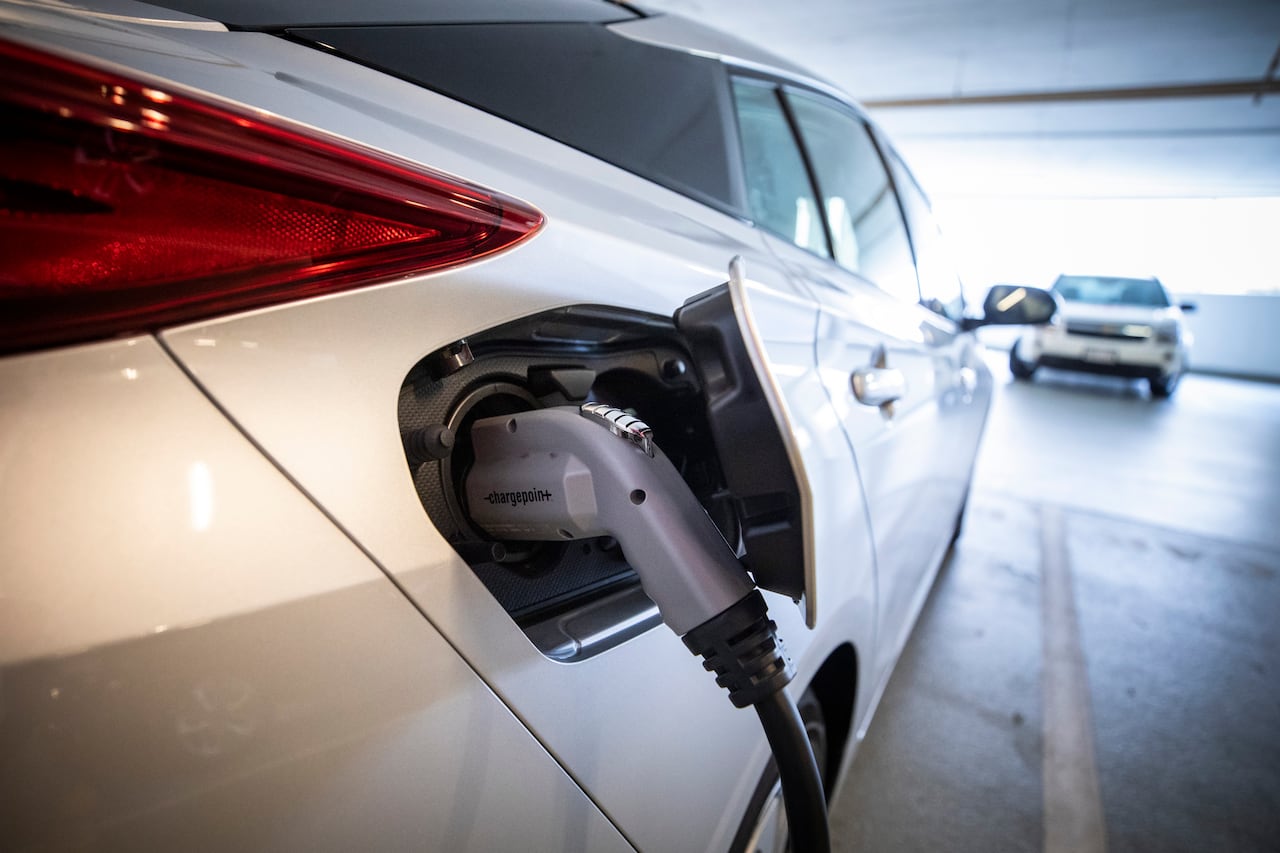 As of Oct. 1, owners of fully electric vehicles in Nova Scotia will be charged $500 when registering their vehicle for the first time or renewing registration every two years, and owners of hybrids will be charged $250. (Ben Nelms/CBC)
Some electric vehicle owners in the province say they feel they’re being penalized by the Nova Scotia government’s new levy on electric and hybrid vehicles.
Details of the new levy were announced in Monday’s provincial budget. As of Oct. 1, owners of fully electric vehicles will be charged $500 when registering their vehicle for the first time or renewing registration every two years, and owners of hybrids will be charged $250.
Budget documents say the levy is intended to ensure EV owners contribute to road construction and maintenance costs. The fee is expected to raise $1.6 million in 2026-27 and $3.3 million in 2027-28, when it is fully implemented.
The levy is similar to those already in place in Alberta and Saskatchewan. Quebec is introducing a similar fee in 2027.
Rhonda Frank is a small business owner who lives in Head of Chezzetcook, N.S., and has three fully electric vehicles. She said the additional $1,500 fee she’ll have to pay every two years will add up.
“It seems punitive,” Frank said. “It feels like I’m being charged a penalty just for trying to be a green business. And $1,500 may not sound like a lot, but for a micro-business, every new fee matters.”
Frank said she doesn’t object to helping pay for roads, but believes the flat fee isn’t the right approach. She said calculating the fee based on road-wear considerations such as vehicle class or axle loads, or distance travelled, would make more sense.
She also pointed out that many hybrid users do buy gas sometimes and thereby contribute to gas taxes.
“I’m asking them for a fair, transparent approach that’s based on evidence,” Frank said.
EV driver John MacPherson echoed that sentiment.
MacPherson said he drives about 10,000 kilometres per year, and the new fee means he’ll be paying about double what he would have paid in fuel taxes using a gasoline-powered car.
“A flat $500 fee is not proportionate — especially for moderate drivers like me. There are fairer, usage-based solutions available. I’d like to know why those weren ’t seriously considered,” he said.
“Many of us purchased our vehicles — new or used — believing the government supported the transition to cleaner transportation. Now we’re being hit with one of the highest EV registration fees in the country.”
Definition of ‘hybrid’ TBD
The government said there are about 5,000 fully electric and 15,000 hybrid vehicles in the province, but that the number of hybrids is based on the broadest definition, and it is possible not all of them will be subject to the levy.
WATCH | Electric Vehicle Association of Atlantic Canada reacts to new tax:
Electric Vehicle Association of Atlantic Canada reacts to new N.S. tax
The Houston government’s latest budget includes new levies on electric and hybrid vehicles starting this fall. EV owners will have to pay $500 every two years while hybrid drivers will pay $250. The EV association’s Kurt Sampson says a new tax system will be needed as EVs become more popular.
The estimated $3.3 million the government expects to bring in with the levy is a drop in the bucket compared with the revenue from motive fuel taxes, which is forecast to be $297.7 million in 2026-27.
According to the Department of Public Works, it costs about $700,000 per kilometre to resurface two-lane routes and $800,000 to $1 million per kilometre for two lanes going in the same direction on 100-series highways. New twinning, which includes land acquisition, clearing and grading, costs $10 million per kilometre, the department says.
Nova Scotia’s levy on EVs comes shortly after the federal government announced incentives for buying them, including rebates of up to $5,000 for EVs and $2,500 for plug-in hybrids.
EVs should still save owners money
Kurt Sampson, the executive director of the Electric Vehicle Association of Atlantic Canada, said as gas-powered vehicles start to dwindle and EVs become more popular, a new tax system will be needed.
He said 90 to 95 per cent of the wear and tear on roads is caused by heavy trucks, but the gas tax those drivers pay does not reflect that.
Sampson said the introduction of the levy is an opportunity to have a discussion about creating a new system that’s fair for everyone.
The new levy is unlikely to change the financial equation of EV ownership for most current owners, Sampson said.
“I save $500 a month or more on gas alone, so me having to pay $500 every two years for this tax is really inconsequential,” he said.
“But for someone who might be considering an EV who doesn’t really know or have a solid grasp of the economics of EV ownership, it’s probably another deterrent. And you know, we don’t like to see that.”
Abby Lefebvre, the energy co-ordinator with the Ecology Action Centre, said she doesn’t believe the levy will be a deterrent to most people considering buying an EV, but the fee will impact some Nova Scotians who “are already pinching coins.”
“It really is still important to remember all of the good that EVs can do for our community and to not be discouraged by what’s happening,” she said.
— Frances Willick
Thanks for reading. If you have questions, criticisms or story tips, please send them to whatonearth@cbc.ca.
What on Earth? comes straight to your inbox every Thursday.
Editors: Emily Chung and Hannah Hoag | Logo design: Sködt McNalty