
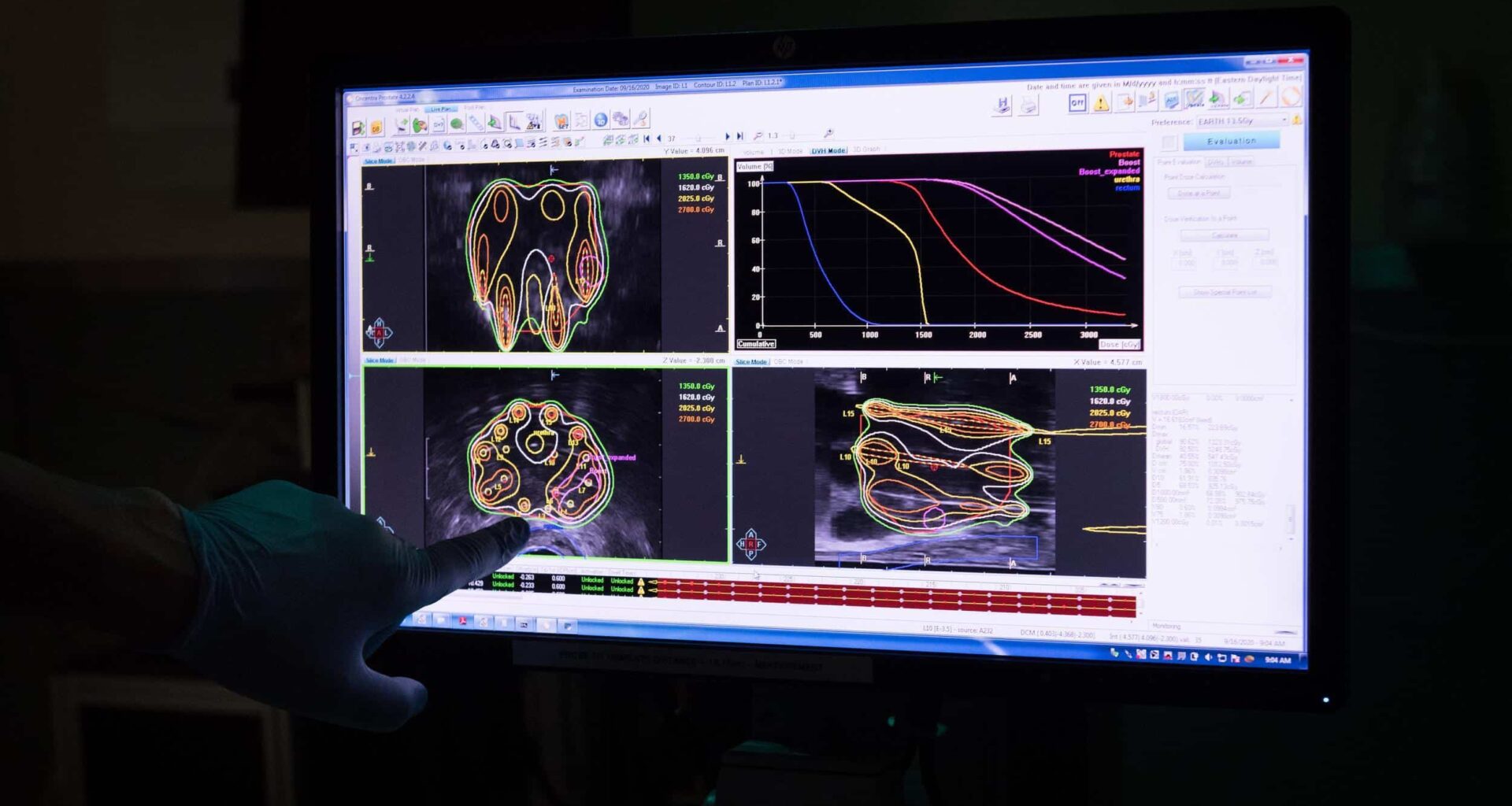
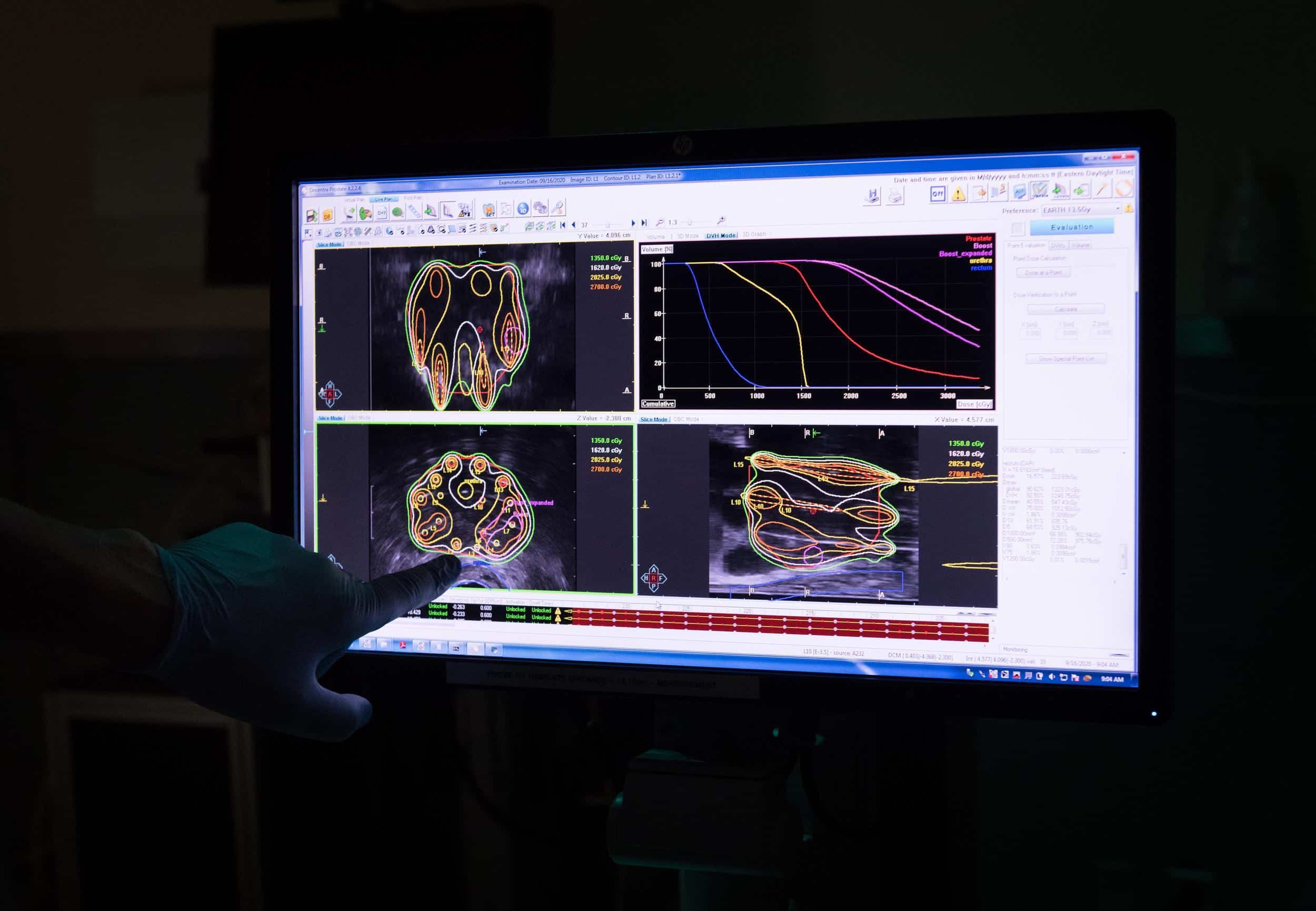

Dr. Andrew Loblaw oversees a procedure for prostate cancer treatment
A Sunnybrook-led study comparing the pooled data of patient experiences from past clinical trials suggests a precise form of external beam radiation (SBRT) was shown to be better at eliminating intermediate-risk prostate cancer with less relapse and initial complications, compared to an internal radiation therapy known as brachytherapy.
“Looking back at a large sample of patient data from five trials over a median follow-up of nearly 10 years allowed us to make a long-term comparison of stereotactic body radiotherapy (SBRT) and brachytherapy for the first time,” says first author of the study, Dr. Cristian Udovicich, a clinical research fellow at Sunnybrook’s Odette Cancer Centre.
Published in JAMA Network Open
, the study was a post hoc analysis of individual patient data pooled from five prospective trials conducted from 2010 and 2018, including 247 participants: 180 (72.8 per cent) of whom underwent SBRT, and 67 (27.1 per cent) underwent brachytherapy.
The findings showed SBRT was associated with significantly lower recurrence of cancer relapse and treatment-related side effects/complications of the genitourinary tract occurring during or shortly after the treatments, compared with brachytherapy.
At five years, cancer relapse was 7.8 per cent for brachytherapy compared with 3.0 per cent for SBRT. At 10 years, relapse was 38.0 per cent for brachytherapy compared with 10.4 per cent for SBRT. The brachytherapy cohort had a significantly higher incidence of acute grade 2 or greater genitourinary adverse events compared with SBRT (74.6 per cent of participants vs 51.7 per cent).
There was no significant difference in patient-reported quality of life over the longer term, as outside of the acute adverse events, both treatments were seen to be tolerated equally well over a longer period of time.
For patients with intermediate-risk prostate cancer considering radiation as part of their treatment plan, radiotherapy options include internal radiation (through placement of radioactive material directly into or near a tumour to kill cancer cells – this includes brachytherapy), or external beam radiation – with the most precise form being SBRT, a non-invasive treatment that delivers highly-concentrated doses of targeted radiation from different angles in an effort to destroy tumour cells, while helping protect nearby healthy tissue.
While traditional radiation is given in small doses over multiple sessions, SBRT is delivered in only one to five more precisely-targeted treatments, is less invasive, and doesn’t require going under a general anesthetic.
“This is the first evidence we have, to our knowledge, comparing these two different kinds of radiation therapy options that patients with prostate cancer have to choose from – brachytherapy and stereotactic body radiotherapy,” says Dr. Andrew Loblaw, corresponding author of the study, a scientist in the Odette Cancer Research Program at Sunnybrook Research Institute and a professor of radiation oncology at University of Toronto’s Temerty Faculty of Medicine. “The results suggest there may be a need for ongoing follow-up past five years for individuals with intermediate-risk prostate cancer, particularly those undergoing brachytherapy. The long-term outcomes assessed in this study may also help to inform discussions regarding radiation modality selection for the management of intermediate-risk prostate cancer.”