
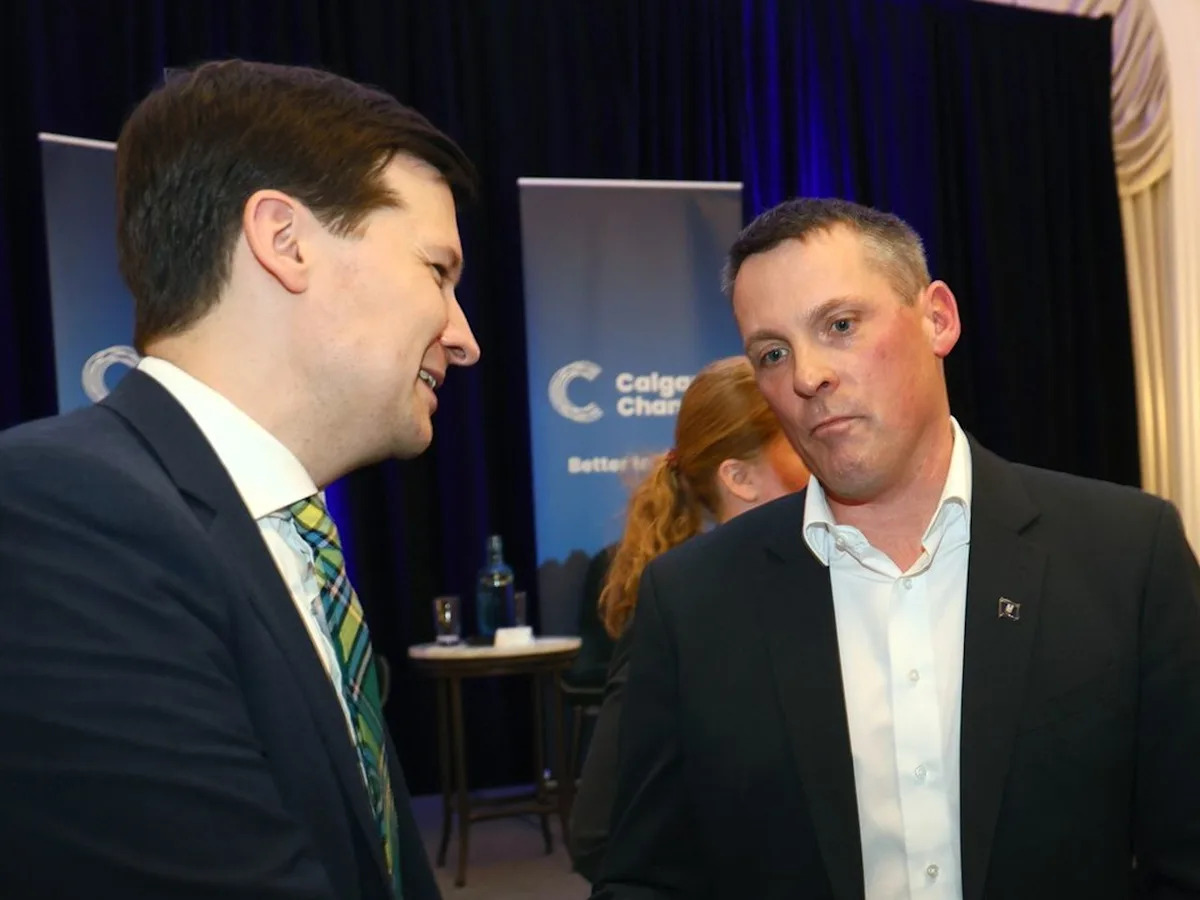
Mayor Jeromy Farkas said the province’s move to increase its share of property taxes in its latest budget undermines the city’s efforts to minimize increases to the levy this year.
“To have a massive, nearly $400 increase now, thanks to the provincial government, without them being willing to show their work in terms of what Calgarians will benefit from, we are in an egregious situation,” Farkas said at a news conference Friday.
“This biggest tax increase in Calgary’s history is being pushed down Calgarians’ throats by the provincial government. This is going to trigger an extreme affordability crisis in our city.”
Farkas’ comments came a day after Finance Minister Nate Horner tabled the province’s 2026-27 fiscal plan on Thursday that includes $83.9 billion in expenses and $74.6 billion in revenues, resulting in a $9.4-billion deficit. The province blamed the red ink on a slump in oil prices, which they say has forced the government to tighten its purse strings and look for revenue sources elsewhere.
Related
The City of Calgary estimates property taxes will now climb by 21 per cent, largely due to the province’s decision to raise its education tax requisition, which the city is legally obligated to collect from homeowners.
In comparison, the city raised the amount by 1.6 per cent during the fall 2025 budget, despite inheriting a roughly 3.6 per cent tax bump, which council trimmed after budget deliberations. The move will result in a rise of $340 in property taxes this year for average Calgary homeowners, provincial officials said during a technical briefing ahead of Thursday’s budget release.
For Edmonton homeowners, the average increase will be just more than $150 a year. The difference is due primarily to higher home values in Calgary.
Last year, the provincial increase, according to Calgary’s estimate, was 14 per cent, bringing the total rise in property taxes in two years to 35 per cent.
“That is a massive increase, and on a yearly basis in terms of the dollar amount, this is the largest Calgarians have ever faced,” Farkas said.
“There are many ways that we can work together to unleash what Calgary has to offer, but Calgarians need to understand what they’re getting when they’re paying this much to the province,” he added. “Calgarians expect transparency. They expect accountability, they expect fairness, and they have not seen this from our provincial government.”
However, Horner said the province gave the city plenty of warning in the past two years about the increase.
“We said we’re getting to 33 per cent, we didn’t want to put it on the folks in one year, so we staggered it over two,” Horner said during an interview with Calgary Chamber of Commerce CEO and president Deborah Yedlin at the Fairmont Palliser on Friday. “I’m surprised that everyone is this surprised.
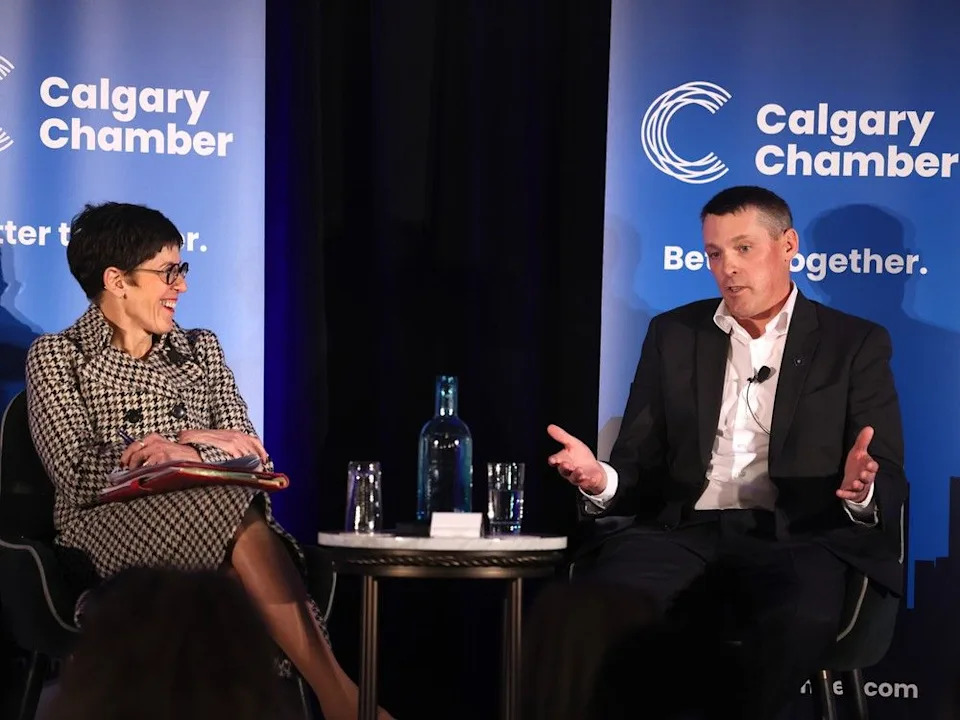
The Calgary Chamber of Commerce hosted the Honourable Nate Horner, Alberta’s President of Treasury Board and Minister of Finance at the Fairmont Palliser in Calgary on Friday, February 27, 2026.
“The education budget is at $10.8 billion — that goes to the operating line. But we have to be cognizant too, the schools are dominating the capital plan. We are going to spend billions and billions on schools. And we all have to chip in.”
The provincial budget includes funding for 14 new school projects in Calgary, as part of $3.3 billion to support 161 new and ongoing school projects across the province.
Health-care facilities in Calgary will also receive a funding boost. Foothills Medical Centre will get $15 million this year for its neonatal intensive-care unit, while $30 million is allocated for the new Calgary Radiopharmaceutical Centre.
The provincial budget includes $319 million for Compassionate Intervention Centres in both Calgary and Edmonton to support addiction recovery, and $10 million for Calgary’s Office of the Chief Medical Officer in 2026, up from $2 million each in the 2024 and 2025 budgets.
The Bridgeland Riverside Continuing Care Centre and the Bethany Continuing Care Centre in Calgary will receive $27 million and $60 million, respectively. Alberta Kidney Care will also be allocated $36 million over three years, including $34 million in new funding, to develop a renal dialysis unit at the Richmond Road Diagnostic Treatment Centre.
Farkas also acknowledged an investment of $204 million into the Alberta Affordable Housing Partnership Program for projects in Calgary. There is also $1.1 billion over three years to support the expansion of Calgary’s LRT network, including previously announced contributions toward the Green Line project, and continued study of a future rail connection to Calgary’s airport.
However, the mayor said the steep rise in property taxes is unfair to the city. He said he is open to considering a clarification of tax increases, specifically by the city and the province, in future bills.
Yedlin said the measure will hurt the economic environment of the city, as the increase will fall on the shoulders of business owners.
“That is not welcome from a business context, because it means less money to invest, means less money to expand your business,” she said.
“It means less money to pay your employees and less money to hire.”
— With files from Scott Strasser