
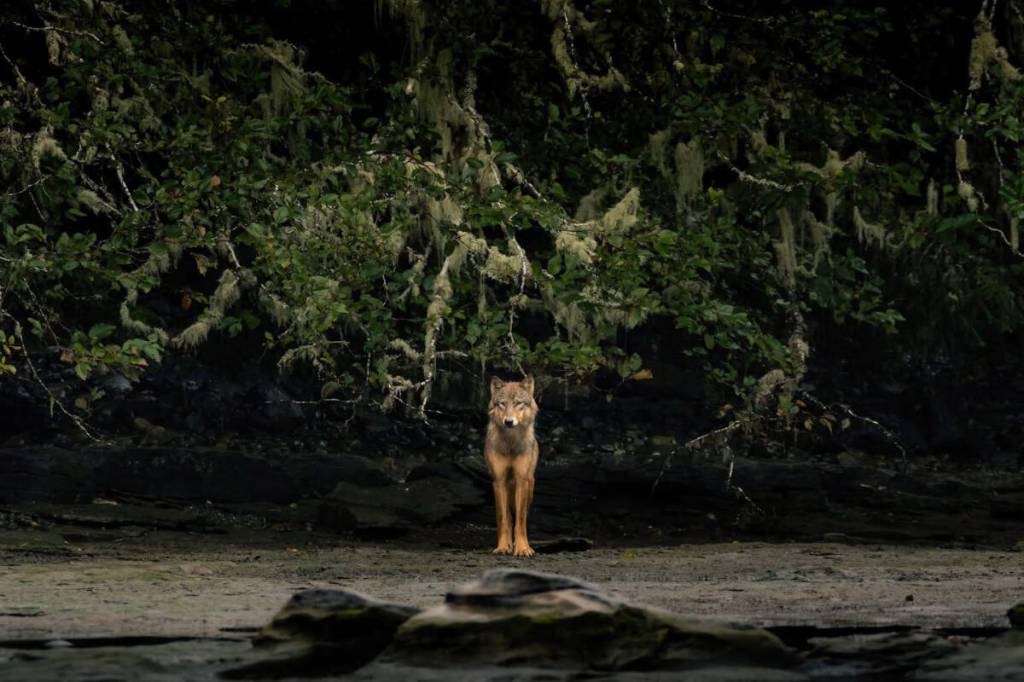
Who’s afraid of big, bad wolf: South Island wolf sightings no cause for alarm
Published 5:30 am Friday, February 27, 2026
Reports of wolf sightings across southern Vancouver Island have prompted a wildlife organization to urge residents to focus on coexistence and prevention rather than panic.
Mollie Cameron, president of Wild Wise Society, said the group has seen an increase in sightings shared on social media and reports from residents in recent days. However, she said the activity reflects visibility rather than a new presence.
“We don’t necessarily have a number of complaints,” Cameron said. “It’s more an increase in sightings being posted online and residents reaching out to us.”
She noted wolves have lived in neighbouring forests for many years, largely without incident. The recent surge in posts has contributed to fear and misinformation, she said.
Most reports involve sightings only, but Cameron said the attention highlights the need for residents to reduce potential attractants.
It shouldn’t be up to a wolf to understand human ownership of livestock or pets, she said. They are simply trying to survive.
Wolves are opportunistic hunters and scavengers. Unsecured livestock, free-roaming cats and unattended dogs can draw predators into residential areas. Cameron emphasized that protecting domestic animals is a human responsibility.
Despite public concern, wolf attacks on humans remain extremely rare. Cameron said only two fatal wolf attacks have been documented in North America over the past century. Problems are more likely if people feed wildlife or allow animals to become accustomed to human presence.
To stay safe outdoors, she recommends keeping dogs on leash, bringing cats indoors and ensuring livestock are properly secured. If someone encounters a wolf, they should make noise, appear larger and back away slowly without running.
“Making noise and scaring them away helps keep wolves alert of people,” Cameron said. That’s the best way to keep both humans and wildlife safe.
The organization is not disclosing specific sighting locations to protect the animals. Hunting regulations provide limited protection for wolves, and sharing locations could place them at risk.
Cameron added that coexistence should be proactive rather than reactive.