
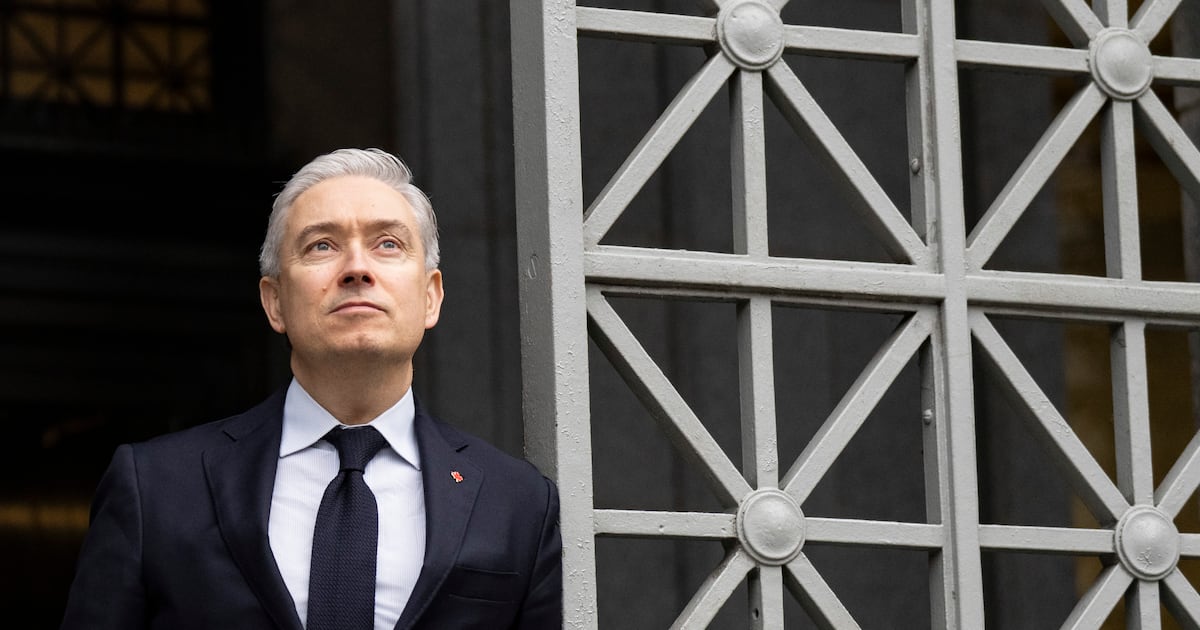
Finance Minister François-Philippe Champange says the federal government is once again “exploring” a formal free-trade deal with India, and that the South Asian country also sees “a lot of benefit” to deepening ties with Canada.
In an interview with CTV Question Period airing Sunday, host Vassy Kapelos asked Champagne directly whether he, as finance minister, wants a formal free-trade deal with India.
“We’re exploring,” he said. “I’m smiling because I was trade minister 10 years ago when this discussion started.”
“So, one thing that I can say is that Prime Minister (Mark) Carney wants to go much faster,” Champagne said, pointing to the number of trade agreements signed with other countries in recent months.
Champagne is joining Carney this week on a trip to India, as the prime minister works to reset relations after years of tension.
Canada and India have been at odds since 2023, when the federal government first levelled allegations of both foreign interference and transnational repression, including crimes such as murder and extortion.
At the time, talks toward a free-trade agreement — which had been underway for years — were indefinitely put on pause.
Carney, meanwhile, has pledged to diversify Canada’s trading partners to insulate the economy from a protracted trade war with the United States.
Despite the previously fraught relationship, Carney and Indian Prime Minister Narendra Modi have now met three times since last June. And, they announced in November they had agreed to launch negotiations towards a new Comprehensive Economic Partnership Agreement (CEPA).
They made the announcement just hours after Carney made it clear, in response to a question from CTV News, that “yes,” he does consider India to be a reliable trading partner.
“We’ve seen what’s going on in the world. It is in Canada’s best interest,” Champagne told Kapelos. “The United States always will be a strategic partner.”
“But at the same time, Canadians understand that the world has changed,” he also said, before citing measures, such as the federal government’s pledge to eliminate interprovincial trade barriers, as examples of ways to become more resilient.
“Taking back control of our economy is doing the things that are at home, which is very important, and at the same time branching out so that we have these strategic partnerships.”
Champagne also pointed to other G7 countries that have been engaging with India, and the leaders of those countries that have recently met with Modi — such as the U.K. and France — arguing that Canada is following suit.
“I think it’s good for Canada,” he said. “You know, engagement doesn’t mean endorsement.”
Asked why this attempt at hammering out a deal will be any different than previous ones, Champagne said: “The world is different.”
“And I understand it,” he added. “And I would say, respectfully, my Indian counterpart understands it.”
“Our G7 partners and beyond understand that India is going to be an economic superpower,” he said. “And therefore, you have to engage constructively.”
Champagne said while he doesn’t want to “speak for India,” he believes Modi and his government “see a lot of benefit” to working with Canada, including on critical minerals, artificial intelligence, food security and energy security.
“I think the dynamic of the world trade has changed, which is opening up opportunities that perhaps were not seized at the time,” Champagne said, in reference to previous attempts to ink a free-trade deal. “I wish we would have done it then, but you know, the world now is requiring us to do things differently.”
Government officials downplay transnational repression threats
Meanwhile, on Wednesday, senior government officials downplayed threats of foreign interference and transnational repression by India.
They told reporters in a background briefing ahead of Carney’s trip to India that the prime minister would not be travelling to India if the federal government believed India was actively interfering in the Canadian democratic process.
Kapelos repeatedly asked Champagne to respond to what the senior government officials said, but he would not answer directly.
“As I’m sure you can appreciate, I’ve been very busy with passing the budget,” Champagne said. “I’m not saying I heard about some references to comments made, but public safety is always top of mind.”
He said in working on a trade deal, it’s important to have guardrails in place to facilitate “strategic engagement.”
In a statement to CTV News on Thursday, when asked whether India is still engaging in foreign interference, CSIS spokesperson Magali Hébert did not specifically address the latest comments from senior government officials.
The RCMP also would not comment directly to CTV News on Wednesday’s comments from government officials.
You can watch Finance minister François-Philippe Champange’s full interview on CTV Question Period Sunday at 11 a.m. ET.
With files from CTV News’ Stephanie Ha