

Not all of us enjoy lunges; not all of us can safely do them either, whether that’s down to injury, age-related reasons or mobility issues. That doesn’t mean you can’t strengthen your legs or enjoy lower-body workouts; you just need to choose your leg exercises wisely.
There’s one exercise I turn to often when my knees need a break or clients tell me that squats or lunges aren’t comfortable. That said, what works for me (or my clients) may not work for you, so if you are working with a health condition or injury and suffer from knee pain, I strongly advise seeking medical advice first before starting a new exercise regimen.
You may like
Why should you build strength in your legs?
(Image credit: Getty Images)
Did you know we begin to lose fitness at 35? A 47-year-old study suggests this is roughly the time at which aspects of our fitness begin to decline, so it’s more important than ever to retain strength, mobility and muscle mass if you also want to retain functionality.
You can stay fit, strong and healthy at any age. I recommend focusing on two areas more often: strength and mobility and staying naturally active by walking, gardening, cycling, or swimming, for example.
This is a strength exercise you can do right now (and absolutely anywhere) if you have a box, bench, or similar to hand. It’s one of my favorites for building lower-body strength and it also improves stability and balance by teaching you to control movement while standing on one leg. It will also test lower-body mobility, especially in your ankles.
If you do experience any pain in your knees, reduce your range of motion by not lowering as far (think above parallel). If that still doesn’t help, you may want to try other types of movements to assess what works for you. More on that later.
How to do single-leg deficit squats
Deficit Single Leg Squat – YouTube
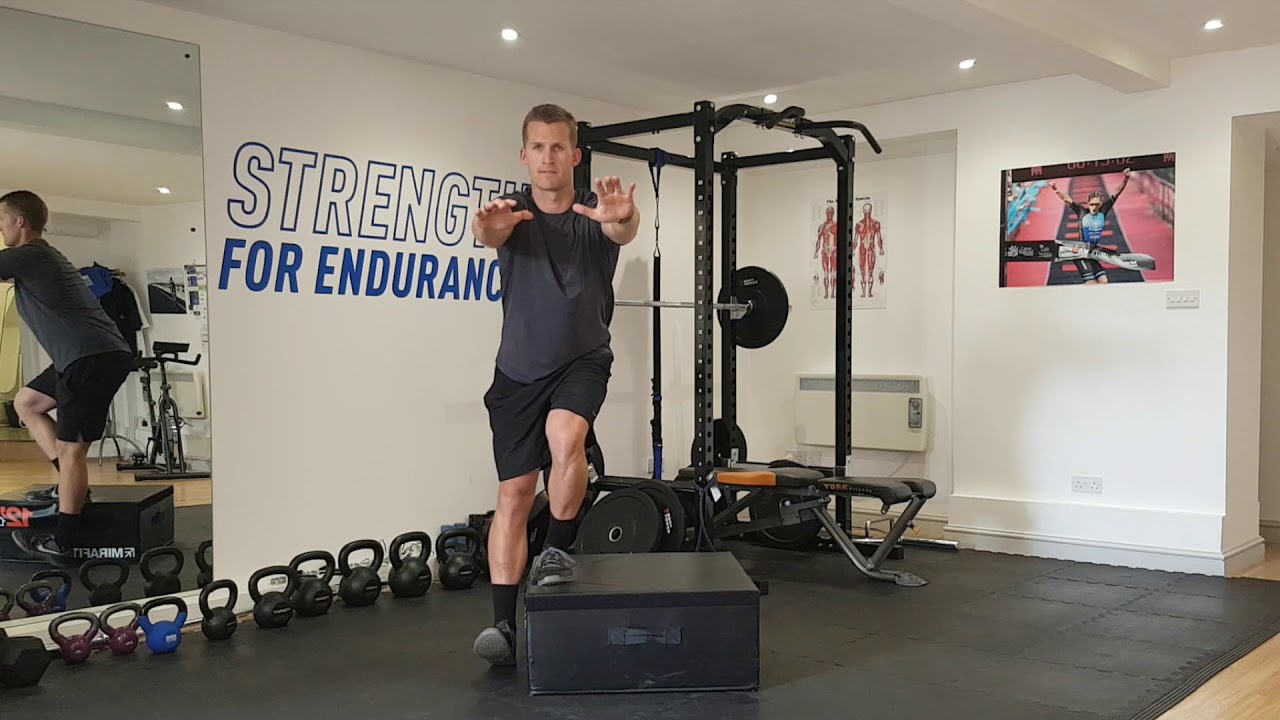
You’ll need a bench or box (or similar) on a height setting that allows you to dangle one leg off the edge while you bend through your standing leg. It should also be heavy enough that it won’t tip over when you stand on it.
Stand on the right side of your box with your left foot at the right edge. Bring a very soft bend into the left kneeAllow your right leg to hover over the ground next to the boxEngage your core and keep your torso upright and back straight. A slight forward lean is okay, but hinge at the hips if you choose to do thisExtend your arms in front of you or place them at your hipsBend your left leg and sit your hips back to perform a single-leg squatAllow your right leg to trace down the outside of the box, keeping the leg straight and slightly ahead of your bodyLower as far as you can, then pauseDrive up to stand through your left leg, extending through the hips and kneeContinue for 6-8 reps, then switch to the other side of the box (and the other leg).
Over time, you might decide to hold a weight in each hand or one weight to your chest to progress this exercise. Practice sitting lower, and notice the difference between your left and right sides.
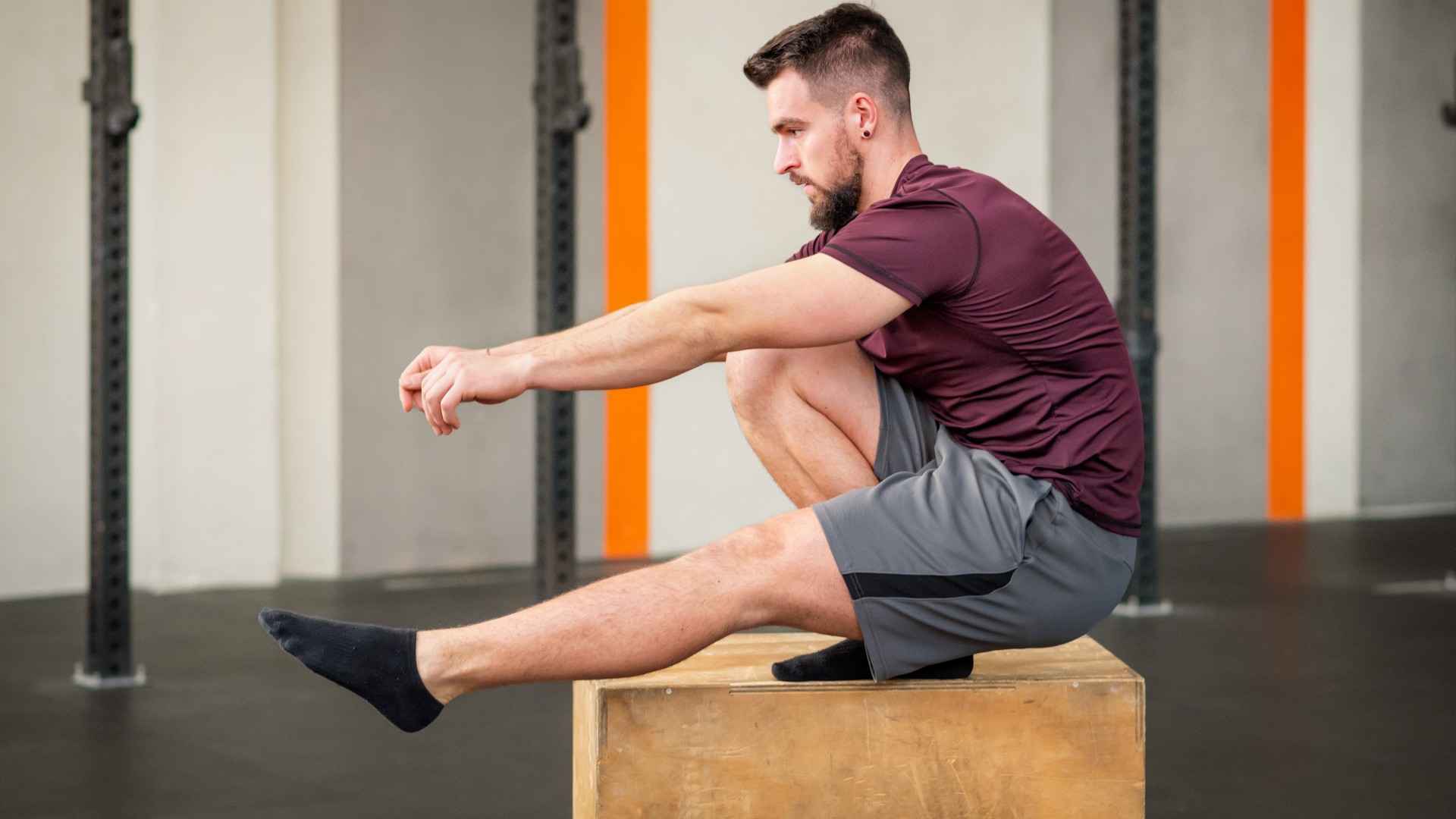
This exercise is sometimes used as a way to build the foundational strength required for pistol squats, so if that’s of interest, see if you can extend one leg in front of you as you lower into your standing leg; this increases core, hip, quad and hamstring engagement, and tests hamstring flexibility.
You may like
What are the benefits?
(Image credit: Getty Images)
As I mentioned, it gets harder to naturally maintain muscle mass and bone density at an older age, which can impact balance and increase the risk of injury or falls. This squat variation works on increasing single-sided strength, which not only builds balance and stability but also helps reduce any muscular or mobility imbalances showing up in your body.
The box or bench provides a deficit, which means your “free” leg can lower past the box, allowing your standing leg to reach a deep squat and increasing range of motion. Don’t worry if your free foot touches the floor: You’ll find your ankles, hips and knees working hard, which are joints you want to keep happy!
I use this move with clients who want to increase mobility, as good lower-body mechanics mean tasks like walking, climbing and running become easier.
There’s a quadriceps muscle called the vastus medialis, which helps stabilize the knees; when this muscle is weak, it can contribute to knee pain and limit mobility. Any form of single-leg squat requires quads activation, which can help support your knee joints.
All of that is great, but sadly, one strength exercise won’t be a fix-all, so consider full-body workouts and mixing upper and lower-body exercises into your regimen. I’ve included a few ideas and alternatives below for you to try.

(Image credit: Getty Images/Jacob Wackerhausen)

Follow Tom’s Guide on Google News and add us as a preferred source to get our up-to-date news, analysis, and reviews in your feeds.
More from Tom’s Guide