
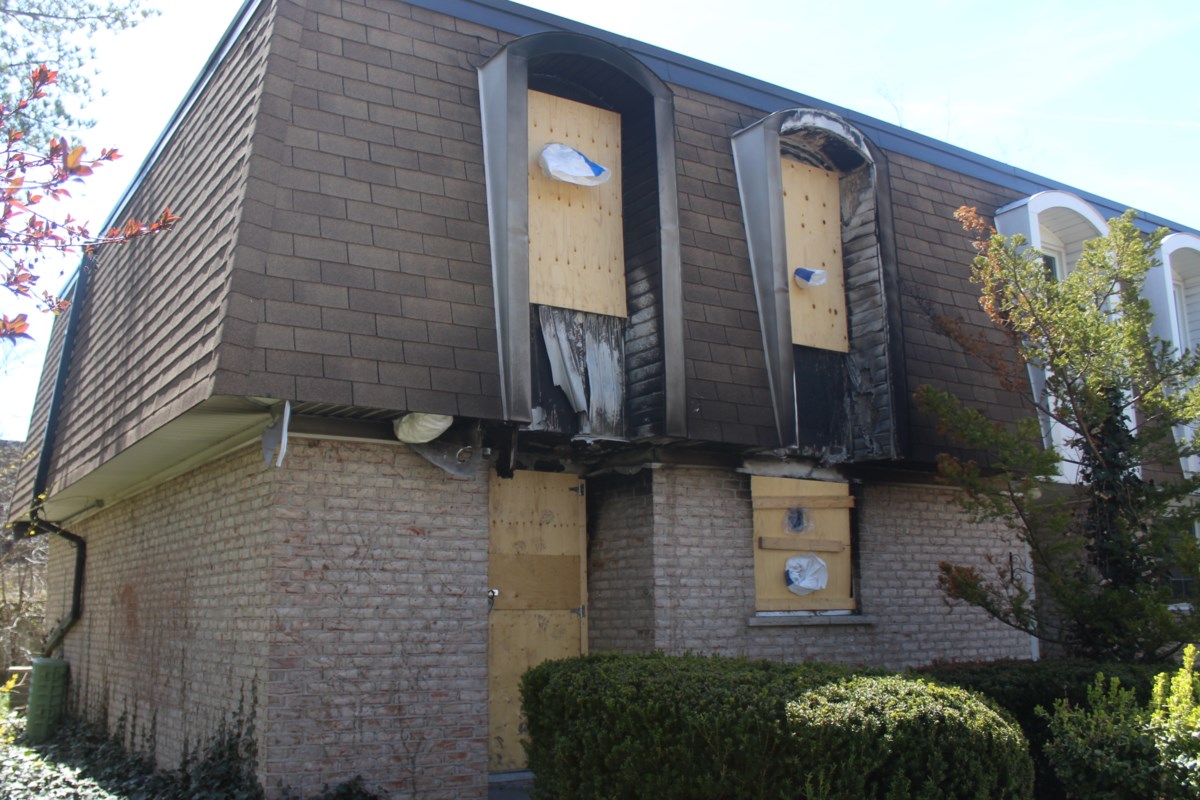
Two landlords also placed on probation, ordered to pay $37,000 in fines for not providing working smoke alarms
A Guelph landlord has been sentenced to 50 days in jail after an investigation found a lack of smoke alarms at an Edinburgh Road house fire that killed two people in 2024.
Hung Viet Le was given the jail time. He was one of two landlords charged. The second landlord did not receive jail time. They both face two years of probation and $37,000 in fines.
Charges laid in provincial offences court were for fail to install a smoke alarm on the second storey hallway and failure to install a smoke alarm on the first storey and fail to install a smoke alarm in the basement storey.
The pair pleaded guilty to the charges in Provincial Offences Court.
A City of Guelph news release points out that it is very rare for a landlord to get jail time for such charges.
During its investigation, Guelph fire inspectors looked at all townhouses in the complex where the fire occurred and determined seven units either lacked functioning fire alarms or had them removed. In addition, four units did not have carbon monoxide alarms and 14 units were unoccupied or nobody answered.
“Incarceration for fire safety offences is not common. This result demonstrates dedication to public safety and is an example of fair justice application of sentencing principles,” the city’s general manager of legal services, Jennifer Charles, said in a news release. “We hope the decision will serve as public education, showing other property owners the importance of fire prevention and life safety measures and the seriousness of their legal obligations under the Fire Code.”
Jeanette Niebler-Blei and her daughter Rachel Niebler were killed in the fire at 383 Edinburgh Rd. S. on March 11, 2024.
Their estates are among four plaintiffs in an $11.5 million lawsuit against the landlords. The other plaintiffs were reportedly inside the home as well, but escaped after the fire broke out.
In the statement of claim, the landlords are identified as Hung Viet Le and Mai Pham.
Through a subsequent statement of defence, Le and Pham deny any wrongdoing in the civil suit and claim no safety concerns had been raised with them prior.
“This incident sends a clear message to every landlord and property owner in Ontario: you are legally responsible for ensuring that there are working smoke alarms on every storey of your properties, and outside all sleeping areas,” said John McBeth, acting Ontario fire marshal, in the release.
Under the Ontario Fire Code, all homes must have a working smoke alarm on every storey and outside all sleeping areas. In addition, buildings with attached garages and/or fuel-fired appliances are required to have working carbon monoxide alarms.
“This unprecedented sentence clearly communicates to all landlords in Guelph that they are responsible for complying with the Ontario Fire Code. Ensuring tenant safety is both an ethical obligation and a legal requirement for landlords,” said Guelph Fire Chief Steven Goode in the release.
“The City of Guelph’s zero-tolerance policy for smoke alarm violations results in automatic fines or legal action against property owners who fail to have working smoke alarms on every storey and outside every sleeping area.”
According to the lawsuit, the fire started unbeknownst to the family of four inside the townhouse. It says both Jeanette and Rachel “became trapped as the fire grew.”
The family claims the landlords knew, among other things, there was “an inadequate number of exits,” permitted more people to reside in the home than what was allowable, and failed to install smoke alarms “or in the alternative, failed to regularly inspect the smoke detectors in the premises to ensure that they were functioning properly.”
Fire personnel weren’t able to get the two out, and both died, while the other two sustained “serious and permanent injuries.”
In the statement of defence for the civil suit, the landlords point to residents as the responsible parties.
“It was later reported that the origins of the fire was from the oven/stove on the premises which the plaintiffs used for cooking and which they had negligently operated to their own detriment,” it reads.