
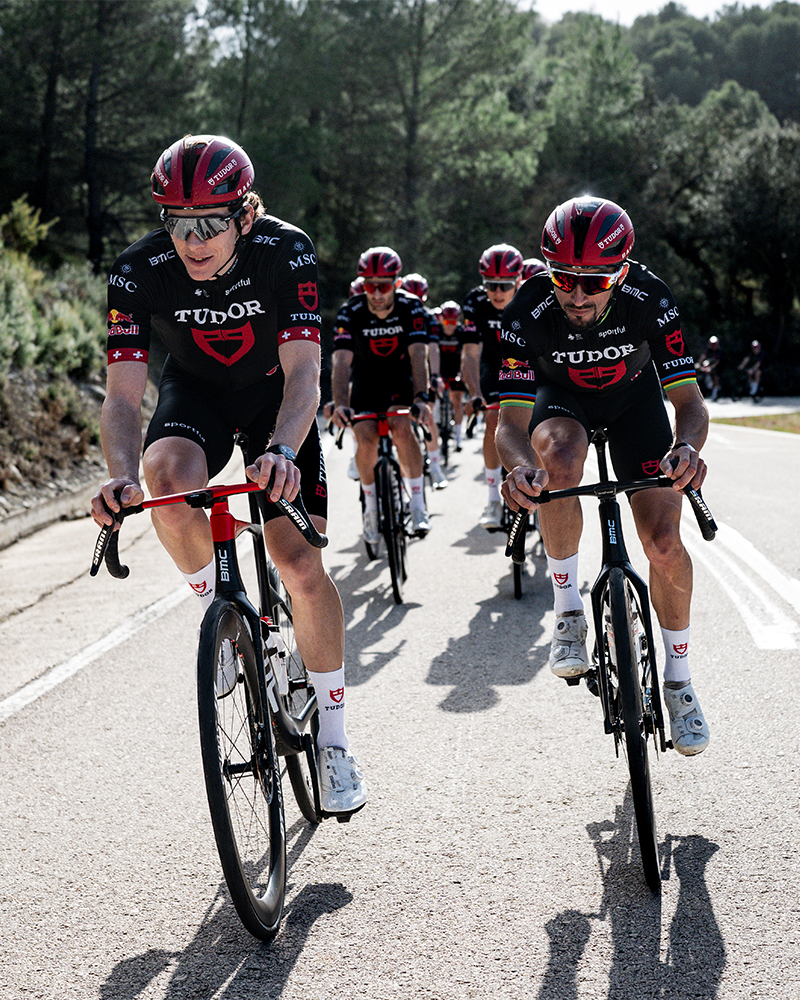
Sixteen hours in the air and an hour-and-a-half on the road later, I arrived, exhausted to say the least, in Moraira, a small, upmarket coastal town on Spain’s Costa Blanca, on the hospitality of Tudor and the Tudor Pro Cycling Team (TPCT). Situated in the province of Alicante, in the Valencian Community, the small, polished town unfolds between pale limestone cliffs and placid Mediterranean waters like a piece of Impressionist art. What is now an upmarket coastal enclave is dotted with traces of its former fishing village past.
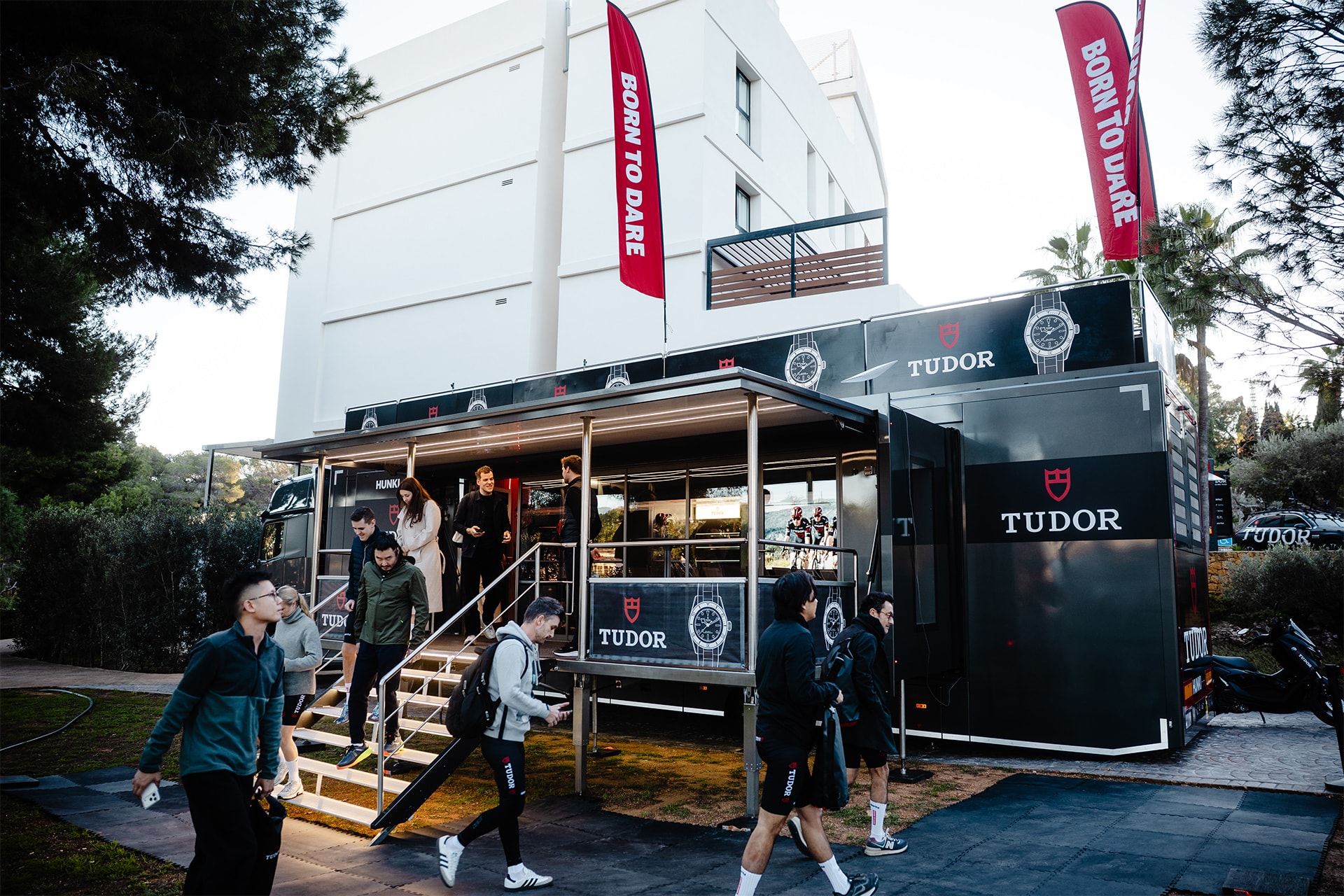
Tudor Pro Cycling Team winter training camp
During the lead-up to the trip, many, with whom I had shared my travel itinerary, were astonished when I mentioned cycling in Spain, specifically in Moraira. Their initial reaction naturally was, “Cycling in Spain?” followed by “Where’s Moraira?” I briefly mentioned the Tudor Pro Cycling Team before segueing to their second question, noting Valencia as the closest major city. My arrival late in the evening instead of the afternoon was nothing short of hurried, no thanks to a massive flight delay. After barely settling down in the hotel, I was whisked away to my hotel driveway to test my gear for the big ride the next day. The night air was cold, but not bonefreezing as you would expect from a European winter.
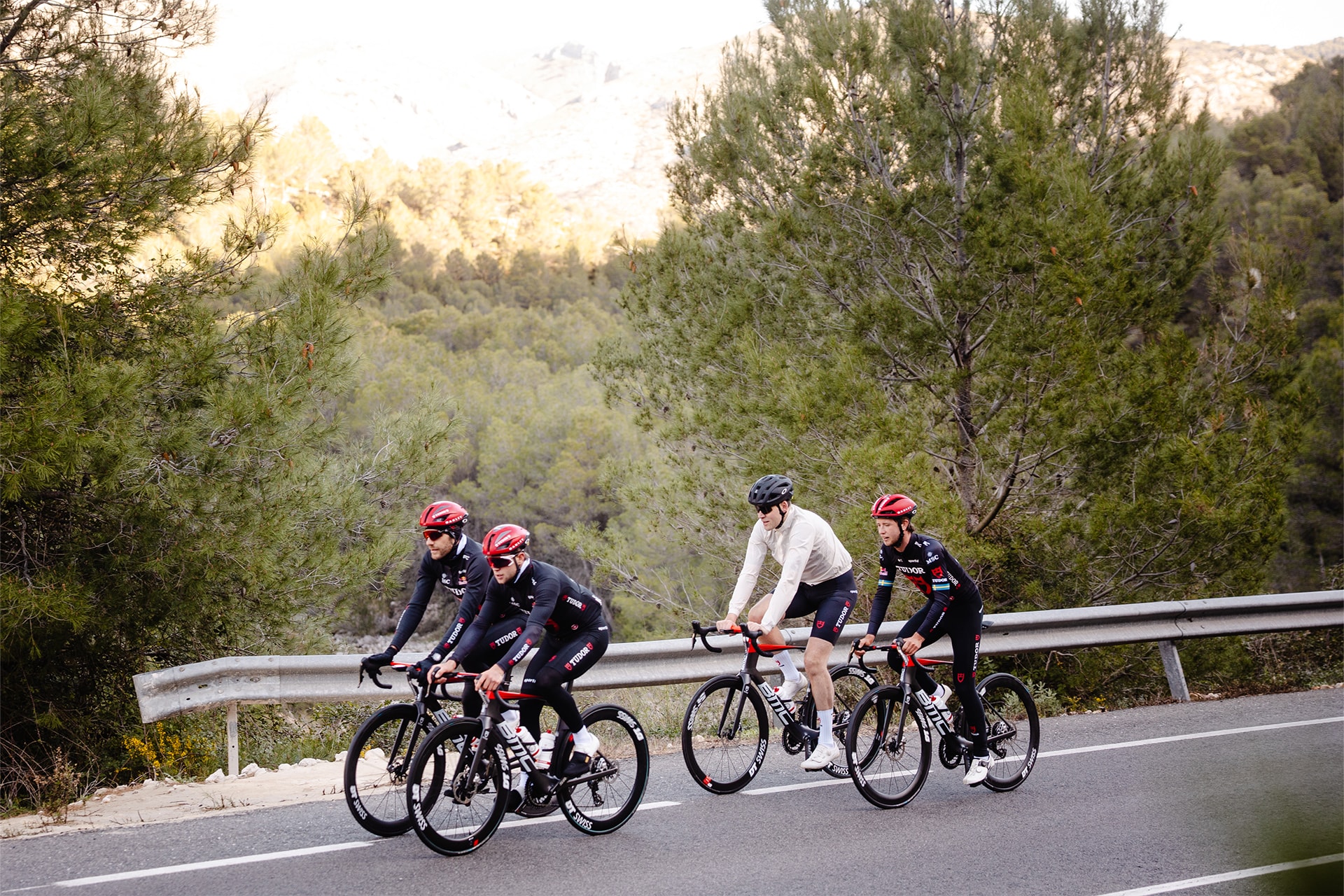 Where most of Europe freezes over, Moraira is blessed with forgiving conditions — mild temperatures, stable, dry air, and generous sunlight, quite the opposite of most of freezing Europe. This reliability is crucial during the pre‑season periodisation, as coaches can plan high-volume days without constantly rewriting sessions around storms or snow. On the roads, Moraira sits between key training loops used from Calpe and Benissa. The area combines flat or rolling coastal roads for endurance days with a dense network of medium-length climbs for threshold and VO₂ work. Quiet, well‑surfaced roads in the hinterland allow teams to do structured intervals and race simulations with relatively low traffic stress compared with more urbanised regions. This combination has made this corner of Spain a sanctuary for professional cycling teams.
First Interaction With Tudor Pro Cycling Team
That same evening, we convened at the TPCT winter training base for dinner with the rest of the organisation. The Moraira training camp represents one of the rare occasions when riders, coaching and performance specialists, sports directors, mechanics, chefs, and management, et al, come together before the demands of the season scatter them across the global race calendar. There are instances where TPCT will be competing at three different venues at any point during the season. With the Santos Tour Down Under season opener in Australia on 20 January 2026, the critical training block allowed for the optimisation of training and coaching details, recovery protocols, and equipment testing. It also helps build and strengthen team camaraderie and dynamics, given that cycling is a team sport after all. Instead of renting a section of a hotel, the team took over an entire property (for anonymity’s sake, we will not disclose the hotel’s name). The benefits are multifold.
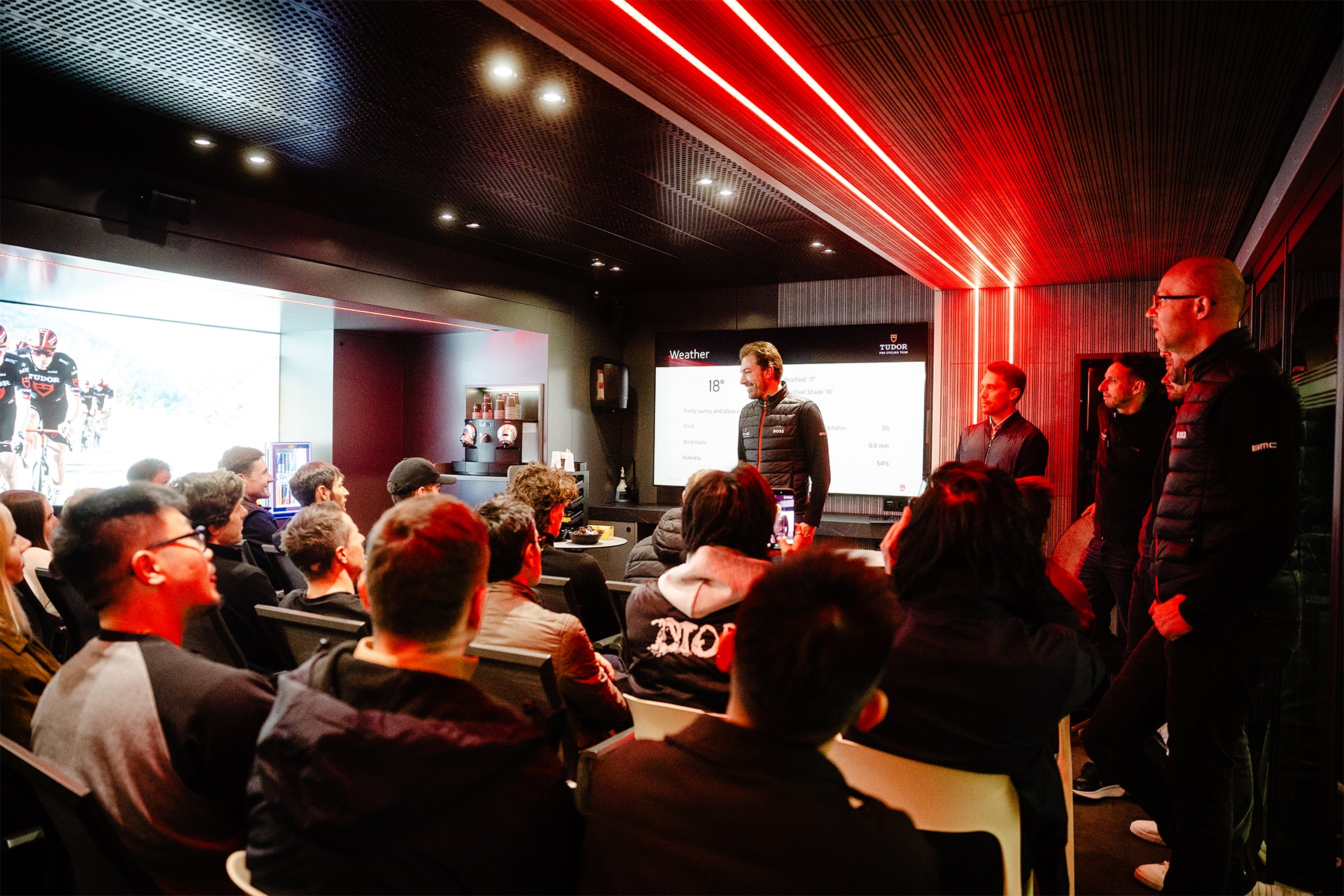
Fabian Cancellara addressing the team and members of the visiting press
Firstly, it creates a performance-driven, safe and closed environment for the team where every detail is controlled and monitored. For instance, our dinner was not specially prepared for us, nor was it fancy fare. We had what the cyclists ate during their day-to-day: clean, healthy, and nutritious, prepared by the team’s in-house chef rather than engaging the hotel’s catering services.
It was here that we were first introduced to TPCT’s founder, Fabian Cancellara. With two Olympic gold medals and numerous accolades under his belt, Cancellara is one of the greatest classics riders and time-trialists of his generation. In 2022, he set up TPCT with Tudor’s support as a long-term project rooted in audacity, ambition, and Tudor’s “Born to Dare” ethos. With a foundation built on the Swiss Racing Academy, founded in 2018 and led by Cancellara since 2020, with the aim of developing future Swiss talent, TPCT’s rapid rise over the years has propelled the team onto the biggest stages of the Union Cycliste Internationale (UCI). The professional cycling circuit is divided into three divisions: the top-tier WorldTeams, the middle-tier ProTeams, and the entry-level Continental Teams. In their inaugural 2022 season, TPCT competed as a Continental Team, securing 11 total victories and 30 podium finishes. Within a year, the team was promoted to the ProTeam classification and was invited to compete at the prestigious Tour de France in 2025. Thanks to the team’s points haul in 2025, TPCT secured automatic invitations to the 2026 WorldTours, including the three Grand Tours (Giro d’Italia, Tour de France, Vuelta a España) and five Monument classics (Milano-Sanremo, Tour of Flanders, Paris-Roubaix, Liège-Bastogne-Liège, Il Lombardia). “We’ll [compete] at the Classics and all three Grand Tours,” Cancellara confirmed in a separate report about their 2026 race programme.
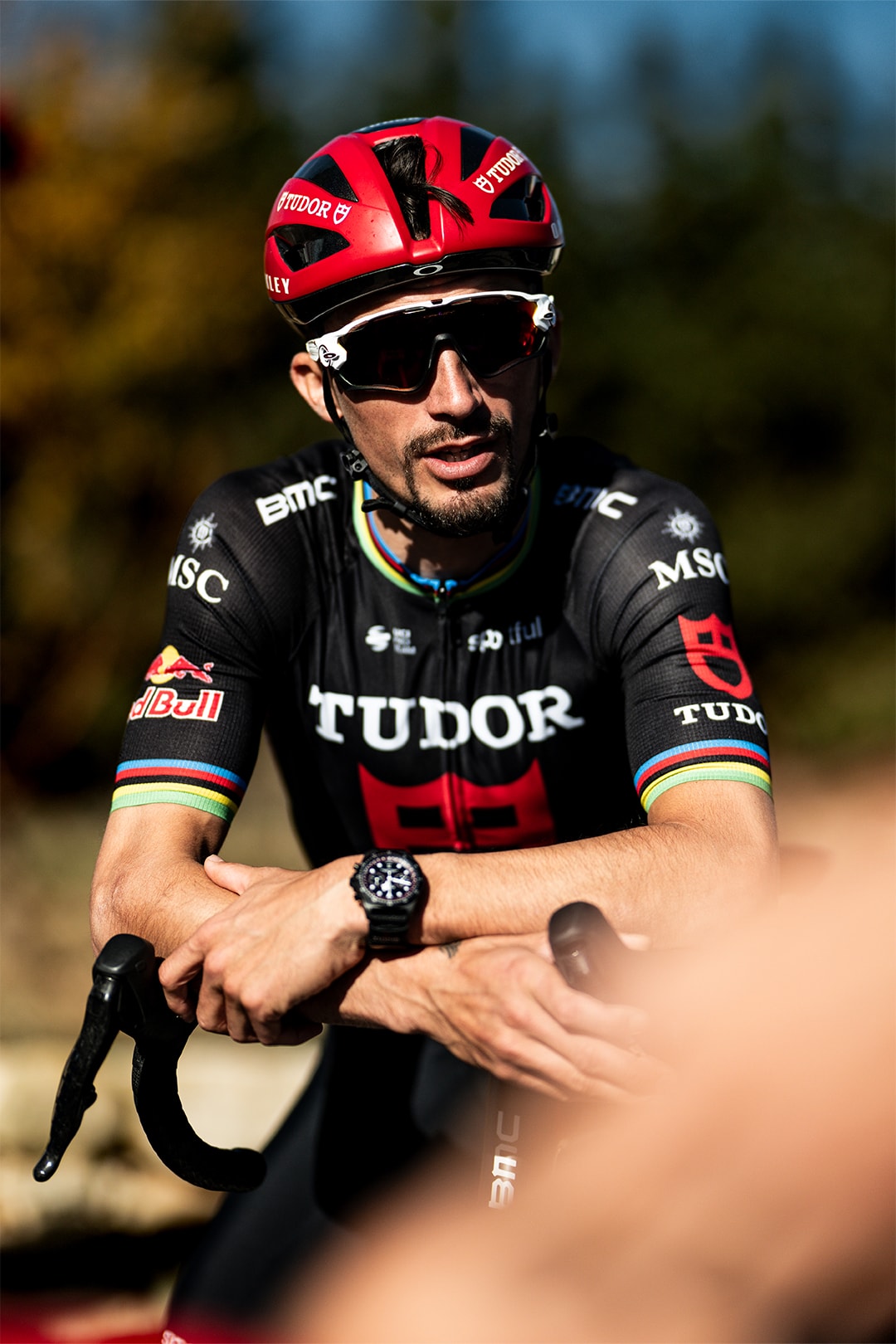
In the cyclist roster, TPCT added big names to its ranks, donning its black-andred livery. Two-time UCI World Champion, multiple Grand Tour stage winner, and Monument winner Julian Alaphilippe is its biggest signing thus far and a testament to the team’s ambition. “This [TPCT ] is a project with ambition, and seeing the team rise over the past few years motivated me to join,” shared Alaphilippe during our one-to-one interview. From the team’s inception to date, the incoming signings have transformed the team dynamics, featuring a potent mix of experience and a champion’s mentality, balanced by youthful energy from the younger crop of rising cyclists. Marc Hirschi, Marco Brenner, and Matteo Trentin are other big names racing in the black and red livery. Separately, TPCT’s Development Team consists of 14 cyclists, four of whom are promoted from the Under-23s programme.
The Big Cycle
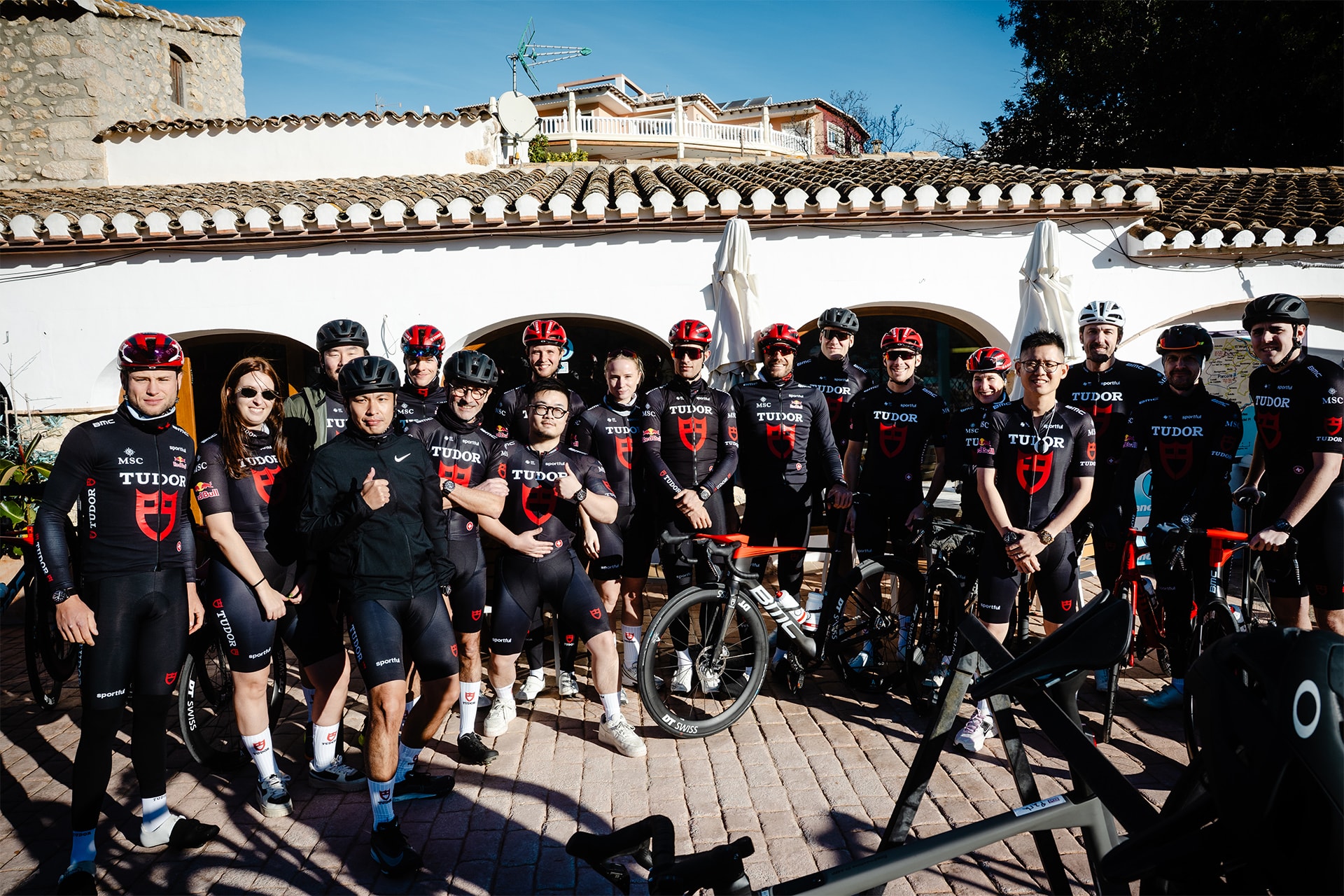
Flag off at Blanca Bikes in Parcent, Alicante
Day two began bright and early as we were briefed on our cycling course before being whisked to our starting point at Blanca Bikes in Parcent, Alicante. It was the highlight of our trip, but little could have prepared us for what was to come, apart from regular cardio and road cycling. First, there was the matter of cycling in chilly 10°C conditions with nothing more than the TPCT racing bib (I wore an extra sweater, of course). We were told it was a relaxing cycle: a 26km route cutting through the hilly backcountry past Benigembla before ending at the Can Sueño restaurant situated at the mountainous topography of Castell de Castells. They clearly forgot we are journalists.
After final checks on our gears, we embarked on a memorable, epic ride through some of the most picturesque landscapes alongside Canceralla and other TPCT cyclists. We rolled out from Parcent with roads gently threading through olive groves and terraced fields as the land slowly began to rise. An unhurried but insistent climb towards Benigembla draws us deeper into the Costa Blanca interior. The air grew colder as the rhythm of soft gradients and tightening bends ushered us towards the horizon framed by limestone hills.
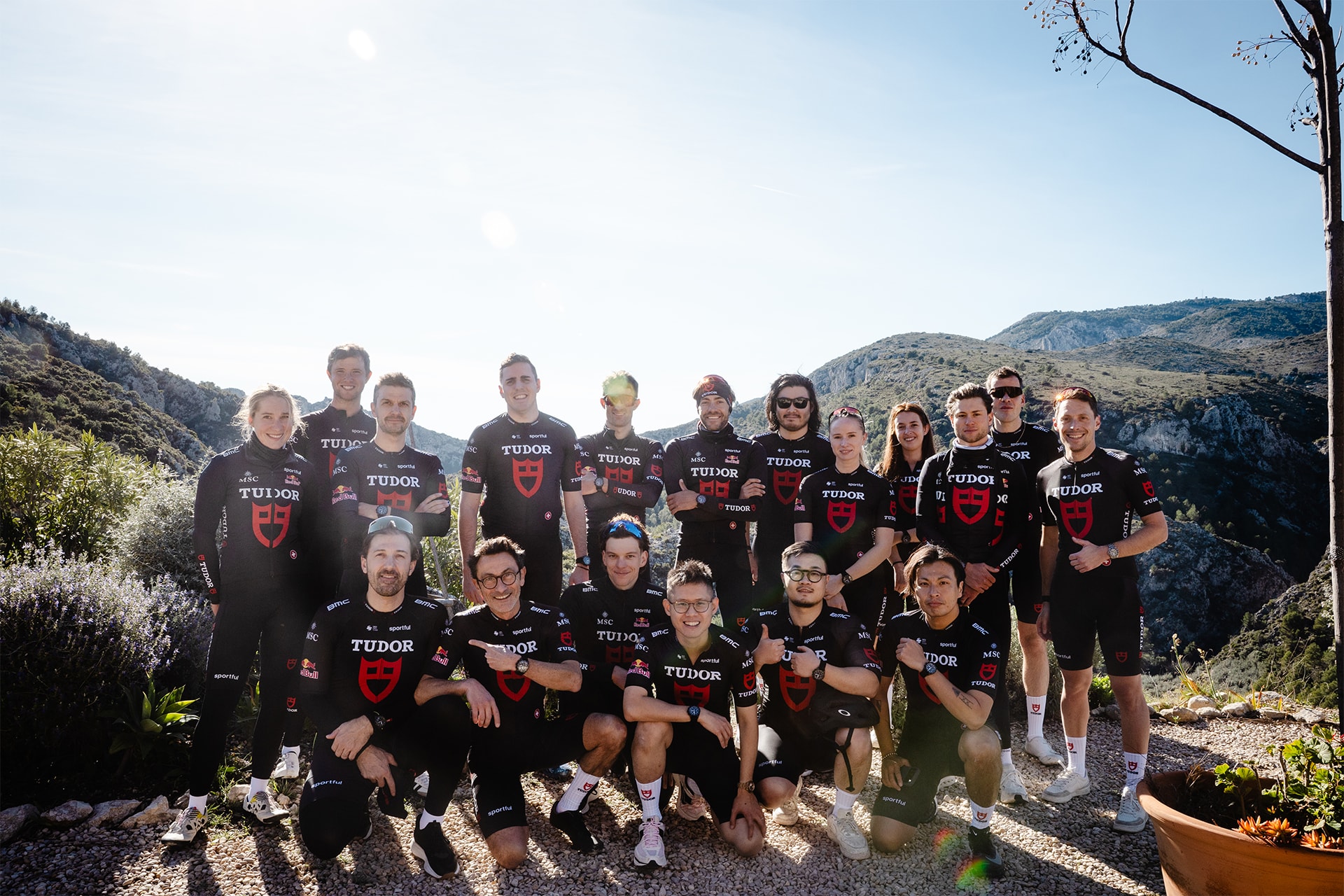
Top of the cliff range at Can Sueño
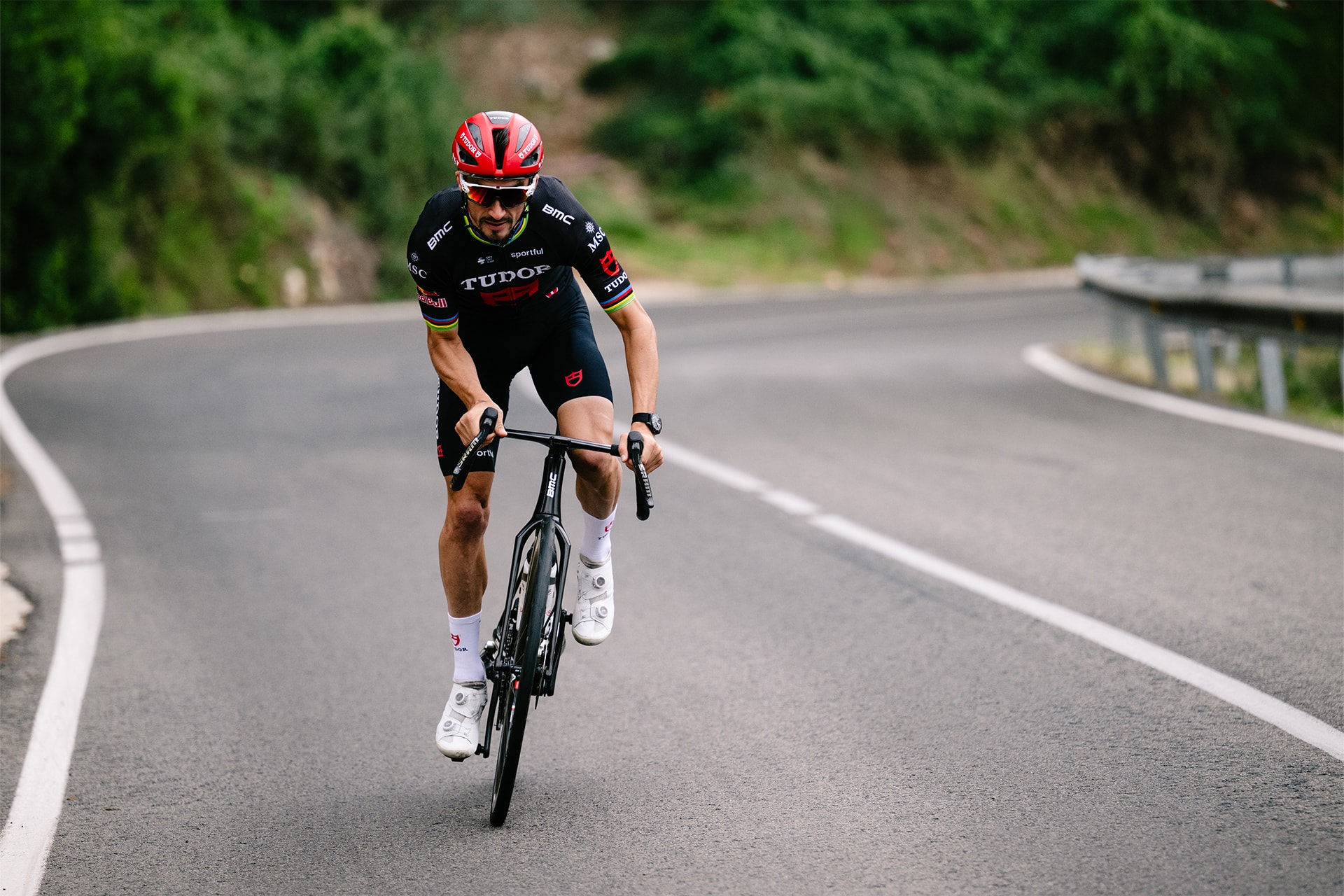
Not long after, we arrived at the most challenging stretch of the route at Castell de Castells. A brutal thigh-bursting ascent unfolds in steep hairpins and long patient pulls through pine-scented slopes. From there, the effort and lactic acid build up linger in the legs as the terrain dips towards wide, cinematic views across valleys. The final approach to Can Sueño feels earned rather than rushed as we savour the final leg defined by the quiet drama of Costa Blanc’s inland.
Man and Machine
Apart from the cyclists themselves, equipment is the next most obvious element in cycling. Throughout our experience, we had the Tudor Pelagos FXD Chrono “Cycling Edition” strapped on our wrists. Tudor’s Pelagos FXD range was first unveiled as an even more technical take on the tool watch nature of the original Pelagos. Tudor Pelagos FXD Chrono “Cycling Edition”, unveiled in 2024, was engineered specifically for TPCT. Lightweight, robust, and engineered for legibility under strain, the watch’s carbon-composite case mirrors the material logic of the modern BMC Teammachine R racing machines we were riding.
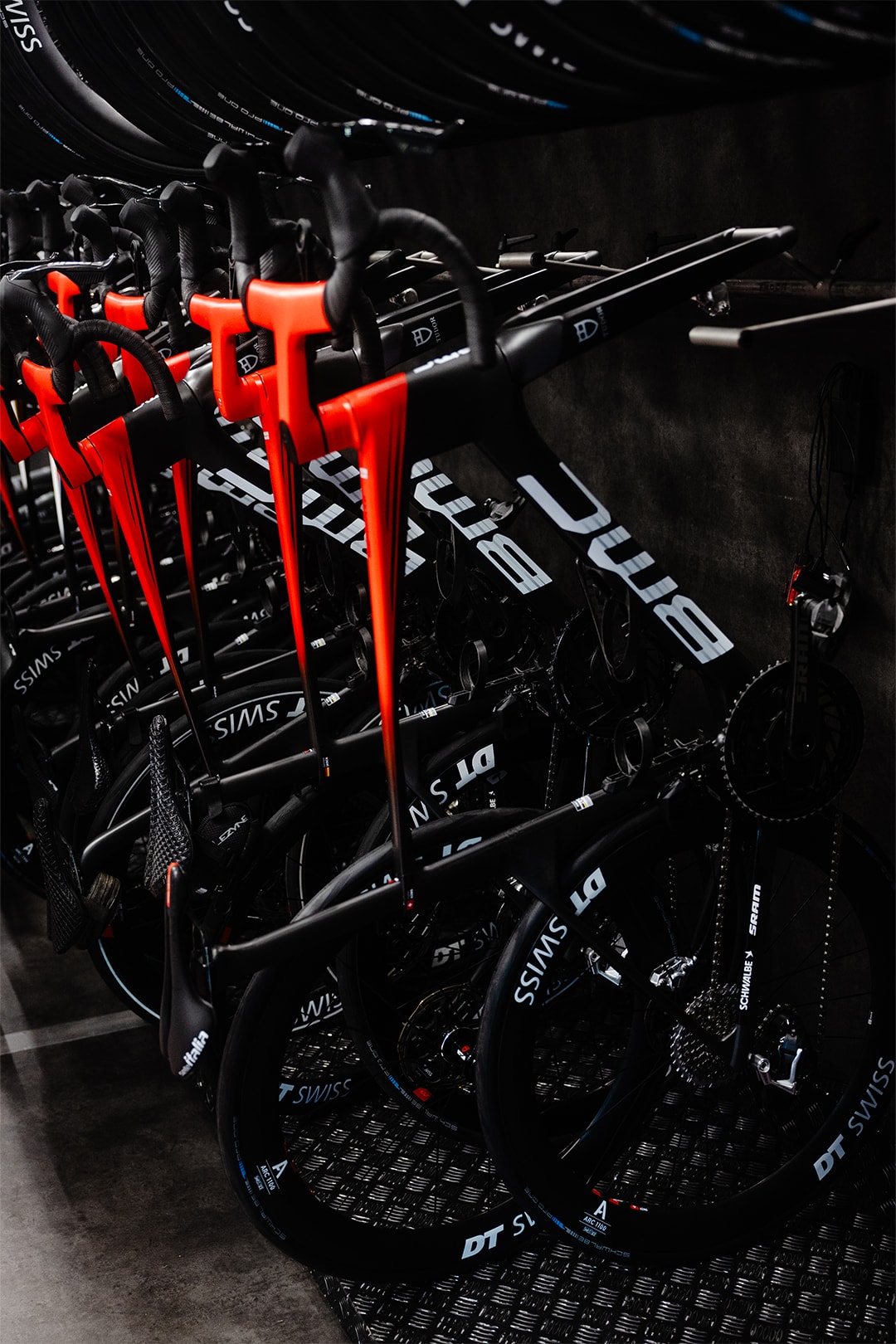
The racing machines of choice: BMC Teammachine R
Amid early starts and long training loops into the surrounding hills, the Tudor Pelagos FXD Chrono “Cycling Edition” feels like a steady and confident companion measuring effort, discipline, and the unglamorous hours that define professional cycling long before the peloton ever reaches the start line.
Exclusive Interview With Two-Time UCI World Champion Julian Alaphilippe
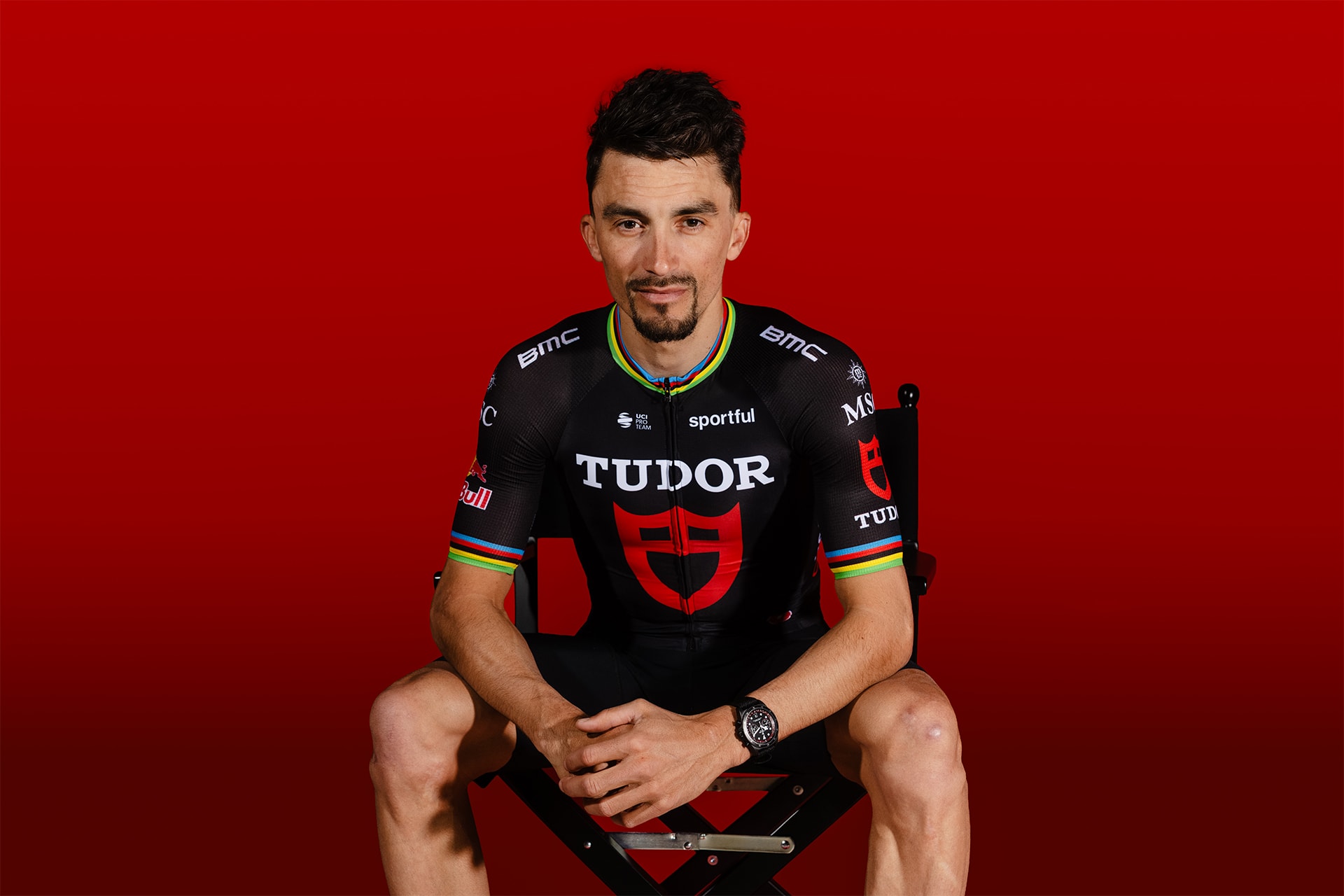
Two-Time UCI World Champion Julian Alaphilippe
As a kid, did you always want to be an athlete?
No, I was dreaming of succeeding and having success in general, more so than being an athlete. I remember playing the drums as a kid, and my dream was to play at sold-out concerts. I had that kind of fire within me.
What led you to cycling then?
As a child, I was always on the bicycle racing against my brother and friends. At around 14, I decided to join the cycling school to train and compete.
And now, you have a glittering career as a two-time UCI road world champion. What would you say was the most important lesson that has defined your career?
It was to never give up. Even though it might sound cliché, that was the case for me. I was falling a lot of the time before winning my first race as a professional. I always had that belief, and I always knew that never giving up was the key to having this career.
 Has the accolade of being a two-time world champion been beneficial or detrimental to you? Has it given you confidence or unwanted distractions going into races?
No, it was a goal that I set for myself quite early in my career. I came close [to the top] a few times, but then I became World Champion for the first time in 2020 at Imola, Italy. I’ve dreamt about winning, and doing so after countless falls and years of time spent; it was very special and emotional for me.
Joining Tudor Pro Cycling Team marked a major change in your career. What ambitions or values within the team convinced you that this was the right next step for you?
It was a good moment in my career to be part of this team as a leader, share my experience with some young guys, and race for the best possible results at the highest level of cycling. The Tudor Pro Cycling Team is a project with ambition, and seeing the team rise over the past few years motivated me to join.
How do you define success in this role within the team?
Of course, victory is still the goal; you start each race trying to win. However, you can also find success in learning from mistakes, self improvement and within the team. Success is not repeating the same mistakes; it’s moving ahead with a clear direction in mind. And it’s not just about the victories; it’s also about how we ride and learn from one another as a team.
Tudor’s “Born to Dare” manifesto speaks about courage and pushing beyond the comfort zone. How closely does that mindset reflect your approach to racing and personal life?
I was always a daring person in my personal life. On the professional side, I made the bold choice to join the Tudor Pro Cycling team. I could have remained at my previous team, but then I thought of all the possible good things we could accomplish together at the Tudor Pro Cycling Team.
 Have you thought about the legacy you want to leave behind?
More or less, but not so much into detail, because I’m really trying to be the best version of myself on and off the bike. You have to be happy when you’ve done your best. There are many things you cannot change, and I’m happy if I leave behind something nice rather than something negative.
Today you’re not just racing for yourself and the team; You’re doing it for your wife and son as well. What is it like to be away from family, and does your son understand what you’re doing?
He understands. I’ve missed so many moments with him, and it has become more and more difficult for me since becoming a father.
Do you wish he would grow up to be a cyclist in your footsteps?
I don’t know, to be honest. But if he ever becomes a cyclist, I’d be happy to support him. Above all, I just want him to be happy regardless of what he does.
When you look back at your career, what do you think is the most defining moment that changed the trajectory of your career?
I’d say my first Flèche Wallonne victory in 2018. My mentality changed after that, and I realised I’m capable of winning rather than just finishing on the podium. I went on to win more races after that, and thought it was a crucial moment in my career.
The cycling experience with Tudor Pro Cycling Team took place at the start of January 2026; Julian Alaphilippe’s response was edited for brevity and clarity. Once you are done with this story, click here to catch up with our March 2026 issue.