
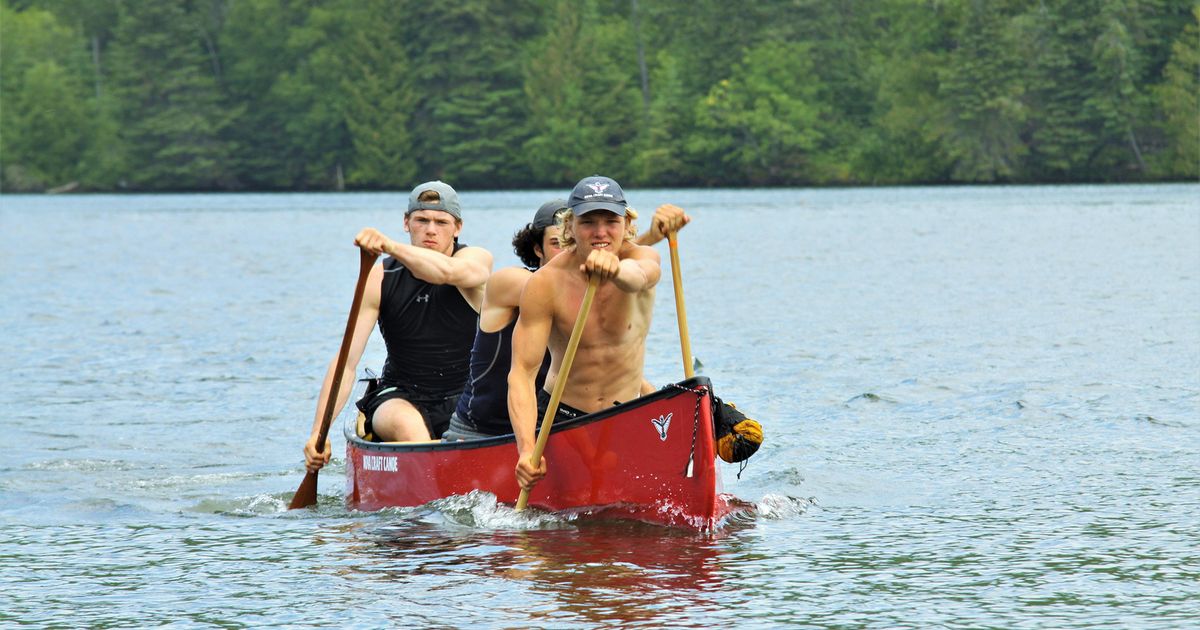
A trio of Toronto friends will soon embark on an 8,000-kilometre canoe journey across Canada — all for a good cause.
On Apr. 1, best friends Will Vyse, Nolan Aziz, and Georges Kirijian will dip their paddles into the water in Tadoussac, Quebec, and begin a 200+ day canoe expedition across the country.
The journey, officially called Canada by Canoe, has been years in the making.
While the three friends met in high school, they became close while working at a canoe tripping camp during the summer of 2019. But when the pandemic hit the following spring, returning to camp was no longer an option, so they decided to plan their own backcountry trip instead.
As canoe pros who had already completed the camp’s longest canoe trip — a 50-day expedition — they felt confident they could manage an independent voyage.
“We actually decided to up the ante and do a 60-day trip,” Vyse, founder of Canada by Canoe, tells blogTO. That idea quickly evolved into something bigger, eventually becoming Canoe4Covid.
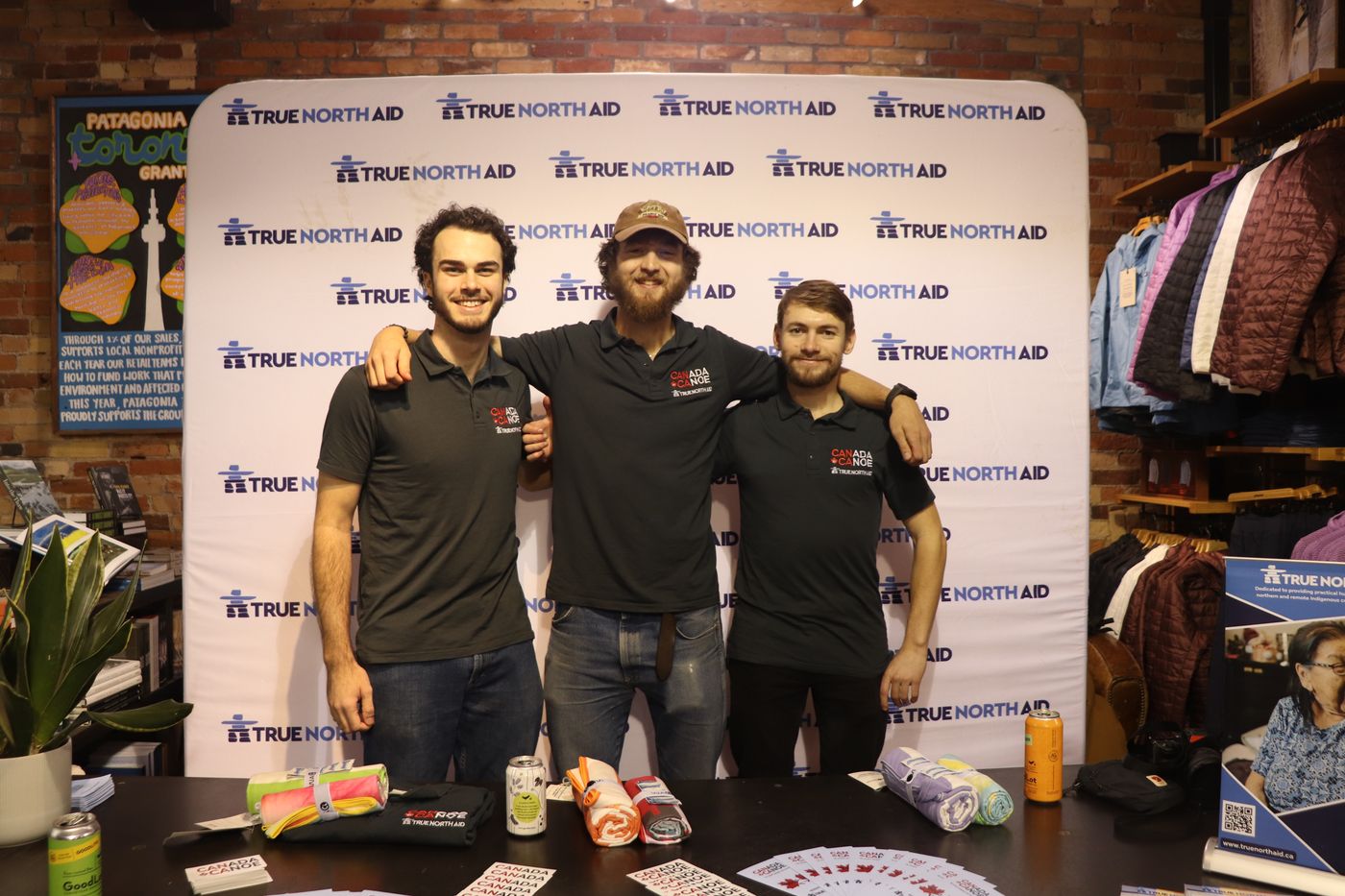
Georges Kirijian, Nolan Aziz, and Will Vyse of Canada by Canoe.
The then-teens partnered with Food Banks Canada and set a fundraising goal of $60,000, combining their canoeing passion with a desire to give back. Canoe4Covid ultimately raised more than $87,000.
After that success, Vyse couldn’t shake the idea of going even further.
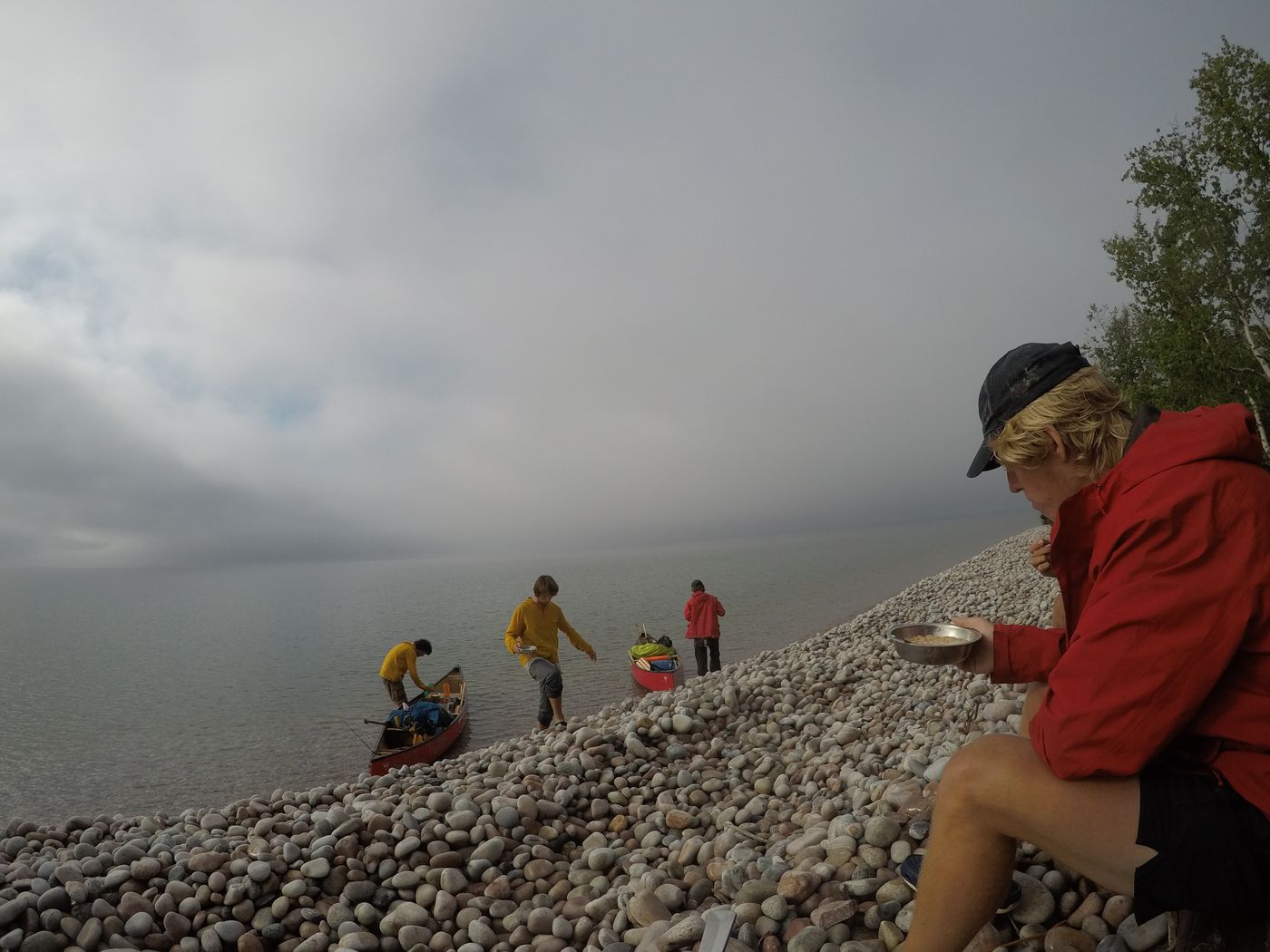
A candid moment from the team’s Canoe4Covid expedition.
“I started looking at maps and researching other massive canoe trips,” he says. Eventually, he landed on what many would call an ambitious goal: paddling across the entire country using a remote, carefully plotted route that took three-and-a-half years to refine.
Vyse recalls that Aziz and Kirijian were instantly on board. With that, Canada by Canoe was born.
In 2024, the team partnered with True North Aid, a charity focused on supporting remote northern communities, continuing their signature style of pairing endurance canoeing with charitable impact.
There are three driving forces behind the expedition, Vyse explains. “First and foremost, we love canoe tripping. Plain and simple.”
Second, they want to channel that passion into giving back, particularly to northern communities where they’ve repeatedly experienced what he calls unmatched generosity and “Northern Hospitality.”
Lastly, the canoe itself carries national meaning.
“The canoe is a historic vessel that’s been used as a form of transportation by some of the earliest Indigenous inhabitants of this land,” he says, noting its central role in the fur trade and the formation of Canada. “Not only was Canada made because of the canoe, but the canoe was made for Canada.”
In Tadoussac, the journey truly begins, as the three men push off into open water. Vyse explains that ice clearing along the Saguenay Fjord typically wraps in early March, clearing the way for their April 1 departure. From there, it’s 8,000 kilometres of lakes, rivers, and portages.
“We will be taking no rest days,” Vyse says. Unless extreme weather stops them, they plan to make forward progress every single day.
Meals will mostly happen in the canoe, with one person eating while the other two paddle, rotating to keep the boat moving. Even breaks are taken in shifts to “maximize our forward motion and minimize time wasted,” Vyse says.
If Canoe4Covid taught them anything, it’s that rigid plans don’t survive long in the wilderness.
“The only thing you can be certain of is uncertainty,” Vyse recalls learning while paddling on Lake Superior. This time, they’re planning accordingly.
The team will rely on what Vyse calls “asynchronous food drops,” a system that uses a satellite phone to update friends, family and other “food collaborators” along the route about their arrival times. On past trips, arriving early meant waiting around for supplies. This time, the new approach gives them the flexibility to keep moving.
Their diet will be simple: cereal and powdered milk, peanut butter and jam tortillas, plus dehydrated rice or pasta meals. “It’s not glamorous, but after a long day’s work, a warm bowl of just about anything feels heavenly,” Vyse says.
Safety gear, however, is anything but minimal.
They’ll wear waterproof drysuits in colder months, store food in sealed barrels hung from trees at night while they camp, and carry both a satellite messenger and a satellite phone for added safety. “Better safe than sorry,” Vyse says, noting the importance of staying in constant communication with their team back in Toronto and their families.
For drinking water, they’re packing both Aquatabs (water purification tablets) and a gravity filter system for sources that require more thorough filtration. They expect that, in some cases, they’ll use both together if conditions demand it.
The 8,000-kilometre journey, which will take just over 200 days to complete, will end in Port Edward, B.C.
When the team announced its Canada by Canoe expedition in March of 2025, they made their aim quite clear: to “push the boundaries of what is possible using human-powered travel while supporting northern communities in need.”
And, it seems like that’s what they are set to do.