
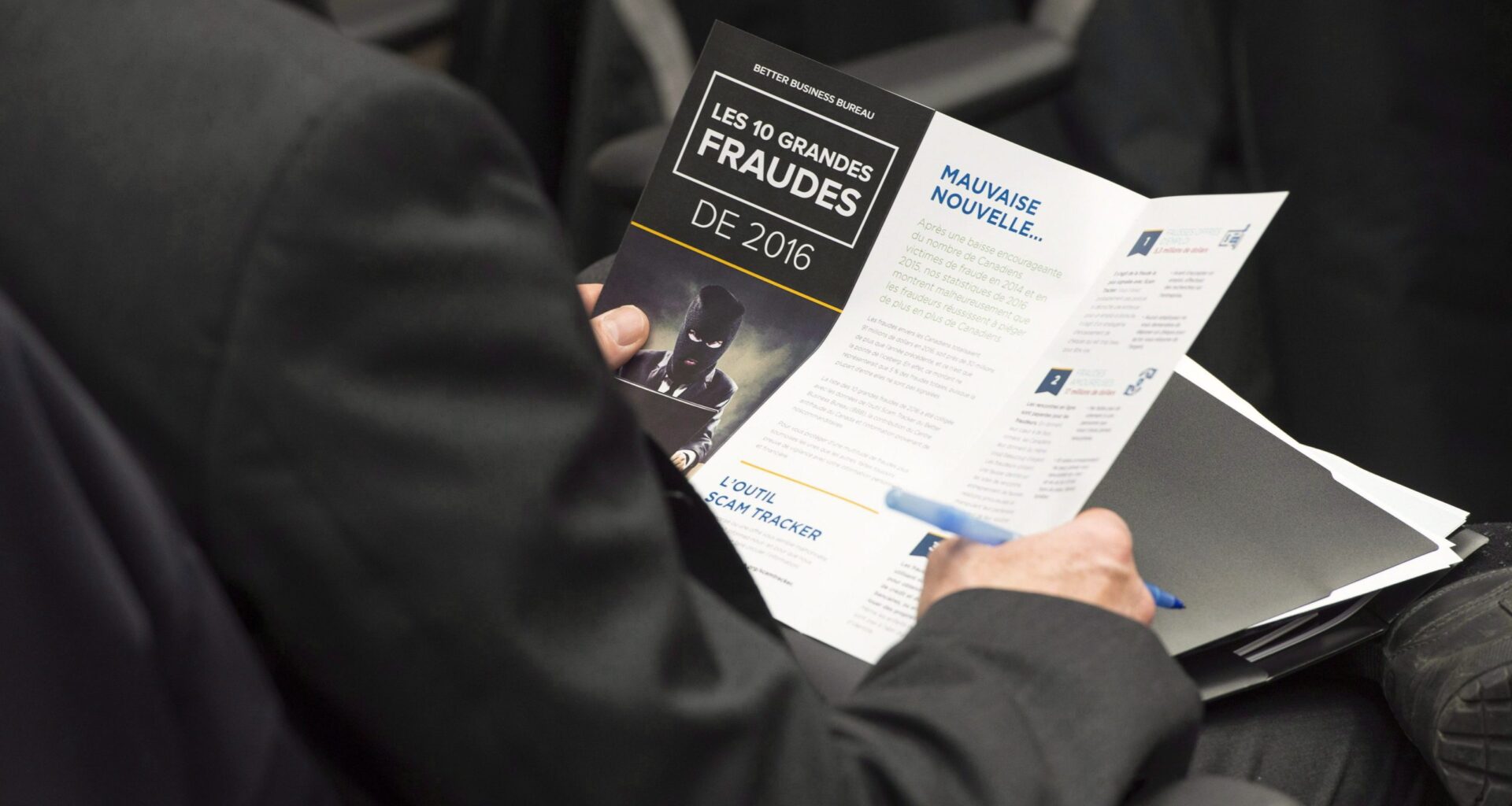
The vast majority of Canadians (83 per cent) and a slightly smaller proportion of Quebecers (76 per cent) are sufficiently concerned about fraud and no longer trust any unexpected emails, texts, or calls. According to respondents to a survey released Monday, it is safer to consider any unexpected call, text, or email as a potential fraud attempt.
The Angus Reid poll, conducted for RBC, reveals widespread fear and irritation among Quebecers and Canadians regarding the rise in fraud and the difficulty in detecting it.
As for the Quebec data, more than three-quarters of respondents are irritated by the omnipresence of fraud (78 per cent) and feel that a new scam occurs almost every week (76 per cent).
Doubt is even greater when it comes to advertising, with 84 per cent of respondents in Quebec finding it increasingly difficult to determine whether an advertisement is authentic or fraudulent, and 73 per cent having trouble knowing if a website is legitimate when shopping online.
The third party still bites
This data shows that Quebecers are still quite aware and wary, but never enough, and many still fall for scams. For example, we see that about a third of Quebecers have clicked on a link, opened an email or attachment, or spoken to someone on the phone before realizing it was a scam.
Nearly half (43 per cent) of Quebecers do not feel confident that they can spot fraud powered by artificial intelligence, and nearly two-thirds (64 per cent) believe that this will get worse and that artificial intelligence will soon make scams impossible to detect.
Many Quebecers (28 per cent) believe it is easy to fall victim to identity theft fraud, and more than a third (34 per cent) think it would be easy for fraudsters to impersonate them to their family or friends. However, Quebecers are the most likely among Canadians (35 per cent) to have established a password with their loved ones to prevent identity theft scams.
The rest of Canada is more fearful
Conversely, however, even though a large majority of them are fearful, they are generally less so than the rest of Canada, a fact that can possibly be explained by the fact that many, if not most, fraud attempts by email, text or call are made in English.
By publishing these results, RBC reminds us to be wary of any request that seems urgent and pressures us to act quickly, usually by using fear tactics. At the very moment of writing, the author received a recorded call—in English—reporting an unusual transaction to cover the purchase of a very expensive smartphone and inviting him to take steps to speak to a “representative.” This is a fairly obvious fraud attempt and relatively easy to thwart with a simple check of his credit card and the supposedly involved merchant.
The RBC survey was conducted online from Jan. 5 to 9 among 1,540 adult members of the Angus Reid Forum. An additional 303 Canadians over the age of 60 were included to ensure a minimum of 100 respondents per region. No data has been released regarding the size of the Quebec sample. The survey was conducted in both French and English. For comparison, the margin of error for a sample of this size across Canada is plus or minus 2.5 per cent, 19 times out of 20.
–This report by La Presse Canadienne was translated by CityNews